
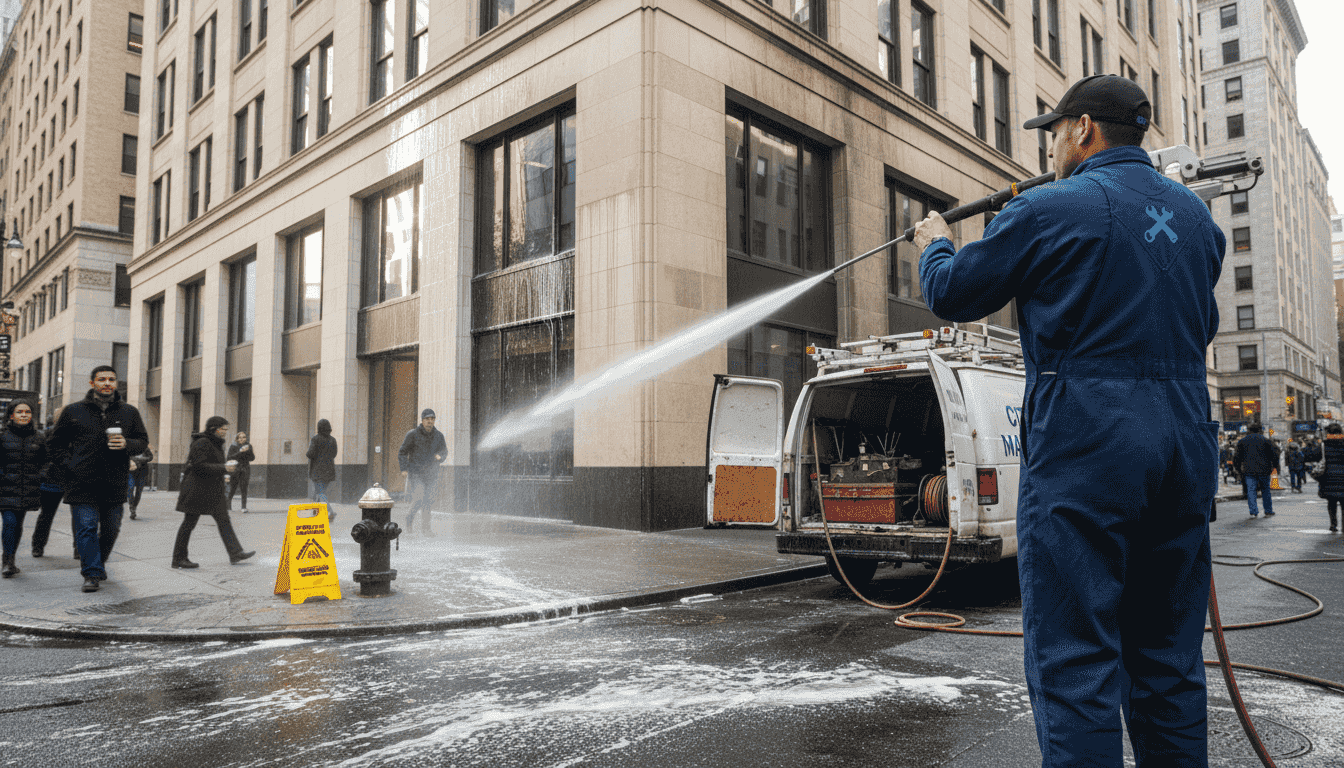
Property managers know the look of a dirty exterior signals more than just curb appeal loss. Routine cleaning directly defends against accelerated material breakdown from harsh weather, pollution, and biological threats. According to research, green building practices including exterior cleaning protect structural materials from degradation and keep buildings durable over time. Staying ahead with regular cleaning means fewer repairs, longer asset life, and increased satisfaction for both tenants and owners.
Table of Contents
- Exterior Cleaning and Building Longevity
- Major Threats to Building Exteriors
- How Cleaning Prevents Structural Damage
- Financial Benefits of Routine Maintenance
- Common Pitfalls and Maintenance Mistakes
Key Takeaways
| Point | Details |
|---|---|
| Clean Exteriors Enhance Longevity | Regular cleaning prevents material degradation and extends the life of building components. |
| Cost-Effective Maintenance Strategy | Investing in routine cleaning avoids costly repairs by addressing problems before they escalate. |
| Understanding Threats to Exteriors | Recognizing the effects of pollution, moisture, and biological growth helps prioritize proactive maintenance. |
| Documented Maintenance Practices | Keeping a detailed maintenance log improves accountability and aids in managing future expenses and repairs. |
Exterior Cleaning and Building Longevity
Your building's exterior is under constant assault. Weather, pollution, algae, and dirt degrade materials faster than you might realize.
Why exterior condition matters
Clean buildings last longer. That's not marketing speak—it's material science. When dirt, mold, and environmental contaminants accumulate on your building's surface, they accelerate the breakdown of concrete, siding, roofing, and other structural elements.
Think of your building's exterior like your car's paint. Leave it unwashed for months, and contaminants etch into the finish. Same principle applies to your apartment complex.
Green building practices, including regular exterior maintenance and cleaning, directly protect structural materials from degradation and preserve building durability over time.
The cost of neglecting exterior cleanliness
Skipping regular exterior cleaning creates expensive problems:
- Mold and algae penetrate surfaces, requiring costly remediation or replacement
- Accumulated grime traps moisture, causing rot and structural damage
- Dirty gutters and downspouts lead to water damage and foundation issues
- Stained or degraded exteriors reduce property values and tenant satisfaction
- Early material failure forces premature reconstruction and associated expenses
One delayed cleaning job might save a few thousand dollars today. But that same delay could cost $50,000 in premature siding replacement or foundation repairs tomorrow.
How regular cleaning preserves your investment
Regular exterior cleaning acts as preventative maintenance for your entire building. It removes harmful substances before they can cause damage, extends the life of roofing materials, siding, and concrete, and keeps your property looking professionally maintained year-round.
When you maintain clean exteriors, you're also enhancing energy efficiency and reducing the environmental impact of your building by preserving materials and preventing early deterioration.
What gets cleaned makes a difference
Key exterior surfaces that benefit from regular cleaning:
- Rooflines and gutters (prevent water damage and structural rot)
- Facade and siding (stop mold growth and material breakdown)
- Concrete surfaces (prevent algae penetration and cracking)
- Windows and trim (extend lifespan and improve appearance)
- Parking areas and walkways (maintain safety and prevent deterioration)
Regular exterior cleaning isn't an optional expense—it's structural insurance that pays for itself by preventing costlier repairs down the road.
For property managers juggling budgets across multiple units, exterior cleaning is one of the highest-return maintenance investments you can make. Your tenants notice clean buildings. Your insurance company notices. And most importantly, your building's structural integrity notices.
Pro tip: Schedule cleaning on a seasonal rotation rather than reactively when your building looks grimy—this prevents contaminants from settling deep into materials and keeps maintenance costs predictable year-round.
Major Threats to Building Exteriors
Your building's exterior faces relentless attacks from multiple directions. Understanding these threats helps you prioritize maintenance and protect your investment.
Weather and moisture damage
Rain, snow, and freeze-thaw cycles penetrate building materials. Water seeps into cracks, expands when frozen, and causes structural failure over time. This is the single most destructive force on apartment complexes.
Moisture also creates conditions for mold and algae growth. Once established, these organisms eat deeper into surfaces, causing permanent damage that cleaning alone cannot fix.
Environmental pollution and contaminants
Material degradation from climate change and environmental pollution accelerates exterior breakdown across all building types. Industrial emissions, vehicle exhaust, acid rain, and salt air corrode metals, degrade concrete, and stain siding.
Older buildings in urban areas experience faster deterioration. Pollution settles into pores and crevices, trapping moisture and accelerating decay.
Age and material fatigue
Building materials have expiration dates. Roofing materials degrade under UV exposure, siding becomes brittle, and sealants crack and fail. Exposure to weather, pollutants, and lack of maintenance causes accelerated exterior degradation and structural damage.
A 20-year-old roof doesn't perform like a new one. Materials lose elasticity and protective properties with age.
Neglect and deferred maintenance
Many property managers delay cleaning or repairs to reduce costs. This creates a domino effect:
- Dirty surfaces trap moisture and accelerate decay
- Small cracks become major structural problems
- One damaged gutter leads to foundation issues
- Cosmetic stains become permanent material damage
- Repair costs multiply exponentially over time
Deferred maintenance on a $2 million apartment complex isn't saving money. It's creating future losses.
Biological threats
Mold, mildew, algae, and lichen thrive on dirty, moist exteriors. These organisms don't just look bad—they actively consume building materials. They also pose health risks to your tenants.
Once biological growth takes hold, it spreads rapidly and becomes difficult to remove.
Ignoring exterior threats today means expensive reconstruction tomorrow. A $5,000 cleaning investment now prevents $50,000 in structural repairs later.
Your building's exterior is your first line of defense against all these threats. When it's clean and well-maintained, contaminants can't settle in. When it's neglected, every threat compounds.
Pro tip: Document your building's exterior condition with quarterly photographs—this creates accountability, tracks deterioration patterns, and provides evidence for insurance claims when damage occurs.
Here's a quick reference of major threats and appropriate cleaning responses:
| Threat Type | Typical Damage Caused | Cleaning Strategy |
|---|---|---|
| Weather & Moisture | Cracks, rot, structural failure | Seasonal removal of buildup |
| Pollution & Contaminants | Corrosion, staining, surface breakdown | Gentle washing, chemical neutralizers |
| Biological Growth | Surface consumption, health risks | Algaecide treatments, pressure washing |
| Age & Material Fatigue | Brittleness, sealant failure | Low-impact cleaning, inspect post-wash |
| Deferred Maintenance | Escalated repair costs, accelerated decay | Strict cleaning schedule |
How Cleaning Prevents Structural Damage
Cleaning isn't cosmetic. It's structural protection. Regular exterior cleaning removes the substances that destroy buildings from the outside in.
Removing corrosive contaminants
Pollutants, salt deposits, and chemical residues sit on your building's surfaces. Over time, these substances bond with materials and corrode them from the surface inward. A dirty building isn't just ugly—it's actively being eaten away.
Regular cleaning removes harmful deposits such as pollutants, biological growth, and corrosive agents that would otherwise accelerate damage to structural components. The longer contaminants remain, the deeper they penetrate.
Preventing moisture infiltration
Dirty surfaces trap water. Algae, mold, and accumulated grime create pockets where moisture sits. This moisture seeps into cracks, expands during freeze-thaw cycles, and forces structural failure.
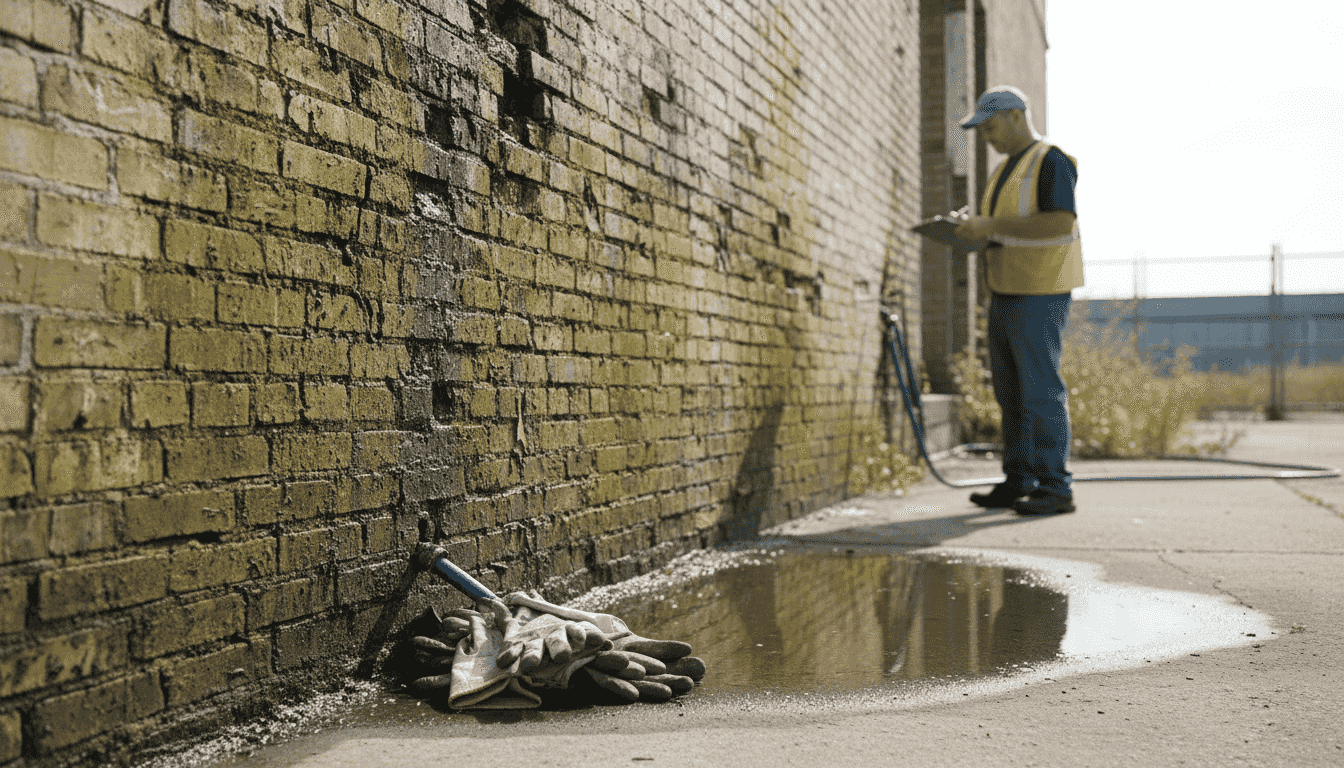
Clean surfaces allow water to run off rather than pool. This simple difference prevents thousands of dollars in foundation and structural damage.
Biological growth control
Mold, lichen, and algae aren't just unsightly. They consume building materials. Once they establish roots in your exterior, they're incredibly difficult to remove and leave permanent damage behind.
Regular cleaning stops biological growth before it takes hold. Prevention is infinitely cheaper than remediation.
The cumulative protection model
Cleaning prevents accumulation of harmful substances that weaken materials and reduce building lifespan. Think of it as compound interest working in your favor:
- Each cleaning removes contaminants before they bond to materials
- Regular intervals prevent deep penetration into pores and cracks
- Consistent maintenance stops small problems from becoming structural failures
- Materials stay in original condition longer
- Repair costs remain predictable and manageable
One cleaning might remove surface dirt. But consistent, regular cleaning prevents the accumulation that causes permanent damage.
Material preservation over time
Your building's materials have a lifespan. Concrete should last 50+ years. Roofing materials last 20-30 years. Siding lasts 20-40 years depending on type. These timelines assume proper maintenance.
Without regular cleaning, you're accelerating material failure by decades. You're essentially throwing away years of material lifespan.
Regular cleaning acts as structural insurance. A $3,000 cleaning prevents $30,000 in premature material replacement.
Property managers who treat cleaning as preventative maintenance rather than cosmetic upkeep see dramatically lower overall maintenance costs. Your building stays structurally sound longer, materials last their intended lifespan, and repair emergencies become rare.
Pro tip: Schedule pressure washing during dry seasons when your building can dry completely between cleaning and rainfall—this prevents moisture from being trapped in freshly cleaned cracks and pores.
Financial Benefits of Routine Maintenance
Routine exterior cleaning isn't a budget line item to minimize. It's a financial strategy that saves money across your entire operation.
Avoiding emergency repairs
Emergency repairs cost exponentially more than planned maintenance. A $4,000 cleaning scheduled in spring costs far less than a $40,000 emergency roof repair in winter because cleaning was skipped.
Unplanned repairs also disrupt tenant relationships, require emergency contractor availability, and often involve temporary solutions rather than permanent fixes.
Extending asset lifespan
Preventive maintenance reduces costly repairs and prolongs asset life. Your roofing, siding, and structural materials have planned lifespans. Regular cleaning lets them reach those timelines instead of failing prematurely.
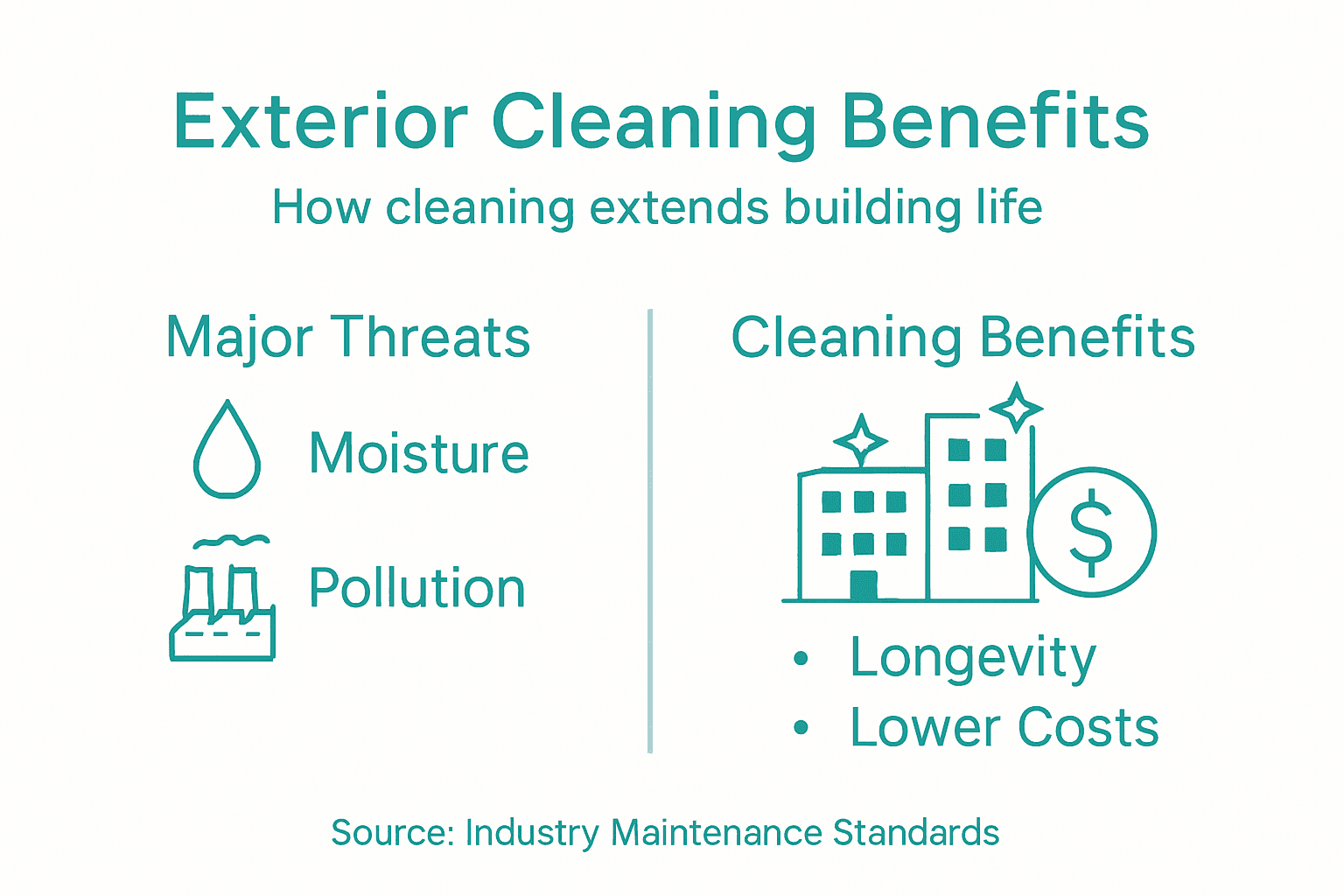
A roof that lasts 25 years versus 15 years is worth $20,000+ in extended value. That's the return on routine maintenance.
Predictable operating budgets
Scheduled cleaning creates predictable costs. Emergency repairs create budget chaos. Property managers juggling multiple units need to forecast expenses accurately.
Routine maintenance means you control when money gets spent. Emergency repairs mean vendors and contractors control your timeline and costs.
Capital expenditure deferral
Well-maintained buildings delay expensive capital replacements. Regular maintenance enhances longevity and performance while reducing unexpected costs. Deferring a $100,000 facade replacement by five years through routine cleaning saves interest costs, inflation impact, and capital availability headaches.
Tenant retention and lease rates
Cleaner buildings command higher rents and experience lower vacancy rates. Tenants notice building condition. A well-maintained exterior property attracts quality residents and justifies premium pricing:
- Reduces vacancy periods and turnover costs
- Allows rent increases without tenant complaints
- Decreases maintenance-related lease breaks
- Improves resident satisfaction scores
- Supports long-term lease renewals
One premium-paying tenant staying an extra year offsets years of cleaning investment.
Insurance and liability protection
Negligent maintenance creates liability. Insurance companies investigate water damage, structural failure, and injury claims. Properties with documented maintenance programs face lower claims costs and better renewal rates.
Your cleaning records prove diligence. That documentation protects you legally and financially.
A $50,000 annual cleaning budget prevents $500,000 in repairs and preserves $200,000+ in annual rental premiums. That's a 10-to-1 return on investment.
For multi-family property managers operating on thin margins, routine exterior cleaning is one of the highest-ROI maintenance investments available. It compounds over time through deferred repairs, extended asset life, and premium rental rates.
Pro tip: Track cleaning dates, costs, and pre/post photographs in a dedicated maintenance log—this creates documentation that justifies cleaning expenses to ownership and supports insurance claims when needed.
The table below summarizes financial outcomes of different maintenance approaches:
| Approach | Upfront Cost Level | Long-term Financial Impact | Risk of Major Repairs |
|---|---|---|---|
| Preventive Routine | Moderate | Lower overall costs | Minimal |
| Deferred/Reactive | Low (short-term) | High emergency expenses | High |
| Untrained Crews | Low (initially) | Increased repair likelihood | Elevated |
| Professional Crews | Moderate | Extended asset lifespan | Reduced |
Common Pitfalls and Maintenance Mistakes
Property managers often make maintenance decisions that seem cost-effective in the moment but backfire dramatically. Understanding these pitfalls helps you avoid expensive mistakes.
Reactive instead of proactive approaches
Common maintenance pitfalls include reactive rather than proactive approaches that lead to premature equipment failure and increased repair costs. Many managers only call cleaners when the building looks visibly dirty.
By then, contaminants have already bonded to surfaces and caused damage. You're treating symptoms instead of preventing disease.
Skipping regular schedules to save money
Delaying cleaning to stretch budgets backfires. A property manager might skip two cleanings to save $8,000. That decision then costs $50,000 when structural damage develops.
This penny-wise, pound-foolish approach destroys building equity and tenant satisfaction simultaneously.
Ignoring early warning signs
Maintenance mistakes stem from neglect of early damage signs, allowing minor issues to escalate into major problems. A small stain becomes permanent structural damage. A minor leak becomes foundation failure.
The window to fix problems affordably closes quickly.
Hiring the cheapest contractor available
Low-bid contractors often use improper techniques that damage surfaces. Aggressive pressure washing can force water into cracks. Wrong cleaning chemicals can etch concrete permanently. Untrained crews miss problem areas.
You pay less upfront, then pay exponentially more for damage repair.
Poor planning and scheduling
Haphazard cleaning schedules create inconsistent results. Some buildings get cleaned twice yearly. Others go years between cleanings. This inconsistency accelerates deterioration in neglected periods:
- Seasonal variation in cleaning frequency creates damage windows
- Weather-dependent scheduling misses optimal timing
- No documentation of cleaning history
- Impossible to track material degradation patterns
- Contractor availability dictates your maintenance schedule
Consistent, planned schedules beat reactive emergency calls.
Insufficient staff training
Cleaning professionals need expertise specific to your building materials. Concrete cleaning requires different techniques than siding or roofing. Wrong methods cause permanent damage that outlasts any savings.
Trained crews understand material properties, cleaning chemistry, and damage prevention.
Neglecting design considerations
Some building designs make cleaning dangerous or ineffective. Poor drainage increases moisture damage. Inaccessible areas can't be maintained. Certain material combinations create accelerated degradation.
You can't fix bad design, but you can plan maintenance around it.
The cheapest cleaning job often becomes the most expensive mistake. A $3,000 professional cleaning beats a $200 amateur disaster every time.
Every maintenance mistake starts with a decision to cut corners. That decision saves money today and costs thousands tomorrow.
Pro tip: Establish a written maintenance schedule with documented cleaning dates, contractor contact information, and before/after photographs—this creates accountability and prevents costly scheduling gaps.
Protect Your Investment With Expert Exterior Cleaning
Maintaining your building's exterior is more than just appearance upkeep. The constant assault from weather, pollution, and biological growth demands a proactive approach to prevent costly structural damage and extend material lifespan. The article highlights how deferred maintenance and neglect lead to expensive repairs and irreversible degradation. If you manage apartment complexes or multi-family units, addressing these challenges now means avoiding emergencies later and protecting your asset’s value.
Monster Property Partners offers professional commercial pressure washing services designed specifically for large-scale exterior cleaning projects. Our experienced team understands the importance of consistent cleaning schedules and safe, effective techniques that preserve roofing, siding, and concrete integrity. We prioritize reliable operations and transparent communication to deliver outstanding results that keep your buildings structurally sound and tenant-ready.
Take control of your property's lifespan today.

Ready to prevent costly repairs and enhance your building’s durability? Visit Monster Property Partners now to schedule a consultation. Discover how our exterior cleaning solutions align perfectly with the preventive maintenance strategies that the article recommends. Don’t wait for damage to escalate—invest in your building’s future now.
Frequently Asked Questions
How does exterior cleaning impact the lifespan of a building?
Regular exterior cleaning removes harmful contaminants like dirt, mold, and pollutants that can degrade building materials over time. By preventing these substances from establishing root systems, cleaning helps maintain the structural integrity and extends the lifespan of roofing, siding, and other materials.
What are the financial benefits of routine exterior cleaning?
Routine exterior cleaning acts as a proactive financial strategy by avoiding emergency repairs, extending asset lifespan, and creating predictable maintenance costs. This approach ultimately saves money on costly capital replacements and improves tenant satisfaction, leading to higher rental rates.
What are the major threats to a building's exterior that cleaning can prevent?
The major threats include moisture damage, environmental pollution, biological growth, and material fatigue. Regular cleaning helps mitigate these threats by removing contaminants and preventing moisture accumulation that can lead to structural issues.
How often should I schedule exterior cleaning for optimal results?
It is advised to schedule exterior cleaning on a seasonal rotation rather than reactively. This prevents contaminants from embedding deep into the materials and keeps maintenance costs predictable throughout the year.
Recommended
- Monster Property Partners | Multifamily Exterior Cleaning Orlando FL
- Monster Property Partners | Multifamily Exterior Cleaning Orlando FL
- Portfolio Partnership | Monster Property Partners
- Does Regular Cleaning Extend Carpet Life: Complete Guide - Yarra Valley Carpet Cleaning
- 7 Types of Home Cleaning Every Owner Should Know
- Gutter Cleaning in Asset Management – Preserving Value