
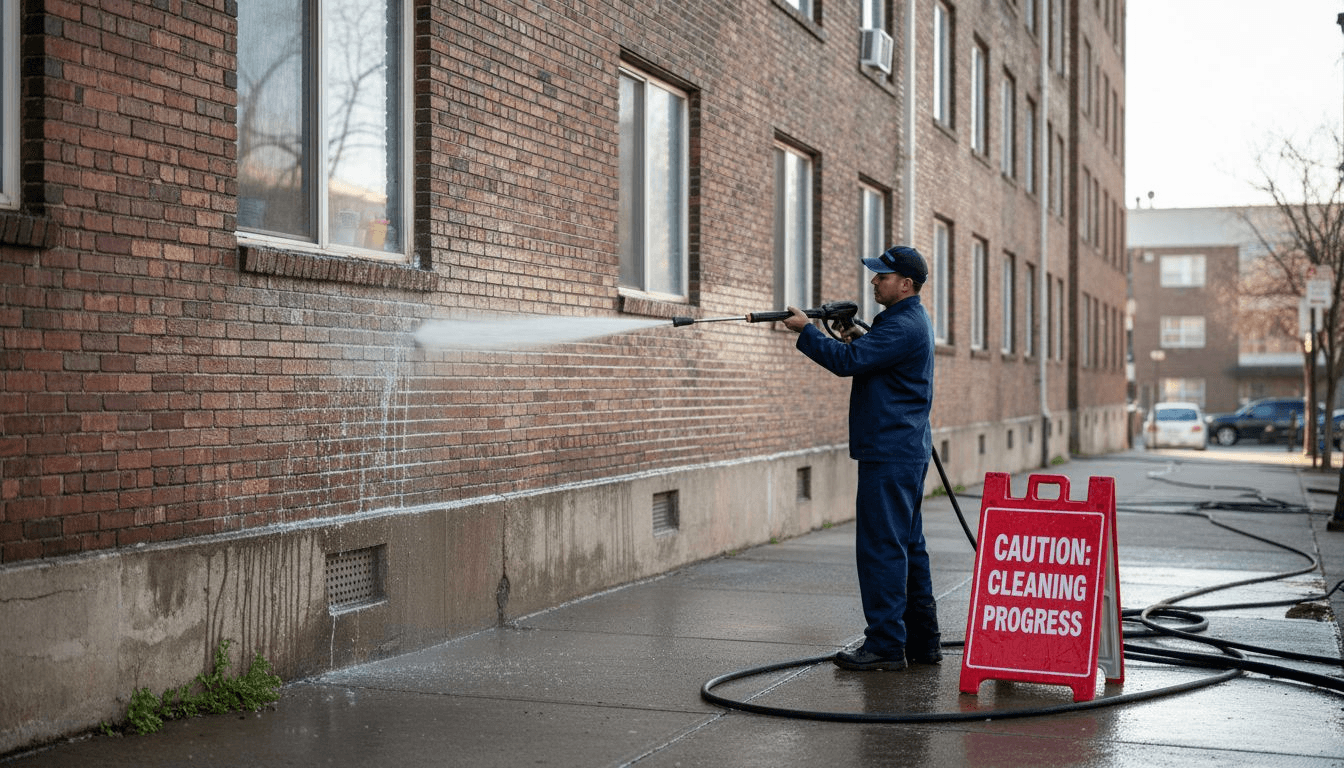
A neglected facade lowers tenant satisfaction before anyone steps inside. Property managers know that clean, well-maintained exteriors are more than just curb appeal; they signal care and directly impact retention and asset value. By prioritizing exterior cleaning of walls, roofs, gutters, and windows using proven methods, you protect your investment, reduce emergency repairs, and build trust with residents who value a safe, attractive environment.
Table of Contents
- Exterior Cleaning In Property Maintenance Defined
- Types Of Exterior Cleaning Methods For Multi-Family Units
- Impact Of Exterior Cleaning On Property Value And Tenant Retention
- Key Risks And Financial Implications For Property Managers
- Avoiding Common Mistakes In Exterior Cleaning Projects
Key Takeaways
| Point | Details |
|---|---|
| Importance of Exterior Cleaning | Regular exterior cleaning enhances property appeal, increases tenant satisfaction, and protects investment value. |
| Method Selection Matters | Choose the appropriate cleaning method—pressure washing for durable surfaces and soft washing for delicate ones—to prevent damage. |
| Impact on Financial Stability | Clean exteriors lead to higher rental rates, lower vacancy rates, and reduced maintenance costs, contributing to long-term financial health. |
| Avoiding Contractor Mistakes | Hiring qualified contractors and adhering to safety standards is crucial to prevent liability issues and property damage. |
Exterior cleaning in property maintenance defined
Exterior cleaning is the systematic process of maintaining a building's outer surfaces. For multi-family properties, this means keeping walls, roofs, gutters, windows, and common areas looking fresh and well-maintained. It goes beyond aesthetics—it protects your investment and directly impacts tenant satisfaction.
Exterior cleaning refers to cleaning a building's outer surfaces such as walls, roofs, gutters, and windows to maintain hygiene and remove dirt or litter. This definition captures the scope of what property managers handle daily, though the work often extends to parking areas, entryways, and siding that tenants see constantly.
Your property's exterior is the first impression. Tenants notice a well-maintained facade immediately. They see clean windows, debris-free gutters, and spotless entryways before entering their units. These details signal you care about the property.
Exterior cleaning addresses multiple concerns property managers face:
- Grime and dirt accumulation from weather, foot traffic, and environmental pollution
- Mold and mildew growth that damages surfaces and creates safety hazards
- Debris buildup in gutters that causes water damage to roofs and foundations
- Staining and discoloration that ages the property prematurely
- Safety hazards from slippery surfaces or blocked pathways
The scope of exterior cleaning includes various specialties. Exterior cleaning draws on environmental care, architecture preservation, and public safety principles, which means the work requires knowledge beyond just pressure washing. It involves understanding how different surfaces respond to cleaning methods, protecting landscaping, and ensuring no environmental runoff harms surrounding areas.
For urban multi-family units, professional pressure washing services handle the heavy lifting. They tackle high-rise windows, vinyl siding, concrete walkways, roof surfaces, and decorative elements that individual maintenance crews struggle to reach safely or effectively. This specialized approach saves time, reduces liability, and delivers consistent results.
Regular exterior cleaning prevents costly repairs. Algae and mold weaken wood siding. Dirt buildup corrodes metal components. Clogged gutters lead to foundation damage that costs thousands to repair. Cleaning now prevents emergency expenses later.
Well-maintained exteriors increase property value, reduce maintenance emergencies, and create an environment where tenants want to renew their leases.
Property managers who prioritize exterior cleaning report higher tenant retention rates. Clean common areas reduce complaints about maintenance. Prospective tenants choose properties that look cared for over ones showing neglect.
Pro tip: Schedule exterior cleaning on a consistent quarterly basis rather than waiting for visible problems—seasonal dirt and moisture buildup happens gradually, so preventative cleaning maintains your property's value and prevents tenant satisfaction issues before they start.
Types of exterior cleaning methods for multi-family units
Property managers need to understand the main cleaning methods available. Each method works best for specific surfaces and situations. Choosing the wrong approach can damage your property or waste money on ineffective cleaning.
The two primary exterior cleaning methods are pressure washing and soft washing. Pressure washing uses high-pressure water to remove tough grime from durable surfaces like concrete and brick. Soft washing applies low-pressure sprays with biodegradable chemicals designed for delicate surfaces such as roof shingles and painted wood.
Understanding when to use each method prevents costly mistakes. Here's what you need to know:
Here's a quick comparison of exterior cleaning methods and their best uses:
| Method | Ideal Surfaces | Key Benefit | Caution |
|---|---|---|---|
| Pressure Wash | Concrete, brick, stone | Rapid dirt removal | Can damage delicate areas |
| Soft Wash | Roof shingles, wood | Protects fragile materials | Slower, needs chemicals |
| Hand Cleaning | Windows, fixtures | Precise detail cleaning | Labor-intensive |
| Gutter Flush | Gutters, downspouts | Prevents water damage | Requires regular checks |
- Pressure washing suits concrete walkways, driveways, parking lots, and brick facades
- Soft washing works better for roof cleaning, wood siding, stucco, and painted surfaces
- Window cleaning often requires specialized equipment and trained professionals
- Gutter cleaning prevents water damage and should happen twice yearly
- Decorative element cleaning protects railings, light fixtures, and architectural details
Pressure washing delivers rapid results on hard surfaces. It strips away years of dirt, algae, and stains in minutes. However, high-pressure streams can damage wood, dent siding, and force water into building cavities if misused.
Soft washing protects delicate materials while still removing contaminants effectively. The biodegradable chemicals break down mold, mildew, and algae without harsh scrubbing. Results take longer but last longer because the root problem gets addressed, not just the surface stain.
Choosing the correct method depends on surface type, local environmental conditions, and the type of contaminants present. Urban multi-family properties face unique challenges—salt spray from traffic, air pollution, and concentrated foot traffic create different cleaning needs than suburban buildings.
Professional cleaning services assess your property's specific conditions. They know which surfaces need pressure washing and which require soft washing. They handle high-reach areas safely and efficiently while protecting your landscaping and surrounding properties.
The best cleaning method combines effectiveness, surface protection, and environmental responsibility—not just the fastest or cheapest option available.
Regular cleaning with the appropriate method prevents surface deterioration. Preventative soft washing extends roof life by years. Strategic pressure washing keeps concrete looking newer longer. Your property's longevity depends on using the right tool for each job.
Pro tip: Partner with professionals who assess each surface individually rather than applying one method to your entire property—different materials on multi-family units require different approaches to maximize cleaning results and protect your investment.
Impact of exterior cleaning on property value and tenant retention
A clean exterior directly influences your bottom line. Tenants make decisions about staying or leaving based on what they see when they arrive home. First impressions matter more than you might think.
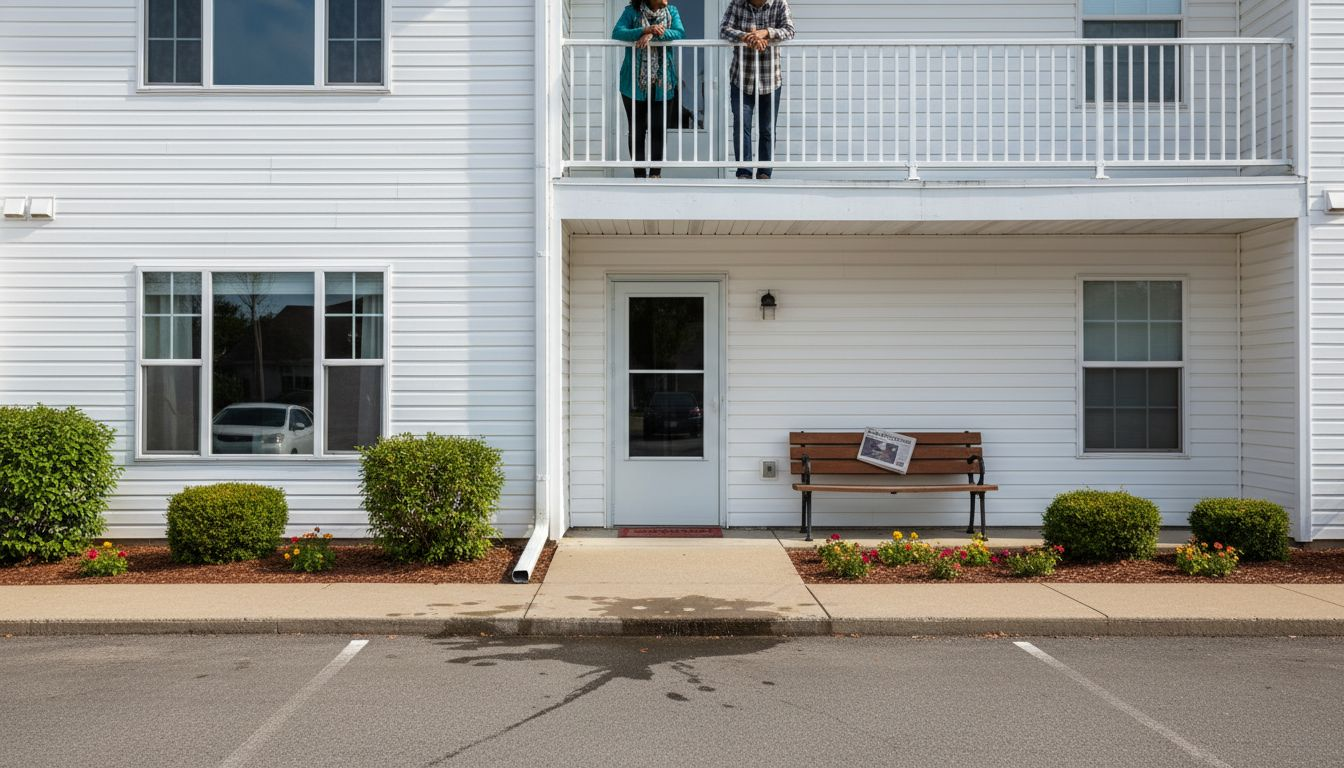
Maintaining clean building exteriors significantly enhances tenant satisfaction and retention by creating a positive impression and fostering a sense of pride and safety among occupants. When tenants feel their building is well-maintained, they develop emotional investment in the property. This transforms them from renters into community members.
The financial impact shows up immediately. Properties with clean, attractive exteriors command higher rents. They also experience lower vacancy rates because tenants renew leases instead of searching elsewhere. One well-maintained property outperforms a neglected one in the same market by thousands of dollars monthly.
Here's how exterior cleanliness affects your business:
- Higher rental rates justify premium pricing when your building looks pristine
- Faster lease renewals reduce costly turnover and marketing expenses
- Lower vacancy periods mean consistent income during transitions
- Reduced maintenance complaints from tenants who feel their environment is cared for
- Improved property appraisals that reflect the property's true condition
Clean environments reduce stress and health risks associated with mold and mildew. When tenants see evidence of preventative maintenance, they worry less about hidden problems. They trust that management handles issues proactively rather than reactively.
Propertyy value increases measurably with regular exterior cleaning. Appraisers note building condition in their assessments. A property showing neglect gets valued lower regardless of its bones. Clean properties suggest responsible management and attract serious buyers or investors.
Tenant retention directly strengthens your long-term financial stability. Replacing a tenant costs between 5 percent and 10 percent of annual rent when accounting for vacancy, marketing, and turnover labor. Keeping existing tenants costs far less than acquiring new ones.
Clean building exteriors lower vacancy rates, improve financial stability, and create the community pride that turns renters into long-term residents.
Urban multi-family properties face extra pressure. Prospective tenants compare your building to competitors daily. A dirty facade signals poor management across the entire operation, even if interior units are spotless. Your exterior competes for attention before tenants ever step inside.
Regular cleaning demonstrates commitment to tenant wellbeing. It shows your property isn't just a transaction—it's an investment in community quality of life. Tenants recognize this and reward you with loyalty and positive referrals.
Pro tip: Schedule exterior cleaning before lease renewal periods to maximize impact on retention decisions—tenants are most likely to renew when they recently experienced improved property conditions and feel valued by management.
Key risks and financial implications for property managers
Neglecting exterior maintenance creates a cascade of problems. What starts as deferred cleaning becomes expensive emergency repairs. The financial damage extends far beyond the repair bills themselves.
Property managers face varied risks including physical property damage, tenant-related issues, and third-party risks from contractors and service providers. Exterior maintenance failures trigger multiple liability exposures simultaneously. A single water intrusion from poor gutter maintenance can damage multiple units, creating tenant disputes and legal claims.
Ignoring exterior condition creates predictable financial losses. Here's where the money goes:
- Structural damage from water infiltration costs tens of thousands to repair
- Tenant turnover from dissatisfaction reduces rental income and increases vacancy periods
- Legal liability when tenant injuries or property damage occur from neglected maintenance
- Insurance claims that increase premiums or result in coverage denial
- Asset devaluation that reduces property worth and refinancing options
Water damage represents the biggest risk. Clogged gutters allow water to seep behind siding. Mold spreads through interior walls. Structural deterioration accelerates. What starts as a cleaning issue becomes a demolition project.
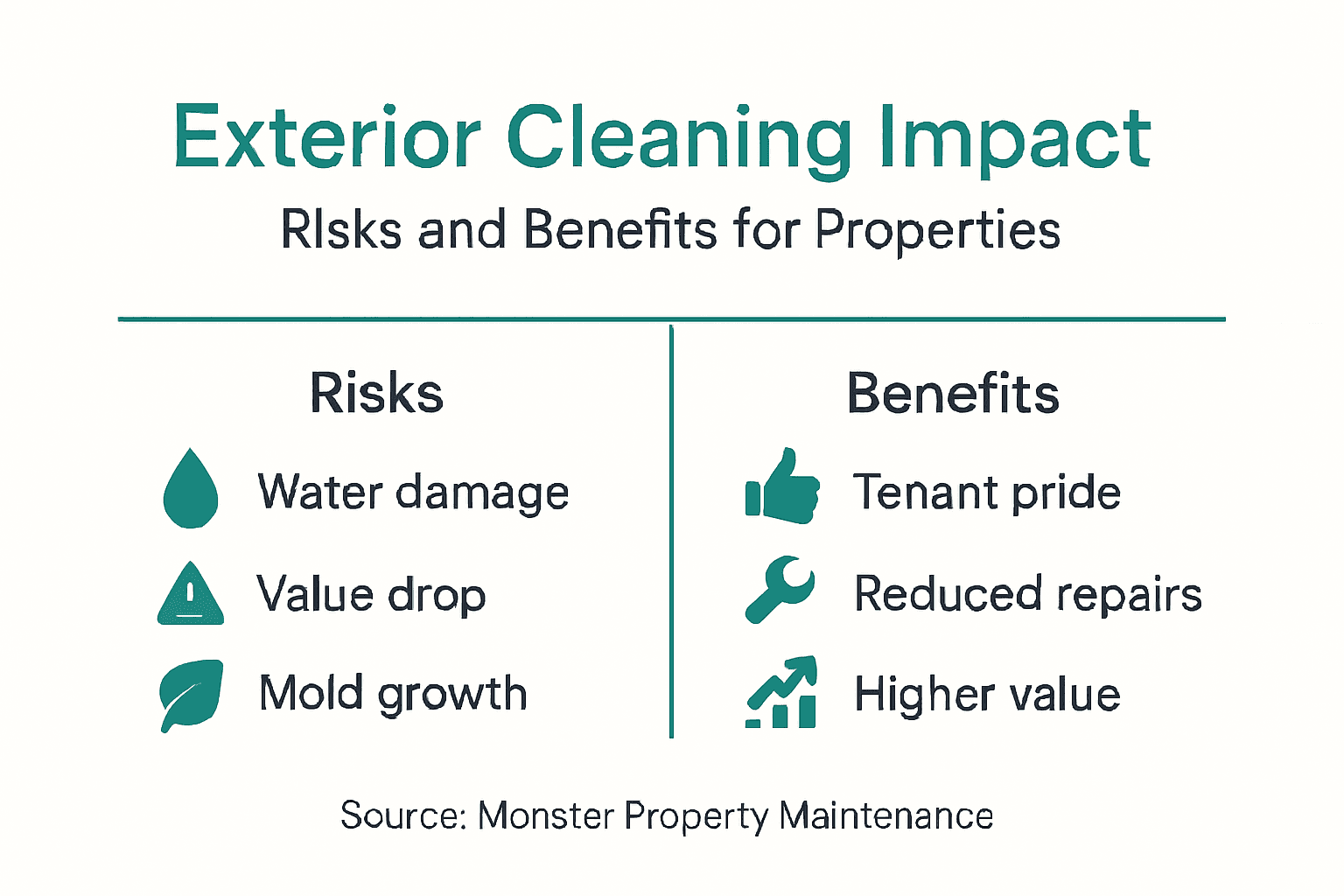
Risk mitigation in property management focuses on proactive maintenance and early identification of potential problems to avoid costly repairs and tenant dissatisfaction. Preventative exterior cleaning costs far less than emergency restoration work. Strategic cleaning intercepts problems before they compound.
Liability exposure increases when tenants suffer harm. Slip and fall incidents on algae-covered walkways create personal injury claims. Tenant illness from mold exposure generates health-related lawsuits. These claims exceed insurance coverage limits and drain reserves rapidly.
Contractor selection directly impacts risk. Unqualified contractors cause damage during cleaning, creating secondary liability. They may apply harsh chemicals inappropriately or use excessive pressure on delicate surfaces. Your insurance may not cover contractor-caused damage, leaving you responsible.
Deferred exterior maintenance costs significantly more than scheduled cleaning—the question is not whether you'll spend money, but how much when emergencies force your hand.
Property value erosion affects financing. Banks reassess properties based on condition. A deteriorated exterior triggers lower appraisals and reduced loan availability. Refinancing becomes expensive or impossible when your property shows neglect.
Tenant satisfaction directly impacts your financial stability. Unhappy tenants break leases, creating vacancy costs. They post negative reviews that deter quality applicants. Replacement tenants cost more to acquire and may be higher-risk.
The following table summarizes financial and operational impacts of regular exterior maintenance:
| Impact Area | Benefit | Business Result |
|---|---|---|
| Property Value | Shows care/maintenance | Higher appraisal values |
| Tenant Retention | Builds trust and pride | Lower turnover costs |
| Risk Mitigation | Avoids emergency repairs | Fewer insurance claims |
| Market Position | Clean curb appeal | Attracts premium tenants |
Pro tip: Create a documented exterior maintenance schedule and budget for quarterly professional cleaning—this demonstrates risk management to insurance carriers, justifies coverage limits, and creates evidence of proactive maintenance if liability claims arise.
Avoiding common mistakes in exterior cleaning projects
One wrong decision during exterior cleaning can damage your property and liability exposure simultaneously. Many property managers learn this the hard way. Understanding what goes wrong helps you avoid costly missteps.
Common exterior cleaning mistakes include skipping essential safety precautions, using incorrect tools or excessive pressure, and cleaning in unsuitable weather conditions. These errors lead to property damage, personal injury, and ineffective cleaning outcomes. A single mistake can wipe out the benefits of routine maintenance and create new problems.
Here are the mistakes that hurt most:
- Excessive pressure on delicate surfaces causes dents, cracks, and water infiltration into building cavities
- Using wrong cleaning solutions for specific materials leads to discoloration or material deterioration
- Cleaning during rain or high winds prevents proper drying and spreads chemicals beyond target areas
- Skipping safety measures exposes workers to slip hazards, chemical exposure, and fall risks
- Neglecting thorough rinsing leaves chemical residue that damages surfaces and harms landscaping
Pressure is the biggest culprit. Many property managers assume "more pressure equals cleaner." This thinking destroys roof shingles, warps wood siding, and forces water into wall cavities. What looks clean immediately becomes problematic weeks later when water damage appears.
Chemical selection matters significantly. Bleach works well on concrete but damages wood and vinyl siding. Some cleaners create slippery surfaces that increase slip and fall liability. Using the wrong chemical for your specific building materials causes permanent staining or deterioration.
Weather timing prevents do-overs. Cleaning during rain washes away chemicals before they work effectively. Wind spreads overspray onto landscaping and neighboring properties. High heat causes chemicals to dry too quickly without proper contact time. Professionals choose specific windows when conditions allow proper chemical dwell time and thorough rinsing.
Safety precautions protect your team and liability profile. Algae and mold create slip hazards that injure workers. Chemical exposure requires proper protective equipment. Fall protection becomes critical for high-access cleaning. Skipping these measures creates workers' compensation claims and personal injury liability.
The costliest cleaning mistake is hiring unqualified contractors to save money—damage from improper cleaning often exceeds the savings and creates liability exposure.
Thorough rinsing separates professional work from amateur attempts. Residual chemicals continue working after cleaning, damaging surfaces. Chemical runoff harms soil and plants around your property. Professional services rinse completely, ensuring safety and optimal results.
Regular maintenance prevents the temptation to rush or cut corners. Properties requiring aggressive cleaning to remove years of buildup force contractors into riskier approaches. Quarterly cleaning prevents this cycle.
Pro tip: Always require proof of insurance and worker certification before hiring cleaning contractors—this single step eliminates most contractor-caused damage and protects you from liability if their work causes injuries or property damage.
Elevate Your Property’s Curb Appeal and Tenant Satisfaction Today
Maintaining a clean exterior is not just about appearance it is about protecting your investment while boosting tenant satisfaction and retention. The article highlights the critical challenges property managers face such as grime buildup mold issues and clogged gutters all of which can lead to costly repairs and unhappy tenants. At Monster Property Partners we understand the importance of tailored exterior cleaning solutions including professional pressure washing and soft washing specifically designed for multi-family units and apartment buildings.
Our dedicated team focuses on reliable operations and clear communication to manage large cleaning projects efficiently ensuring every surface from roofs to concrete walkways receives the right treatment—avoiding common mistakes like excessive pressure or wrong chemical use. Ready to prevent emergency repairs improve your property value and create a positive first impression that encourages lease renewals discover our proven exterior cleaning strategies that align perfectly with the key concepts of preventative maintenance and tenant retention from the article.

Don’t wait for visible problems to harm your property’s condition and tenant loyalty. Take action now with Monster Property Partners and experience the difference of expert exterior cleaning done right. Visit our website and connect with a team dedicated to becoming the nation’s leading partner in exterior cleaning for apartment buildings and multi-family units. Clean exteriors save money increase property value and build tenant trust start your transformation today.
Frequently Asked Questions
What is exterior cleaning in property maintenance?
Exterior cleaning is the systematic process of maintaining a building's outer surfaces, including walls, roofs, gutters, windows, and common areas. It protects investments and enhances tenant satisfaction by maintaining hygiene and aesthetics.
What are the primary methods of exterior cleaning?
The two main methods are pressure washing, which uses high-pressure water for tough grime on durable surfaces, and soft washing, which utilizes low-pressure sprays with biodegradable chemicals for delicate materials.
How does exterior cleaning impact tenant retention?
Regular exterior cleaning creates a positive first impression, fosters tenant pride, reduces complaints, and encourages lease renewals. Clean properties also tend to have higher rental rates and lower vacancy periods.
What are the risks of neglecting exterior maintenance?
Neglecting exterior maintenance can lead to structural damage, increased tenant turnover, legal liabilities from injuries, and asset devaluation. It can create costly repair needs, as water damage and mold growth can escalate quickly.
Recommended
- Monster Property Partners | Exterior Cleaning Orlando
- Services | Multifamily Exterior Cleaning | Monster Property Partners
- Portfolio Partnership | Monster Property Partners
- Real Estate Cleaning: Top 3 Ways to Maximize Value
- Window Cleaning Basics: Enhancing Rental Property Appeal
- Commercial Property Cleaning – Protecting Value and Tenancy