
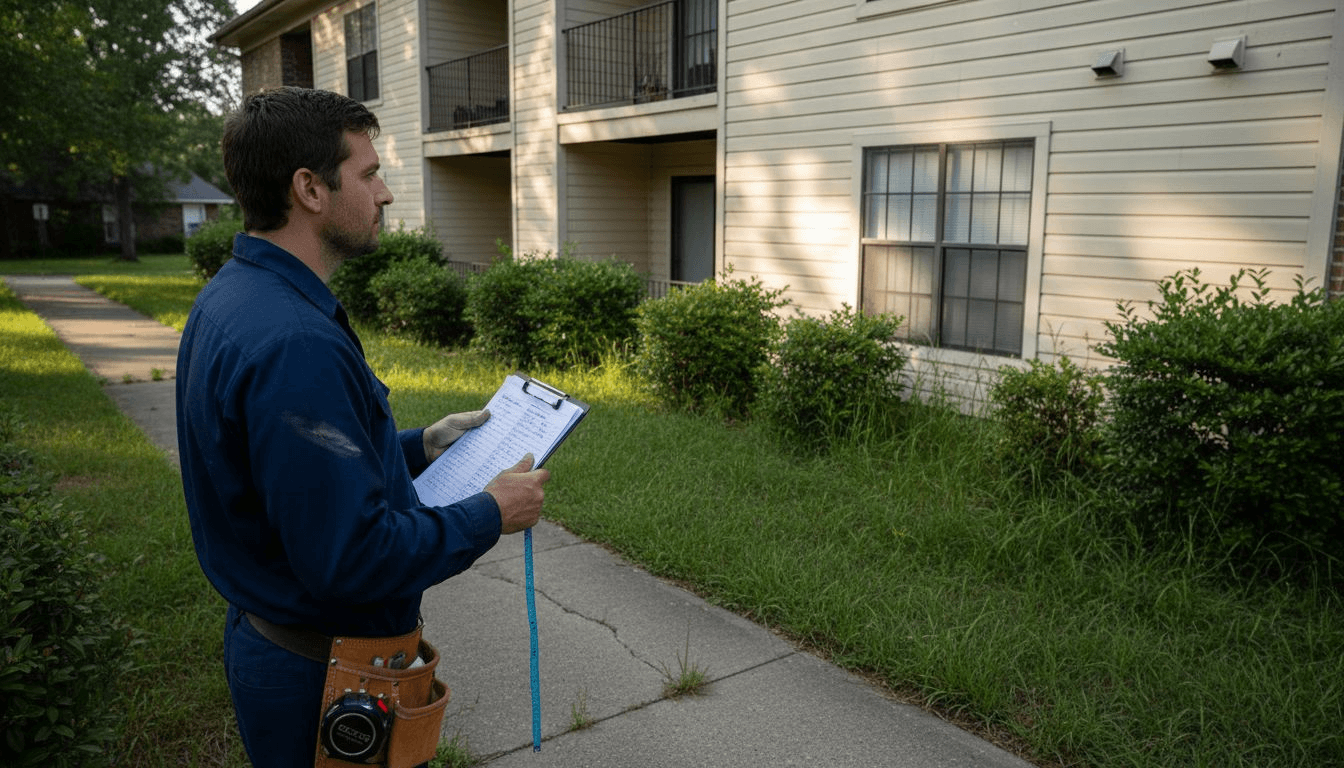
Delayed maintenance increases building damage by over 25%, directly causing aesthetic decline and safety hazards that drive up repair costs and tenant turnover. Property managers who understand this connection can prevent structural deterioration while enhancing tenant satisfaction. This article reveals how strategic exterior cleaning services and proactive upkeep reduce emergency repairs, extend building life, and protect property value. You'll discover actionable frameworks, debunk costly misconceptions, and learn how professional partnerships maximize maintenance effectiveness across apartment complexes.
Table of Contents
- Understanding Exterior Maintenance And Its Core Challenges
- Common Misconceptions That Undermine Effective Exterior Maintenance
- Framework And Best Practices For Effective Exterior Maintenance Planning
- How Exterior Maintenance Enhances Tenant Safety, Satisfaction, And Property Value
- Leveraging Professional Cleaning Services To Maximize Exterior Maintenance Benefits
- Conclusion And Practical Next Steps For Apartment Maintenance Managers
- Expert Exterior Cleaning Solutions Tailored For Apartment Complexes
- Frequently Asked Questions About Exterior Maintenance
Key Takeaways
| Point | Details |
|---|---|
| Emergency Repair Reduction | Regular exterior maintenance reduces emergency repairs by up to 35% through proactive scheduling. |
| Safety Impact | Poor maintenance leads to about 20% of tenant injury claims from slip hazards caused by algae and debris. |
| Cost of Neglect | Neglecting routine cleaning and repairs increases costs by up to 40% over a decade. |
| Framework Essentials | Structured plans include assessment, cleaning every 6 to 12 months, prompt repairs, and ongoing monitoring. |
| Professional Value | Expert pressure washing removes contaminants that DIY methods miss, extending surface lifespan significantly. |
Understanding Exterior Maintenance and Its Core Challenges
Exterior maintenance encompasses cleaning, repairs, and upkeep of building surfaces including siding, paint, windows, roofing edges, walkways, and lighting fixtures. These tasks protect structural integrity while maintaining the visual appeal that attracts and retains tenants. Environmental pollutants like vehicle emissions, industrial residue, and airborne particulates settle on surfaces and accelerate material breakdown. Moisture from rain, humidity, and irrigation creates ideal conditions for biological growth such as algae, moss, and mildew that degrade paint and siding.
Neglected exterior maintenance accelerates building envelope deterioration, leading to costly structural repairs within 5 to 10 years. When minor issues like small cracks or peeling paint go unaddressed, water infiltrates deeper layers causing rot, mold, and foundation damage. Property managers face a compounding problem where initial savings from deferred maintenance turn into repair bills that exceed 40% more than preventive care would have cost.
Common deterioration triggers include:
- UV radiation breaking down paint and sealant compounds over time
- Freeze thaw cycles expanding trapped moisture and cracking concrete and masonry
- Biological organisms retaining moisture against surfaces and accelerating decay
- Pollutants creating acidic conditions that erode protective coatings
Understanding these root causes helps property managers recognize why routine assessments and timely interventions are essential. The financial impact of reactive maintenance far exceeds the investment in regular exterior maintenance partnerships that prevent damage before it escalates. Establishing baseline conditions through initial assessments allows you to track deterioration patterns and adjust maintenance frequency based on your specific climate and building materials. Addressing what causes exterior siding damage early protects your entire building envelope.
Common Misconceptions That Undermine Effective Exterior Maintenance
Property managers often operate under false assumptions that lead to costly neglect and avoidable safety hazards. Correcting these misconceptions enables better resource allocation and protects both your budget and tenant wellbeing.
Misconception 1: Exterior maintenance is purely cosmetic. While curb appeal matters, maintenance primarily ensures safety and regulatory compliance. Failure to maintain exteriors can lead to code violations in 30% of inspections, resulting in fines and mandatory emergency repairs. Accumulated algae creates slip hazards that contribute to tenant injuries and liability claims.
Misconception 2: Skipping maintenance during off seasons saves money. Delaying cleaning and repairs between seasons allows contaminants to settle deeper into porous materials. In colder climates, moisture trapped in cracks expands during freeze thaw cycles, causing exponentially more damage than would occur with timely intervention. Winter moisture penetration can triple repair costs compared to preventive fall cleaning.
Misconception 3: Pressure washing only improves appearance. Professional cleaning removes moisture trapping organisms and pollutants that actively degrade building materials. Biological growth like algae holds water against surfaces, accelerating rot and material breakdown. Regular professional exterior cleaning prevents this moisture buildup and extends surface lifespan by years.
Misconception 4: In house maintenance staff can handle all exterior work. While routine inspections belong in house, specialized cleaning requires commercial grade equipment and expertise to avoid surface damage. High pressure application without proper training can strip paint, damage siding, and force water behind protective barriers.
Pro Tip: Schedule exterior assessments in early spring and late fall to identify damage from seasonal extremes before deterioration accelerates. These twice yearly checks catch issues while repairs remain minor and affordable.
Recognizing these myths allows you to prioritize maintenance activities that deliver the highest return on investment while protecting tenant safety and property value.
Framework and Best Practices for Effective Exterior Maintenance Planning
A structured maintenance approach transforms reactive crisis management into predictable, budget friendly operations. This cyclical framework optimizes resource allocation while maximizing building lifespan and tenant satisfaction.
-
Conduct comprehensive initial assessments to establish baseline conditions. Document current state of all exterior surfaces, fixtures, and drainage systems through photos and detailed notes. Identify existing damage, high risk areas prone to moisture accumulation, and surfaces requiring immediate attention versus scheduled maintenance.
-
Schedule routine cleaning at optimal intervals. Pressure washing every 6 to 12 months removes accumulated pollutants and biological growth before they cause material degradation. Adjust frequency based on local climate, building orientation, and surrounding vegetation. Coastal properties and high humidity areas require more frequent cleaning than arid climates.
-
Perform preventative repairs promptly when assessments reveal issues. Address minor cracks, loose caulking, and early paint failure immediately to prevent water infiltration. Small repairs completed during scheduled maintenance cost 60 to 80% less than emergency fixes after structural damage occurs.
-
Monitor maintenance effectiveness through regular inspections. Compare current conditions to baseline documentation to track deterioration rates and identify patterns. Adjust cleaning frequency and repair priorities based on observed outcomes and tenant feedback regarding safety concerns.
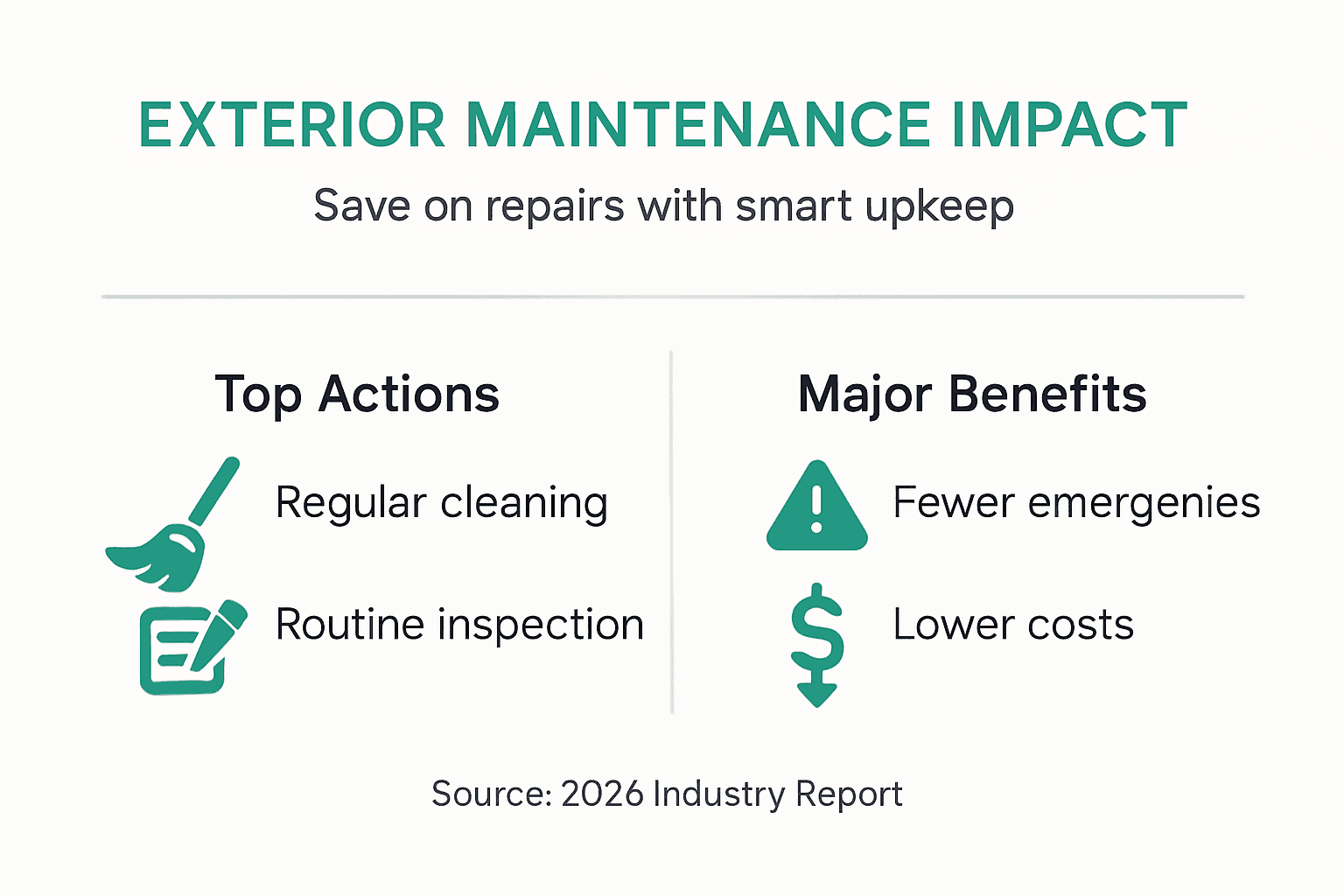
A structured exterior maintenance plan reduces emergency repair costs by up to 35%, optimizing property management budgets while extending asset lifespan. The following table outlines recommended maintenance frequencies:
| Task | Frequency | Primary Benefit |
|---|---|---|
| Visual Inspection | Monthly | Early damage detection |
| Pressure Washing | 6 to 12 months | Contaminant removal |
| Gutter Cleaning | Quarterly | Water damage prevention |
| Sealant Inspection | Annually | Moisture barrier integrity |
| Paint Touch Ups | As needed | Surface protection |
Pro Tip: Align pressure washing with lease renewal periods to maximize curb appeal when prospective tenants tour properties. Clean exteriors during peak leasing seasons create strong first impressions that improve occupancy rates.
This framework balances preventive care with budget constraints by focusing resources on high impact activities. Partnering with multifamily exterior cleaning services ensures professional execution while freeing your staff for other property management priorities. The scheduled property maintenance benefits compound over time as consistent care prevents the accelerating deterioration that plagues reactive approaches.
How Exterior Maintenance Enhances Tenant Safety, Satisfaction, and Property Value
Proactive exterior upkeep directly impacts three critical property management outcomes: reduced liability exposure, improved tenant retention, and sustained asset value. Understanding these connections helps justify maintenance budgets and prioritize resource allocation.
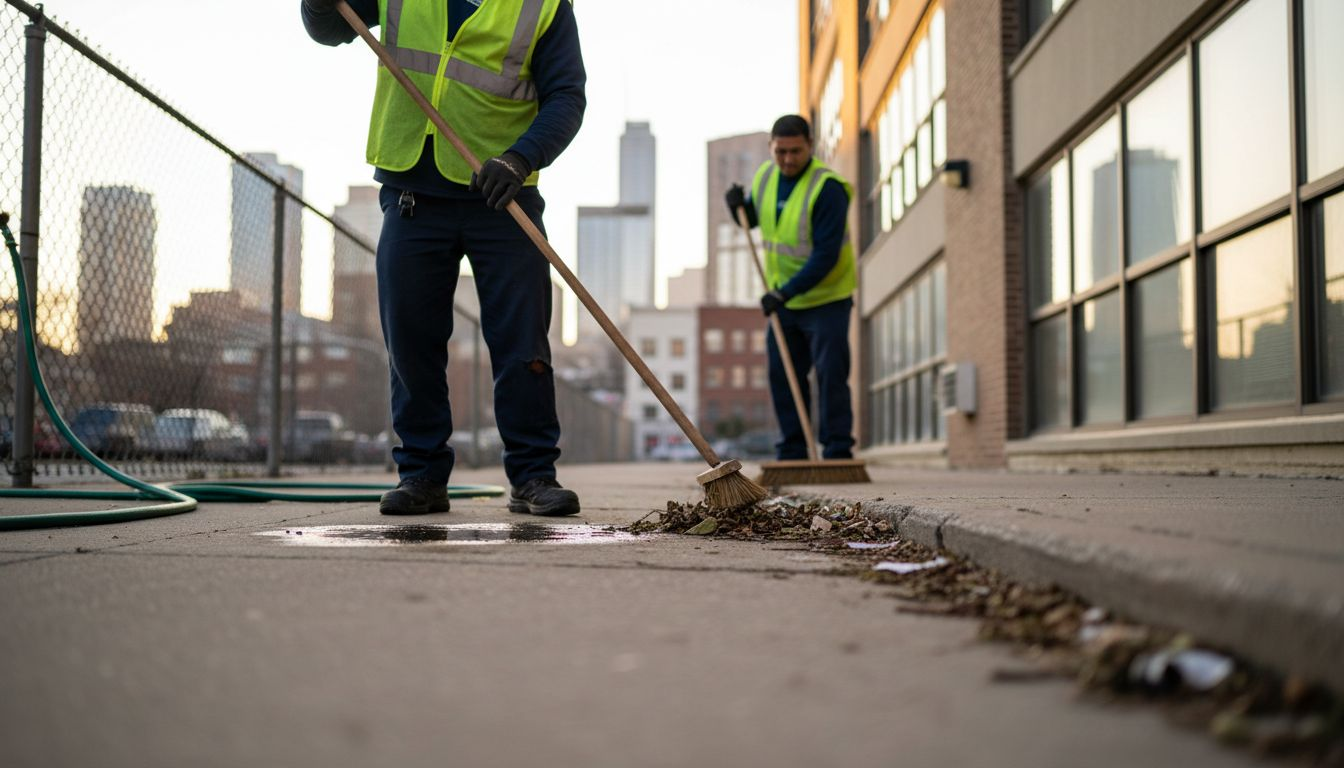
Poorly maintained exteriors increase slip and fall hazards contributing to 20% of tenant injury claims in apartment complexes. Algae and moss create slippery surfaces on walkways, stairs, and parking areas, especially dangerous after rain or morning dew. Proper lighting maintenance reduces trip hazards and enhances security by eliminating dark areas where accidents and crimes occur more frequently. Regular cleaning removes these biological hazards before they cause injuries that result in costly liability claims and increased insurance premiums.
Well maintained exteriors significantly improve curb appeal, directly influencing tenant satisfaction and lease renewal decisions. Properties with clean, attractive facades command higher rents and experience lower vacancy rates. Prospective tenants form immediate impressions based on exterior condition, often deciding whether to tour units within seconds of arrival. Current tenants feel pride in well kept communities, leading to better care of individual units and longer tenancy periods.
Maintained buildings sustain or increase property values by preventing the accelerated deterioration that requires major capital investments. Regular care protects your asset from the compounding damage that transforms minor issues into structural problems. The building envelope maintenance study demonstrates how consistent upkeep extends building lifespan and preserves market competitiveness.
"Property managers who implement structured maintenance programs report 25 to 30% higher tenant satisfaction scores and measurably lower turnover rates compared to reactive maintenance approaches."
The following table contrasts reactive versus proactive maintenance impacts:
| Factor | Reactive Maintenance | Proactive Maintenance |
|---|---|---|
| Annual Costs | Higher due to emergencies | Lower through prevention |
| Safety Incidents | 20% linked to neglect | Minimal with regular cleaning |
| Tenant Satisfaction | Declines with visible deterioration | Increases with consistent upkeep |
| Property Value | Depreciates faster | Maintains or appreciates |
| Repair Frequency | Frequent major repairs | Scheduled minor fixes |
Key safety and value benefits include:
- Elimination of slip hazards through regular surface cleaning
- Enhanced security via functional exterior lighting and clear sightlines
- Improved tenant perception leading to longer lease terms
- Protection against accelerated material degradation
- Reduced emergency repair frequency and associated costs
Partnering with your property management portfolio maintenance team ensures consistent execution of these preventive strategies, maximizing return on your maintenance investment while protecting tenant wellbeing.
Leveraging Professional Cleaning Services to Maximize Exterior Maintenance Benefits
Specialized commercial cleaning services form a critical component of comprehensive exterior maintenance, delivering results that in house teams cannot match. Professional pressure washing removes contaminants at the molecular level, preventing the moisture retention and material degradation that lead to costly repairs.
Pressure washing effectively eliminates dirt, vehicle emissions, industrial pollutants, algae, moss, and mildew that accelerate surface breakdown. These organisms and particles create acidic conditions and trap moisture against building materials, causing rot, corrosion, and structural damage. Commercial grade equipment applies precise pressure levels that clean thoroughly without damaging delicate surfaces like painted siding or decorative stonework.
Professional cleaning integrates seamlessly with your scheduled maintenance framework for optimal results. Coordinate pressure washing with repair schedules so surfaces are clean when contractors apply new paint or sealants. This timing ensures proper adhesion and extends the lifespan of protective coatings. Regular professional service reduces the labor burden on your maintenance staff, allowing them to focus on tenant requests and emergency responses.
Benefits of expert exterior cleaning include:
- Complete removal of biological growth that DIY methods leave behind
- Protection of building materials through appropriate pressure application
- Time savings compared to in house cleaning attempts
- Professional assessment of surface conditions during service visits
- Consistent results across large multifamily properties
Using professional exterior cleaning services ensures thorough surface care that supports both aesthetic appeal and structural health. Experts understand which cleaning solutions work best for specific materials without causing damage or voiding manufacturer warranties. They recognize early signs of deterioration that untrained observers miss, allowing you to address problems before they escalate.
Pro Tip: Request before and after documentation from your cleaning service provider to track maintenance effectiveness over time. These records help justify budget allocations and demonstrate property care to owners and investors.
Professional partnerships deliver specialized expertise and equipment that make comprehensive exterior maintenance practical and affordable. The investment in expert cleaning prevents the exponentially higher costs of structural repairs while maintaining the property appearance that attracts quality tenants.
Conclusion and Practical Next Steps for Apartment Maintenance Managers
Regular exterior maintenance protects three critical assets: tenant safety, property aesthetics, and long term financial value. The evidence clearly demonstrates that proactive care reduces emergency repair costs by up to 35% while extending building lifespan and improving tenant satisfaction. Property managers who implement structured maintenance programs gain competitive advantages through lower operating costs, reduced liability exposure, and higher occupancy rates.
Adopt the cyclical framework outlined in this article: conduct detailed assessments to establish baselines, schedule cleaning every 6 to 12 months, perform preventive repairs promptly, and monitor effectiveness through regular inspections. This systematic approach transforms maintenance from reactive crisis management into predictable, budget friendly operations that protect your investment.
Debunk the misconceptions that cause costly neglect. Recognize that maintenance serves safety and compliance functions beyond cosmetic appeal. Understand that seasonal delays accelerate damage rather than saving money. Acknowledge that professional cleaning prevents material degradation while in house efforts address only surface appearance.
Leverage partner with professionals who bring specialized equipment, expertise, and efficiency to your maintenance program. Expert exterior cleaning services remove contaminants that cause structural damage while freeing your staff to focus on tenant relations and emergency response.
Essential action steps:
- Schedule comprehensive exterior assessments within the next 30 days
- Establish baseline documentation through photos and detailed condition notes
- Create annual maintenance calendars with specific cleaning and repair milestones
- Budget for professional pressure washing at optimal 6 to 12 month intervals
- Review tenant injury reports to identify maintenance related safety patterns
Start implementing routine maintenance immediately to reduce emergency costs, boost tenant retention, and protect property value. The longer you delay, the more deterioration compounds and repair costs escalate.
Expert Exterior Cleaning Solutions Tailored for Apartment Complexes
Property managers who apply the strategies outlined in this article gain measurable improvements in safety outcomes, tenant satisfaction, and operational costs. Monster Property Partners specializes in commercial pressure washing services designed specifically for apartment buildings and multifamily units. Our professional cleaning removes pollutants and biological growth that accelerate material deterioration, extending your building's lifespan while enhancing curb appeal.
Partnering with exterior cleaning experts reduces unexpected repair costs by maintaining exterior integrity year round. We deliver reliable operations and effective communication throughout large scale projects, ensuring minimal disruption to your tenants. Our team understands the unique challenges apartment complexes face and tailors services to your property's specific needs and maintenance schedule. Explore our multifamily exterior cleaning services to keep your apartments safe and attractive. Discover comprehensive exterior cleaning solutions that integrate seamlessly with your maintenance framework. Ready to implement proactive maintenance that protects your investment? Partner with Monster Property Partners to become part of a growing network of properties benefiting from expert exterior care.
Frequently Asked Questions about Exterior Maintenance
What is the ideal frequency for exterior cleaning in varying climates?
Most apartment complexes benefit from pressure washing every 6 to 12 months, but climate significantly impacts optimal frequency. High humidity regions, coastal properties, and areas with heavy vegetation require cleaning every 6 months due to accelerated biological growth. Arid climates with minimal rainfall may extend intervals to 12 months while still preventing pollutant accumulation.
How does exterior maintenance directly reduce tenant injury risks?
Regular cleaning eliminates slip hazards like algae and moss that cause falls on walkways and stairs, addressing up to 20% of tenant injury claims. Proper lighting maintenance reduces trip hazards and improves visibility in parking areas and common spaces. Prompt repair of loose railings, cracked pavement, and damaged steps prevents accidents before they occur.
Can small scale DIY maintenance replace professional cleaning?
In house staff can handle routine inspections and minor touch ups, but specialized cleaning requires commercial equipment and expertise. DIY pressure washing often applies incorrect pressure levels that damage surfaces or fail to remove deep seated contaminants. Professional services deliver thorough cleaning while avoiding the surface damage and incomplete results common with amateur attempts.
What are the signs that exterior repair is urgently needed?
Visible cracks in siding or masonry, peeling paint exposing bare substrate, water stains indicating moisture infiltration, and loose or missing caulking around windows and doors all signal urgent repair needs. Biological growth covering more than 10% of surface area, sagging gutters, and standing water near foundations require immediate professional assessment to prevent structural damage.
How to select a reliable exterior cleaning service provider?
Look for providers with specific multifamily property experience, commercial grade equipment, and comprehensive liability insurance. Request references from similar sized apartment complexes and verify their understanding of different building materials and appropriate cleaning methods. Reliable partners provide detailed service agreements, before and after documentation, and coordinate schedules to minimize tenant disruption.