
TL;DR:
- Curb appeal significantly influences tenant retention, lease renewal rates, and property value growth in multifamily investments. Maintaining attractive exteriors through regular landscaping, lighting, cleaning, and repairs yields measurable financial benefits and competitive advantages. Strategic curb appeal management should be treated as a vital operational element to maximize ROI and asset performance.
The difference between a property with 92% lease renewals and one stuck at 58% often comes down to what tenants see before they ever open their front door. Curb appeal renewal rates show this gap is not an accident. It is the direct result of how intentionally a property owner manages the exterior experience. For multi-family investors, that gap represents thousands of dollars in lost revenue, higher turnover costs, and weaker asset performance. This article breaks down exactly why curb appeal drives retention, what the numbers say about ROI, and the specific strategies that produce lasting results.
Table of Contents
- Why curb appeal drives tenant retention
- The economics of curb appeal: renewal rates and ROI
- Essential curb appeal maintenance techniques
- When and where curb appeal matters most
- Our take: curb appeal is the unspoken lever in tenant retention
- Boost your property's tenant retention with professional curb appeal solutions
- Frequently asked questions
Key Takeaways
| Point | Details |
|---|---|
| Lease renewal multiplier | Excellent curb appeal can boost renewal rates up to 92 percent, reducing vacancy and turnover. |
| High ROI for maintenance | Investing $1,000 per unit annually yields rent premiums, faster leasing, and asset value growth. |
| Maintenance protects value | Consistent exterior upkeep lowers long-term repair costs and protects property investments. |
| Competitive market edge | Curb appeal has greater impact in slow or competitive markets, especially for Class C properties. |
Why curb appeal drives tenant retention
Tenant retention is not just about rent price or unit features. It is about how residents feel every single day when they come home. Curb appeal is the first and last impression your tenants experience, and that emotional signal accumulates over time into a decision to renew or move on.
Curb appeal for multifamily properties works because it builds resident pride. When the exterior of a building is clean, well-lit, and attractive, tenants feel comfortable inviting guests over. They feel respected. They associate the appearance of the building with the quality of management and the community they belong to. That psychological connection is powerful and often underestimated.
On the flip side, peeling paint, overgrown landscaping, broken lighting, and dirty common areas send a different signal entirely. They tell tenants that management does not care, which naturally raises the question: why should they?
"Curb appeal is not a cosmetic investment. It is a signal to every tenant, prospect, and neighbor about how seriously you take the property and the people who live there."
Properties with strong curb appeal benefit from a clear retention advantage. Here is what research consistently shows about boosting tenant retention through exterior upkeep:
- Residents in well-maintained properties report higher satisfaction and are more likely to renew leases
- Strong exterior presentation drives 34% higher renewal rates compared to poorly maintained properties
- Happy tenants refer friends and family, reducing vacancy periods organically
- Residents take better care of units in buildings they are proud to live in
- Deferred exterior maintenance signals neglect and accelerates tenant turnover
This is not a soft benefit. It is a measurable operational advantage that shows up directly in your renewal numbers and bottom line.
The economics of curb appeal: renewal rates and ROI
Once you understand the psychological mechanism, the financial case becomes very clear. Let's look at the hard numbers.
Renewal and rent data show that excellent curb appeal correlates with a 92% renewal rate, while poor curb appeal produces just 58%. That 34-point gap is enormous when you consider the cost of turning a unit. Typical turnover costs for a multi-family unit, including cleaning, repairs, lost rent during vacancy, leasing fees, and administrative time, can run anywhere from $1,500 to $5,000 or more per unit.
Beyond retention, curb appeal affects rental pricing power. Properties with strong exterior presentation command an average rent premium of $127 per month over comparable units with poor appeal. Units with poor curb appeal, by contrast, often lease at a discount of $34 per month or more below market. That is a combined swing of over $160 per month per unit. For a 50-unit property, that difference compounds into significant annual revenue.
Leasing speed is another dimension. Well-maintained properties lease in an average of 18 days versus 52 days for poorly maintained ones. Faster leasing means less vacancy loss and more predictable cash flow. When you scale that across a portfolio, the economics become impossible to ignore.
Here is a side-by-side comparison:
| Metric | Excellent curb appeal | Poor curb appeal |
|---|---|---|
| Renewal rate | 92% | 58% |
| Average rent premium | +$127/month | -$34/month |
| Average days to lease | 18 days | 52 days |
| Estimated property value uplift | +7% to +14% | Baseline or loss |
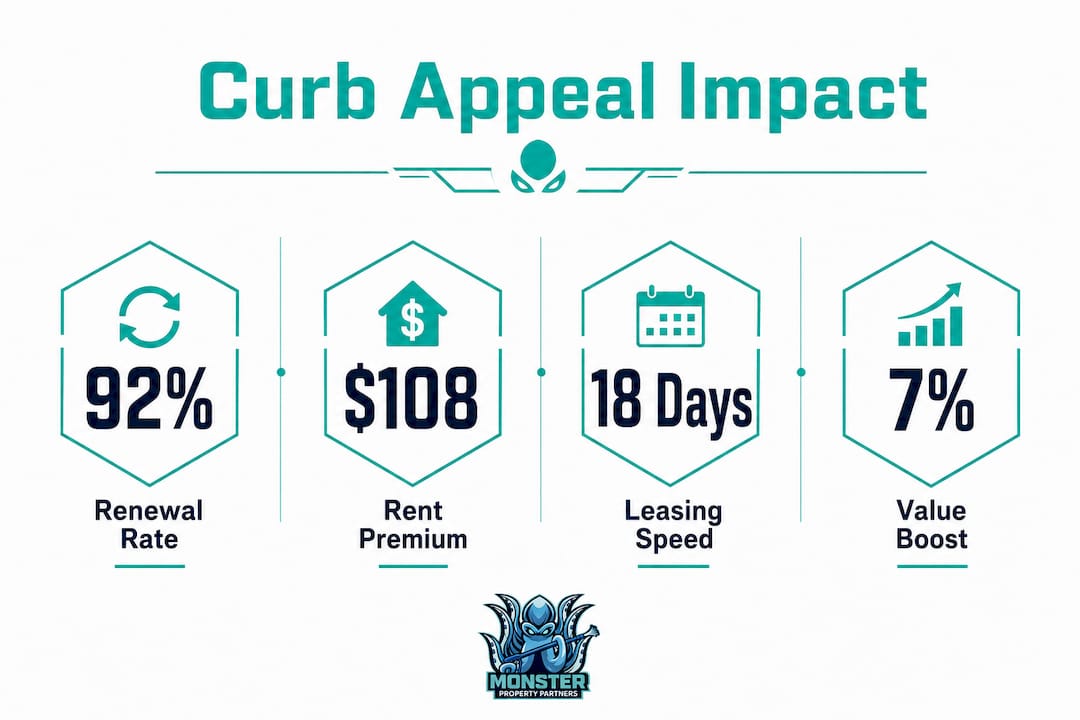
Strong curb appeal increases property values by an average of 7%, according to research from the University of Texas at Arlington. In slower or more competitive rental markets, that premium climbs to 14%. For a property valued at $3 million, a 7% lift is $210,000 in added asset value. That is not a cosmetic outcome. It is a direct investment return.
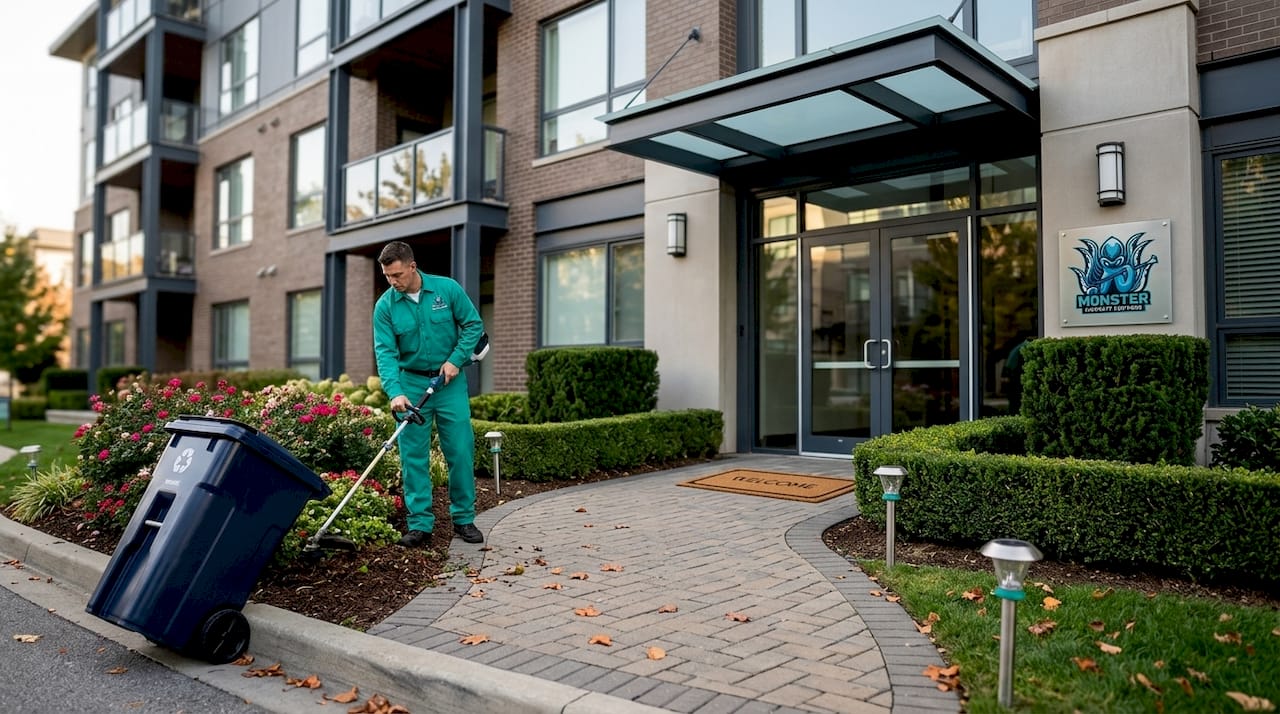
Pro Tip: Budget approximately $1,000 per unit annually for curb appeal maintenance and upgrades. Based on renewal rate improvements and rent premiums alone, most multi-family operators see this investment pay back several times over within a single lease cycle.
Investors focused on boosting property value and stabilizing occupancy should treat curb appeal as a line-item capital strategy, not a discretionary expense. The exterior cleaning benefits extend beyond aesthetics into measurable financial performance at every level of the asset.
Essential curb appeal maintenance techniques
Understanding the ROI is only half the equation. The next step is knowing exactly what maintenance practices create and sustain strong curb appeal in multi-family settings.
Prioritizing these core maintenance tasks consistently produces results across property types and markets:
- Landscaping maintenance: Mow regularly, trim hedges, pull weeds, plant seasonal color, and maintain clean bed edges. Landscaping is often the first thing a prospect or returning tenant notices.
- Exterior pressure washing: Clean building facades, walkways, driveways, parking areas, dumpster pads, and common area concrete at least twice per year. Dirt, mold, and grime build up faster than most owners realize.
- Lighting upgrades and maintenance: Replace burned-out bulbs immediately. Consider upgrading to LED lighting in parking lots, building entries, and walkways. Good lighting improves safety perception and nighttime appeal dramatically.
- Signage and wayfinding: Property name signs, parking signs, and building number markers should be clean, properly lit, and professionally maintained. Faded or broken signage signals neglect.
- Painting and touch-ups: Fresh paint on trim, railings, doors, and facade surfaces communicates active management. Even small touch-ups make a measurable visual difference.
- Trash and common area cleanliness: Dumpster enclosures should be clean, closed, and odor-controlled. Litter in parking lots and entryways needs to be addressed daily, not weekly.
Consistent exterior maintenance reduces deferred repair costs and prevents the invisible leasing losses that come from tenants deciding not to renew or prospects choosing a competitor property. Deferred maintenance compounds. A minor crack in a walkway becomes a liability issue. Faded paint becomes a perception of decay. Acting early and consistently is always cheaper.
Here is a general budget framework for multi-family curb appeal maintenance:
| Maintenance level | Annual cost per unit | What it includes |
|---|---|---|
| Basic upkeep | $200 to $500 | Landscaping, lighting, litter control |
| Mid-level program | $1,000 to $2,000 | Above plus pressure washing, painting, signage |
| Full-service program | $2,000 to $3,000+ | Above plus seasonal upgrades, full exterior refresh |
Pro Tip: Schedule pressure washing in early spring and again in late summer or early fall. Those timing windows align with peak leasing season and renewal decision periods, when first impressions matter most to both prospects and renewing tenants.
For more on building a sustainable approach, our exterior maintenance tips and maintenance checklist guide offer practical frameworks tailored to multi-family operations. You can also review care tips for curb appeal and the value of regular exterior cleaning as part of a year-round strategy.
When and where curb appeal matters most
Not every market and not every property class benefits equally from curb appeal investment. Knowing where curb appeal has the highest leverage helps you target your budget for maximum return.
Slow and competitive markets: In markets where vacancy rates are higher or supply is tight, curb appeal functions as a powerful differentiator. Research on curb appeal value premiums shows the property value uplift can reach 14% in competitive or slower rental markets, compared to the 7% national average. When prospects have more choices, your building's exterior becomes a decision-making filter.
Class C properties: This is where curb appeal produces some of its most dramatic retention gains. Class C tenants are often cost-conscious and have fewer options, but they still respond powerfully to exterior quality and pride of place. When affordability is combined with a well-maintained exterior, retention improves significantly.
High-turnover building types: Garden-style apartments, older walk-up buildings, and properties near transit corridors tend to see higher baseline turnover. In these settings, curb appeal investments directly offset the churn rate by creating a sense of community and quality that makes tenants think twice before leaving.
Here is what the broader industry data shows about where you stand:
- 2024 multifamily renewal rates nationally averaged 59%, according to the National Apartment Association
- Class C properties outperformed at 65% renewal rates, partly due to curb appeal and maintenance strategies
- Properties with active exterior maintenance programs consistently outperform passive operators in the same submarket
Key conditions where curb appeal ROI is highest:
- Markets with 5%+ vacancy rates where differentiation drives leasing decisions
- Older properties where exterior age signals can be offset by active maintenance
- Value-add acquisitions where first-year curb appeal upgrades accelerate lease-up
- Properties near competing newer stock where exterior quality creates parity perception
If cleanliness drives tenant retention in your property, it is likely because your tenants are making daily comparisons between their current home and what else is available nearby. Curb appeal is how you win that comparison quietly and consistently.
Our take: curb appeal is the unspoken lever in tenant retention
Most asset management strategies focus on unit renovations, amenity upgrades, and rent pricing models. These are all legitimate tools. But curb appeal rarely gets treated with the same rigor, even though it consistently produces measurable retention and value outcomes.
Industry consensus on curb appeal is clear: poor exterior maintenance leads to higher vacancies and faster turnover, while improvements yield measurable retention gains. Yet we still see operators treat exterior cleaning and landscaping as reactive line items rather than strategic investments. That gap between what the data says and how owners actually budget is where the real opportunity lives.
Here is what most guides miss: curb appeal is not just a marketing asset for attracting new tenants. It is a daily operational touchpoint for the tenants you already have. Every time a resident pulls into the parking lot, walks through the entry, or passes the landscaped beds, they are either confirming or reconsidering their decision to stay. That silent evaluation happens hundreds of times before a lease renewal conversation even begins.
Missed maintenance does not just fail to impress. It actively erodes resident confidence. A tenant who notices that a broken entry light stayed dark for two weeks is not just annoyed. They are recalibrating their expectations for how the property will be managed when something bigger goes wrong inside their unit. That recalibration often ends in non-renewal.
We see this play out repeatedly with exterior cleanliness and property maintenance. The operators who treat exterior cleaning and maintenance as a systematic program, not a reaction to complaints, consistently see better renewal numbers, fewer vacancy days, and stronger asset positioning when they go to sell or refinance. That is the compounding advantage most owners are leaving on the table.
Boost your property's tenant retention with professional curb appeal solutions
Understanding these strategies is valuable. Executing them consistently at scale is where most property teams hit a wall. Managing landscaping vendors, scheduling pressure washing across multiple buildings, coordinating painting cycles, and keeping common areas spotless requires the kind of systematic approach that benefits from professional support.
At Monster Property Partners, we specialize in exterior cleaning programs built specifically for multi-family properties. Our teams handle large-scale projects with the consistency and communication that multi-site operators need. From routine pressure washing to full exterior refresh programs, we help property owners turn curb appeal from an intention into a measurable retention strategy. Explore our multifamily exterior cleaning services or learn about our common area cleaning for apartments to see how a professional program can support your retention goals and protect your asset value.
Frequently asked questions
What are the most cost-effective curb appeal upgrades for tenant retention?
Landscaping, lighting, pressure washing, and clean signage consistently deliver the strongest ROI for tenant retention with relatively minimal investment per unit. These improvements are visible daily to every resident, which maximizes their retention impact.
How does curb appeal affect renewal rates in competitive rental markets?
In competitive or slow rental markets, strong curb appeal drives up to a 14% property value premium and substantially higher renewal rates compared to poorly maintained properties, because differentiation matters more when tenants have more choices.
What annual budget should owners allocate for curb appeal maintenance?
Investing $1,000 per unit annually is the benchmark used by high-performing operators, covering mid-level programs that include pressure washing, painting, landscaping, and lighting with proven retention and leasing ROI.
Are there indirect benefits to improving curb appeal besides retention?
Yes, curb appeal increases property values by an average of 7%, and it also supports higher achievable rents, faster leasing velocity, stronger investor appeal, and more organic tenant referrals that reduce marketing costs over time.