
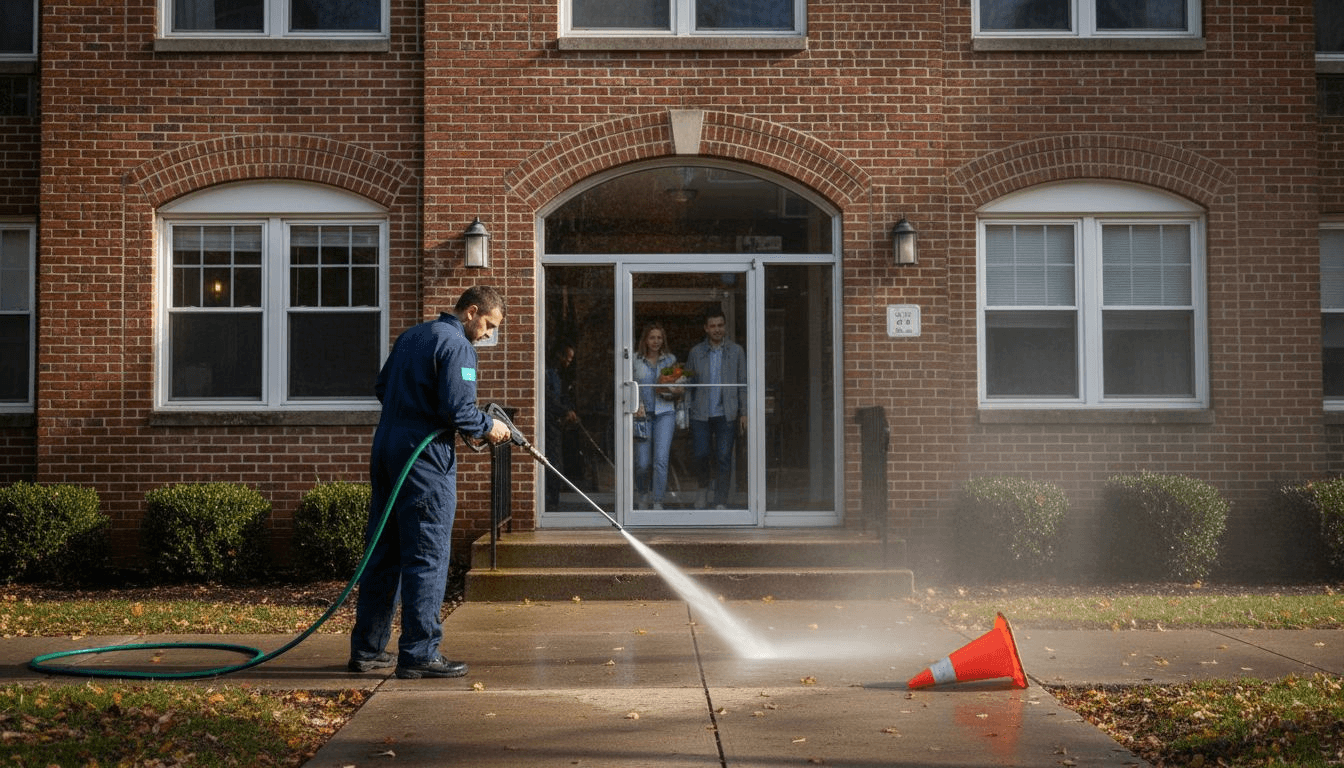
Managing a multi-family property in a busy city means tackling constant cleaning challenges that single-family homeowners rarely face. The impact of exterior cleanliness goes far beyond looks—it directly affects tenant satisfaction and property value. With multiple residents sharing common spaces every day, only professional-grade pressure washing keeps building facades, sidewalks, and entryways truly welcoming. Discover how routine exterior cleaning transforms tenant retention and protects your investment while meeting critical compliance requirements.
Table of Contents
- Exterior Cleaning For Multi-Family Units Explained
- What Makes Multi-Family Exterior Cleaning Different
- The Components Of A Complete Exterior Cleaning Program
- Teamwork Across Roles And Responsibilities
- Why Consistency Matters More Than You Think
- Curb Appeal And Tenant Satisfaction Factors
- The Direct Connection Between Cleanliness And Tenant Retention
- What Tenants Actually Notice
- The Competitive Advantage Of Curb Appeal
- Building Community Pride Through Maintenance
- Health And Safety Benefits For Residents
- Preventing Mold Growth And Respiratory Issues
- Reducing Pest And Allergen Exposure
- Preventing Slip-And-Fall Accidents
- Structural Integrity And Long-Term Safety
- Preventing Damage And Reducing Long-Term Costs
- The True Cost Of Deferred Maintenance
- Protecting Your Building Envelope
- Extending Component Lifespan
- Documenting Maintenance For Financial Planning
- Legal, Environmental, And Compliance Considerations
- Building Code Compliance And Inspections
- Environmental And Health Regulations
- Liability Protection Through Documentation
- Working With Qualified Contractors
Key Takeaways
| Point | Details |
|---|---|
| Impact on Value | Consistent exterior cleaning enhances tenant retention and property value while reducing long-term operational costs. |
| Importance of Teamwork | Collaboration among property managers, residents, and cleaning professionals is essential for effective maintenance and tenant satisfaction. |
| Preventive Maintenance | Regular cleaning helps prevent costly repairs by addressing minor issues early, avoiding significant financial burdens later. |
| Regulatory Compliance | Adhering to cleaning standards is vital for legal compliance, protecting the property from fines and liabilities. |
Exterior Cleaning for Multi-Family Units Explained
Exterior cleaning for multi-family units goes far beyond aesthetics. It's a coordinated effort involving property managers, residents, and maintenance professionals working together to maintain safe, attractive communities. Your building's exterior directly impacts tenant retention, property value, and long-term operational costs.
Unlike single-family homes, multi-family properties face unique cleaning challenges. You're managing common areas that dozens of residents use daily, shared entryways with heavy foot traffic, and complex building facades that require specialized equipment and expertise. Each surface demands specific cleaning approaches.
What Makes Multi-Family Exterior Cleaning Different
Multi-family properties require coordinated planning that single-family homes don't. Here's why the approach matters:
- Scope and scale: You're cleaning hundreds of linear feet of facades, parking areas, walkways, and landscaping simultaneously, not just one residential space
- Tenant impact: Pressure washing schedules must accommodate resident schedules to avoid disruptions and safety concerns
- Compliance requirements: Routine exterior maintenance including landscaping and facade upkeep prevents code violations and safety hazards
- Equipment and expertise: Professional-grade pressure washing equipment and trained operators are non-negotiable for multi-family work
The Components of a Complete Exterior Cleaning Program
Effective exterior cleaning involves multiple interconnected elements working as a system. Your program should address:
- Building facades and siding removal of dirt, mold, and algae buildup
- Parking lot cleaning to eliminate oil stains, debris, and tire marks
- Entryway and lobby exterior cleaning for first impressions
- Sidewalk and walkway pressure washing for safety and appearance
- Landscaping area maintenance including around plant beds and hardscaping
- Stairwell and balcony cleaning to prevent slip hazards
Each component requires different water pressure settings, cleaning solutions, and techniques. Applying 4,000 PSI to delicate brick requires different handling than cleaning concrete.
Comparing cleaning program features for different property types:
| Cleaning Factor | Single-Family Home | Multi-Family Property |
|---|---|---|
| Area Covered | One building, small yard | Multiple units, large grounds |
| Scheduling Needs | Owner decides | Coordinated for tenant impact |
| Compliance Concerns | Minimal | Strict codes and regulations |
| Equipment Used | Consumer-grade, basic | Professional-grade, specialized |
Teamwork Across Roles and Responsibilities
Property management success depends on clear communication between residents, managers, and cleaning professionals. Cooperative roles of residents, housing managers, and pest management professionals ensure inspections, proper sanitation, and reporting of issues remain effective.
Your responsibilities include:
- Scheduling cleanings to minimize resident disruption
- Communicating timelines to all occupants in advance
- Identifying problem areas requiring repeated or specialized attention
- Monitoring results and addressing quality concerns immediately
Residents support the program by staying clear during cleaning hours and reporting maintenance issues they notice.
Why Consistency Matters More Than You Think
One-time cleanings provide temporary improvement. Regular, scheduled exterior cleaning prevents buildup that becomes exponentially harder and more expensive to remove. Mold and algae growth accelerate when left untreated for months.
Consistent cleaning extends building materials' lifespan. Regular pressure washing removes contaminants that cause premature deterioration of siding, concrete, and roofing materials.
Preventive exterior maintenance costs significantly less than fixing damage from prolonged neglect and deterioration.
Property managers who implement quarterly or semi-annual cleaning schedules see measurable improvements in tenant satisfaction scores and reduced maintenance emergency calls.
Here's a summary of exterior cleaning benefits for property managers and residents:
| Benefit Type | Property Manager Advantage | Resident Advantage |
|---|---|---|
| Financial | Lower repair costs, fewer emergencies | Healthier environment, justified rent |
| Safety | Reduced liability, fewer accidents | Safer walkways, improved air quality |
| Tenant Retention | Higher renewal rates, less vacancy | Stronger community, longer stays |
| Marketability | Premium rental rates, better reviews | Attractive property, pride in community |
Pro tip: Schedule exterior cleaning during mild weather seasons (spring and fall) when you can coordinate with landscaping maintenance and minimize resident schedule conflicts.
Curb Appeal and Tenant Satisfaction Factors
First impressions matter in multi-family housing. Tenants form opinions about your property within seconds of arrival, and those opinions directly influence their satisfaction and likelihood of renewing leases. A clean, well-maintained exterior tells residents you care about their living environment.
Your building's curb appeal affects more than just aesthetics. It impacts tenant retention rates, your ability to attract quality residents, and your property's competitive position in the rental market. Poor exterior conditions signal neglect and create justified concerns about interior maintenance standards.
The Direct Connection Between Cleanliness and Tenant Retention
Regular exterior cleaning and maintenance significantly boost tenant satisfaction by creating clean, attractive living environments. When residents see well-maintained common areas, they feel their monthly rent is justified and their investment in the community matters.

Tenant retention directly impacts your bottom line. Losing even one tenant costs you thousands in vacancy expenses, advertising, and turnover processing. Retaining existing tenants costs far less than acquiring replacements.
Properties with excellent curb appeal show measurable differences:
- Higher lease renewal rates (reducing costly turnover)
- Faster new tenant acquisition and shorter vacancy periods
- Ability to command premium rental rates in competitive markets
- Reduced emergency maintenance calls from frustrated residents
- Stronger sense of community pride among occupants
What Tenants Actually Notice
Tenant expectations for clean, safe, and visually appealing properties drive satisfaction ratings. Your residents scrutinize these specific areas regularly:
- Entryways and lobbies where they enter daily
- Parking lots for cleanliness and surface condition
- Walkways and landscaping around the property perimeter
- Balconies and outdoor seating areas
- Stairwells for safety and appearance
Ignoring any single area creates the impression that maintenance is inconsistent. If the walkway is filthy but the lobby is spotless, residents question whether management actually cares.
The Competitive Advantage of Curb Appeal
In competitive rental markets, curb appeal becomes a decisive factor for prospective tenants. They compare your property against nearby alternatives, and a cleaner, more attractive building often wins the lease.
Clean exteriors attract quality tenants who maintain their units better and cause fewer management headaches.
Prospective tenants photograph your building before touring it. Those photos circulate on review sites and social media. Poor curb appeal generates negative comments that discourage future applicants before they even call.
Building Community Pride Through Maintenance
Well-maintained exteriors create positive psychological effects on residents. They're more likely to keep their units clean, respect common areas, and develop genuine connections to their community when management demonstrates investment in the property.
Residents in attractive buildings report higher satisfaction levels and remain longer. This stability creates stronger communities and reduces behavioral problems associated with high turnover.
Pro tip: Photograph your property after professional exterior cleaning and use those images in your rental listings and marketing materials to showcase curb appeal and attract higher-quality tenant applications.
Health and Safety Benefits for Residents
Exterior cleanliness directly impacts resident health and safety. While many property managers focus on appearance, the protective benefits of regular exterior cleaning are equally important. Clean exteriors prevent serious health hazards that affect your tenants' quality of life and your liability exposure.
Negligent exterior maintenance creates conditions for dangerous problems. Mold growth, pest infestations, slippery surfaces, and structural deterioration all stem from deferred cleaning. These aren't aesthetic complaints—they're genuine health and safety threats that can lead to injuries, illnesses, and legal consequences.
Preventing Mold Growth and Respiratory Issues
Regular exterior cleaning prevents water intrusion and mold development, which are serious health risks. Moisture accumulation on building exteriors creates ideal breeding grounds for mold spores that spread to interior spaces.
Mold exposure triggers respiratory problems, especially in vulnerable populations like children, elderly residents, and those with asthma or allergies. Property managers who ignore exterior maintenance risk tenant health complaints and potential lawsuits.
Key prevention areas include:
- Roof and gutter cleaning to prevent water pooling and drainage failures
- Siding pressure washing to remove moisture-retaining dirt and algae
- Drainage system maintenance around building perimeters
- Balcony and exterior surface drying to eliminate mold-promoting dampness
- Regular inspection of areas prone to moisture collection
Reducing Pest and Allergen Exposure
Exterior cleaning reduces pest infestations and prevents conditions contributing to mold. Clean exteriors eliminate food sources, shelter, and breeding grounds for rodents, insects, and other pests that spread disease and trigger allergies.
Dirty common areas attract pests that inevitably migrate indoors. Once inside, they contaminate surfaces, trigger allergic reactions, and spread pathogens. Prevention through exterior cleaning costs far less than pest control interventions.
Clean exteriors support better indoor air quality by removing allergen sources before they enter living spaces. This benefit directly improves respiratory health across your entire resident population.
Preventing Slip-and-Fall Accidents
Slippery surfaces cause serious injuries. Dirty sidewalks, walkways, and stairs accumulate algae, moss, and water that create hazardous conditions. One resident fall can result in medical bills, lost work time, and litigation against your property.
Regular pressure washing maintains the building envelope and prevents accidents caused by slippery surfaces and structural damage. Clean, dry surfaces dramatically reduce slip-and-fall incidents.
High-risk areas requiring frequent cleaning:
- Entryway and lobby floors
- Exterior stairs and step treads
- Parking lot surfaces and ramps
- Walkways connecting buildings or to parking areas
- Balconies and outdoor seating spaces
Structural Integrity and Long-Term Safety
Dirty exteriors mask early signs of structural problems. Accumulated dirt, algae, and debris hide cracks, deteriorating sealants, and water damage until problems become expensive emergencies.
Regular cleaning allows property managers to identify maintenance issues before they escalate. A clean building envelope shows problems clearly, enabling preventive repairs that protect resident safety.
Clean exteriors are documented, maintained exteriors where managers catch problems early and keep residents safe.
Property managers who implement consistent exterior cleaning programs demonstrate due diligence in resident protection. This documentation protects you legally if injury claims arise.
Pro tip: Maintain detailed records of all exterior cleaning dates, conditions observed, and maintenance issues identified during cleaning—this documentation proves you prioritized resident safety and protects against negligence claims.
Preventing Damage and Reducing Long-Term Costs
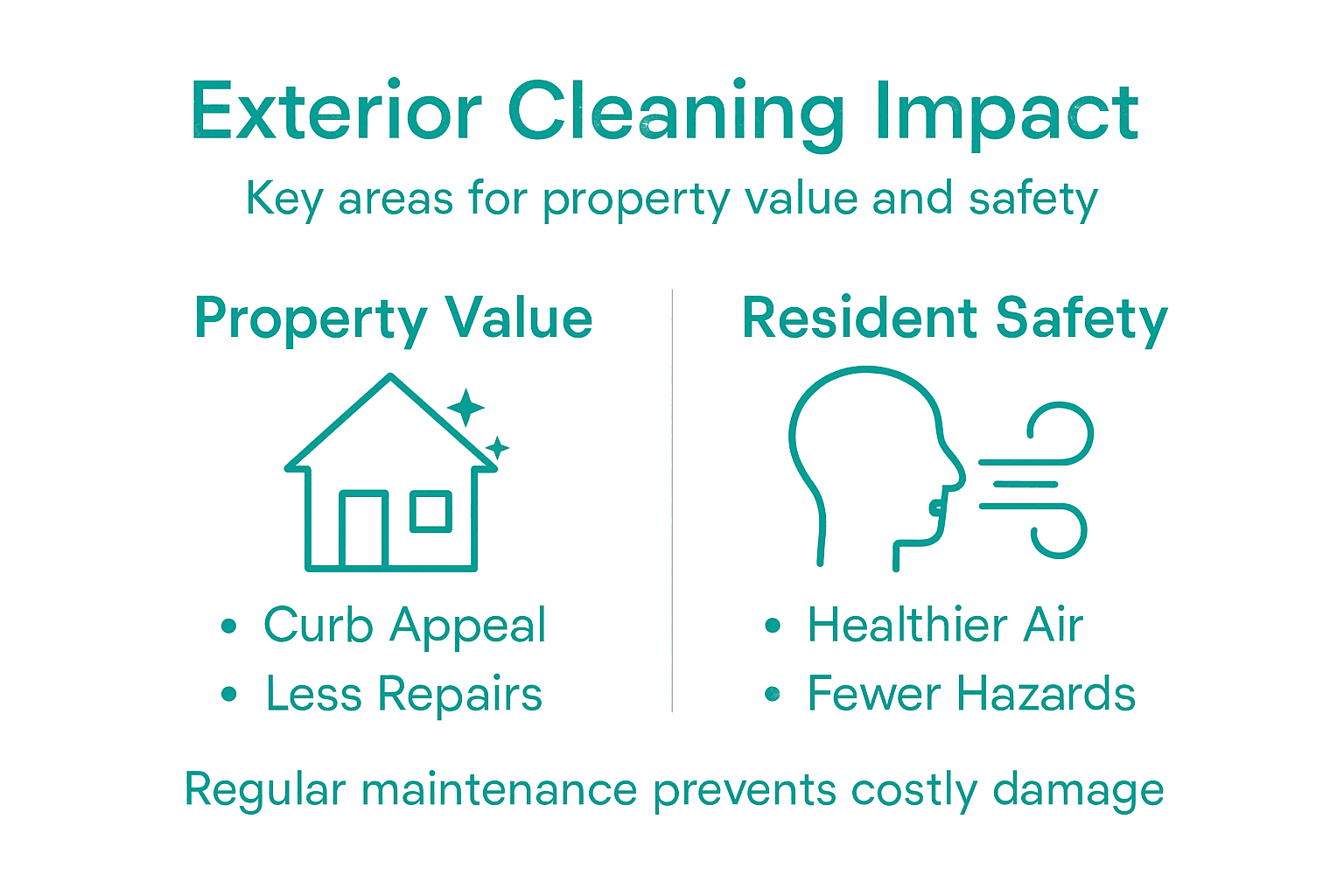
Deferred exterior maintenance is expensive. What starts as a small crack or minor algae growth becomes a catastrophic repair costing thousands of dollars. Property managers who skip regular cleaning sacrifice thousands in long-term savings to save hundreds today—a financially devastating trade-off.
Building exteriors face constant assault from weather, UV exposure, moisture, and environmental contaminants. Without regular cleaning, these forces accelerate damage exponentially. A $500 cleaning appointment now prevents a $50,000 roof replacement later.
The True Cost of Deferred Maintenance
Consistent exterior maintenance prevents costly repairs by catching minor issues early. Small cracks, leaks, and surface deterioration escalate rapidly into major structural problems when ignored.
Consider a simple example: algae growth on siding. Left untreated for two years, algae traps moisture against building materials, causing paint to peel, wood to rot, and eventually, structural damage requiring expensive replacement. Regular pressure washing prevents this cascade for a fraction of remediation costs.
Common damage progression patterns include:
- Minor roof debris accumulation leading to water pooling and leaks
- Gutter neglect causing water damage to fascia, soffit, and interior walls
- Sidewalk cracks expanding from freeze-thaw cycles into safety hazards
- Siding deterioration exposing the building envelope to weather infiltration
- Concrete spalling from accumulated salt and moisture damage
Protecting Your Building Envelope
Exterior cleaning and maintenance lower the risk of costly damage from weather and moisture. Your building envelope is the first defense against environmental damage. When dirty or deteriorating, it fails to protect interior spaces, creating cascading problems.
A compromised building envelope invites moisture infiltration, which triggers mold growth, structural rot, and insulation deterioration. These problems spread invisibly behind walls, becoming expensive disasters before discovery.
Regular exterior cleaning maintains envelope integrity by:
- Removing moisture-retaining debris from all surfaces
- Identifying cracks, gaps, and sealant failures early
- Preventing algae and mold from penetrating materials
- Maintaining proper drainage and water management
- Keeping gutters, downspouts, and drainage clear
Extending Component Lifespan
Building materials have predictable lifespans. Dirty, neglected materials fail prematurely. Clean, maintained materials last significantly longer, delaying expensive replacement cycles.
A concrete parking lot might last 20 years with regular cleaning and maintenance but only 10 years of neglect. That difference represents massive capital expense. Similarly, roofing, siding, and other components all degrade faster when exposed to dirt, algae, and moisture accumulation.
Regular cleaning extends material lifespan by years, deferring expensive replacement projects and protecting your capital budget.
Property managers who implement consistent cleaning schedules reduce emergency repair calls, avoid unexpected capital expenses, and maintain more predictable budgeting.
Documenting Maintenance for Financial Planning
Regular exterior cleaning creates documentation of property condition. This documentation supports accurate capital budgeting and helps you anticipate major expenses before they surprise you.
Property managers with documented maintenance histories can forecast roof replacements, siding updates, and concrete repairs based on actual condition data rather than guessing.
Pro tip: Create a detailed exterior maintenance log tracking cleaning dates, conditions observed, and any deterioration noted—use this data to forecast major repairs and justify cleaning expenditures to ownership as cost-prevention investments.
Legal, Environmental, and Compliance Considerations
Exterior cleaning isn't just a maintenance task. It's a legal and regulatory requirement tied to building codes, environmental regulations, and health standards. Property managers who overlook compliance risk fines, tenant lawsuits, and operational shutdowns.
Multi-family properties operate under strict regulatory frameworks. Local building codes, health departments, and environmental agencies all establish standards for exterior cleanliness and maintenance. Compliance protects residents while shielding your property from legal exposure.
Building Code Compliance and Inspections
Regular cleaning supports compliance with building codes and regulations designed to protect residents. Code inspectors evaluate exterior cleanliness as a direct measure of property maintenance standards. Dirty, neglected exteriors trigger violations and mandatory remediation orders.
Inspection failures create documented compliance issues that affect your property's legal standing. Some violations trigger fines, others require expensive corrective work within specific timeframes. Multiple violations can result in licensing revocation or operational restrictions.
Common code violations related to exterior cleanliness include:
- Accumulation of debris on roofs, gutters, or around the building perimeter
- Mold and algae growth on exterior surfaces creating health hazards
- Clogged drainage systems causing water pooling or damage
- Deteriorating walkways and stairs creating slip-and-fall hazards
- Pest activity resulting from unsanitary conditions
Environmental and Health Regulations
Environmental, health, and safety regulations impact exterior cleaning protocols. Cleaning operations must comply with requirements regarding chemical use, waste disposal, water runoff management, and pesticide application.
Certain building materials require specialized handling. Lead-based paint, asbestos, and other hazardous materials demand compliance with federal and state regulations. Cleaning work that disturbs these materials can trigger significant legal liability if not handled properly.
Environmental compliance considerations include:
- Water runoff management to prevent pollution of storm drains
- Chemical and cleaning solution disposal following EPA guidelines
- Pesticide use restrictions in residential settings
- Lead safety protocols when cleaning older buildings
- Noise and scheduling requirements protecting neighboring properties
Liability Protection Through Documentation
Consistent exterior cleaning demonstrates due diligence in property management and resident protection. This documentation protects you legally if injuries, illnesses, or property damage claims arise.
Property managers who maintain documented cleaning schedules and inspection records can prove they took reasonable steps to maintain safe conditions. This evidence becomes critical in slip-and-fall litigation, mold claims, or pest-related disputes.
Documented cleaning schedules and maintenance records are your strongest defense against liability claims and regulatory violations.
Without documentation, courts may assume negligence even if you performed cleaning work. With records showing consistent maintenance, you demonstrate responsible property management.
Working With Qualified Contractors
Hiring contractors requires compliance verification. Your cleaning service must carry appropriate licenses, insurance, and certifications for the work they perform. They must also comply with all local, state, and federal regulations during their operations.
Inexperienced contractors can create compliance violations that become your legal responsibility. Ensure any pressure washing service understands multi-family regulations and maintains proper documentation of their work.
Pro tip: Before hiring an exterior cleaning contractor, verify their licensing, liability insurance, and knowledge of local building codes and environmental regulations—request documentation of their compliance history and certifications specific to multi-family properties.
Elevate Your Multi-Family Property With Expert Exterior Cleaning
Maintaining the exterior of multi-family units presents unique challenges that impact tenant satisfaction, property value, and long-term costs. From preventing mold and slip hazards to preserving curb appeal and ensuring legal compliance, consistent, professional exterior cleaning is essential. If you are managing a property faced with these complex demands, you need a partner who understands the scale, coordination, and expertise required to protect your investment and keep residents happy.

Take control of your property's maintenance with Monster Property Partners. Our team specializes in commercial pressure washing tailored for apartment buildings and multi-family units. We prioritize reliable operations and clear communication to minimize tenant disruptions while delivering top-tier results that prevent costly repairs. Discover how our strategic exterior cleaning services can transform your multi-family property by visiting our main website and learn why proactive cleaning directly contributes to tenant retention and safer communities. Start protecting your investment today by reaching out for a comprehensive consultation.
Frequently Asked Questions
Why is exterior cleaning important for multi-family units?
Regular exterior cleaning for multi-family units is crucial for maintaining safety, preventing health issues, and enhancing curb appeal. Clean exteriors help reduce the risk of mold, pests, and slip-and-fall accidents while also contributing to tenant satisfaction and retention.
How often should exterior cleaning be performed on multi-family properties?
It's recommended to schedule exterior cleaning at least quarterly or semi-annually. Regular cleanings prevent buildup that can lead to costly repairs and ensure a safe, attractive environment for residents.
What specific areas should be prioritized during exterior cleaning?
Key areas to focus on include building facades, sidewalks, entryways, parking lots, and outdoor common areas. These locations are highly visible and frequently used by residents, making them important for both safety and aesthetics.
What equipment is necessary for effective exterior cleaning of multi-family units?
Professional-grade equipment is essential for multi-family exterior cleaning, including high-powered pressure washers and specialized cleaning solutions. Trained operators should handle the equipment to ensure safety and effectiveness.