
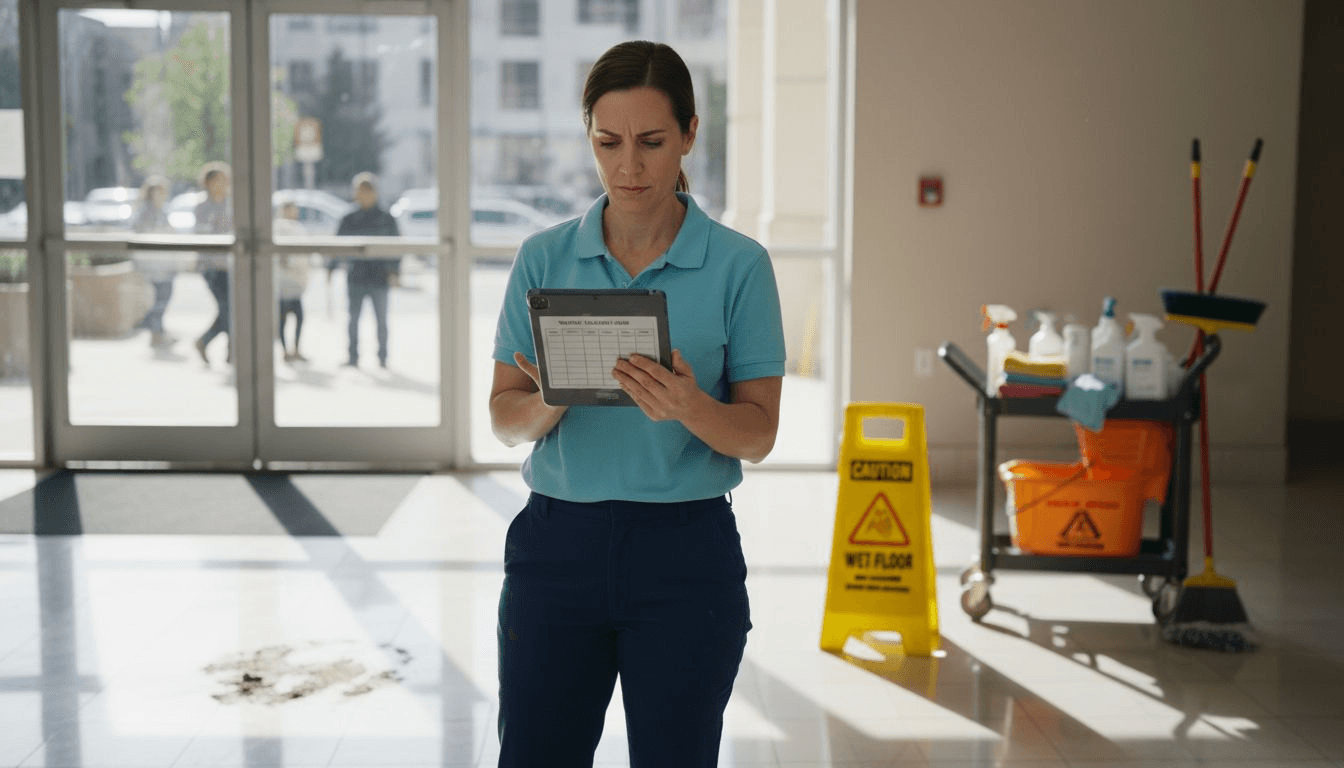
Keeping a multi-family property spotless can feel like juggling endless priorities while aiming to boost tenant satisfaction and property worth. Each American apartment complex comes with its own mix of high-traffic areas, seasonal needs, and diverse stakeholder expectations. This guide breaks down efficient and effective cleaning workflows that help property managers prioritize tasks, organize teams, and communicate results for real impact across every floor and outdoor space.
Table of Contents
- Step 1: Assess Property Needs And Schedule Services
- Step 2: Organize Cleaning Teams And Allocate Equipment
- Step 3: Execute Exterior Cleaning And Pressure Washing
- Step 4: Inspect Completed Work And Address Issues
- Step 5: Communicate Results To Stakeholders
Quick Summary
| Key Point | Explanation |
|---|---|
| 1. Assess Cleaning Needs Thoroughly | Conduct a detailed evaluation of property conditions to identify specific cleaning tasks and prioritize maintenance efforts. |
| 2. Organize Cleaning Teams Effectively | Break teams into specialized units, ensuring each member has defined roles and access to proper equipment. |
| 3. Implement Systematic Exterior Cleaning | Use appropriate pressure washing techniques tailored to different surfaces to ensure thorough and safe cleaning. |
| 4. Conduct Comprehensive Post-Cleaning Inspections | Perform detailed inspections to verify cleaning effectiveness and identify areas needing further attention. |
| 5. Communicate Results Clearly | Deliver structured reports to stakeholders, highlighting performance metrics and areas for improvement to maintain transparency. |
Step 1: Assess Property Needs and Schedule Services
Successfully optimizing a multi-family property's cleaning workflow starts with a comprehensive and strategic needs assessment. Your goal is to develop a precise understanding of the specific maintenance requirements across different property areas and create a targeted service schedule that maximizes efficiency.
Begin by conducting a thorough property needs evaluation that involves multiple critical steps. First, walk through the entire property and document existing conditions, noting areas that require immediate attention or specialized cleaning. Pay specific attention to high-traffic zones like lobbies, hallways, shared amenities, and exterior spaces.
- Inspect common areas thoroughly
- Document current cleaning and maintenance status
- Identify specific surface types and materials
- Note seasonal maintenance requirements
- Assess frequency of current cleaning services
Next, compile a comprehensive inventory of cleaning needs by categorizing requirements into distinct groups:
Here's a summary of cleaning task frequencies and the benefits of planning them:
| Task Frequency | Example Activities | Business Impact |
|---|---|---|
| Daily | Trash removal, basic wiping | Keeps public areas sanitary |
| Weekly | Carpet vacuuming, restroom deep clean | Maintains tenant satisfaction |
| Monthly | Window washing, vent cleaning | Enhances property appeal |
| Quarterly/Annual | Power washing, major repairs | Prevents costly damage |
- Daily maintenance tasks
- Weekly deep cleaning protocols
- Monthly specialized services
- Quarterly comprehensive property assessments
- Annual major maintenance projects
Consult with property management teams, maintenance staff, and potentially even tenant representatives to gather diverse perspectives on cleaning priorities. This collaborative approach ensures you capture nuanced requirements that might not be immediately visible during a standard walkthrough.
Property cleaning workflows are most effective when they combine systematic documentation with flexible, responsive planning.
Pro tip: Create a digital tracking system that allows real-time updates and transparent communication between cleaning teams and property management to streamline service scheduling and quality control.
Step 2: Organize Cleaning Teams and Allocate Equipment
Building an efficient cleaning workflow for multi-family properties requires strategic team organization and precise equipment allocation. Your objective is to create a well-structured team that can systematically manage cleaning tasks across different property areas with maximum productivity and minimal redundancy.
Start by implementing structured cleaning schedules that clearly define roles, responsibilities, and task distributions. Break down your cleaning team into specialized units with distinct focus areas:
- Exterior maintenance crew
- Interior common area specialists
- Deep cleaning technicians
- Specialized surface treatment experts
- Quality control and inspection team
Utilize the 5S organizational methodology to optimize your team's workflow and equipment management. This approach involves five key principles:
- Sort: Remove unnecessary equipment and supplies
- Set in Order: Create designated storage spaces
- Shine: Maintain clean and organized workspaces
- Standardize: Develop consistent procedures
- Sustain: Continuously improve team practices
Ensure each team member has the right tools for their specific tasks. Create equipment kits tailored to different cleaning zones, including appropriate cleaning agents, protective gear, and specialized tools for various surfaces and environments.
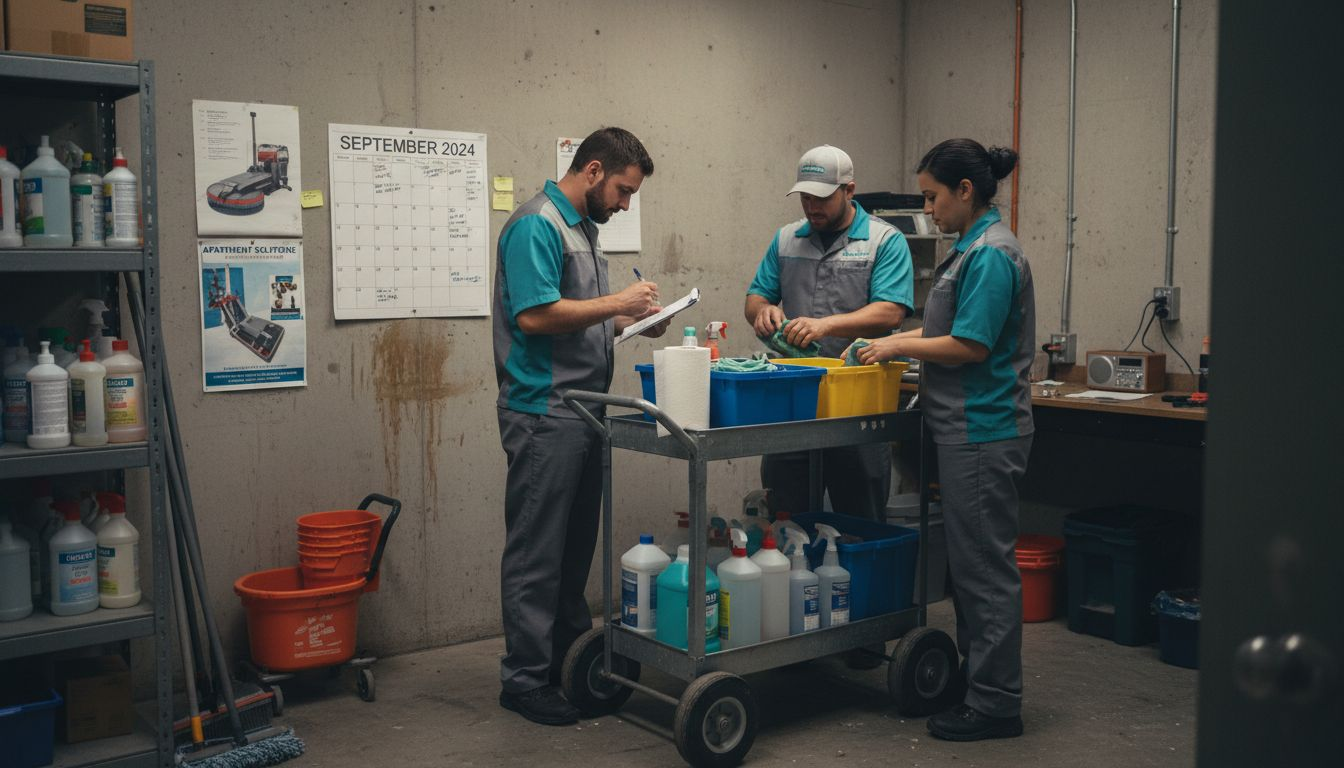
This table compares cleaning team specializations and their value:
| Team Type | Main Focus | Value to Property |
|---|---|---|
| Exterior Maintenance Crew | Outdoor areas and landscaping | Extends curb appeal |
| Interior Specialists | Shared spaces | Boosts tenant well-being |
| Deep Cleaning Technicians | Intensive treatments | Reduces health risks |
| Surface Treatment Experts | Unique materials | Protects building surfaces |
| Quality Control Inspectors | Final review and repairs | Ensures consistent results |
Effective team organization transforms cleaning from a routine task into a strategic property maintenance process.
Pro tip: Develop a digital equipment tracking system that monitors tool inventory, maintenance schedules, and replacement needs to prevent workflow interruptions and ensure optimal resource management.
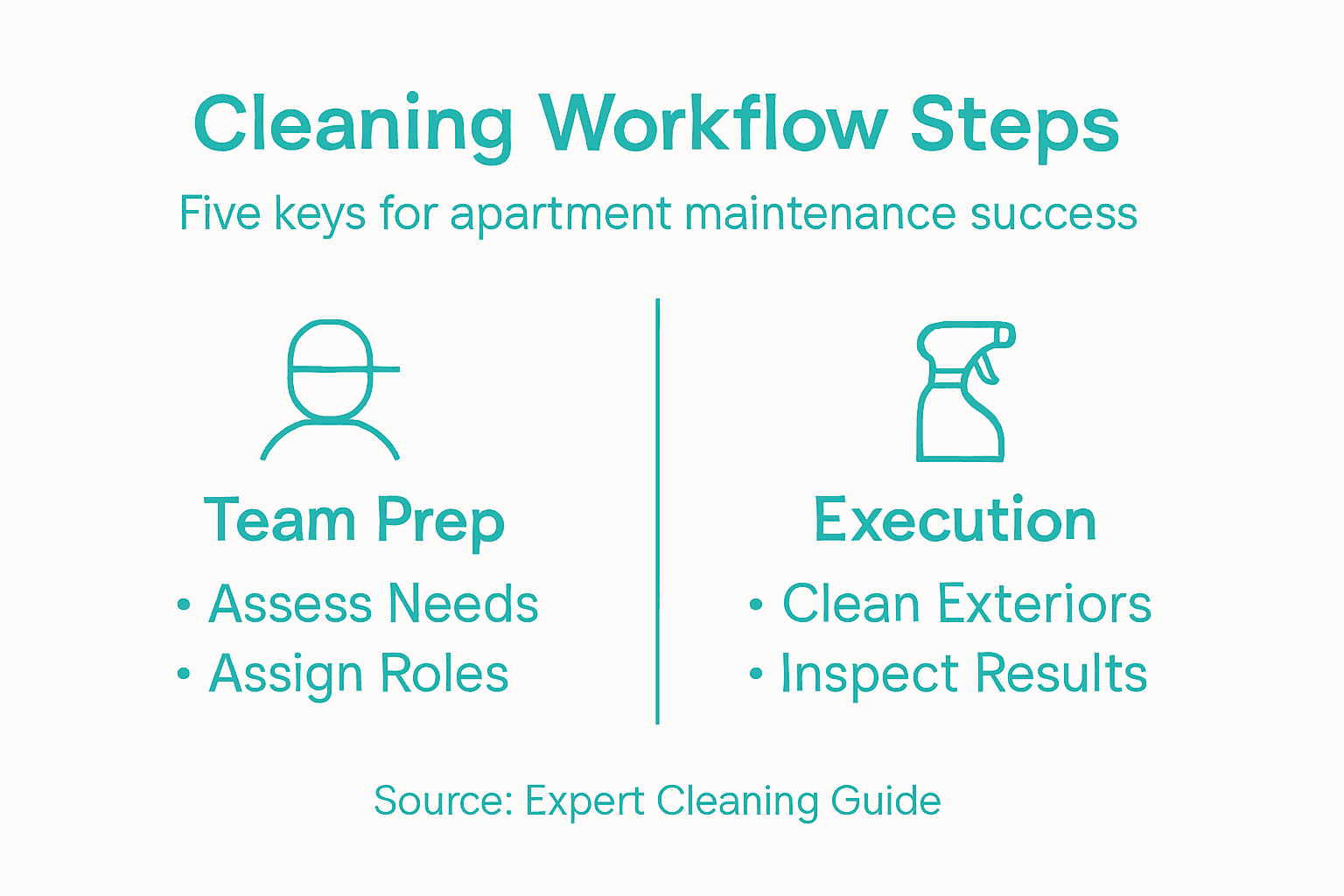
Step 3: Execute Exterior Cleaning and Pressure Washing
Executing a comprehensive exterior cleaning strategy for multi-family properties requires precision, specialized equipment, and a systematic approach. Your mission is to transform the property's exterior surfaces, removing years of accumulated dirt, grime, and environmental buildup while protecting the underlying materials.
Begin by understanding pressure washing techniques that match different surface types and cleaning requirements. Select the appropriate pressure washing equipment based on specific property needs:
- Hot water pressure washers for grease and oil-stained concrete
- Cold water machines for siding, gutters, and roofs
- Surface cleaning attachments for uniform large area cleaning
- Adjustable pressure nozzles for delicate surfaces
- Specialized cleaning solutions for different material types
Implement a methodical cleaning sequence that ensures maximum efficiency and minimal property damage:
- Inspect surfaces for existing damage
- Select appropriate cleaning agents
- Test pressure settings on inconspicuous areas
- Clean from top to bottom
- Maintain consistent distance and angle
Pay special attention to material-specific cleaning requirements. Different surfaces like concrete, brick, stucco, and vinyl siding demand unique pressure washing approaches to prevent potential damage while achieving optimal cleanliness.
Effective exterior cleaning is about precision, not just power. Understanding your equipment and surfaces is key to maintaining property value.
Pro tip: Calibrate your pressure washer's settings for each surface type, and always start with the lowest effective pressure to minimize potential structural damage.
Step 4: Inspect Completed Work and Address Issues
Conducting a comprehensive post-cleaning inspection is crucial for ensuring the highest quality standards in multi-family property maintenance. Your goal is to systematically verify the effectiveness of the cleaning process and identify any areas requiring additional attention or remediation.
Begin by performing multifamily property inspections that follow a structured and thorough evaluation methodology. Develop a detailed inspection checklist that covers all critical areas:
- Exterior surfaces and building facades
- Common area cleanliness
- Specific high-traffic zones
- Individual surface conditions
- Equipment and cleaning tool performance
Implement a comprehensive visual assessment process that ensures no detail goes unnoticed:
- Start with an overall property walkthrough
- Document existing conditions with photographic evidence
- Compare current state with pre-cleaning assessment
- Identify and categorize potential issues
- Develop immediate remediation strategies
Focus on detecting subtle signs of incomplete cleaning or potential damage. Pay close attention to nuanced details like residual staining, surface inconsistencies, or areas that might require specialized treatment.
Quality inspection is not just about finding problems, but about understanding the full context of the cleaning performance.
Pro tip: Create a digital inspection template with pre-defined criteria and smartphone-compatible documentation tools to streamline the assessment process and ensure consistent, comprehensive reporting.
Step 5: Communicate Results to Stakeholders
Effective communication of cleaning and maintenance outcomes is critical for maintaining transparency and building trust with property stakeholders. Your objective is to deliver clear, concise, and actionable insights that demonstrate the value of your comprehensive cleaning workflow.
Develop strategic communication approaches tailored to different stakeholder groups, ensuring each receives information most relevant to their interests:
- Property owners receive financial and performance metrics
- Tenants get visual progress reports
- Management teams obtain detailed operational insights
- Maintenance staff review technical assessment details
- Board members get executive-level summaries
Implement a comprehensive reporting framework that provides structured information:
- Summarize pre-cleaning assessment conditions
- Present detailed cleaning intervention results
- Highlight areas of significant improvement
- Outline recommended follow-up actions
- Provide comparative performance data
Utilize multiple communication channels to ensure message penetration, including digital reports, visual presentations, and brief executive summaries that capture the essential outcomes quickly and professionally.
Clear communication transforms routine maintenance reporting into a strategic management tool.
Pro tip: Develop standardized report templates with consistent formatting to streamline communication and enable quick comprehension across different stakeholder groups.
Elevate Your Multi-Family Property Cleaning Workflow with Expert Pressure Washing
Managing cleaning challenges like coordinating specialized teams and executing precise exterior maintenance requires a strategic partner who understands your goals deeply. If you want to eliminate inefficiencies and protect your property surfaces with expert pressure washing, Monster Property Partners is your trusted ally. We specialize in delivering reliable, large-scale exterior cleaning solutions for apartment buildings and multi-family units that align perfectly with the detailed workflows and quality inspections discussed.
Take control of your property maintenance today by partnering with a team dedicated to precision, communication, and results. Visit Monster Property Partners to discover how our commercial pressure washing services can transform your cleaning workflow. Click here to optimize your exterior cleaning strategy now and experience the difference of working with the national leader in multi-family property cleaning solutions.
Frequently Asked Questions
How can I assess the cleaning needs of a multi-family property?
To assess the cleaning needs, conduct a detailed property walkthrough and document the existing conditions in various areas. Focus on high-traffic zones, specific surface types, and any immediate maintenance requirements to create an informed service schedule.
What steps should I take to organize my cleaning teams efficiently?
Organizing cleaning teams requires assigning specific roles based on expertise and creating structured cleaning schedules. Divide your teams into specialized units, such as interior specialists and quality control inspectors, to enhance productivity and streamline operations.
How do I execute an effective pressure washing plan for exteriors?
To execute pressure washing effectively, choose the right equipment and follow a systematic method. Inspect surfaces, adjust pressure settings as needed, and clean from top to bottom to prevent damage and achieve thorough cleanliness.
What should I include in a post-cleaning inspection checklist?
A post-cleaning inspection checklist should cover critical areas, including exterior surfaces, common areas, and any high-traffic zones. Document the cleaning's effectiveness with photos and compare pre- and post-cleaning conditions to identify further issues if necessary.
How can I communicate the cleaning results to stakeholders?
To communicate cleaning results effectively, create tailored reports for different stakeholders, summarizing key findings and actions taken. Use clear metrics and visual aids to convey improvements and keep all parties informed about the property's maintenance status.