
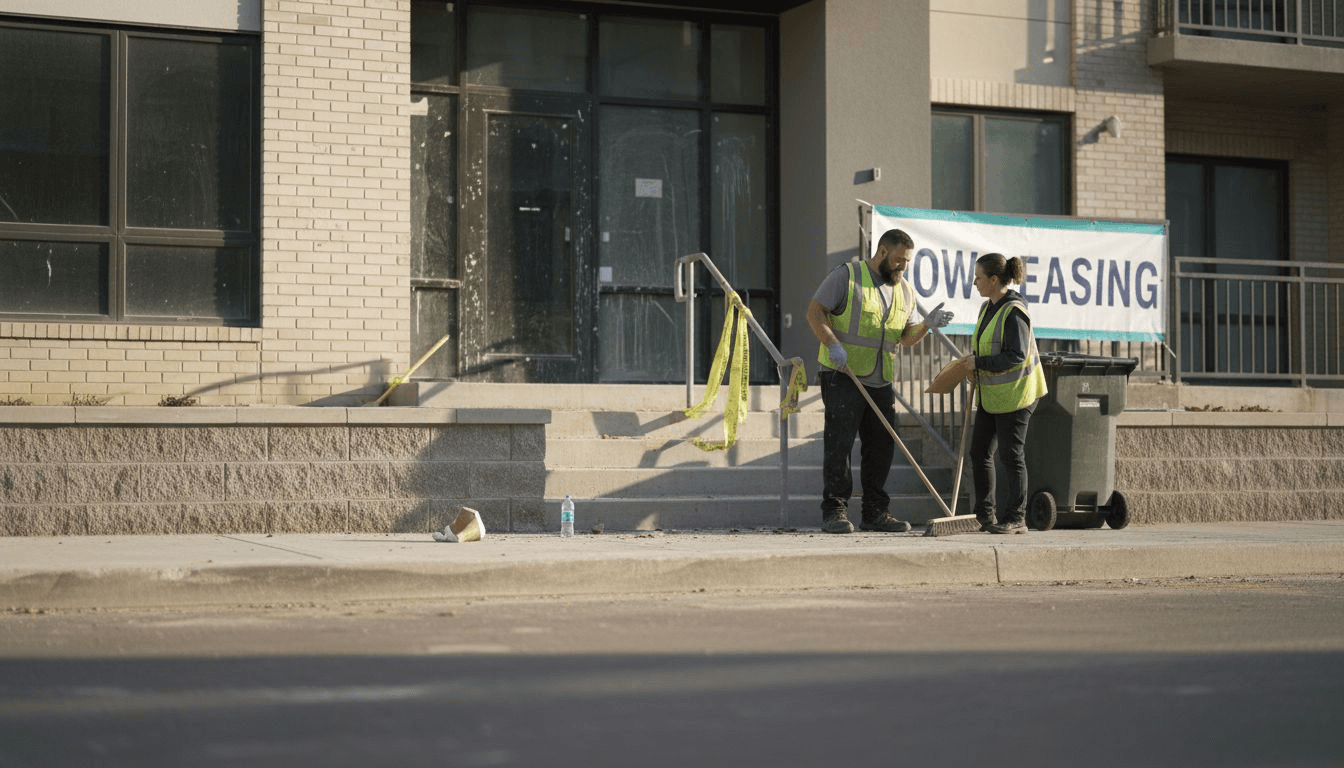
Construction might be finished, but the leftover dust, debris, and stains on your building’s exterior still linger—creating a challenge every property manager knows too well. Tenants and prospective residents notice everything, from concrete streaks on walkways to smudges on windows. Proper post-construction exterior cleaning not only restores curb appeal but also supports environmental compliance and protects your investment. Find out how clear methods and targeted maintenance turn your multi-family property from post-project mess to market-ready in record time.
Table of Contents
- Defining Post-Construction Exterior Cleaning Tasks
- Phases And Methods For Exterior Cleaning Projects
- Common Challenges And Misconceptions For Managers
- Safety, Compliance, And Environmental Considerations
- Cost Factors And Solutions For Multi-Family Properties
Key Takeaways
| Point | Details |
|---|---|
| Post-construction cleaning is essential for tenant satisfaction | A thorough cleaning within 2-3 weeks of construction completion enhances curb appeal and speeds up leasing processes. |
| Environmental compliance is critical | Effective cleaning prevents pollutants from contaminating water systems, protecting your property from liability. |
| Understand surface-specific cleaning requirements | Different materials need tailored cleaning methods to avoid damage and ensure effective cleanup. |
| Regular maintenance can save costs | Preventive cleaning and inspections can significantly reduce long-term expenses and prevent costly emergencies. |
Defining post-construction exterior cleaning tasks
Post-construction exterior cleaning differs significantly from routine maintenance. It targets debris, dust, and residue left behind after construction projects wrap up. Your building's exterior gets exposed to construction materials, equipment marks, and environmental pollutants that accumulate during work.
Think of it as resetting your building's appearance to move-in condition. Contractors and construction equipment leave traces everywhere. Concrete dust coats windows and siding. Metal stains mark surfaces. Adhesive residue clings to pavement. Your tenants notice every detail, and first impressions shape their entire leasing experience.
Core Cleaning Tasks
Post-construction cleaning encompasses several distinct activities that work together to restore your property:
- Debris removal from parking lots, walkways, and landscaping areas
- Window and glass cleaning to remove construction dust and overspray
- Pressure washing of concrete surfaces, sidewalks, and building perimeter
- Metal and fixture cleaning to eliminate stains from construction materials
- Architectural detail cleaning for trim, railings, and decorative elements
- Landscape restoration including soil cleanup and surface preparation
Beyond Aesthetics: Environmental and Regulatory Standards
Cleaning your exterior isn't purely cosmetic. Best management practices for stormwater after construction completion address sediment removal, erosion control, and surface cleaning to prevent pollutants from entering water systems. Construction sites generate runoff containing concrete dust, metal particles, and debris.
Proper post-construction cleaning maintains environmental compliance while protecting groundwater quality. This protects your liability exposure and demonstrates responsible property management to tenants and local authorities.
Structural vs. Non-Structural Considerations
Your property has multiple surfaces requiring different cleaning approaches. Concrete requires high-pressure washing to remove stubborn stains. Glass demands chemical treatment for film removal. Metal fixtures need specialized solutions to prevent corrosion.
Each surface type has specific cleaning requirements:
Here's how cleaning methods vary by exterior surface type:
| Surface Type | Recommended Cleaning Method | Common Risks | Cleaning Frequency |
|---|---|---|---|
| Concrete & Asphalt | High-pressure washing | Etching, water intrusion | After construction, quarterly |
| Glass & Windows | Chemical treatment, soft scrubbing | Scratches, seal damage | After construction, monthly |
| Metal Fixtures | Specialized cleaners, no abrasives | Corrosion, finish discoloration | After construction, semi-annually |
| Landscaping Areas | Manual debris removal, revegetation | Soil compaction, plant damage | After construction, seasonally |
- Hard surfaces (concrete, asphalt, stone) tolerate aggressive pressure washing
- Delicate surfaces (windows, painted metal, siding) need gentler methods
- Landscaping areas require debris removal and sediment cleanup
- Drainage systems need inspection and sediment removal
The Timeline Factor
Timing matters enormously for tenant satisfaction. Construction concludes. Your property still looks like an active worksite for weeks. Prospective tenants touring the building see dust, stains, and disorder. Leasing velocity drops immediately.
Completing comprehensive exterior cleaning within 2-3 weeks of construction completion maximizes your competitive advantage. Your building presents move-in ready, not still-under-construction. This directly impacts leasing rates and rental concessions you need to offer.
Comprehensive post-construction cleaning restores curb appeal while ensuring environmental compliance and protecting tenant health.
Pro tip: Schedule your post-construction cleaning during final construction inspections so your building looks market-ready before the leasing office opens tours to prospective tenants.
Phases and methods for exterior cleaning projects
Post-construction cleaning unfolds in distinct phases, each with specific objectives and methods. Understanding this sequence helps you plan timelines, allocate resources, and ensure nothing gets missed. Your property's transformation from dusty construction site to leasing-ready building follows a structured process.
The Close-Out Inspection Phase
This is your foundation. Before any cleaning begins, conduct a thorough close-out inspection to identify all areas needing attention. Walk the entire property exterior with a detailed checklist.
Look for:
- Debris piles and construction material remnants
- Concrete spills, stains, and discoloration
- Window film, overspray, and glass contamination
- Temporary erosion controls still in place
- Damaged or stained architectural elements
- Sediment accumulation in drainage areas
This inspection becomes your cleaning roadmap. Document everything with photos. This prevents miscommunication between your team and cleaning contractors about scope and expectations.
Systematic Monitoring and Maintenance Methods
Inspection schedules and maintenance protocols ensure constructed elements remain functional and clean. Schedule regular monitoring of erosion control measures, stormwater drainage, and site stability immediately after construction ends.
Your maintenance approach includes:
- Sediment removal from catch basins, swales, and drainage areas
- Vegetation management to prevent erosion and maintain landscaping appearance
- Component repair of damaged BMPs or drainage features
- Surface cleaning using appropriate pressure and chemical methods for each material
- Temporary control removal once permanent solutions function properly
Method Selection by Surface Type
Not all surfaces tolerate identical cleaning approaches. Choose methods based on material composition and condition.
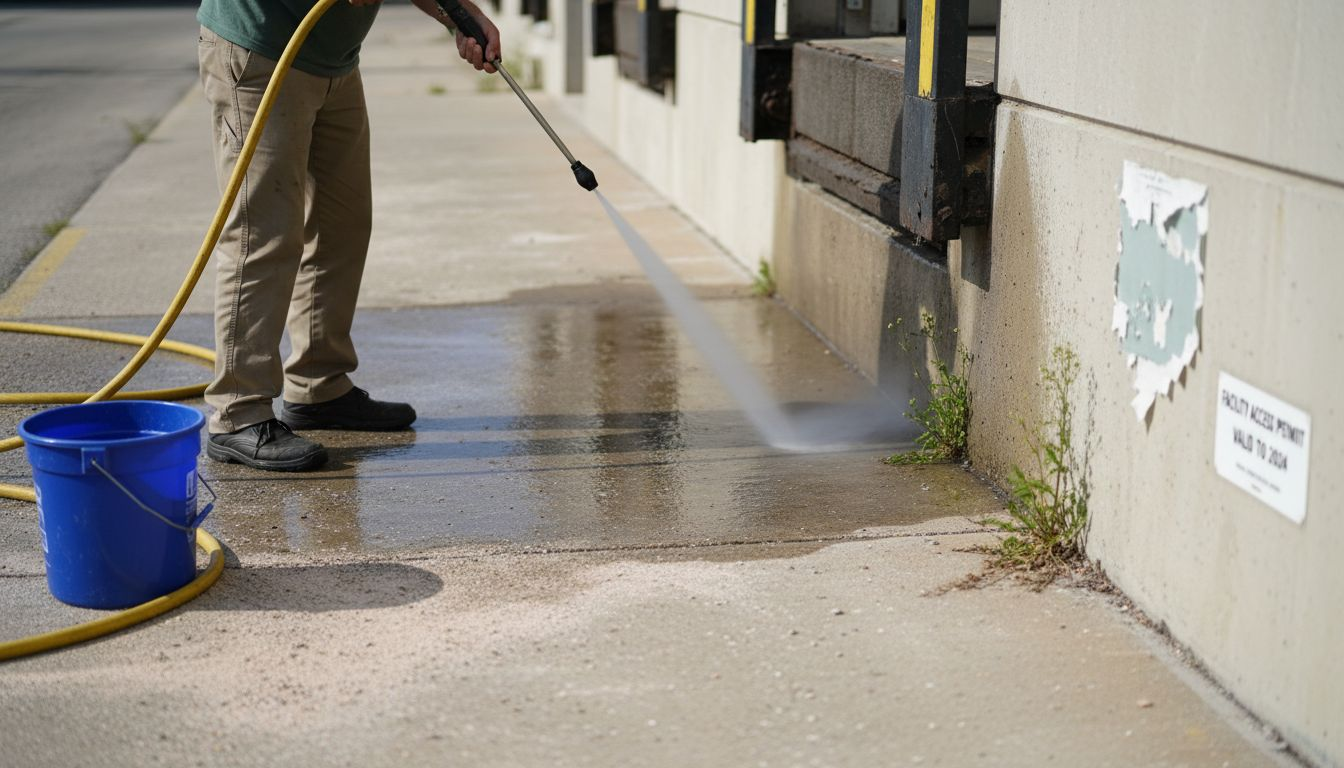
Hard surfaces like concrete and asphalt respond well to high-pressure washing. This removes embedded dust, stains, and adhesive residue. Start at lower pressure on delicate areas; increase as needed.
Glass and windows require chemical treatment followed by soft-brush scrubbing. Pressure washing risks damage to glazing compounds and seals.
Metal fixtures and railings need specialized cleaners that prevent oxidation and staining. Steel wool or abrasive pads can damage finishes.
Landscaping areas require manual debris removal and sediment cleanup from runoff patterns. Revegetation follows once soil stabilizes.
Timeline and Sequencing
Phasing matters significantly. Complete heavy debris removal first. Then address stationary stains and buildup. Finish with detailed cleaning of architectural elements and windows.
This sequence prevents recontamination. You avoid stirring up debris that resettles on freshly cleaned surfaces.
Systematic phases and material-specific methods transform post-construction cleanup from chaotic to predictable and effective.
Pro tip: Schedule your close-out inspection within one week of construction completion, then immediately contract your cleaning work to start within two weeks while debris is still accessible and hasn't hardened or caused permanent staining.
Common challenges and misconceptions for managers
Many property managers stumble on post-construction cleaning because they underestimate its complexity and ongoing demands. Construction wraps up. The building looks mostly clean. You assume the hard part is finished. Then leasing stalls because prospective tenants notice dust on window sills and concrete stains on the parking lot.
The disconnect happens because managers often view post-construction cleaning as a one-time checkbox rather than a phased process with specific maintenance requirements.
The "It's Done" Misconception
This is the most costly mistake. Believing project completion means the cleaning work ends sets you up for failure. Construction completion and leasing readiness are not the same thing.
Your building requires:
- Systematic inspections to identify hidden debris and stains
- Specialized cleaning methods for different materials and conditions
- Ongoing monitoring of drainage systems and sediment accumulation
- Regular touch-ups as weather and traffic expose new issues
Continuous monitoring and maintenance remain crucial for remedy effectiveness and tenant satisfaction long after construction concludes. This is not optional busywork; it directly impacts your property's market competitiveness.
Underestimating Costs and Timeline
Budget surprises destroy project timelines. Managers often allocate cleaning expenses based on rough estimates rather than detailed inspections. Then reality emerges: concrete stains require specialized treatments costing 40% more than anticipated. Window film removal takes three times longer than expected. Sediment removal from drainage areas reveals structural issues needing repairs.
These cost overruns compress your leasing timeline. Your building misses peak leasing seasons because you're still cleaning months after construction completion.
Unclear Roles and Responsibility Gaps
Who owns what? This confusion creates finger-pointing between contractors, property managers, and maintenance teams. Construction contractors may claim they completed their cleanup obligations. Your maintenance staff lacks specialized equipment for pressure washing or chemical treatments. Your property manager doesn't know which contractor to call for specific issues.
Define ownership clearly:
- Construction contractor completes final debris removal per contract
- Specialized cleaning company handles post-construction cleaning and stormwater management
- Property management oversees ongoing maintenance and regular monitoring
- Maintenance staff manages routine cleaning and drainage inspections
Complexity of Engineered Systems
Many managers underappreciate the technical requirements of stormwater management features, erosion controls, and drainage systems. These aren't just aesthetic elements. They're engineered systems requiring specific maintenance protocols to function properly.
Skipping maintenance on these systems leads to drainage failures, sediment accumulation, and potential environmental violations. Your liability exposure increases significantly when systems designed for environmental protection fail due to neglect.
Viewing post-construction cleaning as a continuous process rather than a one-time task prevents cost overruns, timeline delays, and tenant dissatisfaction.
Pro tip: Create a written maintenance schedule with assigned responsibilities before construction concludes, clearly documenting which contractor handles initial cleaning and which internal team manages ongoing monitoring and upkeep.
Safety, compliance, and environmental considerations
Post-construction cleaning isn't just about aesthetics. Safety hazards, environmental regulations, and worker protection create a complex compliance landscape that many managers overlook. Cutting corners here exposes your property to liability, fines, and environmental violations that dwarf the cost of doing it right.
Environmental Regulations and Water Quality Protection
Your cleaning activities directly impact local water bodies. Construction debris, sediment, and chemical residues can contaminate stormwater systems if not managed properly. Stormwater regulations and management plans require site managers to follow inspection protocols, maintenance schedules, and pollution prevention practices.
These aren't suggestions. Violations carry real penalties. Your property must maintain erosion barriers, sediment control measures, and proper debris disposal throughout the cleaning process.
Key compliance requirements include:
- Regular inspection of drainage systems and sediment accumulation
- Timely removal of debris before it enters water bodies
- Documentation of all maintenance activities and inspections
- Compliance with local stormwater permits and discharge standards
Worker Safety During Cleaning Operations
Pressure washing, chemical treatments, and elevated work create genuine hazards. Your cleaning contractors need proper training, equipment, and insurance. High-pressure equipment can cause serious injury. Chemical cleaners require respiratory protection in certain conditions. Working at heights demands fall protection.
Responsibilities include:
- Verify contractor licensing and insurance before work begins
- Confirm workers have proper training for equipment and chemicals used
- Ensure safety equipment is available and actually used on site
- Document all safety protocols in writing
Preventing Contamination During Cleaning
Safety and compliance during cleaning require strict adherence to environmental regulations and proper control measures to prevent new contamination. Your cleaning process shouldn't create the problems it's supposed to solve.
Control contamination by:
- Using biodegradable cleaners when possible
- Capturing and properly disposing of contaminated runoff
- Protecting soil quality through erosion controls
- Monitoring water discharge to ensure it meets environmental standards
Public Safety and Access Management
Your property remains accessible to the public and future tenants during cleaning. This creates liability if someone gets injured by cleaning equipment, chemicals, or hazards. Proper signage, barriers, and scheduling prevent accidents.
Clean during off-peak hours. Post warning signs around active cleaning areas. Keep the public and maintenance staff away from chemical application zones. Document any incidents, no matter how minor.
Compliance isn't a cost center; it's liability protection that prevents fines, environmental violations, and tenant safety issues.
Pro tip: Require your cleaning contractor to provide a safety and environmental compliance plan in writing before work begins, including chemical products, disposal methods, water discharge protocols, and worker training documentation.
Cost factors and solutions for multi-family properties
Post-construction cleaning budgets surprise most property managers. Initial estimates based on square footage don't account for actual site complexity. A 200-unit apartment complex requires different cleaning approaches than a single-story building. Your actual costs depend on multiple variables that need careful analysis before you commit dollars.
Understanding Your Cost Variables
Cleaning expenses aren't one-size-fits-all. Site complexity, remediation extent, and material types drive your actual costs. A property with extensive concrete staining costs significantly more than one with primarily landscaping work.
Major cost factors include:
- Scope of contamination (construction dust versus embedded stains)
- Building square footage and perimeter length
- Number and type of surfaces (concrete, glass, metal, landscaping)
- Site drainage complexity and sediment accumulation
- Labor intensity for specialized cleaning methods
- Equipment requirements (pressure washers, lifts, chemical application systems)
- Disposal costs for construction debris and contaminated runoff
A detailed site inspection before bidding prevents budget surprises. Skip this step, and you'll face cost overruns mid-project.
Preventive Maintenance Reduces Long-Term Costs
Regular maintenance after initial cleaning costs far less than reactive repairs. A $5,000 preventive cleaning schedule prevents the $25,000 emergency cleaning when drainage systems fail and contaminate landscaping.
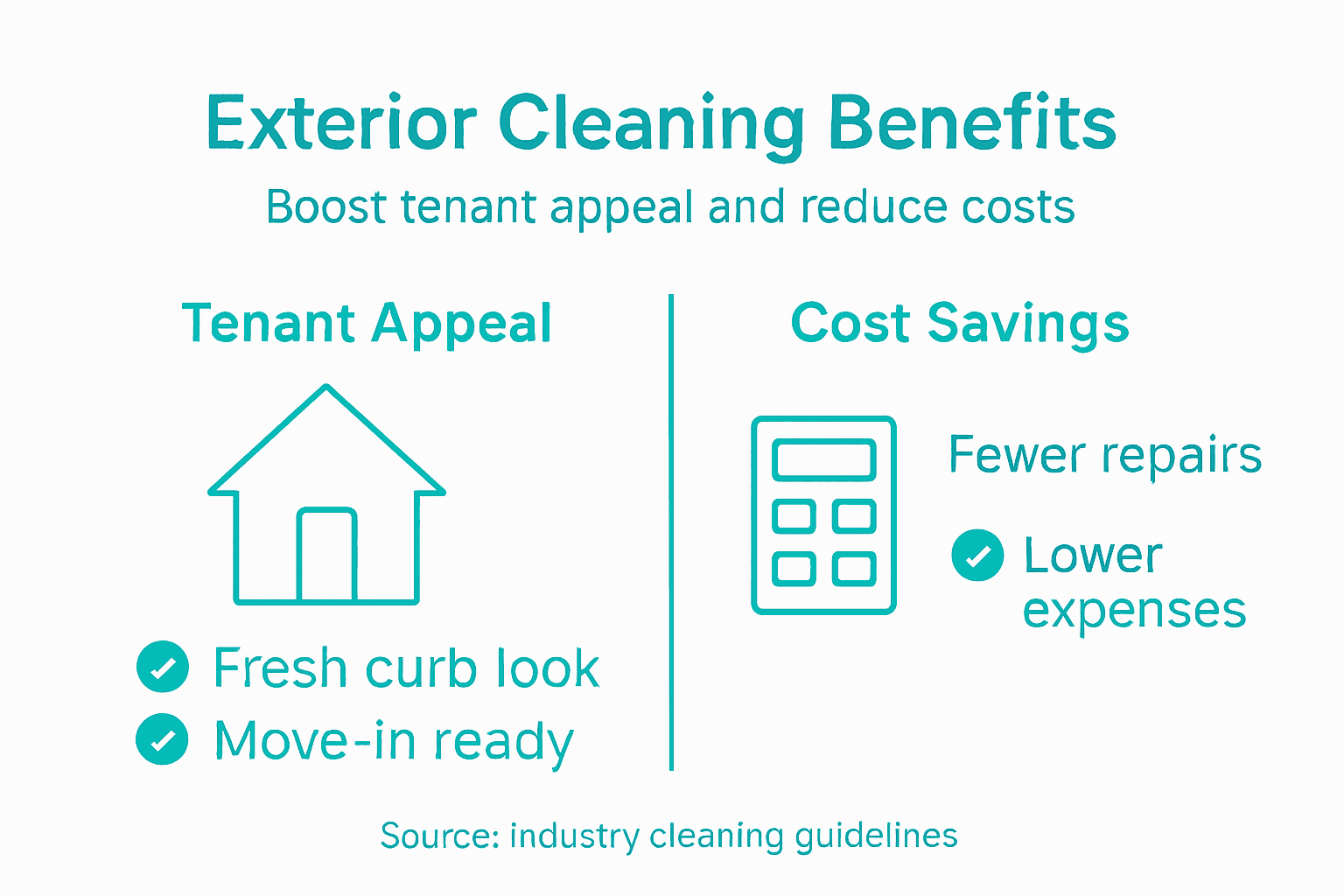
Efficient inspection and maintenance programs reduce costs by protecting infrastructure lifespan and preventing environmental penalties. Schedule quarterly inspections of drainage systems, sediment basins, and erosion controls. Address small issues before they become expensive problems.
See how proactive maintenance impacts long-term cleaning budgets:
| Maintenance Type | Typical Cost (Annual) | Risk if Neglected | Potential Savings |
|---|---|---|---|
| Preventive Cleaning | $5,000 | Drainage failures, fines | $20,000-$25,000 |
| Quarterly Inspection | $1,000 | Hidden damage, missed contaminants | $15,000+ |
| Green Infrastructure | $8,000 upfront | Higher debris cleanup, frequent repairs | 40-50% over 5 years |
Preventive actions include:
- Monthly sediment removal from catch basins
- Quarterly landscape inspections and minor repairs
- Semi-annual deep cleaning of stormwater features
- Annual comprehensive site assessment
Green Infrastructure Solutions Lower Operating Costs
Green infrastructure practices like infiltration basins and vegetated swales provide long-term cost savings by improving stormwater management efficiency. These features reduce sediment accumulation, require less frequent maintenance, and often qualify for municipal funding or stormwater credits.
Green solutions cost more upfront but save money long-term through:
- Reduced sediment removal frequency
- Lower chemical treatment needs
- Potential municipal stormwater credits (up to 50% cost reduction in some jurisdictions)
- Enhanced property marketability and tenant appeal
Engaging Residents in Cost Management
Your tenants directly impact cleaning costs. Reducing litter, minimizing landscaping debris, and preventing dumping decreases your maintenance burden. Simple signage and resident communication programs cost almost nothing but significantly reduce cleaning expenses.
Educate residents about:
- Proper waste disposal in designated areas
- Construction material handling during renovations
- Landscape maintenance responsibilities
- Drainage system protection
Strategic planning and preventive maintenance transform post-construction cleaning from a budget crisis into a predictable, manageable expense.
Pro tip: Request itemized cost breakdowns from cleaning contractors that distinguish between initial post-construction cleaning, monthly maintenance, and quarterly specialized services so you can phase expenses across your fiscal year rather than absorbing one massive upfront cost.
Elevate Tenant Appeal with Expert Post-Construction Exterior Cleaning
The challenge of restoring your property to a move-in ready condition after construction is a critical step that impacts tenant satisfaction and leasing success. From stubborn concrete stains to delicate window treatments and effective sediment control, the detailed cleaning and maintenance processes can feel overwhelming. Key pain points include managing complex surface-specific cleaning methods, adhering to environmental compliance, and preventing costly delays that stall leasing velocity.
At Monster Property Partners, we understand these challenges firsthand. Our experienced team specializes in commercial pressure washing for apartment buildings and multi-family units, offering tailored solutions that target every post-construction residue and environmental concern with precision. By partnering with us, you benefit from reliable project management, clear communication, and proactive scheduling that ensures your property looks its absolute best within that crucial 2-3 week window after construction. Discover how our expertise transforms cleaning chaos into a strategic advantage by visiting our services.
Ready to enhance your property's curb appeal and accelerate leasing with proven exterior cleaning solutions?

Contact Monster Property Partners today to schedule your comprehensive post-construction cleaning. Take control of your property's first impressions and compliance needs now by visiting Monster Property Partners. Let us help you deliver a pristine, welcoming environment tenants deserve.
Frequently Asked Questions
What is post-construction exterior cleaning?
Post-construction exterior cleaning involves a thorough cleaning process designed to remove debris, dust, stains, and residues left after construction projects. It resets a property's appearance to a move-in condition.
Why is post-construction cleaning important for tenant appeal?
Post-construction cleaning is crucial for tenant appeal as it enhances the building's curb appeal, making it attractive to prospective tenants. A clean exterior indicates proper property management and enhances first impressions, positively influencing leasing decisions.
How long does post-construction cleaning take to complete?
Ideally, comprehensive post-construction cleaning should be completed within 2-3 weeks after construction ends. This timeline helps ensure that the property looks ready for tenants, improving leasing velocity.
What are the key tasks involved in post-construction cleaning?
Key tasks include debris removal, window and glass cleaning, pressure washing, fixture cleaning, architectural detail cleaning, and landscape restoration. Each task targets specific areas and surfaces to ensure a thorough cleaning.
Recommended
- Services | Multifamily Exterior Cleaning | Monster Property Partners
- Monster Property Partners | Exterior Cleaning Orlando
- Portfolio Partnership | Monster Property Partners
- Exterior Cleaning’s Impact on Investor Returns – white-diamond-pressure
- Professional Post Construction Cleaning—Why It Matters
- Commercial Property Cleaning – Protecting Value and Tenancy