
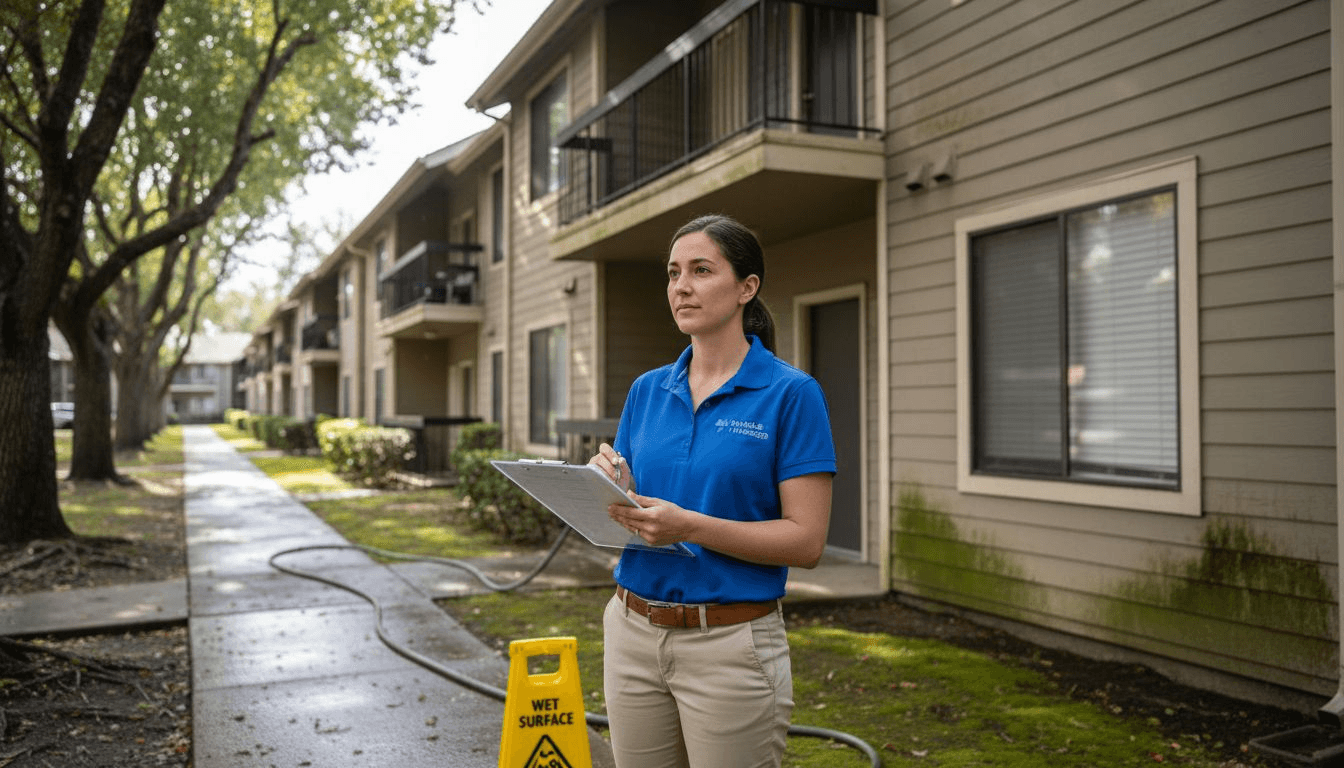
Pressure washing an apartment complex brings real challenges that property managers cannot ignore. Surfaces with cracks, peeling paint, or signs of mold require more than just powerful equipment—they demand careful preparation and the right approach. If these problem spots are missed, your building risks costly repairs and dissatisfied tenants.
This list reveals actionable steps to protect your property before cleaning begins. You will learn how to inspect surfaces, choose the right equipment, and prevent damage from high-pressure water. Get ready to discover specific tactics that make your pressure washing projects safer, more effective, and worry-free.
Table of Contents
- 1. Inspect Exterior Surfaces For Problem Areas
- 2. Choose The Right Pressure Washing Equipment
- 3. Select Safe And Effective Cleaning Solutions
- 4. Schedule Washing At Optimal Times
- 5. Protect Landscaping And Building Entrances
- 6. Conduct A Final Quality Check And Follow Up
Quick Summary
| Takeaway | Explanation |
|---|---|
| 1. Inspect exterior surfaces carefully | Thoroughly check for damage or weak areas before pressure washing to prevent costly mistakes. |
| 2. Choose the right pressure equipment | Select pressure washers and nozzles suitable for specific surfaces to avoid damaging materials. |
| 3. Select safe cleaning solutions | Use appropriate cleaning products that are compatible with the surfaces and environmentally friendly. |
| 4. Schedule washing optimally | Time pressure washing during cooler, cloudier days for better effectiveness with minimal disruption. |
| 5. Conduct a final quality check | Perform a thorough inspection post-cleaning to ensure satisfaction and address any issues promptly. |
1. Inspect Exterior Surfaces for Problem Areas
Before your team turns on any pressure washers, conduct a thorough walkthrough of the entire exterior. This single step prevents costly mistakes and protects your building from damage.
Your inspection should identify cracks, peeling paint, mold growth, and other problem areas that need attention. Identifying these issues early helps you decide whether repairs should happen before cleaning or if you need to adjust your pressure settings.
Walk the property systematically. Start at ground level and work your way up, examining every wall section, corner, and architectural feature. Don't rush this phase—it typically takes 30 to 45 minutes for a medium-sized complex but saves hours of remediation work later.
Look for these specific problem areas:
- Cracks and structural damage in concrete, siding, or brick that could worsen under high pressure
- Peeling or loose paint that will lift away with aggressive water pressure
- Mold, mildew, and algae growth requiring specific cleaning solutions rather than force alone
- Delicate materials like vinyl siding, stucco, or wooden trim needing gentler pressure settings
- Electrical boxes, light fixtures, and vents that shouldn't be directly sprayed
- Recent repairs or patched areas that may not withstand pressure washing
Document what you find. Take photos of problem spots and note their locations on a site map. This creates a reference guide for your cleaning crew and protects you if a tenant later claims damage occurred during washing.
Identifying problem areas before you pressure wash reduces damage risk and ensures your cleaning approach matches each surface's actual condition.
Check your building materials carefully. Different surfaces require different pressure levels—brick and concrete handle higher PSI than vinyl or wood. Flagging these variations now prevents your team from using one-size-fits-all pressure settings that could damage sensitive areas.
Pay special attention to areas where water pooling could cause problems. Identify French drains, landscape beds, and electrical conduits that need temporary protection. Note any surfaces that are already weak or deteriorating.
Pro tip: Create a laminated inspection checklist that your crew carries on every job, checking it against your initial findings to confirm all problem areas received appropriate treatment.
2. Choose the Right Pressure Washing Equipment
Wrong equipment turns a straightforward cleaning job into a nightmare of damage and inefficiency. Selecting the correct pressure washer and accessories for your multi-family property is non-negotiable.
Pressure washers come in different power levels measured in PSI (pounds per square inch). For apartment complexes, you typically need machines ranging from 2,000 to 4,000 PSI depending on your surfaces. Concrete and brick handle higher pressure, while vinyl siding and stucco need gentler treatment at 1,500 to 2,500 PSI.
Water flow rate matters just as much as pressure. Measured in GPM (gallons per minute), this determines how much water your equipment delivers. Higher GPM covers more area faster but uses more water and can overwhelm delicate surfaces.
Consider these equipment factors for your property:
- Machine type (electric vs. gas) based on power needs and noise restrictions
- Pressure range matching your most common surfaces at your complex
- Hose length allowing crew access without constant repositioning
- Nozzle variety enabling pressure adjustment across different areas
- Tank capacity for chemical solutions and detergents
- Portability fitting your building layout and accessibility
Electric pressure washers work well for routine maintenance and smaller jobs. Gas-powered units deliver more power for heavy-duty cleaning on larger properties. When you're managing multiple buildings with varying cleaning needs, having both types available gives you flexibility.
Mismatched equipment wastes time, increases costs, and risks damaging tenant-facing areas that impact property perception.
Your choice of nozzles directly affects cleaning results. Different nozzle angles deliver varying pressure spreads. A 0-degree nozzle concentrates force in a pinpoint (dangerous for most surfaces), while 40-degree nozzles disperse pressure safely across wider areas. Stock multiple nozzle options so your crew adjusts for each surface type.
Invest in quality equipment from manufacturers specializing in commercial applications. Professional-grade machines last longer and handle the consistent use required for apartment complex maintenance. Budget equipment breaks down frequently, leading to missed cleaning schedules and frustrated tenants.
When managing multifamily exterior cleaning operations, you need reliable equipment that performs consistently across diverse property conditions. Rental options work for occasional projects, but property managers operating year-round benefit from owned equipment with proper maintenance schedules.
Pro tip: Keep detailed maintenance logs for each piece of equipment, tracking service dates and repairs to prevent unexpected breakdowns during peak cleaning seasons.
3. Select Safe and Effective Cleaning Solutions
Using the wrong cleaning solution can damage your property, harm the environment, and create liability issues for your management company. Choosing the right products protects your investment and your tenants.
Cleaning solutions fall into different categories based on what they target. Alkaline cleaners work well on grease and organic buildup. Acidic solutions remove mineral deposits and rust stains. Specialized biocides kill mold and mildew at their source, preventing rapid regrowth.
Your choice depends on the specific problem you're addressing. A general-purpose detergent handles routine maintenance on concrete walkways. Mold-killing solutions become necessary for shaded areas where moisture accumulates. Rust stain removers address iron oxide buildup on surfaces.
Consider these factors when selecting products:
- Surface compatibility ensuring the solution won't damage concrete, brick, vinyl, or wood
- Environmental regulations in your area regarding runoff and chemical disposal
- Tenant safety keeping corrosive or toxic products away from living areas
- Biodegradability reducing ecological impact on landscaping and soil
- Concentration levels allowing proper dilution for different cleaning intensities
- Application method whether you spray, soak, or apply through equipment tanks
Always read the manufacturer's instructions carefully. Overconcentrated solutions don't clean better—they damage surfaces and waste money. Dilution ratios are engineered for optimal performance and safety.
The cheapest cleaning solution often costs more in the long run through property damage, tenant complaints, and environmental cleanup expenses.
Test any new product on a hidden area first. Apply it to an inconspicuous section of siding or concrete and wait 24 hours. This reveals potential discoloration, etching, or unexpected reactions before treating your entire building.
Be transparent with tenants about which products you're using. Post notices before applying treatments near residential entrances. Some residents have sensitivities to certain chemicals, and advance warning prevents health issues and complaints.
Stock your cleaning solutions based on seasonal needs. Winter brings more mold and mildew in humid climates. Summer dust requires different treatment than spring pollen. Rotating your inventory prevents expired products and ensures you always have the right solution available.
Pro tip: Keep a detailed inventory spreadsheet tracking product names, dilution ratios, surface compatibility, and safety data sheets for every cleaning solution you use, making it easy to train new staff and comply with safety regulations.
4. Schedule Washing at Optimal Times
Timing your pressure washing incorrectly wastes water, reduces cleaning effectiveness, and frustrates tenants. Strategic scheduling maximizes results while minimizing disruption to your residents.
Weather conditions dramatically impact cleaning success. Washing on hot, sunny days causes water to evaporate before cleaning solutions can work effectively. Cloudy days or early mornings provide ideal conditions where moisture stays on surfaces longer, allowing chemicals to penetrate and break down dirt and biological growth.
Avoid scheduling pressure washing immediately before rain. Heavy downpours wash away cleaning solutions and negate your effort within hours. Check weather forecasts 48 hours ahead to ensure at least two dry days following your cleaning date.
Consider these scheduling factors for your multi-family property:
- Early morning hours (7 AM to 10 AM) before tenants begin their day
- Cooler seasons (spring and fall) when temperatures are moderate
- Mid-week days reducing weekend disruption and noise complaints
- Dry weather windows allowing proper drying and chemical effectiveness
- After rain events when surfaces are already wet and cleaning agents work better
- Seasonal patterns addressing mold in humid months and dust in dry seasons
Tenant notification matters significantly. Send advance notice at least one week before any exterior cleaning. Explain the timing, expected noise levels, and any temporary restrictions on parking or patio access. This reduces complaints and builds goodwill with residents.
Poorly timed pressure washing wastes up to 40 percent of cleaning solution and water while delivering subpar results that require costly re-cleaning.
Batching your cleaning schedule improves efficiency and crew productivity. Rather than sporadic one-off cleanings, schedule comprehensive exterior maintenance quarterly or seasonally. This keeps your building consistently maintained and prevents massive buildup requiring aggressive treatment.
Consider your building's specific exposure patterns. North-facing walls accumulate more mold due to shade and moisture. South-facing areas suffer from dust and pollen. East-facing entrances get early morning dew. Tailoring your cleaning frequency to each exposure direction extends the time between washings and optimizes resource allocation.
Monitor tenant feedback after scheduling changes. If morning cleanings create excessive noise, shift to afternoons. If weekend maintenance frustrates residents, move to weekday schedules. Your cleaning schedule should serve your property while respecting tenant quality of life.
Pro tip: Create a twelve-month cleaning calendar color-coded by building section and weather season, sharing it with tenants annually so they understand your maintenance rhythm and plan accordingly.
5. Protect Landscaping and Building Entrances
High-pressure water can devastate landscaping in seconds and damage building entrances that took years to establish. Strategic protection before you start washing preserves curb appeal and prevents costly replacement expenses.
Your landscaping represents significant investment. Flower beds, shrubs, and young trees cannot withstand the force of pressure washers. A single blast of 3,000 PSI water can strip bark from trees, uproot plants, and wash away topsoil. Protecting these areas takes minimal time but prevents permanent damage.
Building entrances deserve special attention. Pressure washing near doors, windows, and vents can force water into sealed areas and damage weatherstripping. Electrical boxes, HVAC units, and meter equipment need shielding from direct spray. A few minutes of preparation prevents water intrusion and expensive repairs.
Protect these critical areas before washing begins:
- Flower beds and gardens using plywood sheets or plastic barriers
- Shrubs and small trees wrapping with protective tarps or plastic sheeting
- Electrical boxes and panels covering with weatherproof material
- Vents and air intakes blocking access to prevent water entry
- Doors and windows shielding with boards or protective coverings
- Delicate plantings moving potted plants or flagging with caution tape
Use temporary barriers strategically. Plywood works well for flower beds since you can reposition it quickly. Plastic sheeting protects against overspray while remaining lightweight and easy to handle. Duct tape secures coverings so wind doesn't expose protected areas during cleaning.
One careless spray into an HVAC unit costs thousands in water damage repairs, offsetting months of cleaning revenue.
Train your crew on protection protocols before every job. Make it mandatory that someone walks the property verifying all vulnerable areas are shielded before pressure washers activate. This single practice prevents liability claims and maintains positive tenant relationships.
Consider water runoff patterns when positioning barriers. Debris and contaminated water flow downhill. Directing this water toward storm drains rather than landscaping prevents soil saturation and plant stress. Create temporary channels using tarps or boards to guide water away from sensitive areas.
After cleaning completes, remove all protective materials immediately. Leaving tarps in place traps moisture and kills plants. Document protected areas with photos before and after so you have evidence of care if disputes arise.
Pro tip: Create a standardized protection checklist identifying all vulnerable areas at each property, laminating it for your crew so they follow identical procedures every cleaning session.
6. Conduct a Final Quality Check and Follow Up
The pressure washing job isn't complete when the equipment shuts down. A thorough final inspection and strategic follow-up determine whether tenants are satisfied and whether you've truly solved the problem.
Walk the entire property while surfaces are still drying. Wet concrete and siding reveal results more clearly than dry surfaces. Look for missed spots, uneven cleaning, or areas needing retreatment. This immediate assessment allows your crew to address issues before leaving the property.
Check corners, crevices, and elevated areas carefully. High-pressure equipment sometimes misses transitions between surfaces or spots blocked by architectural features. Water shadows and mineral deposits may still be visible in certain lighting. Evaluate results from multiple angles before declaring the job complete.
Conduct your quality inspection across these key areas:
- Building facades for missed patches, uneven pressure marks, or remaining stains
- Concrete walkways checking for consistent cleaning and no striping patterns
- Entryways and lobbies verifying professional appearance and no residual grime
- Landscaping barriers confirming protective coverings removed completely
- Drainage areas ensuring water flows properly without blockages
- Mechanical equipment verifying no water intrusion or damage occurred
Document your work with photographs from consistent angles and lighting. Before-and-after photos create visual proof of your cleaning effectiveness. These images build your portfolio and provide evidence if disputes arise about work quality.
Quality checks catch problems immediately when corrections are quick and inexpensive rather than later when they become tenant complaints.
Follow up with tenants within 48 hours of completing any exterior cleaning. A brief email or phone call asking about their satisfaction shows you value their experience. This approach identifies issues early and demonstrates accountability to your residents.
Request feedback specifically about appearance, noise levels, and any damage concerns. Ask tenants to report any water intrusion or problems within one week. This creates a clear timeline for liability and gives you opportunity to address legitimate concerns promptly.
Track recurring issues across multiple cleaning cycles. If certain areas consistently need extra attention or if complaints cluster in specific units, you may need to adjust your cleaning frequency, pressure settings, or protective measures for future jobs.
Maintain detailed records documenting completion dates, work performed, conditions observed, and tenant feedback. These records demonstrate consistent maintenance efforts and protect your property from liability claims.
Pro tip: Create a digital quality checklist with photo requirements, sending it to your cleaning crew before each job so they understand exact expectations and can self-assess before you conduct final inspection.
<table> <thead> <tr> <th>Main Step</th> <th>Key Considerations</th> <th>Benefits and Outcomes</th> </tr> </thead> <tbody> <tr> <td>Inspect Exterior Surfaces</td> <td>Identify potential problem areas such as cracks, mold, and delicate materials.</td> <td>Prevents damage and allows for tailored cleaning methods.</td> </tr> <tr> <td>Select Proper Equipment</td> <td>Choose machinery suitable for the specific building requirements and surfaces.</td> <td>Ensures effective cleaning while avoiding damage.</td> </tr> <tr> <td>Choose Cleaning Solutions</td> <td>Select detergents based on surface compatibility and specific cleaning needs.</td> <td>Promotes environmental safety and effective maintenance.</td> </tr> <tr> <td>Schedule Optimal Times</td> <td>Plan cleaning during appropriate weather and tenant availability.</td> <td>Improves efficiency and tenant satisfaction.</td> </tr> <tr> <td>Protect Landscaping</td> <td>Utilize barriers to shield delicate plants and building entrances during cleaning.</td> <td>Preserves landscaping and prevents costly damages.</td> </tr> <tr> <td>Final Quality Check</td> <td>Inspect cleaned areas and gather tenant feedback.</td> <td>Ensures a thorough job and continued tenant approval.</td> </tr> </tbody> </table>Elevate Your Apartment Complex Cleaning with Expert Pressure Washing Solutions
The article highlights the crucial challenges of preventing damage, selecting proper equipment, and protecting delicate building features during pressure washing. If you are managing multi-family properties, you know that inspecting surfaces, choosing the right PSI, and timing cleanings perfectly can feel overwhelming. You want a partner who understands these pain points and takes every step to safeguard your investment while delivering flawless results. From protecting landscaping to conducting final quality checks, these detailed steps are essential but labor intensive.
At Monster Property Partners, we specialize in comprehensive exterior cleaning services tailored for apartment buildings and multi-family residences. Our team excels at managing every phase of the pressure washing process with precision, clear communication, and respect for tenants’ needs. We handle the hard work so you can trust your property looks its best without stress or damage risk. Ready to raise the standard for your property maintenance? Visit our website to learn how our expert pressure washing solutions can transform your building upkeep today. Take the first step by exploring our commercial pressure washing services and see why reliable exterior cleaning partners matter.
Discover more guidance on preparing your properties or managing large exterior cleaning projects effectively through insights shared on our site. Let us help you implement proven strategies that protect your investment and enhance curb appeal across your entire portfolio.
Frequently Asked Questions
What should I inspect before starting pressure washing?
Before beginning pressure washing, thoroughly inspect the exterior surfaces for cracks, peeling paint, mold, and other damage. Document these areas to determine if repairs are needed or if pressure settings need adjustment.
How do I choose the right pressure washing equipment?
Selecting the right pressure washing equipment involves matching the pressure levels and flow rates to your surfaces. Aim for 2,000 to 4,000 PSI for most apartment complexes, adjusting nozzle types and lengths based on accessibility and surface sensitivity.
What cleaning solutions are safe for pressure washing?
Choose cleaning solutions that are compatible with your building materials and effectively target specific problems, such as alkaline cleaners for grease and biocides for mold. Ensure these products are environmentally friendly and follow manufacturer instructions for dilution and application.
When is the best time to schedule pressure washing?
The optimal time for pressure washing is during cool, dry weather, ideally in the early morning or on overcast days. Aim for a schedule that allows at least 48 hours of dry weather afterward to ensure effective cleaning and surface drying.
How can I protect landscaping during pressure washing?
Protect your landscaping by using plywood or plastic barriers to shield flower beds and shrubs from high-pressure water. Spend a few minutes preparing the site to prevent damage, which can save significant costs in repairs later.
What steps should I take after pressure washing is complete?
After pressure washing, conduct a final quality check of the entire property to spot any missed areas or potential damage. Follow up with tenants within 48 hours to gather feedback and address any concerns proactively.
Recommended
- Monster Property Partners | Multifamily Exterior Cleaning Orlando FL
- Monster Property Partners | Multifamily Exterior Cleaning Orlando FL
- Portfolio Partnership | Monster Property Partners
- Pressure Washing: Boosting Property Value and Appeal
- 7 Essential Steps for a Hard Surface Cleaning Checklist
- 6 Steps to a Cleaner Office - Royal Carpet Cleaning