
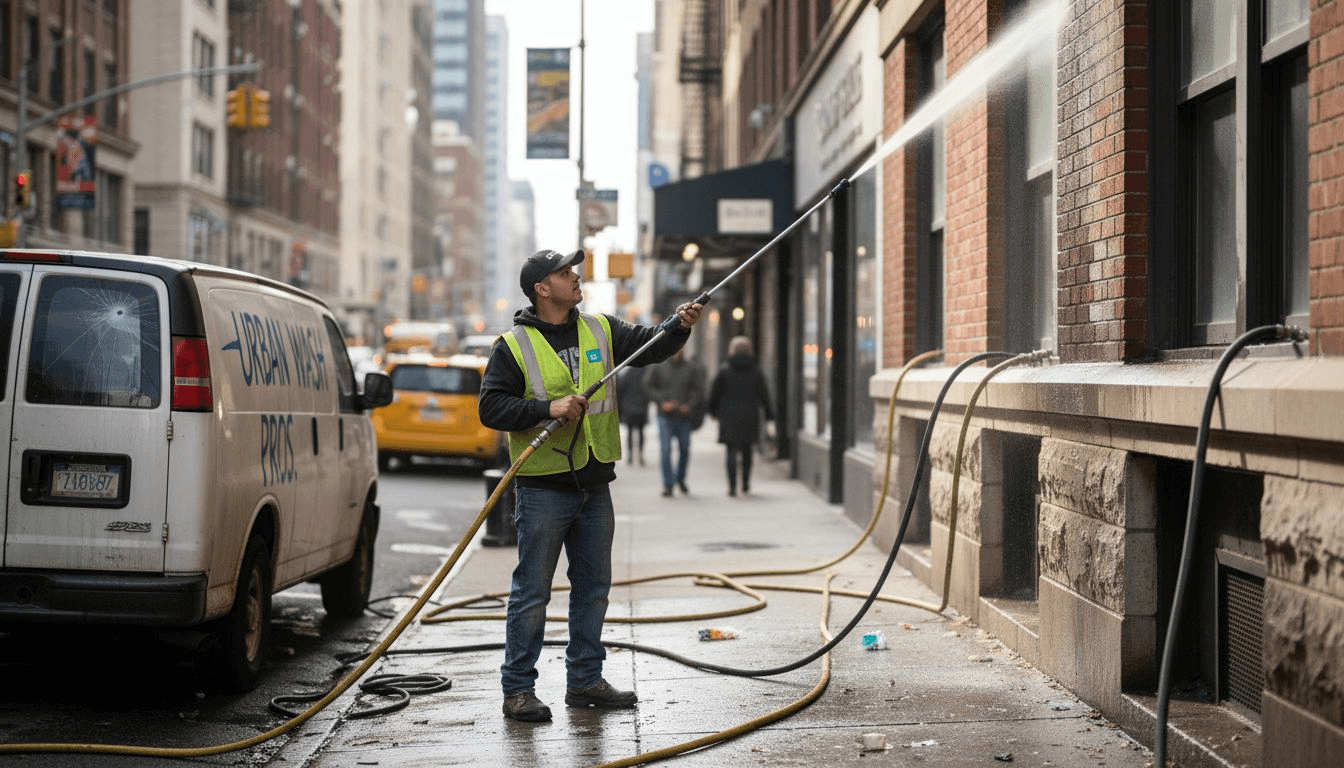
Urban property managers know the struggle of keeping multi-family buildings looking their best while protecting them from daily wear. Pressure washing delivers more than just a clean surface. It is a method that extends surface lifespan and reduces long-term maintenance costs, supporting higher property values and safer walkways in cities. This article uncovers how pressure washing methods and equipment can transform property care and help keep tenants satisfied year-round.
Table of Contents
- Defining Pressure Washing for Property Management
- Types of Pressure Washing Methods and Equipment
- Key Benefits for Multi-Family Urban Properties
- Risks, Legal Issues, and Safety Protocols
- Calculating Costs and Avoiding Common Mistakes
Key Takeaways
| Point | Details |
|---|---|
| Importance of Pressure Washing | Pressure washing is essential for preserving property aesthetics and preventing surface degradation, ultimately enhancing property value. |
| Types of Pressure Washers | Different pressure washing equipment serves varied applications, such as cold and hot water washers for specific dirt and grime removal. |
| Safety Protocols | Implementing rigorous safety measures is crucial to prevent injury and ensure compliance during pressure washing operations. |
| Cost Estimation | Accurate cost estimation is vital, considering factors like surface area and contaminant complexity to maintain profitability and avoid underpricing. |
Defining Pressure Washing for Property Management
Pressure washing is a specialized exterior maintenance technique designed to protect and restore urban property surfaces using high-pressure water spray. Property managers rely on this powerful cleaning method to preserve building aesthetics, prevent surface degradation, and maintain property value.
At its core, pressure washing involves using specialized equipment that removes dirt and contaminants through concentrated water streams applied at high velocities. The process effectively eliminates:
- Accumulated dirt and grime
- Mold and mildew growth
- Algae and moss
- Surface stains and discoloration
- Potential slip hazards
Understanding the mechanics of pressure washing reveals its significance for urban property management. Industrial-grade pressure washers generate water pressures ranging from 1,500 to 4,000 pounds per square inch (PSI), allowing them to clean surfaces far more effectively than traditional manual washing methods. This technology enables property managers to restore surfaces quickly, minimize labor costs, and extend the lifespan of exterior building materials.
Pressure washing is not just cleaning - it's strategic property maintenance that directly impacts asset value and tenant perception.
Commercial applications are particularly diverse, including cleaning:
- Building exteriors
- Parking lots and garages
- Sidewalks and walkways
- Dumpster areas
- Exterior decking and common areas
Pro tip: Schedule professional pressure washing services quarterly to maintain consistent property appearance and prevent long-term surface degradation.
Types of Pressure Washing Methods and Equipment
Property managers must understand the nuanced world of pressure washing equipment to effectively maintain urban properties. High-pressure water stream technologies have evolved significantly, offering multiple specialized approaches for different cleaning challenges.
Pressure Washing Equipment Types include:
- Cold water pressure washers
- Hot water pressure washers
- Electric pressure washers
- Gas-powered pressure washers
- Industrial-grade commercial systems
Each equipment type serves unique property maintenance needs. Cold water systems work well for light dirt removal, while hot water washers excel at breaking down grease and stubborn organic materials. Electric models provide quieter operation ideal for residential complexes, whereas gas-powered units deliver higher mobility and pressure for extensive outdoor cleaning projects.
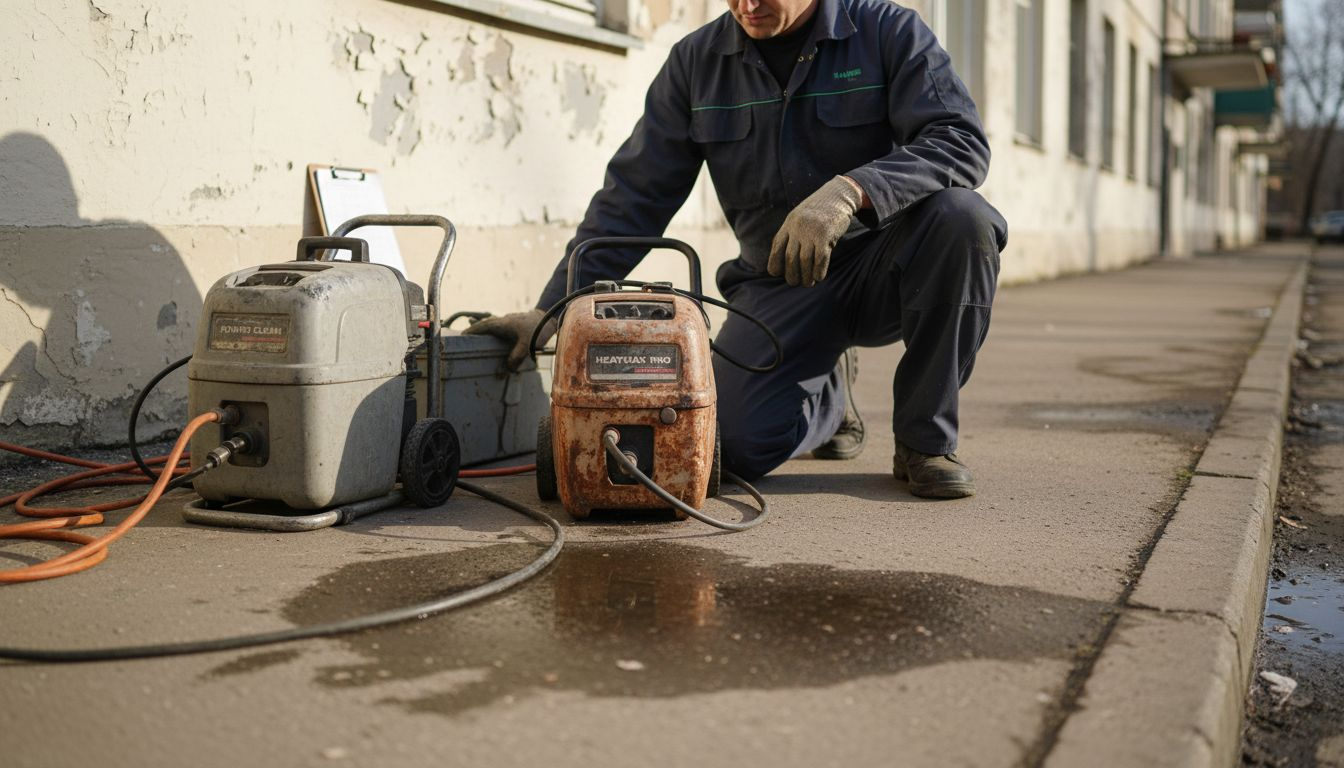
Here's how common pressure washing equipment types differ for property applications:
| Equipment Type | Best Use Cases | Pressure Range (PSI) | Operational Benefit |
|---|---|---|---|
| Cold Water Washer | Basic dirt removal | 1,500–3,000 | Lower cost, easy maintenance |
| Hot Water Washer | Grease, organic buildup | 2,000–4,000 | Cuts through oil and tough stains |
| Electric Washer | Residential, indoor areas | 1,500–2,000 | Quiet operation, less emissions |
| Gas-Powered Washer | Large exteriors, garages | 2,500–4,000 | High mobility, powerful cleaning |
| Industrial System | Heavy-duty, commercial use | 3,500+ | Maximizes efficiency, large jobs |
Professional property managers select pressure washing equipment based on surface type, contaminant complexity, and environmental considerations.
Pressure generation mechanisms vary dramatically, with two primary pump technologies dominating the market:
- Intensifier pumps for high-precision cleaning
- Crankshaft-driven plunger pumps for consistent performance
The critical factors determining equipment selection include:
- Cleaning surface characteristics
- Contaminant type
- Required pressure levels
- Environmental restrictions
- Budget constraints
Pro tip: Invest in professional-grade equipment with adjustable pressure settings to maximize versatility across different property maintenance scenarios.
Key Benefits for Multi-Family Urban Properties
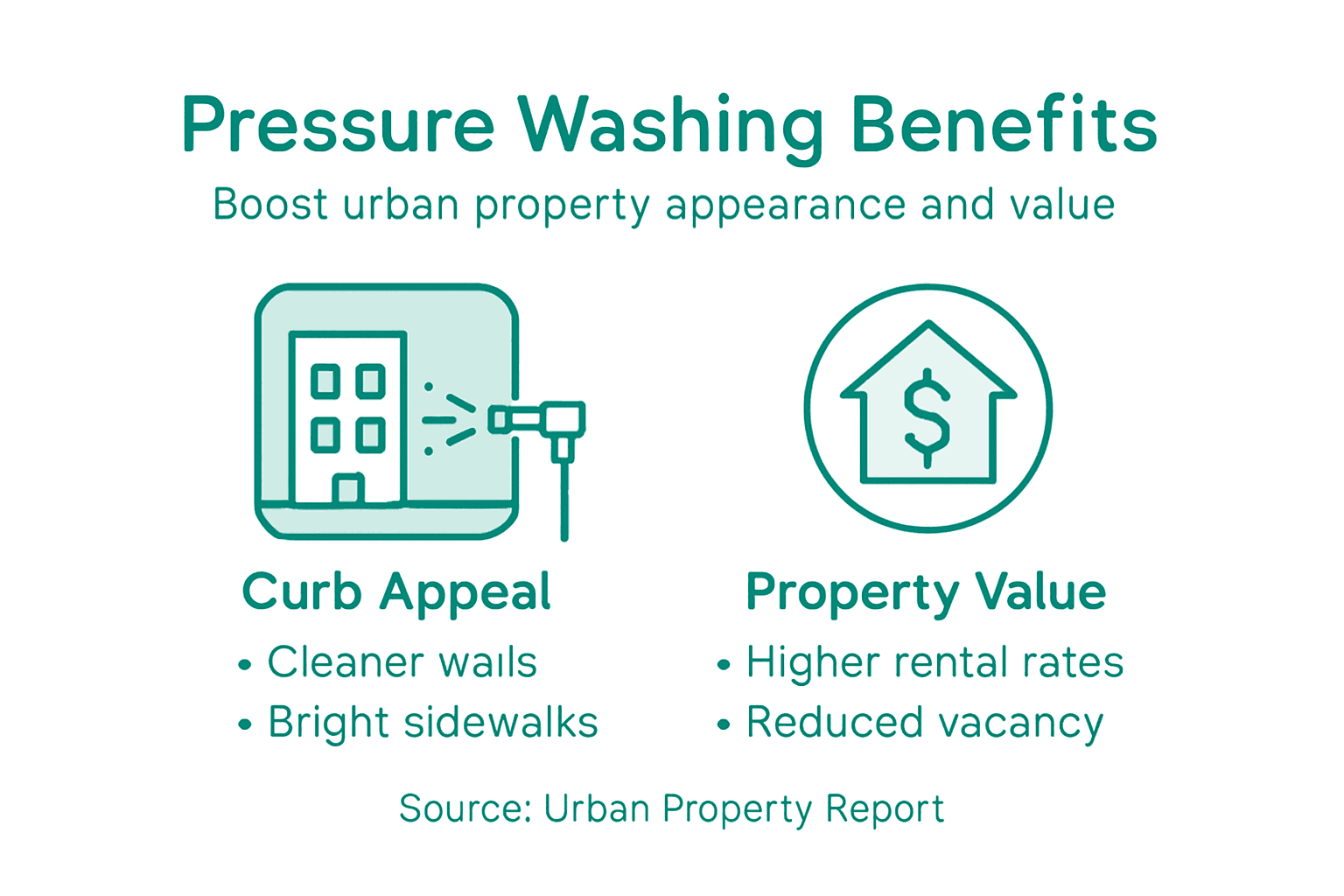
Pressure washing delivers transformative advantages for multi-family urban properties, extending far beyond simple aesthetic improvements. Urban infrastructure maintenance strategies demonstrate how systematic exterior cleaning directly impacts property value and tenant satisfaction.
Key Performance Benefits include:
- Enhanced curb appeal
- Reduced long-term maintenance costs
- Extended surface lifespan
- Improved property safety
- Prevention of structural degradation
- Health hazard mitigation
Property managers recognize that regular pressure washing provides critical preventative maintenance. By removing accumulated pollutants, mold, and environmental contaminants, these services protect building materials and create more attractive living environments. Cold water and hot water systems target different types of grime, ensuring comprehensive cleaning across various surface types.
Strategic pressure washing transforms property maintenance from reactive repairs to proactive preservation.
The economic implications are significant. Regular cleaning prevents costly repairs by:
- Stopping moisture-related damage
- Eliminating potential slip hazards
- Preventing mold and algae growth
- Maintaining attractive property appearances
- Supporting higher rental or sales valuations
Pro tip: Develop a quarterly pressure washing schedule that matches each property's specific environmental exposure and surface materials.
Risks, Legal Issues, and Safety Protocols
Pressure washing operations involve complex safety considerations that extend beyond simple cleaning procedures. Comprehensive safety protocols are critical for protecting workers, property managers, and building occupants from potential hazards.
Primary Safety Risks include:
- High-pressure water injury potential
- Electrical equipment hazards
- Slip and fall accidents
- Eye and skin damage
- Musculoskeletal strain
- Chemical exposure risks
Property management teams must implement rigorous safety frameworks that address equipment operation, personal protective equipment, and potential liability issues. This involves developing comprehensive training programs, conducting regular risk assessments, and maintaining strict operational standards that protect both workers and property assets.
Safety is not an option in pressure washing - it's an absolute necessity for legal and operational integrity.
Legal compliance requires multiple strategic approaches:
- Conduct thorough pre-washing risk assessments
- Provide mandatory safety training
- Use appropriate personal protective equipment
- Maintain detailed operational documentation
- Verify contractor insurance and certifications
Pro tip: Create a standardized safety checklist that employees and contractors must complete before initiating any pressure washing project.
Calculating Costs and Avoiding Common Mistakes
Accurate cost estimation is crucial for successful pressure washing projects in multi-family urban properties. Comprehensive job cost calculation requires a strategic approach that considers multiple financial and operational variables.
Critical Cost Factors include:
- Surface area dimensions
- Contamination complexity
- Equipment usage
- Labor hours
- Chemical and supply expenses
- Travel and preparation time
- Overhead allocation
- Site-specific challenges
Property managers must develop precise estimation strategies that account for nuanced project requirements. Understanding each project's unique characteristics prevents underpricing and ensures financial sustainability. Detailed site evaluations help create accurate quotes that cover all potential expenses and maintain profitability.
Use this table to reference major cost drivers and their potential impacts:
| Cost Factor | Influence on Estimate | Example Challenge |
|---|---|---|
| Surface Area | Larger area, higher cost | Multi-level parking garages |
| Contaminant Complexity | Tough stains increase labor | Grease in dumpsters |
| Site Access | Difficult access raises time | Tight urban alleyways |
| Chemical Requirements | Special cleaners add expense | Mold remediation needed |
Successful pressure washing pricing balances client expectations with realistic operational costs.
Common estimation mistakes property managers should avoid:
- Underestimating labor time
- Neglecting material costs
- Failing to factor in equipment depreciation
- Overlooking site access challenges
- Skipping comprehensive site assessments
Pro tip: Develop a standardized pricing worksheet that captures all potential project variables to ensure consistent and accurate cost estimations.
Elevate Your Urban Property Value with Expert Pressure Washing Solutions
Maintaining curb appeal and preventing structural damage are challenges every property manager faces in urban environments. As highlighted in the article, strategic pressure washing not only restores building aesthetics but also safeguards multi-family units from costly surface degradation and health hazards. Key terms like high-pressure water spray, preventative maintenance, and environmental contaminants emphasize the importance of regular, professional cleaning to enhance tenant satisfaction and protect your investment.
At Monster Property Partners, we specialize in delivering reliable commercial pressure washing services tailored to apartment buildings and multi-family units. Our team understands the significance of precise pressure control, safety protocols, and surface-specific cleaning methods discussed in the article to maximize your property’s value. Experience efficient project management combined with industry-leading equipment and communication that meets the complex demands of urban property maintenance.
Take the first step to transform reactive repairs into proactive preservation today. Discover how our expert team can help you schedule effective pressure washing that aligns with your property’s unique needs and keeps your portfolio looking exceptional. Visit Monster Property Partners now and secure your competitive advantage in urban property management.
Frequently Asked Questions
What is pressure washing and how does it impact urban property value?
Pressure washing is an exterior maintenance technique that uses high-pressure water spray to clean surfaces, removing dirt, grime, mold, and other contaminants. Regular pressure washing helps maintain the aesthetics of urban properties, reduces long-term maintenance costs, and ultimately increases property value by enhancing curb appeal and tenant satisfaction.
How often should property managers schedule pressure washing for their properties?
It is recommended that property managers schedule professional pressure washing services quarterly. This frequency helps maintain a consistent property appearance and prevents long-term surface degradation, ultimately protecting property value.
What types of pressure washing equipment are best for urban property maintenance?
Different types of pressure washing equipment serve various needs: cold water washers are great for basic dirt removal, while hot water washers excel at tackling grease and stubborn stains. Electric models are suitable for residential areas due to their quiet operation, while gas-powered units are ideal for extensive outdoor cleaning projects.
What are the primary safety risks associated with pressure washing?
Pressure washing involves risks such as high-pressure water injury, slip and fall accidents, and exposure to chemicals. It’s crucial for property management teams to implement safety protocols and provide training to ensure safe operation and mitigate potential hazards.
Recommended
- Monster Property Partners | Multifamily Exterior Cleaning Orlando FL
- Monster Property Partners | Multifamily Exterior Cleaning Orlando FL
- Portfolio Partnership | Monster Property Partners
- Pressure Washing’s Impact on Citrus County Property Value – white-diamond-pressure
- Pressure Washing: Protecting Property in Florida