
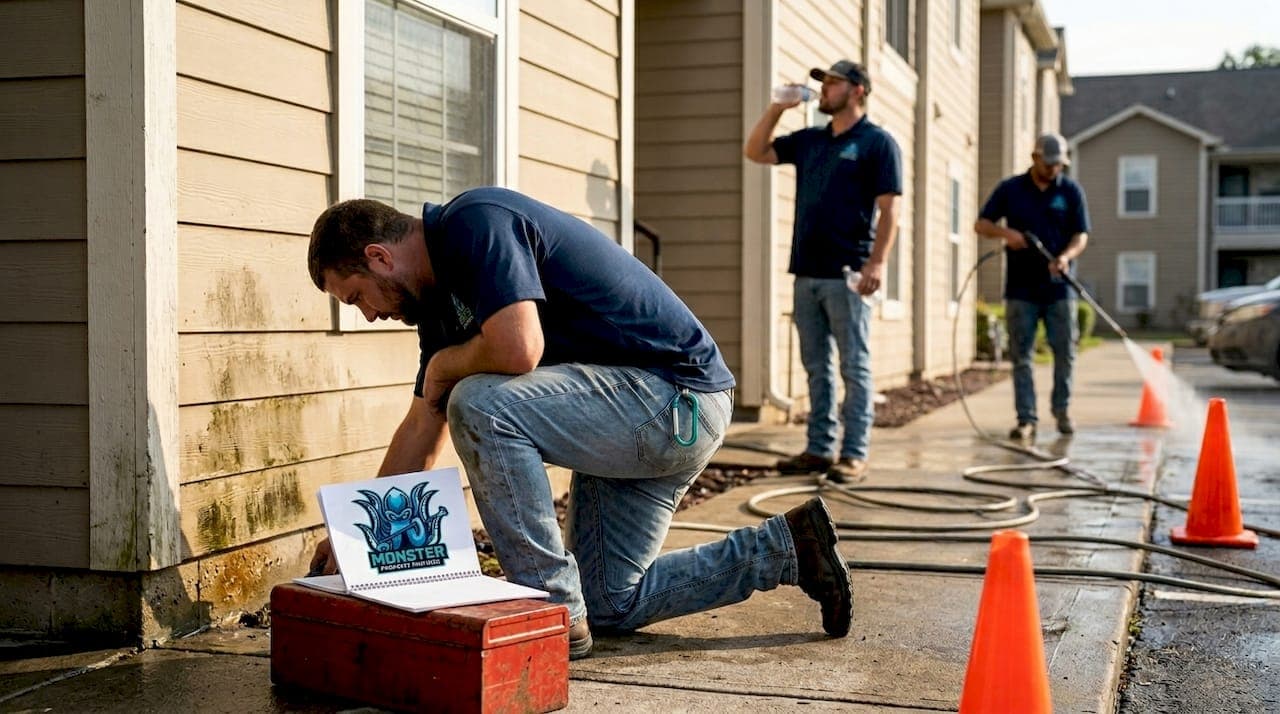
Property managers know that first impressions matter, yet coordinating consistent exterior cleaning for apartment complexes often falls through the cracks. Between juggling tenant requests, vendor coordination, and budget constraints, exterior cleaning benefits get postponed until visible grime forces reactive scrambling. This guide delivers practical scheduling strategies to transform exterior maintenance from chaotic firefighting into predictable, value-building routine that protects your investment and keeps tenants satisfied.
Table of Contents
- Understanding The Importance Of Exterior Cleaning Schedules
- Preparing Your Apartment Complex For Effective Exterior Cleaning
- Executing And Managing Your Exterior Cleaning Schedule
- Verifying Cleaning Effectiveness And Adjusting Your Schedule
- How Monster Property Partners Can Simplify Your Exterior Cleaning Schedule
Key takeaways
| Point | Details |
|---|---|
| Regular scheduling maintains curb appeal | Consistent cleaning preserves property value and tenant satisfaction |
| Assessment prioritizes cleaning tasks | Evaluating specific needs ensures efficient resource allocation |
| Preparation prevents costly mistakes | Right tools and vendor selection streamline scheduling execution |
| Clear schedules prevent damage | Following structured timelines avoids deterioration and emergency repairs |
| Tracking ensures quality standards | Verification and adjustment optimize long-term maintenance outcomes |
Understanding the importance of exterior cleaning schedules
Exterior cleaning maintains appearance and value by removing accumulated dirt, mold, and pollutants that degrade building materials over time. Tenants form opinions within seconds of arriving at your property, and stained walkways or algae-covered siding signal neglect that undermines premium positioning. Beyond aesthetics, regular upkeep preserves assets by preventing organic growth from etching into concrete or moisture from penetrating exterior walls.
Apartment complexes present unique cleaning challenges across multiple surface types. Common areas requiring routine attention include:
- Building facades and siding vulnerable to mildew and oxidation
- Concrete walkways, parking lots, and pool decks accumulating oil and grime
- Windows and glass surfaces collecting hard water deposits
- Gutters and downspouts prone to organic debris buildup
- Dumpster enclosures and service areas attracting persistent staining
Neglecting these surfaces creates compounding problems. Organic growth spreads exponentially once established, turning minor cleaning into major restoration projects. Stained concrete becomes slip hazards when wet, creating liability exposure. Clogged gutters overflow during storms, damaging foundations and landscaping.
"Properties with consistent exterior maintenance command 8-12% higher rental rates and experience 30% faster lease-ups compared to comparable units with visible exterior deterioration."
Scheduled maintenance flips this equation. You catch problems early when simple pressure washing suffices rather than requiring expensive chemical treatments or surface replacement. Tenants notice the difference, translating cleanliness into renewal decisions. Prospective renters tour properties comparing options, and your well-maintained exterior becomes the tiebreaker that justifies premium pricing.
Pro Tip: Schedule quarterly property walks specifically focused on exterior conditions, photographing the same locations each time to track deterioration patterns and validate cleaning effectiveness.
Preparing your apartment complex for effective exterior cleaning
Before creating schedules, assess cleaning needs by conducting thorough property surveys. Walk every exterior surface during different times and weather conditions. Morning dew reveals mildew patterns invisible during dry afternoons. Wet pavement exposes oil staining hidden when surfaces are dusty.
Evaluate each area's specific requirements:
- Windows need frequency based on proximity to irrigation overspray and traffic dust
- Concrete surfaces vary by usage intensity, with high-traffic walkways requiring more attention than secondary paths
- Gutters demand inspection after leaf-fall seasons and before heavy rain periods
- Building exteriors require assessment of material type, sun exposure, and vegetation proximity
Cleaning methods matter enormously for results and surface protection. Pressure washing delivers powerful cleaning for durable concrete and asphalt but damages softer materials like wood siding or older brick. Soft washing uses specialized detergents at low pressure, making it ideal for building facades, painted surfaces, and delicate trim work. Understanding which method suits each surface prevents costly damage while maximizing cleaning effectiveness.
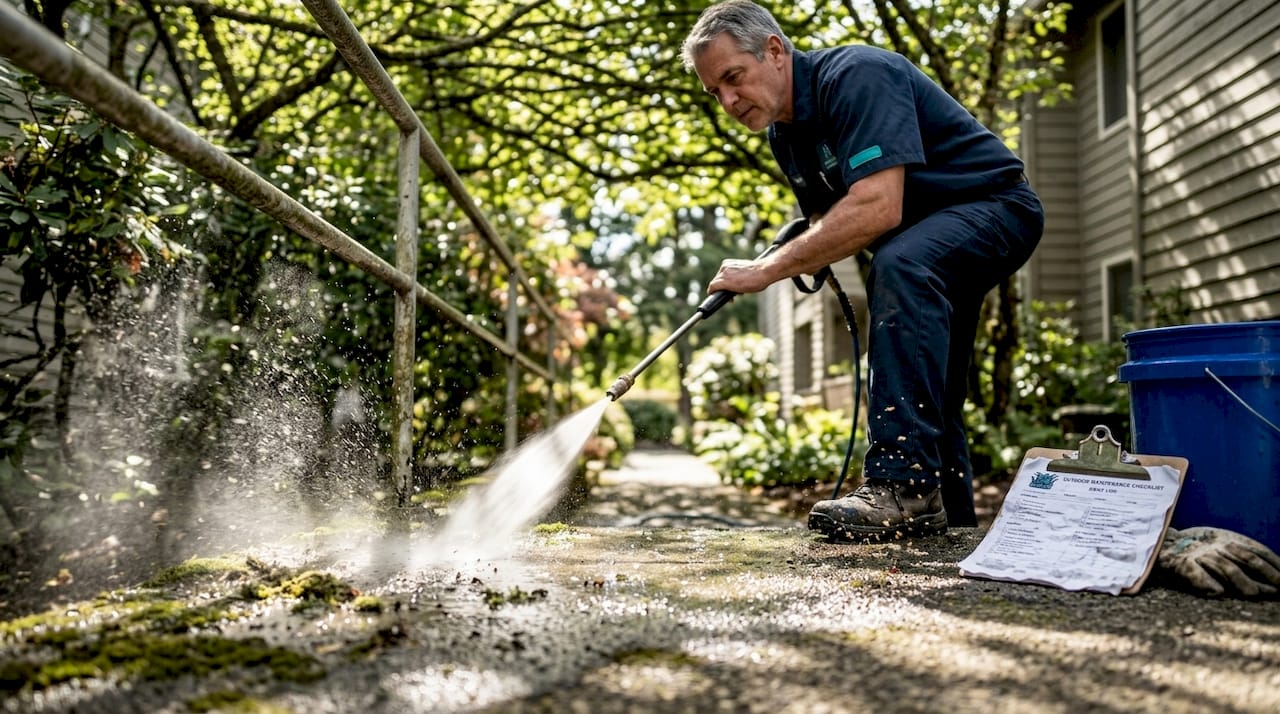
Consolidating with single vendors streamlines scheduling complexity dramatically. Multiple contractors mean coordinating separate calendars, managing different communication styles, and reconciling inconsistent quality standards. One experienced partner learns your property's specific needs, maintains consistent records, and simplifies billing and scheduling coordination.
| Tool/Material | Primary Use | Scheduling Consideration |
|---|---|---|
| Pressure washer | Concrete, asphalt surfaces | Schedule during low-traffic hours |
| Soft wash system | Building exteriors, delicate surfaces | Plan for drying time before rain |
| Gutter cleaning tools | Downspouts, roof drainage | Coordinate before rainy seasons |
| Window cleaning equipment | Glass surfaces, entryways | Schedule when residents are typically away |
| Protective coverings | Landscaping, fixtures | Include setup time in scheduling |
Pro Tip: Schedule exterior cleaning during mid-morning on weekdays when most residents have left for work, minimizing disruption while ensuring adequate daylight for thorough work and immediate quality verification.
Executing and managing your exterior cleaning schedule
Creating effective schedules starts with mapping your property's cleaning requirements onto a calendar framework. Begin by listing all exterior surfaces requiring maintenance, then assign frequencies based on usage intensity and exposure factors. High-traffic concrete areas might need monthly attention while building facades perform well with quarterly cleaning.
Follow these steps to build your schedule:
- Divide your property into zones based on surface type and cleaning method required
- Assign baseline frequencies to each zone using manufacturer recommendations and past experience
- Mark seasonal considerations like pre-winter gutter cleaning or spring mildew removal
- Block out periods when cleaning would disrupt major property events or peak leasing seasons
- Build in buffer time for weather delays or unexpected maintenance discoveries
- Distribute vendor visits to avoid overwhelming staff coordination on single days
Seasonal timing improves results by aligning cleaning with natural cycles. Spring cleaning removes winter salt and grime before summer showcasing. Fall maintenance prepares surfaces for harsh winter conditions. Summer addresses organic growth during peak growing seasons.
| Approach | Best For | Advantages | Limitations |
|---|---|---|---|
| Fixed schedule | Consistent conditions, predictable needs | Easy planning, simple tracking | Less flexible for weather changes |
| Flexible schedule | Variable weather, mixed surface types | Adapts to conditions, optimizes results | Requires more coordination effort |
| Event-driven | Properties with seasonal peaks | Aligns with business priorities | May miss gradual deterioration |
Coordinating with tenants prevents complaints and demonstrates professionalism. Send notices 48-72 hours before cleaning, specifying affected areas and approximate timing. Request that residents move vehicles from parking areas being cleaned and secure patio items near building walls. Clear communication transforms potential frustration into appreciation for proactive maintenance.
Vendor coordination requires establishing clear expectations upfront. Provide site maps marking priority areas, access points, and water sources. Discuss notification protocols for schedule changes or discovered issues requiring immediate attention. Confirm insurance coverage and establish quality standards with photo documentation showing acceptable results.
Pro Tip: Use shared digital calendars with automated reminders sent to property staff, cleaning vendors, and relevant contractors 72 hours before scheduled services, reducing no-shows and improving preparation.
Common scheduling pitfalls derail even well-intentioned plans. Booking too aggressively without weather buffers creates cascading delays when rain forces rescheduling. Failing to communicate schedule changes leaves vendors arriving to locked gates or surprised residents. Skipping pre-cleaning property walks means missing obstacles or damage requiring attention before cleaning begins. Address these by building flexibility into timelines, establishing clear communication protocols, and conducting brief pre-service inspections.
Verifying cleaning effectiveness and adjusting your schedule
Documentation transforms subjective impressions into objective maintenance records. Photograph the same locations before and after each cleaning, creating visual proof of work completed and condition improvements. Track cleaning outcomes in simple spreadsheets noting service dates, areas cleaned, methods used, and any issues discovered. This historical data reveals patterns guiding future scheduling decisions.
Evaluate cleaning quality immediately after service completion using consistent criteria:
- Surface cleanliness compared to pre-cleaning photos
- Complete coverage without missed sections or streaking
- Proper technique evident in results without surface damage
- Thorough cleanup of equipment and debris
- Professional conduct and communication from service crew
Tenant feedback provides ground-level perspective on maintenance effectiveness. Brief surveys after major cleaning projects gauge satisfaction and identify overlooked areas. Monitor online reviews mentioning property appearance, as exterior cleanliness frequently appears in both positive and negative tenant commentary.
| Monitoring Metric | Measurement Method | Target Frequency | Corrective Action |
|---|---|---|---|
| Surface cleanliness | Visual inspection, photos | After each service | Re-clean unsatisfactory areas |
| Tenant complaints | Tracking system review | Weekly | Adjust problem area frequency |
| Organic growth return | Observation timeline | Monthly spot checks | Increase cleaning frequency |
| Equipment effectiveness | Results comparison | Quarterly vendor review | Upgrade methods or change vendors |
Seasonal adjustments optimize resource allocation by matching intensity to conditions. Spring typically demands increased frequency as plants grow and pollen accumulates. Summer heat accelerates organic growth in humid climates, requiring more attention to shaded areas. Fall brings leaf debris requiring gutter focus and walkway clearing. Winter maintenance drops in frequency but targets salt residue and freeze-thaw damage.
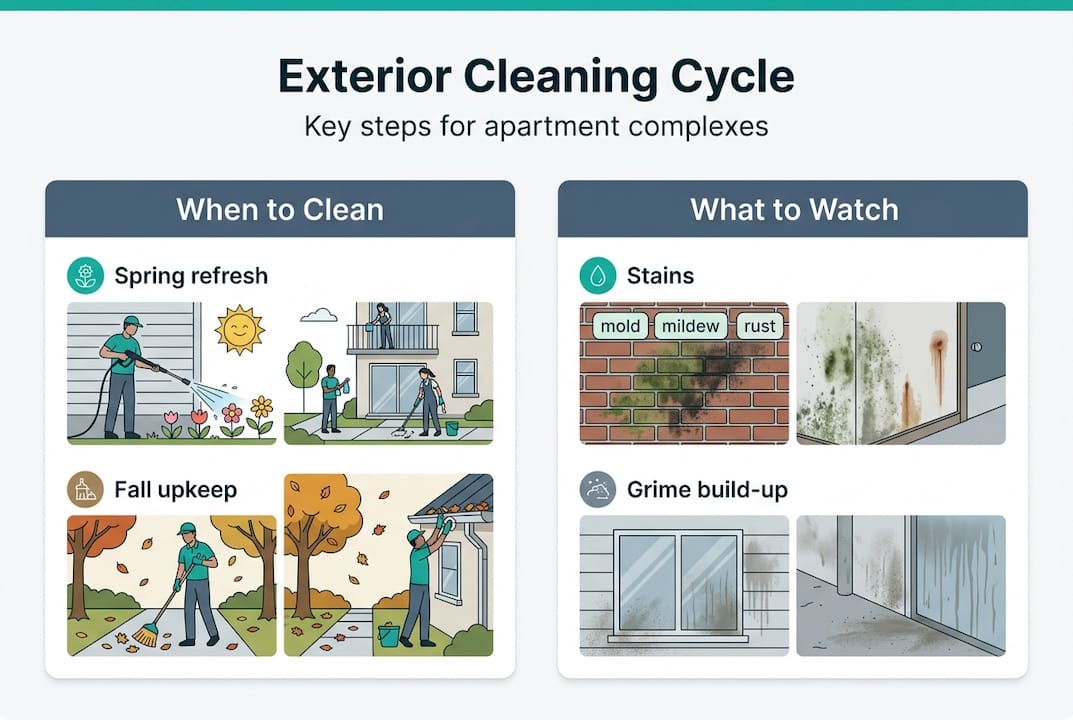
Property-specific factors override general guidelines. Buildings near busy roads accumulate exhaust residue faster than properties in residential areas. Complexes with mature landscaping fight constant organic debris while newer properties with minimal vegetation stay cleaner longer. Pool areas require more frequent attention during summer months when usage peaks.
Communicate improvements to stakeholders by sharing before-and-after photos in newsletters, posting visible results in common areas, and including maintenance updates in lease renewal conversations. Owners appreciate documentation showing their investment receives proper care. Prospective tenants touring properties notice fresh, clean exteriors that justify premium positioning.
Adjust schedules based on accumulated data rather than assumptions. If quarterly building washing leaves visible growth returning after two months, shift to every 60 days. When concrete cleaning maintains appearance for five months, extend the interval and reallocate budget to problem areas needing more attention. Let results guide resource allocation for maximum efficiency.
How Monster Property Partners can simplify your exterior cleaning schedule
Managing exterior cleaning schedules across apartment complexes demands time and expertise that stretches property management resources thin. Monster Property Partners delivers comprehensive multifamily cleaning services designed specifically for apartment communities, handling everything from initial assessment through ongoing maintenance tracking. Our single-vendor approach eliminates coordination headaches by consolidating all exterior cleaning needs under one experienced partner who understands your property's unique requirements.

Our specialized services include common area concrete cleaning that removes years of accumulated staining from walkways, parking areas, and pool decks, plus building soft washing that safely restores siding and facades without high-pressure damage risks. We maintain detailed service records, provide photo documentation, and proactively recommend schedule adjustments based on seasonal conditions and property observations. Contact us to develop a customized maintenance plan that keeps your apartment complex looking exceptional year-round while freeing your team to focus on tenant relationships and operations.
FAQ
How often should exterior cleaning be scheduled for apartments?
Typically every three to six months depending on climate conditions, traffic patterns, and surface types. Properties in humid climates or near heavy vegetation require more frequent attention to control organic growth. Seasonal adjustments increase frequency during spring and fall when environmental factors accelerate deterioration.
What factors influence the choice of cleaning methods?
Surface materials dictate appropriate techniques, with pressure washing suitable for durable concrete while soft washing protects delicate siding and painted surfaces. Environmental regulations, water restrictions, and proximity to landscaping also shape method selection. Stain types matter too, as organic growth responds to chemical treatments while oil staining requires mechanical agitation.
Can exterior cleaning schedules improve tenant satisfaction?
Regular cleaning dramatically boosts curb appeal, which tenants consistently cite as influencing renewal decisions and referral likelihood. Well-maintained properties signal professional management and justify premium rents. Clean exteriors also reduce maintenance complaints by preventing deterioration that creates functional problems like slippery walkways or water intrusion.
What are common mistakes to avoid when scheduling exterior cleaning?
Infrequent cleaning allows problems to compound into expensive restoration projects rather than simple maintenance. Rigid schedules without weather flexibility create cascading delays and vendor conflicts. Poor communication leaves tenants surprised by service disruptions and vendors unprepared for site-specific challenges. Failing to verify results means substandard work goes unaddressed, wasting budget without achieving maintenance goals.