
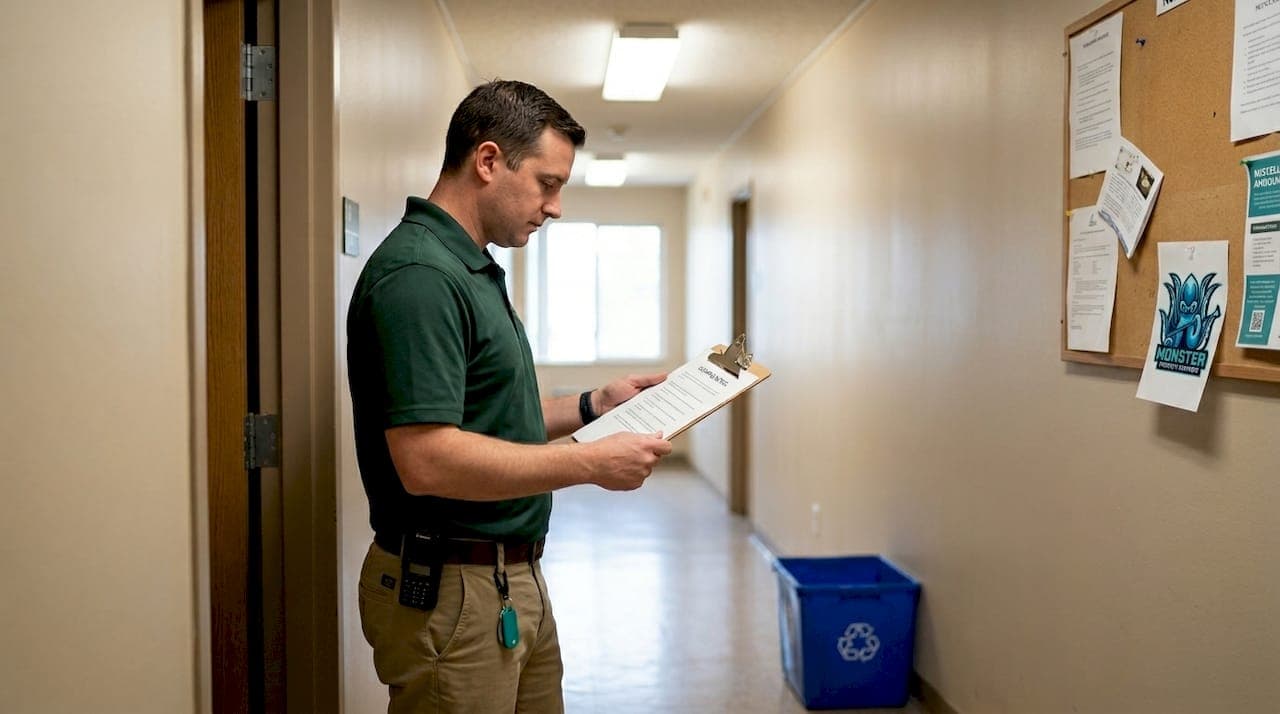
A single missed cleaning notice can cost you a tenant. That might sound dramatic, but turnover costs $3,000–$5,000 per unit, and poor communication during cleaning services is one of the most preventable causes of tenant frustration. When residents feel blindsided by noise, restricted access, or unexpected disruptions, their trust in management erodes fast. The good news is that a structured, multi-channel communication approach can reduce vacancies and boost retention by up to 30%. This guide walks you through every step, from setting up your notification system to resolving complaints after the job is done.
Table of Contents
- Why communication matters for tenant satisfaction and retention
- Prepare for effective cleaning announcements
- Execute clear, multi-channel cleaning notices
- Engage, follow up, and resolve issues after cleaning
- Troubleshooting and real-world scenarios
- Unlock long-term value with professional cleaning and tenant care
- Frequently asked questions
Key Takeaways
| Point | Details |
|---|---|
| Advance notice is critical | Notifying tenants 24-48 hours in advance reduces complaints and legal risk. |
| Clarity boosts satisfaction | Detailed, multi-channel notices prevent confusion and improve tenant experience. |
| Follow-up completes the loop | Feedback requests and updates after cleaning encourage resident trust and retention. |
| Document everything | Keeping records of all communications protects you in disputes and shows professionalism. |
| Retention saves money | Effective communication during cleaning can increase lease renewals and cut costly turnovers. |
Why communication matters for tenant satisfaction and retention
Tenants do not just rent a unit. They rent an experience. When cleaning operations disrupt their day without warning, that experience takes a hit. Missed or poorly communicated cleaning schedules irritate residents, and repeated frustration pushes them toward the exit at lease renewal time.
Cleanliness is directly tied to how tenants perceive building quality and management competence. A spotless lobby signals that you care. But if tenants are caught off guard by a pressure washing crew blocking the entrance at 7 a.m., even a clean building feels poorly managed. Research shows that cleaning boosts retention in measurable ways, but only when paired with clear communication.
Here is what the data says:
- Communication quality correlates 70% with overall tenant satisfaction, outperforming amenities like gyms or pools
- Proactive communication increases lease renewals by up to 30%
- Clean common areas boost satisfaction and perceived property value significantly
- Tenants who feel informed are far less likely to file formal complaints
"The quality of communication a property manager provides matters more to tenants than the physical amenities on offer. Residents want to feel respected and informed, not managed."
The financial case is simple. Every tenant you retain saves you thousands in turnover costs. Investing in a solid communication process around cleaning is one of the highest-return moves you can make as a property owner.
Now that you know the stakes, let's look at what you need to set up effective cleaning communication.
Prepare for effective cleaning announcements
Before you send a single notice, you need a communication infrastructure in place. That means knowing who gets notified, through which channels, and how far in advance.
Start by establishing a written communications policy that categorizes your cleaning types. Routine cleans (hallways, lobbies, parking lots) need different protocols than deep cleans or emergency situations. Your policy should define each category and the minimum notice required for each.
Advance notice via multiple channels is the baseline standard, with 24 to 48 hours minimum for routine cleans. Use at least two channels for every standard notification. Email and SMS together reach the widest audience. Tenant portals and physical posted notices serve as backups.
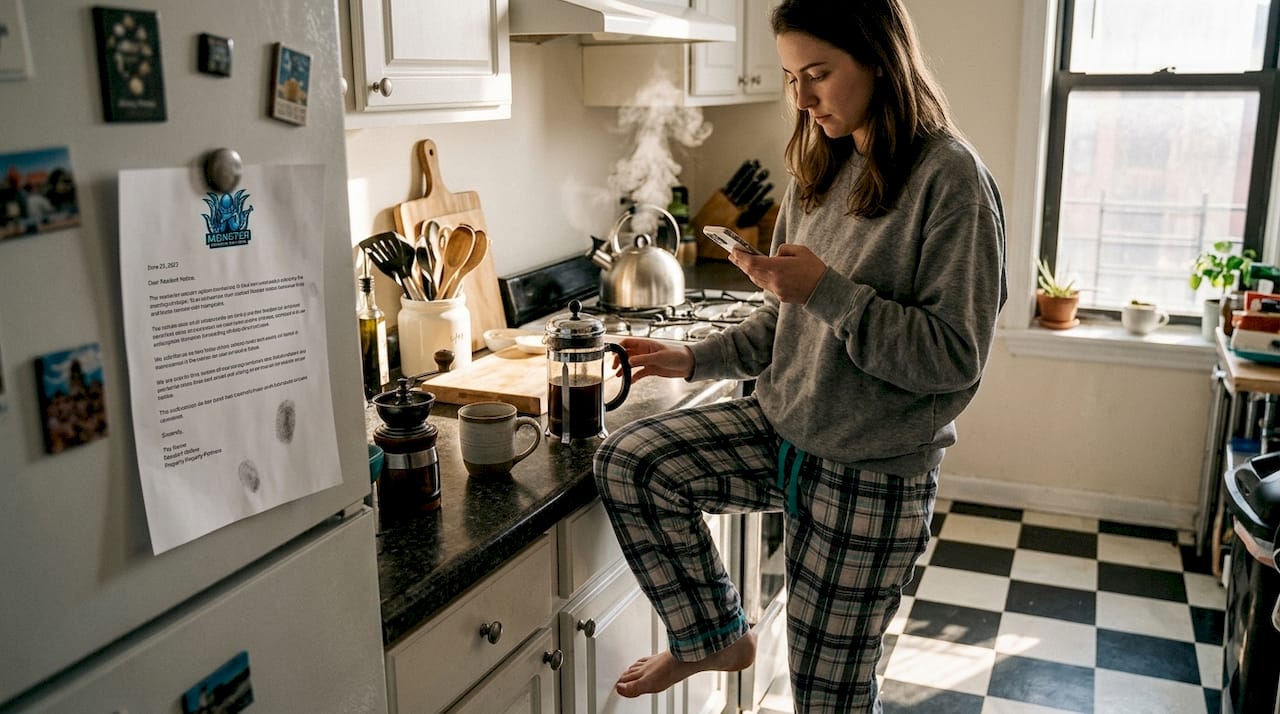
Here is a quick reference for notice requirements by cleaning type:
| Cleaning type | Minimum notice | Recommended channels |
|---|---|---|
| Routine (hallways, lobbies) | 24 hours | Email, SMS |
| Deep clean (exterior, parking) | 48 hours | Email, SMS, portal, posted notice |
| Emergency clean | As soon as possible | SMS, posted notice |
| Unit access required | 48 to 72 hours | Certified mail, email, SMS |
Always use your cleaning checklist for multifamily properties to align your communication schedule with your service schedule. This prevents gaps where a cleaning happens but no one was told.
Document all communications for legal compliance, especially when cleaning requires entry into a unit. Keep copies of every notice sent, every response received, and every adjustment made.
Some tenants need extra consideration. Accommodate disabilities and hoarding situations with empathy and reasonable adjustments before escalating to formal notices. A quick phone call to a tenant with mobility issues before a hallway deep clean goes a long way.
Pro Tip: Build a template library with pre-written scripts for each cleaning type. When your team can copy, customize, and send in under five minutes, notices actually go out on time. Store templates in your property management software or a shared drive everyone can access.
Refer to our property cleaning guide for a full breakdown of how to align your cleaning schedule with your communication calendar.
Once you're prepared, employ these best practices for communicating upcoming cleaning.
Execute clear, multi-channel cleaning notices
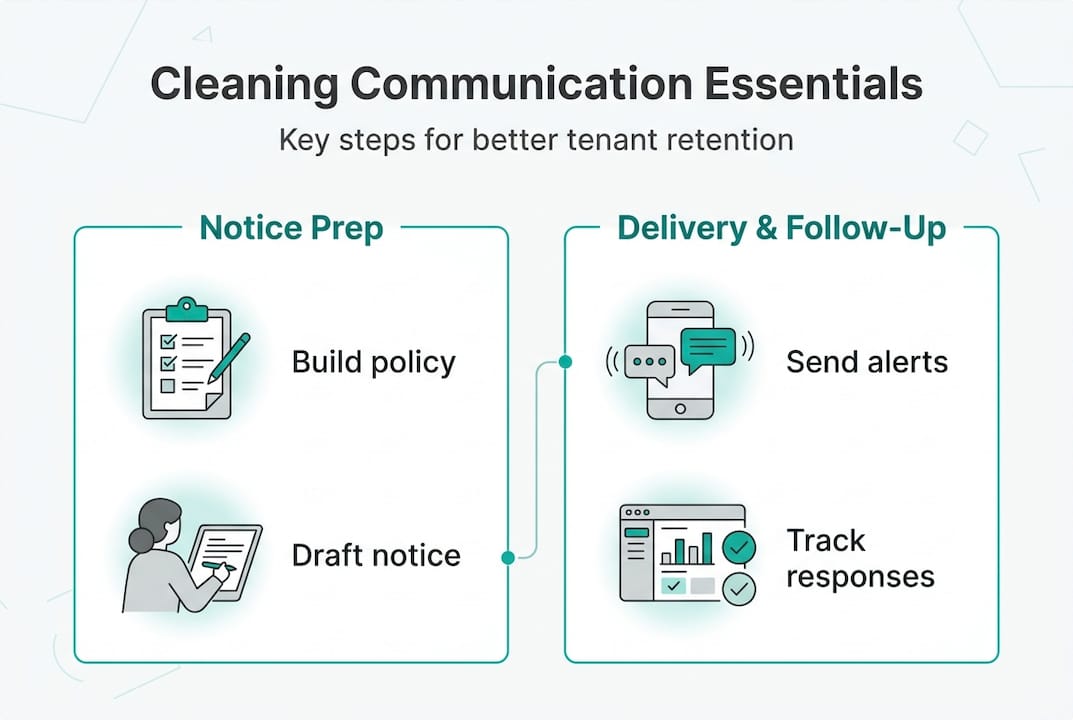
A good notice answers five questions before the tenant even has to ask: What is being cleaned? When does it start? How long will it take? Will anyone need access to my unit? What do I need to do?
Here is a step-by-step process for composing and delivering effective cleaning notifications:
- Identify the cleaning type and scope. Know exactly what areas are affected before you write a single word.
- Draft your notice using a script template. Clear, specific scripts should detail the cleaning type, date, time, expected duration, access requirements, and any tenant actions needed.
- Select your channels. Match the channel to the urgency and audience. SMS for fast reach, email for detail, portal for documentation, physical notices for common areas.
- Schedule delivery at least 24 to 48 hours in advance. For disruptive work like exterior pressure washing or parking lot cleaning, give 72 hours or more.
- Send a reminder. A short reminder the day before reduces the number of tenants caught off guard.
- Include a feedback option. A simple reply email or phone number lets tenants flag conflicts before the crew arrives.
For common area work, schedule during low-traffic times and notify all residents, not just those on the affected floor. Noise and access disruptions travel further than you think.
Here is a quick comparison of notification channels:
| Channel | Best for | Reach speed | Documentation |
|---|---|---|---|
| Detailed notices | Medium | High | |
| SMS | Reminders, urgent alerts | Fast | Medium |
| Tenant portal | Official records | Medium | High |
| Physical notice | Common area work | Slow | Low |
Pro Tip: When scheduling exterior cleaning for large complexes, stagger your notifications by building section. Sending one mass notice for a 200-unit property creates a flood of questions. Targeted notices by wing or floor keep responses manageable.
For common area concrete cleaning projects, always include estimated dry times so tenants know when surfaces are safe to use again.
With notices sent, focus on maintaining positive engagement throughout and after cleaning.
Engage, follow up, and resolve issues after cleaning
Sending the notice is not the finish line. What happens after the cleaning job is just as important for tenant satisfaction.
Here is how to close the loop effectively:
- Send a post-cleaning update. A brief message confirming the work is complete and the area is accessible again reassures tenants and shows professionalism.
- Request feedback. Follow up post-cleaning with a short satisfaction survey or a simple reply prompt. Even a one-question survey tells you a lot.
- Provide status updates for extended work. If a job runs longer than expected, send a mid-job update. Silence during extended cleaning breeds frustration.
- Address complaints with empathy. When a tenant reaches out about noise, access, or a missed area, respond within 24 hours. Acknowledge the issue, explain what happened, and offer a resolution.
Key practices for ongoing engagement:
- Keep a log of every tenant interaction related to cleaning services
- Flag recurring complaints for process review
- Note tenants with special needs or preferences for future scheduling
- Share cleaning schedules quarterly so tenants can plan ahead
"Tenants who receive consistent updates and feel heard after a service issue are significantly more likely to renew their lease than those who are left wondering what happened."
Refer to our property cleaning workflow guide for a full process map that includes post-service communication steps. And if you are evaluating how often to schedule services, our guide on routine pressure washing for multifamily properties covers the right cadence for different building types.
Let's summarize the process and highlight where communication made the real difference.
Troubleshooting and real-world scenarios
Even with a solid system in place, you will run into edge cases. Here is how to handle the most common ones.
Tenants who ignore notices. Some residents simply do not check email or read posted notices. Add SMS to your channel mix and consider a brief phone call for tenants with a history of missed communications. Document every attempt.
Language barriers. In diverse communities, a notice written only in English may not reach everyone. Translate key notices into the primary languages spoken in your building. Many property management platforms support multilingual messaging.
Holiday and weekend cleanings. Tenants are home more often during holidays. Give extra notice, choose quieter hours, and acknowledge the inconvenience directly in your message. A small gesture of transparency goes a long way.
Difficult residents. When a tenant refuses access for a required cleaning or repeatedly files complaints, document every interaction thoroughly. Accommodate disabilities and hoarding situations with empathy and reasonable adjustments before escalating. If formal action becomes necessary, use certified mail for all legal notices.
Real example: A 120-unit complex in the Southwest received a spike in complaints after an unannounced exterior wash. Management responded by implementing a 72-hour SMS and email protocol for all exterior work. Complaints dropped by over 60% within two months.
Pro Tip: Review your routine pressure washing schedule annually and cross-reference it with your complaint log. Patterns in complaints often point directly to gaps in your communication process.
You've now completed the communication cycle. Here's how to turn great communication into retention and ROI.
Unlock long-term value with professional cleaning and tenant care
Building a communication system from scratch takes time, and maintaining it across dozens or hundreds of units takes consistency. That is where having the right partner makes all the difference.
At Monster Property Partners, we do not just show up with pressure washing equipment. We work with property managers to coordinate service scheduling, timing, and tenant notifications so your residents are always informed and your operations run smoothly. Our multifamily cleaning services are designed specifically for apartment buildings and large residential complexes where communication and execution must work together. From common area concrete cleaning to full-building exterior washes, we help you protect your investment and your tenant relationships. Visit Monster Property Partners to schedule a consultation and see how we can support your property goals.
Frequently asked questions
How much notice should I give tenants before cleaning?
Give tenants at least 24 to 48 hours advance notice for routine cleaning, and 72 hours or more for major or disruptive jobs like exterior pressure washing.
What details must be included in a tenant cleaning notice?
Every notice should include the cleaning type, date and time, expected duration, access instructions, and any actions required from tenants, as outlined in clear service scripts.
How do I handle tenant complaints about cleaning?
Respond within 24 hours, acknowledge the issue, and offer a resolution. Post-cleaning follow-up surveys help you catch problems before they become formal complaints.
Is documentation of cleaning notices legally important?
Yes. Document all communications for legal compliance, especially when cleaning requires entry into a tenant's unit or when disputes arise.
Can I use email and text for tenant notifications?
Absolutely. Using multiple channels including email and text ensures all tenants receive the notice, regardless of which platform they check most often.