
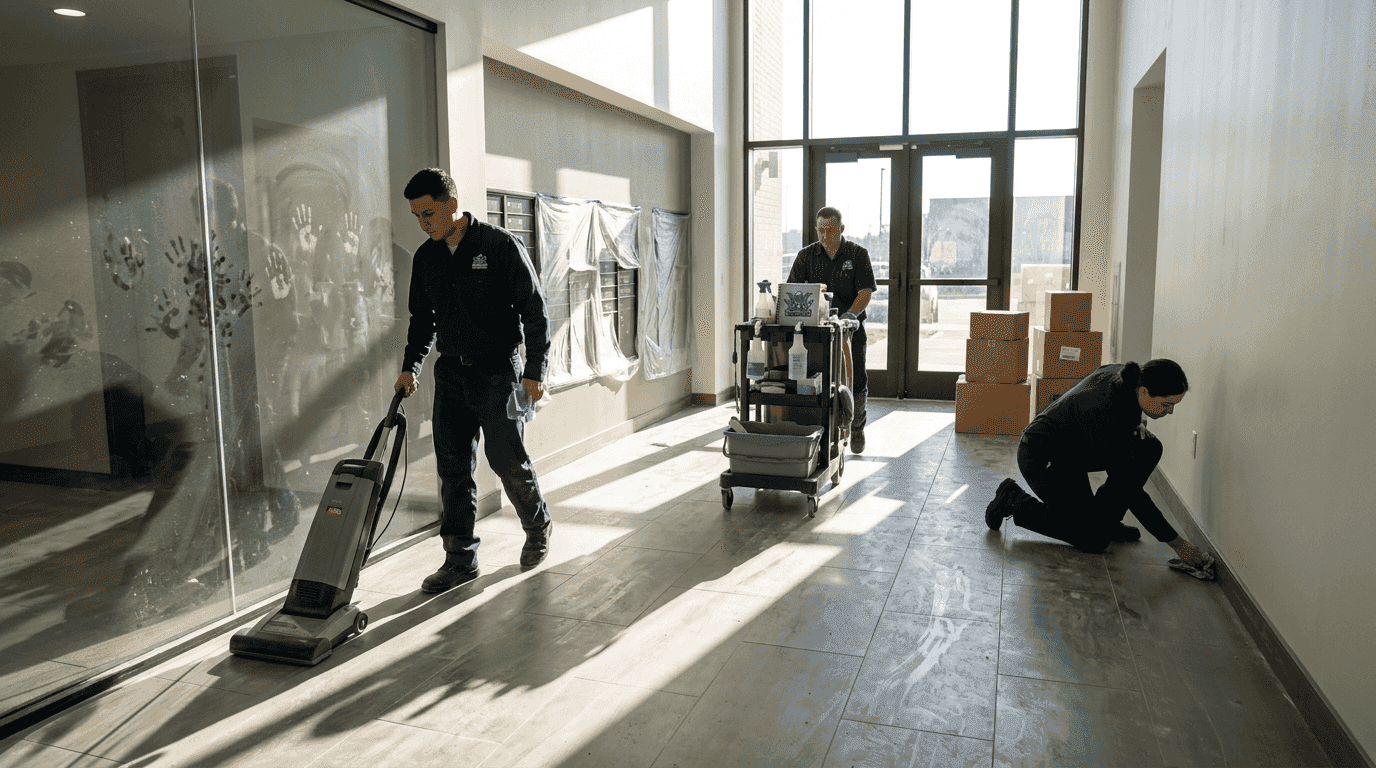
Property managers often assume post-construction cleaning is just another janitorial task, but this specialized service directly impacts tenant health, regulatory compliance, and occupancy timelines. Post-construction cleaning removes debris, dust, and residues after construction or renovation, ensuring spaces meet safety standards and deliver the professional finish tenants expect. This guide explains the multi-phase process, regulatory requirements, and best practices that property managers need to prepare multi-family units for safe, compliant occupancy while minimizing vacancy periods and maximizing tenant satisfaction.
Table of Contents
- Understanding Post-Construction Cleaning And Why It Matters
- The Three Phases Of Post-Construction Cleaning Explained
- Regulatory Compliance And Safety Considerations For Post-Construction Cleaning
- Best Practices For Effective Post-Construction Cleaning In Multi-Family Properties
- How Monster Property Partners Can Support Your Post-Construction Cleaning Needs
Key takeaways
| Point | Details |
|---|---|
| Multi-phase process | Post-construction cleaning consists of rough, intermediate, and final phases to systematically prepare spaces for occupancy. |
| Safety and compliance | OSHA standards and local building codes mandate proper debris removal and documentation before tenant move-in. |
| Health protection | Thorough cleaning prevents respiratory issues by removing fine particles that circulate through HVAC systems. |
| Professional execution | Specialized teams ensure efficiency and thoroughness, reducing vacancy periods and tenant complaints. |
Understanding post-construction cleaning and why it matters
Post-construction cleaning goes far beyond sweeping floors and wiping counters. This specialized service addresses the unique challenges created by construction and renovation work, including hazardous dust, chemical residues, adhesive remnants, and fine particles that standard cleaning cannot eliminate. The process requires specific equipment, techniques, and safety protocols that differ substantially from routine janitorial maintenance.
Many property managers underestimate the complexity involved. Construction activities generate silica dust, drywall particles, paint overspray, and other materials that pose health risks when left in living spaces. These contaminants settle on every surface and infiltrate HVAC systems, where they recirculate and affect air quality. Post-construction cleaning ensures safety, professional presentation, and client satisfaction beyond mere aesthetics.
The financial and legal consequences of inadequate cleaning are substantial. Tenants who move into poorly cleaned units report respiratory complaints, triggering maintenance callbacks and potential liability claims. Building inspectors may delay occupancy permits if debris and dust remain visible. Insurance companies scrutinize cleaning documentation when evaluating claims related to construction defects or tenant health issues.
Pro Tip: Document every phase of post-construction cleaning with dated photographs and checklists. This evidence protects you during inspections and provides accountability if tenants raise concerns about unit conditions.
For multi-family properties, the stakes multiply across dozens or hundreds of units. A single poorly cleaned unit can damage your reputation and trigger cascading tenant complaints. The multi-family property cleaning guide demonstrates how systematic approaches prevent these problems while streamlining turnover schedules.
Consider the difference between regular cleaning and post-construction work:
- Regular cleaning maintains existing cleanliness levels through routine tasks
- Post-construction cleaning transforms construction zones into habitable spaces
- Standard equipment cannot address construction residues effectively
- Specialized training ensures workers recognize and handle hazardous materials safely
Property managers who treat post-construction cleaning as an afterthought face extended vacancy periods, increased maintenance costs, and tenant dissatisfaction that affects renewal rates. Those who prioritize thorough, compliant cleaning protect their investment and reputation.
The three phases of post-construction cleaning explained
Professional post-construction cleanup follows three distinct phases to ensure thoroughness and efficiency. Skipping phases or rushing the sequence causes rework, extends timelines, and compromises results. Each phase builds on the previous work, creating a systematic pathway from construction zone to tenant-ready space.
The rough clean phase tackles the heaviest debris immediately after construction crews complete their work. This phase removes large debris, dust, and construction waste that would interfere with detailed cleaning later. Workers haul away scrap materials, sweep major dust accumulations, and clear pathways for the next phase. This initial cleanup typically occurs while contractors still access the site for final installations.
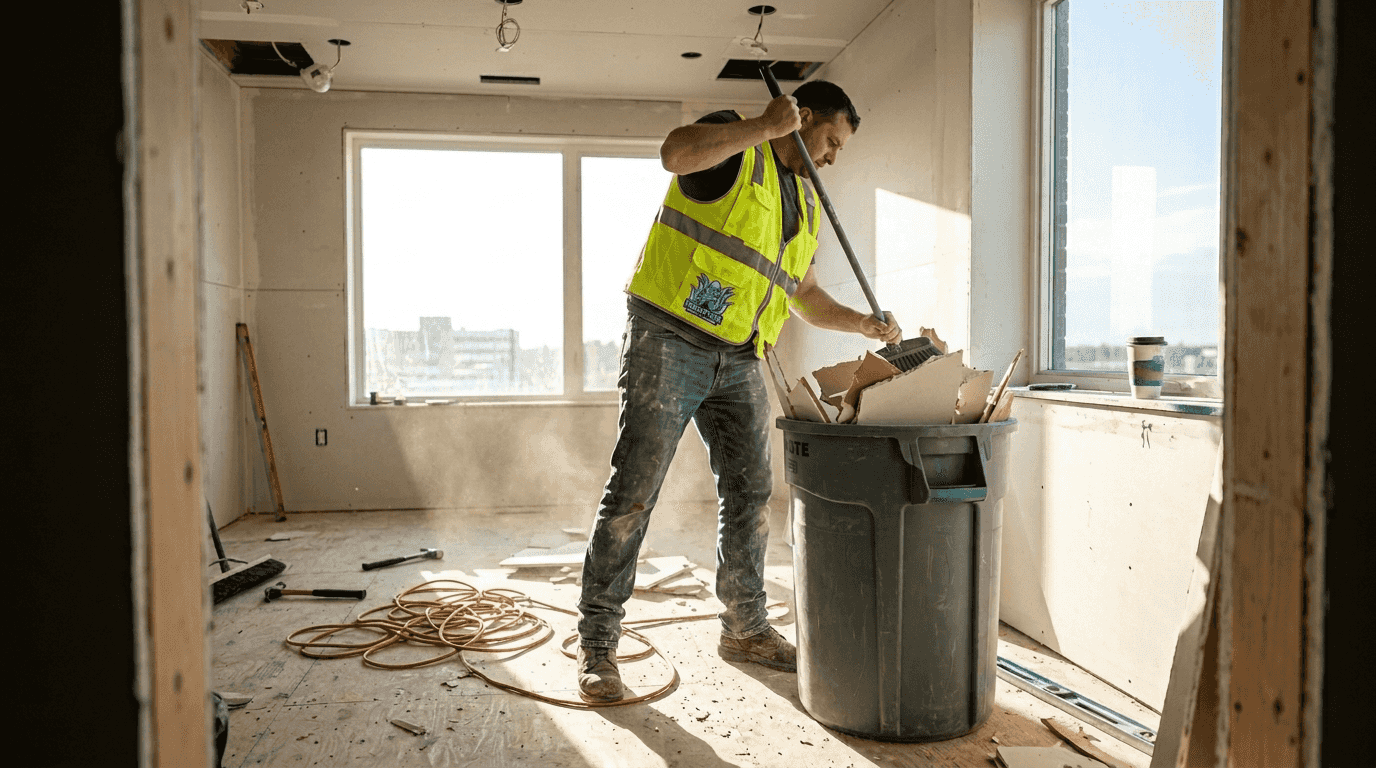
Intermediate cleaning addresses the detailed work that rough cleaning cannot accomplish. Teams remove stickers and labels from windows, fixtures, and appliances. They wipe down all surfaces to eliminate dust films and clean interior windows. This phase includes vacuuming with HEPA filters to capture fine particles and preliminary floor cleaning to assess surface conditions. The intermediate clean reveals any remaining construction issues that need contractor attention before final cleaning.
Final cleaning delivers the polish that makes units tenant-ready. Workers perform meticulous detail work on every surface, fixture, and finish. They clean inside cabinets and closets, sanitize bathrooms and kitchens, and ensure floors shine. Final cleaning includes a comprehensive inspection to verify every area meets standards. This phase often occurs just before tenant move-in to maintain pristine conditions.
| Phase | Primary Activities | Expected Outcome |
|---|---|---|
| Rough Clean | Debris removal, major dust elimination, pathway clearing | Construction zone becomes accessible for detailed work |
| Intermediate Clean | Surface wiping, label removal, HEPA vacuuming, initial floor care | Unit reveals true condition and remaining contractor needs |
| Final Clean | Detail work, sanitization, inside cleaning, final inspection | Space achieves tenant-ready, move-in condition |
The systematic workflow includes debris removal, top-to-bottom dusting, surface wipe-down, floor care, and sanitation at appropriate phases. Following this sequence prevents dust resettlement and eliminates redundant work.

Pro Tip: Schedule intermediate cleaning before your final walkthrough with contractors. This timing reveals punch list items while contractors can still address them efficiently, avoiding delays in your final clean schedule.
The property manager cleaning checklist provides detailed task lists for each phase, ensuring nothing gets overlooked during the transition from construction to occupancy. Property managers who implement phase-based cleaning reduce turnover time by 30% compared to single-pass approaches.
Regulatory compliance and safety considerations for post-construction cleaning
Regulatory compliance shapes every aspect of post-construction cleaning in multi-family properties. OSHA standards mandate regular debris removal during and after construction to protect workers and future occupants. These requirements extend beyond construction crews to cleaning teams who handle potentially hazardous materials during cleanup.
Compliance includes OSHA guidelines and building codes that vary by jurisdiction but share common safety principles. Building inspectors verify that construction debris has been properly removed and disposed of before issuing occupancy permits. They check for dust accumulation in HVAC systems, verify that walking surfaces are safe, and confirm that all construction materials have been cleared from living spaces.
Local building codes often require documentation proving that post-construction cleaning occurred according to specific standards. This documentation typically includes:
- Dated photographs of each cleaned area
- Checklists signed by cleaning supervisors
- Waste disposal receipts for construction debris
- HVAC filter replacement records
- Air quality test results when required
Health considerations extend beyond visible cleanliness. Fine construction dust contains silica, drywall particles, and other materials that cause respiratory problems when inhaled. These particles circulate through HVAC systems for months if not properly removed, affecting every tenant in the building. Property managers who neglect air quality management face tenant complaints, potential lawsuits, and regulatory scrutiny.
Legal risks multiply when cleaning shortcuts compromise safety. Slip and fall accidents on dusty floors, respiratory complaints from poor air quality, and injuries from overlooked debris all create liability exposure. Insurance companies review cleaning documentation when evaluating claims, and inadequate records can void coverage or increase premiums.
Pro Tip: Require your cleaning contractor to provide certificates of insurance and OSHA training documentation for all workers. This verification protects you from liability if accidents occur during the cleaning process.
The industry standards for exterior cleaning complement interior requirements, ensuring the entire property meets safety and compliance benchmarks. Exterior areas accumulate construction debris and require specialized cleaning to prevent tracking contaminants into finished units.
Best practices for effective post-construction cleaning in multi-family properties
Starting cleaning from top down prevents dust resettling on already cleaned surfaces, making this methodology essential for efficiency. Ceiling fans, light fixtures, and upper cabinets get cleaned first, allowing dust and debris to fall onto uncleaned floors below. This sequence eliminates the frustration of recleaning lower surfaces after upper areas shed dust.
Kitchens, bathrooms, and built-ins require special attention due to stubborn residues from construction activities. Adhesives, caulk, grout haze, and paint overspray concentrate in these areas and require specific cleaning agents and techniques. Stainless steel appliances need specialized products to avoid scratching, while tile and grout demand different approaches than countertops.
Air quality management separates professional post-construction cleaning from amateur attempts. HVAC systems accumulate construction dust throughout renovation work, and this dust recirculates unless properly addressed. Replace all air filters immediately after construction, even if they appear clean. Use HEPA vacuum cleaners that capture fine particles instead of redistributing them. Consider professional duct cleaning for major renovations that generated substantial dust.
Common areas like lobbies, hallways, and stairwells require coordinated cleaning to maintain resident access while achieving thorough results. These high-traffic zones accumulate tracked debris from construction areas and need frequent attention during the cleaning process. Schedule common area cleaning during low-traffic hours to maximize effectiveness and minimize resident disruption.
| Focus Area | Key Tasks | Common Pitfalls to Avoid |
|---|---|---|
| Kitchens | Remove appliance stickers, clean inside cabinets, address grout haze | Using abrasive cleaners on stainless steel |
| Bathrooms | Sanitize all fixtures, remove caulk residue, polish mirrors | Neglecting inside medicine cabinets |
| Flooring | Remove adhesive, deep clean based on material type | Cleaning before debris removal is complete |
| Windows | Clean inside and out, remove labels and tape | Leaving streaks that become visible in sunlight |
The clean common areas tenant satisfaction connection demonstrates how thorough cleaning throughout the property affects resident perceptions and renewal decisions. Tenants judge overall property quality by common area cleanliness, making these spaces critical to your reputation.
Pro Tip: Schedule final cleaning no more than 48 hours before tenant move-in. This tight timeline prevents dust accumulation while giving you buffer time to address any issues discovered during the final walkthrough.
Multi-unit turnover cleaning demands careful coordination to prevent delays. Create a master schedule that sequences rough, intermediate, and final cleaning across units to maintain workflow efficiency. The post-construction exterior cleaning impact extends your quality standards beyond unit interiors, ensuring the entire property presents professionally to new and existing tenants.
How Monster Property Partners can support your post-construction cleaning needs
Managing post-construction cleaning across multiple units demands specialized expertise and reliable execution that most property management teams lack in-house. Monster Property Partners delivers multifamily exterior cleaning services designed specifically for apartment buildings and multi-family properties, ensuring your exteriors match the quality of your interior cleaning efforts.
Our common area concrete cleaning services address the tracked debris and construction residue that accumulates in walkways, parking areas, and entryways during renovation projects. Professional pressure washing removes stubborn stains and creates the pristine appearance tenants expect. Learn more about our comprehensive exterior cleaning services that complement your post-construction preparation and reduce vacancy periods through faster, more thorough property turnover.
FAQ
What are the main stages of post-construction cleaning?
Post-construction cleaning follows three essential phases: rough clean, intermediate clean, and final clean. The rough clean removes major debris and dust immediately after construction. Intermediate cleaning addresses detailed surface work and reveals remaining issues. Final cleaning delivers the polish that makes units tenant-ready with meticulous attention to every surface and fixture.
How does post-construction cleaning affect tenant health?
Proper post-construction cleaning removes fine dust particles and construction residues that cause respiratory problems when circulated through HVAC systems. Construction dust contains silica, drywall particles, and chemical residues that trigger allergies and breathing difficulties. Thorough cleaning with HEPA filtration and air quality management protects tenant health and prevents complaints that damage your reputation.
Why is compliance with OSHA important in post-construction cleaning?
OSHA standards mandate debris removal and safe cleaning practices to protect workers and future residents from construction hazards. Compliance prevents fines, liability claims, and occupancy permit delays that extend vacancy periods. Documentation of OSHA-compliant cleaning provides legal protection if tenants raise health concerns or accidents occur during the cleaning process.
What are common mistakes property managers make in post-construction cleaning?
Skipping the rough clean phase creates rework when detailed cleaning spreads large debris instead of removing it first. Moving tenants in before final cleaning is complete generates immediate complaints and damages your reputation. Neglecting HVAC filter replacement and air quality management allows construction dust to circulate for months, causing ongoing tenant health issues and maintenance callbacks that increase operating costs.