

Managing exterior maintenance across multiple properties often feels overwhelming when documentation gets overlooked. In fast-paced environments like North American multi-family communities, consistent cleaning records shape the foundation for clear communication and operational reliability. Comprehensive documentation not only preserves a standardized approach but also supports teams in tracking cleaning details, reducing confusion, and meeting important compliance standards demanded by today's property owners and tenants.
Table of Contents
- Documenting Cleaning Procedures Defined
- Types of Cleaning Documentation Used
- How Proper Documentation Boosts Communication
- Risk Reduction and Compliance Benefits
- Common Pitfalls in Cleaning Documentation
Key Takeaways
| Point | Details |
|---|---|
| Effective Documentation Ensures Compliance | Comprehensive cleaning documentation is essential for meeting regulatory standards and maintaining tenant safety. |
| Standardization Promotes Consistency | Developing standardized cleaning procedures helps achieve uniformity in cleaning quality across multiple properties. |
| Improved Communication Enhances Efficiency | Clear documentation fosters better communication among team members, reducing misunderstandings and improving operational workflows. |
| Risk Management through Documentation | Thorough documentation supports proactive risk management by identifying potential maintenance issues and ensuring accountability within the team. |
Documenting Cleaning Procedures Defined
Documenting cleaning procedures is a systematic approach to recording, validating, and tracking exterior maintenance activities for multi-family properties. Property managers must create comprehensive documentation that captures every critical detail of cleaning processes to ensure operational excellence and regulatory compliance.
At its core, effective documentation involves capturing detailed cleaning parameters that provide a clear, repeatable framework for maintenance teams. This process includes several key components:
- Detailed records of cleaning materials used
- Specific cleaning methods and techniques
- Time and frequency of cleaning activities
- Equipment and tools utilized
- Personnel responsible for each task
Successful cleaning documentation goes beyond simple record-keeping. Comprehensive documentation serves multiple critical functions for property management teams. It provides a standardized approach that ensures:
- Consistent cleaning quality across different properties
- Accountability for maintenance staff
- Easy tracking of cleaning history
- Quick identification of potential maintenance issues
- Compliance with industry standards
Effective cleaning documentation must be intuitive, visual, and designed to support trend analysis. Whether using paper logs or digital tracking systems, the goal remains the same: create a clear, verifiable record of cleaning activities that supports operational efficiency and property maintenance standards.
Pro tip: Develop a standardized cleaning procedure template that can be easily replicated across multiple properties, ensuring consistency and reducing administrative overhead.
Types of Cleaning Documentation Used
Multi-family property managers rely on several critical types of cleaning documentation systems to maintain operational excellence and ensure consistent maintenance standards. These documentation approaches provide a comprehensive framework for tracking, evaluating, and standardizing exterior cleaning processes.
Cleaning Documentation Types include:
- Cleaning Checklists: Detailed task-specific tracking sheets
- Standard Operating Procedures (SOPs): Comprehensive process guidelines
- Cleaning Operations Manuals: Comprehensive reference documents
- Training Manuals: Staff development and procedural instruction guides
- Evaluation Reports: Performance and quality assessment records
Each documentation type serves a unique purpose in property maintenance management. Cleaning evaluation records provide critical insights into maintenance effectiveness, helping property managers track cleaning parameters, timelines, and equipment status with precision.
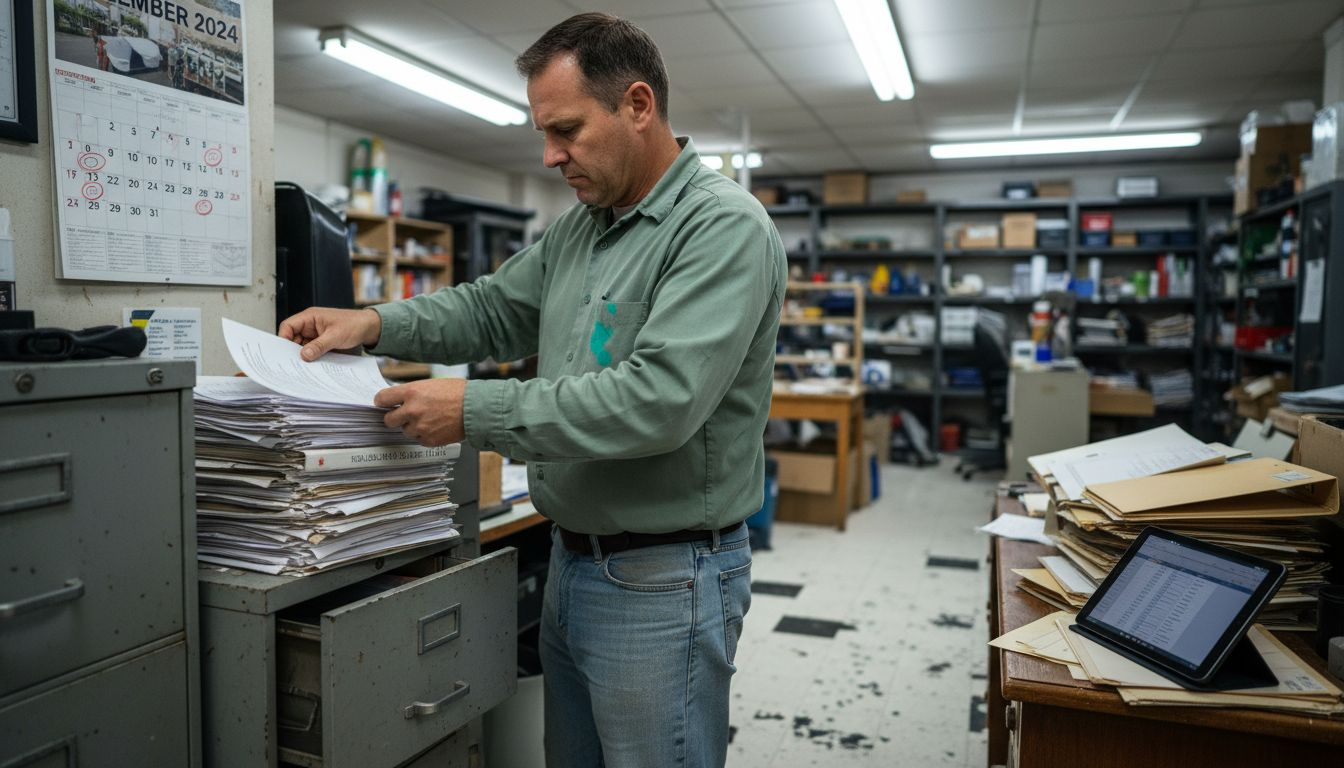
Electronic versus Paper Documentation presents different advantages for property management teams. Digital systems offer real-time tracking, easier data analysis, and simplified record management. Paper documentation, while traditional, provides a tangible backup and can be useful in environments with limited technological infrastructure.
Here's a quick comparison of electronic and paper cleaning documentation systems for property managers:
| Aspect | Electronic Systems | Paper Systems |
|---|---|---|
| Accessibility | Real-time, remote access | On-site, physical records |
| Data Analysis | Automated trends and reports | Manual review required |
| Reliability | Depends on technology uptime | Not affected by power outages |
| Record Longevity | Digital backups, easy retrieval | Risk of loss or damage |
| Training Required | May need staff tech training | Familiar, minimal training |
| Audit Trail | Detailed, time-stamped logs | Handwritten, less verifiable |
Effective cleaning documentation transforms routine maintenance into a strategic, data-driven process that enhances property value and tenant satisfaction.
Pro tip: Develop a hybrid documentation system that combines digital tracking with periodic paper verification to maximize accuracy and reliability.
How Proper Documentation Boosts Communication
Effective communication in property maintenance relies heavily on robust documentation practices. Operational efficiency improves dramatically when teams have clear, accessible records that minimize misunderstandings and create transparent workflows.
Communication benefits of proper documentation include:
- Reducing ambiguity in task assignments
- Creating a shared understanding of cleaning protocols
- Establishing clear accountability mechanisms
- Tracking performance and identifying improvement areas
- Facilitating seamless knowledge transfer between team members
Structured training documentation plays a critical role in ensuring team alignment. By providing comprehensive, consistent instructions, property managers can guarantee that every team member understands their responsibilities and performs tasks to the same high standard.
Communication Channels supported by documentation extend beyond immediate team interactions. Detailed records enable property managers to communicate effectively with stakeholders, including property owners, maintenance contractors, and regulatory bodies. These documents serve as a transparent record of completed work, potential issues, and ongoing maintenance strategies.
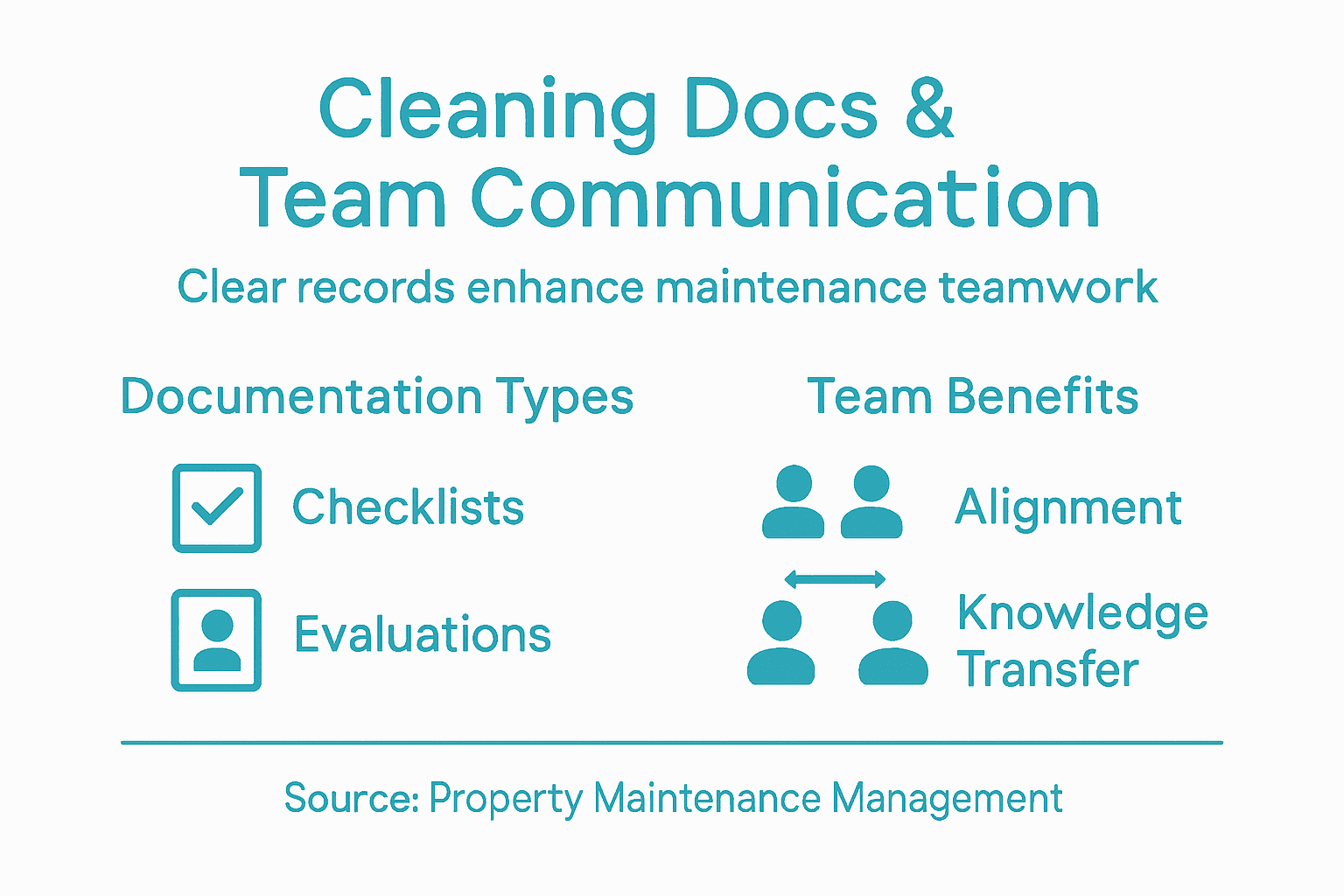
The following table highlights how robust cleaning documentation strengthens property management communication:
| Communication Factor | Documentation Impact |
|---|---|
| Task Clarity | Instructions become easily understood |
| Accountability | Assigns clear ownership to team members |
| Stakeholder Updates | Transparent records aid reporting |
| Team Onboarding | Accelerates new staff integration |
| Issue Escalation | Makes problem identification faster |
Comprehensive documentation transforms communication from a potential weakness into an organizational strength, creating a unified approach to property maintenance.
Pro tip: Implement a digital documentation system that allows real-time updates and instant sharing across your maintenance team to streamline communication.
Risk Reduction and Compliance Benefits
Comprehensive documentation is a critical defense mechanism for multi-family property managers seeking to minimize operational risks. Cleaning validation reduces contamination risks by establishing consistent, verifiable cleaning standards that protect property integrity and tenant health.
Key risk reduction benefits include:
- Preventing cross-contamination incidents
- Establishing clear accountability protocols
- Maintaining consistent cleaning quality
- Creating defensible documentation for potential legal challenges
- Identifying and addressing potential maintenance vulnerabilities
Legal compliance frameworks require meticulous documentation that demonstrates ongoing commitment to safety and hygienic standards. Property managers must maintain records that prove cleaning processes consistently meet established regulatory requirements, protecting both tenants and organizational interests.
Documentation Strategies for risk mitigation go beyond simple record-keeping. They involve creating systematic approaches that track cleaning effectiveness, identify potential issues before they escalate, and provide transparent evidence of proactive maintenance practices. These strategies transform documentation from an administrative task into a strategic risk management tool.
Effective documentation is not just about compliance—it's about creating a proactive safety culture that anticipates and prevents potential risks.
Pro tip: Develop a standardized risk assessment template that integrates directly with your cleaning documentation system to streamline compliance monitoring.
Common Pitfalls in Cleaning Documentation
Multi-family property managers frequently encounter significant challenges when developing cleaning documentation systems. Documentation errors can compromise operational effectiveness by creating communication breakdowns and reducing overall maintenance quality.
Common documentation pitfalls include:
- Incomplete or inconsistent record-keeping
- Delayed documentation of cleaning activities
- Over-reliance on manual paper-based tracking systems
- Lack of standardized documentation procedures
- Insufficient staff training on documentation protocols
- Inadequate review and validation of cleaning logs
Cleaning documentation standards require rigorous attention to detail and systematic training. Property managers must develop comprehensive strategies that address potential documentation weaknesses, ensuring that every cleaning activity is accurately recorded, reviewed, and maintained.
Risk Mitigation Strategies focus on creating robust documentation frameworks that minimize human error and maximize information integrity. This involves implementing digital tracking systems, developing clear standard operating procedures, and establishing routine audit processes that identify and correct documentation gaps before they become significant problems.
Documentation failures are not just administrative oversights—they represent real risks to property maintenance and tenant safety.
Pro tip: Implement quarterly documentation audits and cross-training programs to continuously improve your cleaning documentation processes and reduce systemic errors.
Elevate Your Property Maintenance with Expert Cleaning Documentation Support
The challenge of maintaining consistent cleaning quality while ensuring clear accountability and risk reduction is real for multi-family property managers. Properly documented cleaning procedures eliminate guesswork, improve communication, and safeguard your properties against costly maintenance issues and compliance risks. At Monster Property Partners, we understand how critical these documentation practices are to operational excellence and tenant satisfaction.
Partner with a team that delivers exceptional commercial pressure washing services tailored for apartment buildings and multi-family units. Our reliable cleaning processes and transparent communication tools align perfectly with your need for precise and verifiable cleaning records. Take the next step to protect your property investments and streamline maintenance by visiting Monster Property Partners. Discover how our expertise can support your documentation standards and cleaning goals today.
Frequently Asked Questions
Why is documenting cleaning procedures important for multi-family properties?
Documenting cleaning procedures ensures consistent cleaning quality, accountability, and regulatory compliance, which ultimately enhances tenant satisfaction and property value.
What are the key components of effective cleaning documentation?
Effective cleaning documentation includes detailed records of cleaning materials used, cleaning methods, time and frequency of cleaning, equipment utilized, and personnel responsible for each task.
How can proper cleaning documentation improve communication among maintenance teams?
Proper cleaning documentation reduces ambiguity, establishes clear accountability, facilitates knowledge transfer, and helps track performance, ensuring that all team members are aligned on their responsibilities.
What are common pitfalls in cleaning documentation that property managers should avoid?
Common pitfalls include incomplete record-keeping, delayed documentation, reliance on manual systems, lack of standardized procedures, insufficient staff training, and inadequate review processes.
Recommended
- Monster Property Partners | Multifamily Exterior Cleaning Orlando FL
- Monster Property Partners | Multifamily Exterior Cleaning Orlando FL
- Portfolio Partnership | Monster Property Partners
- Role of Cleaning in Workplace Safety – Safeguarding Health and Compliance – Majic Maids Cleaning Services
- Role of Office Cleaning: Boosting Health and Productivity
- Commercial Cleaning Best Practices for Office Hygiene