
TL;DR:
- Large-scale cleaning is a property-wide program that improves health, value, and tenant retention.
- Regular, systematic cleaning of exteriors and shared spaces reduces contaminants and lowers repair costs.
- Treating cleaning as an investment enhances property appeal, tenant satisfaction, and overall profitability.
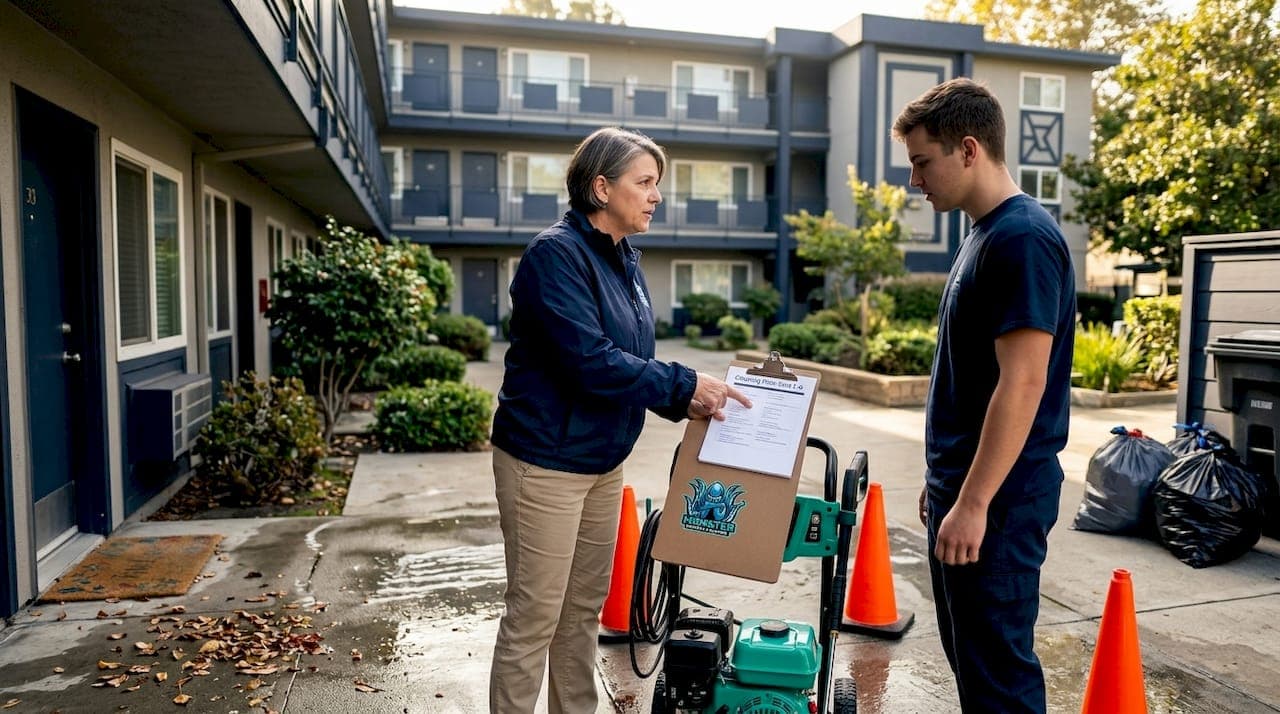
Most property owners think of cleaning as a box to check before a lease signing or a quick fix before an inspection. That thinking leaves serious money and tenant goodwill on the table. Large-scale cleaning for multi-family properties is a strategic tool that directly shapes tenant health, satisfaction, and your building's long-term market value. Cleaning methodology can improve indoor air quality and reduce airborne contaminants, which means your cleaning decisions are health decisions too. This guide gives you a clear picture of what large-scale cleaning really involves and how to use it as a growth lever across your portfolio.
Table of Contents
- What is large-scale cleaning and why does it matter?
- Key benefits of large-scale cleaning for properties and tenants
- Common challenges and misconceptions
- Building an effective large-scale cleaning strategy
- A new perspective: Large-scale cleaning is an investment, not an expense
- Next steps: Partner with specialists for results-driven cleaning
- Frequently asked questions
Key Takeaways
| Point | Details |
|---|---|
| Healthier living environments | Proper large-scale cleaning reduces airborne pollutants and protects tenant well-being. |
| Higher tenant satisfaction | Clean, well-maintained properties attract and retain renters more reliably. |
| Improved property value | Consistent cleaning prevents costly damage and enhances curb appeal. |
| Strategic investment | Viewing cleaning as an investment drives long-term success for property portfolios. |
What is large-scale cleaning and why does it matter?
Large-scale cleaning is not what happens when a maintenance tech mops the lobby after a spill. It is a coordinated, property-wide program that covers exterior surfaces, common areas, parking structures, breezeways, stairwells, and high-traffic zones across an entire building or complex. The goal is systematic, evidence-based cleaning that addresses the full environment your residents share every single day.
To understand the stakes, consider how the exterior cleaning importance of a well-maintained building goes far beyond curb appeal. Grime on exterior walls, mold on walkways, and accumulated debris in shared spaces do not just look bad. They actively degrade the air quality and surface hygiene that residents encounter constantly.
Cleaning protocols beyond aesthetics address particulates, allergens, pathogens, and volatile organic compounds (VOCs). These are invisible threats that accumulate in shared HVAC systems, stairwells, and common laundry areas. Large-scale cleaning targets all of them, not just the visible dirt.
Here is a quick breakdown of what large-scale cleaning covers compared to routine cleaning:
| Cleaning type | Scope | Frequency | Primary goal |
|---|---|---|---|
| Routine cleaning | Individual units, spot treatment | Daily to weekly | Basic hygiene |
| Large-scale cleaning | Exteriors, common areas, entire property | Quarterly to biannual | Health, value, compliance |
| Reactive cleaning | Specific incident response | As needed | Damage control |
Key areas covered in a proper large-scale cleaning program:
- Building exteriors including siding, brick, and painted surfaces
- Parking lots, garages, and entry driveways
- Breezeways, stairwells, and outdoor walkways
- Pool decks, recreation areas, and fitness facility exteriors
- Dumpster enclosures and utility zones
- Rooflines, gutters, and drainage areas
"The air quality inside a building is shaped by what happens on its surfaces. Exterior grime, mold, and organic matter migrate inward through ventilation systems and foot traffic, making large-scale exterior cleaning a direct health intervention."
Industry data backs this up. Indoor air can be 2 to 5 times more polluted than outdoor air, and in dense, multi-family environments, shared spaces become the main conduit for contaminant spread. Ignoring large-scale cleaning is not just an aesthetic oversight. It is a health and liability risk.
Key benefits of large-scale cleaning for properties and tenants
Once you understand what large-scale cleaning entails, the natural next question is: what returns does this deliver to property owners and their residents? The answer covers three distinct areas: health outcomes, financial performance, and competitive positioning.
Health and tenant satisfaction
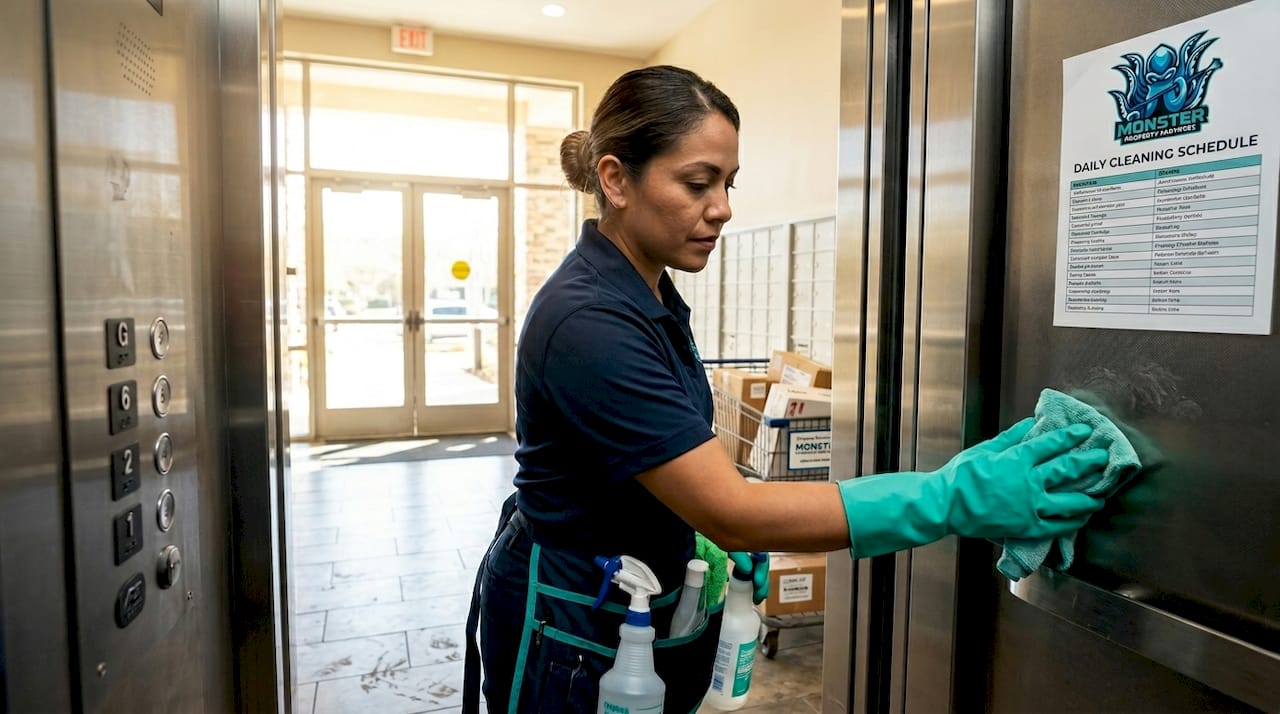
Your residents share lobbies, elevators, laundry rooms, and outdoor spaces daily. When those environments are poorly maintained, airborne contaminants accumulate fast. The fact that indoor air can be 2 to 5 times more polluted than outdoor air becomes especially serious in apartment buildings where ventilation systems connect multiple units. Regular large-scale cleaning disrupts this cycle. Healthier residents file fewer complaints, place fewer maintenance requests related to mold or allergens, and are significantly more likely to renew their leases.
Financial returns and lower maintenance costs
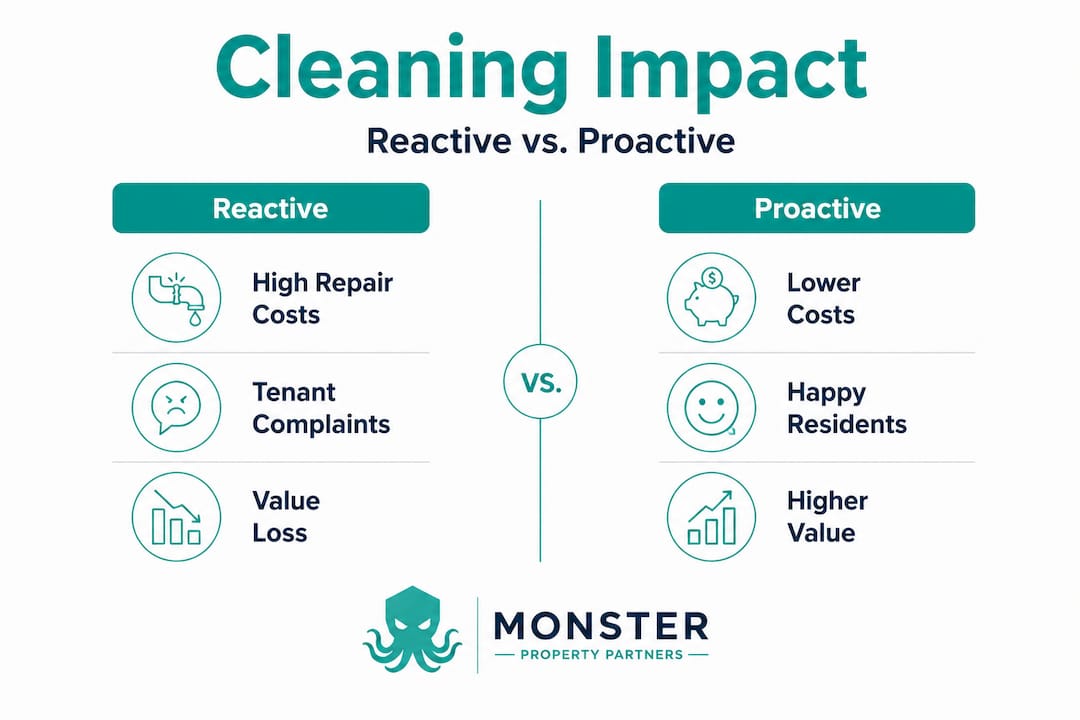
The cleaning benefits for property managers extend well into the balance sheet. Pressure washing concrete surfaces removes embedded dirt and organic matter that accelerates surface degradation. Treating exterior siding before mold takes hold prevents expensive remediation projects. Catching drainage blockages during routine cleaning stops water damage before it starts. The math is straightforward: a scheduled cleaning program costs far less than reactive repairs.
| Reactive approach | Proactive large-scale cleaning |
|---|---|
| High repair costs after damage | Lower costs through prevention |
| Tenant complaints drive action | Scheduled programs prevent complaints |
| Unpredictable capital expenditure | Predictable, budgetable cleaning cycles |
| Faster surface degradation | Extended asset lifespan |
| Higher lease turnover risk | Stronger tenant retention |
Property value and leasing performance
A clean property simply commands more. Prospective tenants make snap judgments based on what they see during tours, and existing tenants form daily impressions walking through shared spaces. Boosting property value through cleaning is not a marketing claim. It is a documented outcome that shows up in faster lease-ups, fewer concessions, and higher renewal rates.
Here is a practical sequence for building financial value through large-scale cleaning:
- Establish a quarterly exterior cleaning schedule for high-visibility surfaces.
- Add a biannual deep-clean of all common areas, including laundry, fitness, and lobby zones.
- Document cleaning logs and use them in marketing materials to differentiate your property.
- Track maintenance request volume before and after cleaning cycles to quantify cost savings.
- Survey tenants post-cleaning to capture satisfaction data for renewal conversations.
Pro Tip: Take before-and-after photos during every large-scale cleaning cycle. These visuals serve double duty: they verify contractor performance and give you compelling content for leasing materials and online listings.
Common challenges and misconceptions
Now that the upside is clear, let's address some roadblocks and myths that prevent property owners from realizing these gains. The most costly mistakes in property cleaning almost always start with a wrong assumption.
Misconception 1: Occasional cleaning is enough
Many owners believe that cleaning common areas once or twice a year is sufficient maintenance. In reality, high-traffic properties need scheduled, systematic programs that address surfaces before visible degradation sets in. By the time a surface looks dirty or damaged, contaminants have already been accumulating for weeks or months. Cleaning strategies must go beyond basic aesthetics to address the deeper health concerns that drive tenant complaints and turnover.
Misconception 2: Cleaning complaints are isolated incidents
When tenants complain about musty smells, allergies, or visible mold in shared spaces, those complaints rarely stay isolated. One unresolved complaint becomes a pattern. A pattern becomes an online review. Poor reviews slow leasing, and slow leasing costs you occupancy revenue. The hidden financial impact of poor air quality and inadequate cleaning is often far larger than owners realize until it shows up in vacancy rates.
Misconception 3: Large-scale cleaning is optional overhead
This mindset treats cleaning as a discretionary cost to cut when margins tighten. In practice, cutting cleaning budgets is one of the fastest ways to accelerate surface deterioration, invite health complaints, and trigger regulatory scrutiny. The cleaning checklist for property managers at a professional level is not a wish list. It is a baseline for protecting your asset.
Common obstacles that hold property owners back:
- Lack of a written cleaning schedule across the full property
- No clear accountability for who manages exterior versus common area cleaning
- Treating cleaning vendors as commodity services rather than strategic partners
- Failing to budget cleaning costs as a capital preservation line item
- Skipping post-cleaning audits or quality checks
Pro Tip: Create a cleaning accountability matrix for your property that maps every zone to a specific schedule, responsible vendor, and quality standard. Properties with documented cleaning programs have measurably fewer tenant complaints and faster lease renewals.
Building an effective large-scale cleaning strategy
With misconceptions clarified, you're ready to put these insights into a workable large-scale cleaning program. The key is moving from ad-hoc, reactive responses to a structured system built on effective cleaning protocols that are proactive and evidence-based.
Here is a step-by-step framework you can apply to any multi-family property:
-
Audit your current protocols. Walk the entire property and identify every zone that experiences regular foot traffic or exposure to the elements. Note surface types, current condition, and the last time each area received professional cleaning. Be honest about gaps.
-
Map your high-risk zones. Not all areas carry equal risk. Breezeways, laundry rooms, dumpster enclosures, and parking structures see the highest concentration of biological and chemical contaminants. These should be cleaned more frequently and with more targeted methods.
-
Build a site-wide cleaning calendar. Use your audit to create a documented schedule that covers every zone. Assign seasonal tasks like post-winter exterior washes or pre-summer pool deck treatments, and tie them to specific dates rather than vague intentions.
-
Vet and partner with qualified professionals. A pressure washing crew that handles residential driveways is not equipped for a 200-unit apartment complex. Look for vendors with documented commercial experience, liability coverage, and familiarity with multi-family property compliance standards. The cleaning workflow guide for large properties is a specialized skill set.
-
Set measurable quality standards. Before any cleaning project begins, define what success looks like. Is it a specific surface appearance rating? A timeline for completion? Reduced tenant complaints in the following 60 days? Clear standards make vendor accountability straightforward.
-
Monitor and adjust. Track results across cleaning cycles. Tenant satisfaction surveys, maintenance request logs, and visual inspections after each cycle all give you data to refine your program. Review commercial cleaning best practices as standards evolve, especially around chemical usage and surface-specific techniques.
Pro Tip: Schedule your largest exterior cleaning projects during tenant lease renewal windows. Clean, refreshed common areas and exteriors during the renewal decision period create a strong positive impression that directly supports lease renewals and referrals.
A new perspective: Large-scale cleaning is an investment, not an expense
Having mapped out the nuts and bolts, here is why reframing your approach to large-scale cleaning could be a game-changer for your investments.
The conventional property management mindset treats cleaning as a line item to minimize. When budgets tighten, cleaning schedules slip. When cleaning schedules slip, surfaces degrade faster, tenant complaints rise, and vacancy costs increase. That cycle is expensive, and it repeats every few years for owners who never question the original assumption.
Here is the uncomfortable truth: every dollar you defer on large-scale cleaning tends to cost you two to three dollars in reactive repairs, tenant turnover costs, and lost rent. That math is not hypothetical. It plays out on balance sheets across the multi-family industry regularly.
Savvy property owners treat professional cleaning the same way they treat property insurance or preventive HVAC maintenance. It is a non-negotiable baseline for protecting an asset worth millions. The cleaning for tenant retention connection is particularly powerful because tenant retention is where the real financial upside lives. Filling a vacant unit costs on average one to three months of rent in lost income and leasing expenses. A cleaning program that improves retention by even a small percentage delivers measurable ROI.
There is also a signal value that goes beyond dollars. When residents see that common areas are consistently well-maintained, that parking structures are pressure-washed regularly, and that the building exterior stays clean and fresh, they draw a conclusion: this ownership group cares about their investment and their residents. That perception directly influences lease renewal decisions, word-of-mouth referrals, and your reputation in the local rental market. In a competitive market, that signal is a real competitive advantage.
Next steps: Partner with specialists for results-driven cleaning
Inspired to elevate your property portfolio? Here is how you can move from insight to implementation with proven partners.
Understanding the value of large-scale cleaning is the first step. Executing it consistently across a multi-family property is where most owners need expert support. Monster Property Partners specializes in exactly this: scaled, professional exterior cleaning for apartment buildings and multi-family communities.
Our team manages everything from high-volume pressure washing to common area concrete cleaning, ensuring every surface across your property meets professional standards. We build structured cleaning programs around your property's specific layout, traffic patterns, and compliance requirements. No guesswork, no reactive scrambling. Just reliable, scheduled cleaning that protects your asset and keeps your residents satisfied. Explore our full range of multifamily exterior cleaning services and start building a program that works as hard as your investment does.
Frequently asked questions
How does large-scale cleaning improve indoor air quality in multi-family buildings?
Thorough cleaning protocols reduce dust, allergens, pathogens, and volatile organic compounds, providing a safer shared environment for all tenants. Cleaning methodology can improve indoor air quality and meaningfully reduce the contaminant load in high-traffic residential spaces.
What is the difference between routine cleaning and large-scale property cleaning?
Routine cleaning focuses on individual units and spot treatment, whereas large-scale cleaning addresses shared spaces and building exteriors systematically. Cleaning protocols beyond basic aesthetics should address particulates, allergens, pathogens, and VOCs across all shared zones.
Can large-scale cleaning reduce tenant turnover?
Yes, properties with consistent, high-quality cleaning programs see higher tenant satisfaction and stronger retention rates because residents feel the ownership group is actively invested in the property's condition.
How often should large-scale cleaning be performed?
Frequency depends on property size, traffic volume, and climate, but quarterly to biannual schedules are established best practices for most multi-family communities, with high-use zones cleaned more often.