
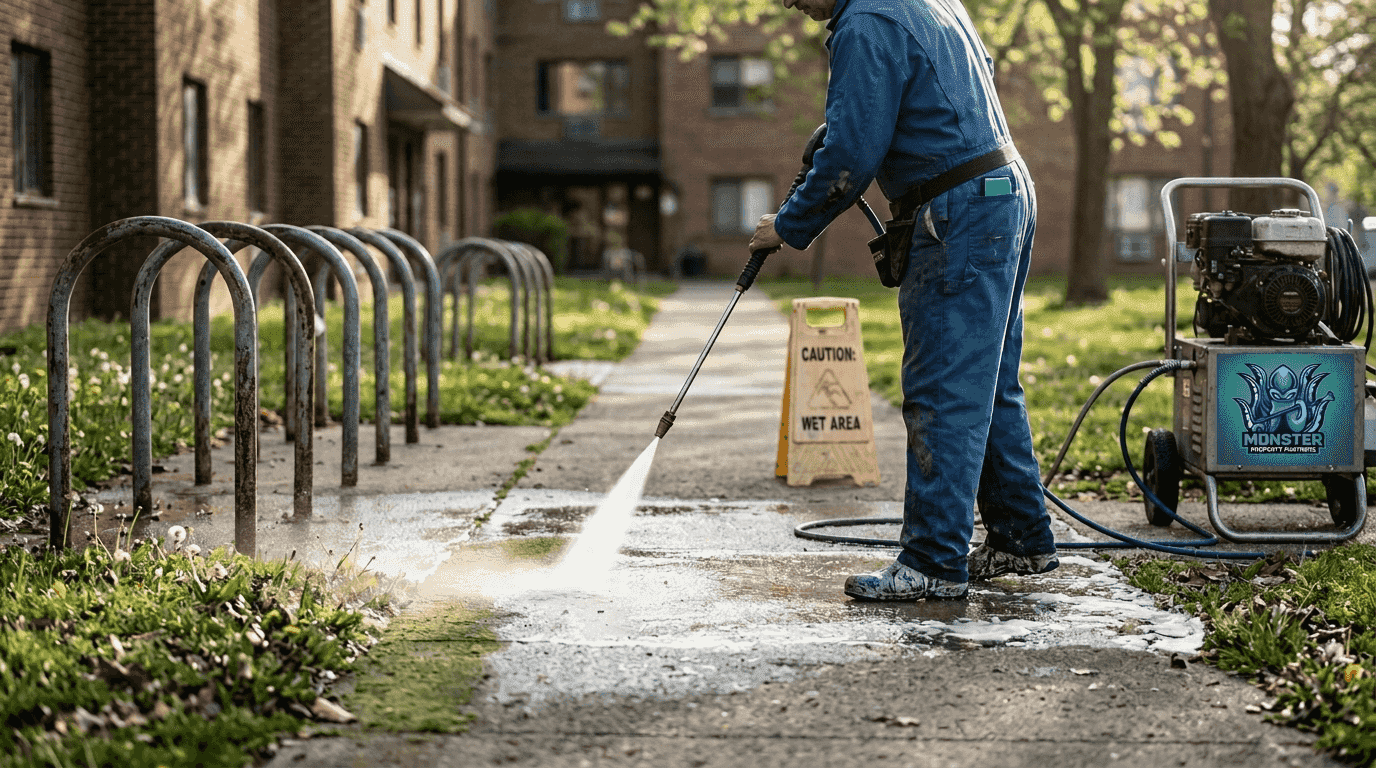
Many property managers view pressure washing as optional maintenance, something to address only when dirt becomes visible or tenants complain. This misconception costs properties thousands in preventable repairs and liability claims each year. Routine pressure washing protects your investment by eliminating safety hazards, preserving building materials, and maintaining tenant satisfaction. Understanding the financial and operational benefits helps you make informed decisions about scheduling regular exterior cleaning services that protect both your property value and your residents.
Table of Contents
- Safety And Liability Risk Reduction Through Routine Pressure Washing
- Cost Savings And Property Value Preservation With Scheduled Cleaning
- Enhancing Tenant Satisfaction And Retention Through Clean Exteriors
- Best Practices For Scheduling And Frequency Of Pressure Washing
- Explore Professional Pressure Washing Services For Your Multifamily Property
- FAQ
Key takeaways
| Point | Details |
|---|---|
| Safety protection | Removes slip hazards like algae and oil that cause injury claims |
| Cost prevention | Stops damage before expensive repairs become necessary |
| Value enhancement | Maintains curb appeal and supports higher property valuations |
| Tenant retention | Clean exteriors signal professional management and care |
| Insurance benefits | Lower risk exposure may reduce premium costs |
Safety and liability risk reduction through routine pressure washing
Slip and fall accidents represent one of the most common liability claims facing multifamily property managers. Algae, oil stains, and accumulated grime create hazardous conditions on sidewalks, parking lots, and common areas where residents walk daily. These substances become especially dangerous when wet, transforming ordinary walkways into liability nightmares. Regular pressure washing reduces liability risks by eliminating slip hazards from these high traffic areas before accidents occur.
The financial impact of a single slip and fall claim often exceeds the annual cost of routine pressure washing services. Medical bills, legal fees, and potential settlements add up quickly when tenants or visitors sustain injuries on your property. Beyond direct costs, claims damage your property's reputation and may trigger insurance premium increases. Proactive cleaning demonstrates reasonable care, a critical factor if liability questions arise.
Property managers who implement regular pressure washing schedules protect residents while reducing their own legal exposure. Focus cleaning efforts on areas where moisture accumulates, foot traffic concentrates, and organic growth thrives. Parking lot surfaces, building entrances, pool decks, and stairwells require particular attention. Understanding the exterior cleaning impact on property management helps you prioritize locations based on risk levels.
Pro Tip: Schedule pressure washing after rainy seasons when algae and mold growth accelerates. This timing maximizes safety benefits when slip hazards peak.
"Preventive maintenance through regular pressure washing costs significantly less than reactive repairs or liability settlements. Property managers who schedule quarterly cleanings report fewer tenant complaints and insurance claims related to exterior hazards."
Many managers overlook pressure washing's role in comprehensive risk management strategies. Insurance carriers increasingly scrutinize property maintenance practices when underwriting policies. Documented cleaning schedules demonstrate your commitment to tenant safety, potentially qualifying your property for better coverage terms. This proactive approach transforms pressure washing from a cosmetic service into an essential liability protection tool.
Cost savings and property value preservation with scheduled cleaning
Routine pressure washing delivers substantial financial advantages through prevention rather than reaction. Professional services typically cost between $0.08 and $0.40 per square foot, a modest investment compared to repair costs when neglect allows damage to progress. Concrete replacement, paint restoration, and structural repairs triggered by accumulated dirt and organic growth cost exponentially more than regular cleaning.
Building materials deteriorate faster when contaminants remain on surfaces. Mold and mildew eat away at paint and sealants. Oil stains penetrate concrete, weakening structural integrity over time. Salt and chemical buildup from winter treatments corrode metal fixtures and degrade asphalt. Each of these problems starts small but compounds when ignored, eventually requiring expensive interventions that scheduled pressure washing would have prevented.
| Maintenance Approach | Annual Cost per Unit | Repair Frequency | Property Value Impact |
|---|---|---|---|
| Reactive cleaning only | $45 per unit | High (quarterly repairs) | Decreases 3-5% annually |
| Quarterly pressure washing | $85 per unit | Low (annual touch ups) | Maintains or increases value |
| Biannual pressure washing | $60 per unit | Moderate (biannual repairs) | Stable with minor increases |
Well maintained exteriors directly influence property valuations during assessments and sales. Appraisers consider curb appeal and visible maintenance quality when determining market value. Clean building facades, spotless sidewalks, and pristine parking areas signal professional management to potential buyers and investors. Properties with documented maintenance records, including regular pressure washing schedules, command premium prices because buyers recognize reduced future maintenance burdens. Learn more about outsourcing exterior cleaning cost savings to maximize your budget efficiency.
Pro Tip: Photograph properties before and after pressure washing sessions. These images document maintenance efforts for insurance purposes and provide compelling evidence of property care during valuations.
Insurance carriers factor property maintenance quality into premium calculations. Properties with documented cleaning schedules and proactive maintenance programs present lower risk profiles than those relying on reactive approaches. Some insurers offer premium discounts for properties demonstrating consistent exterior maintenance practices. Even without explicit discounts, well maintained properties avoid claim frequency increases that trigger rate hikes. The connection between exterior maintenance and repair cost reductions becomes clear when you track expenses over multiple years.
Neglecting exterior cleaning creates a compounding cost problem. Initial savings from skipping scheduled cleanings disappear quickly when reactive repairs become necessary. Tenants complain more frequently about deteriorating conditions. Emergency cleaning services cost more than scheduled maintenance. Property values decline as visible neglect accumulates. Smart property managers recognize that consistent, modest investments in pressure washing prevent these cascading financial problems.
Enhancing tenant satisfaction and retention through clean exteriors
Tenant perceptions of property management quality hinge partly on visible maintenance efforts. Clean sidewalks, spotless patios, and pristine building facades create welcoming environments that residents appreciate. When common areas look professionally maintained, tenants feel confident their rent dollars support quality property care. This confidence translates into longer lease terms and positive word of mouth referrals to prospective residents.
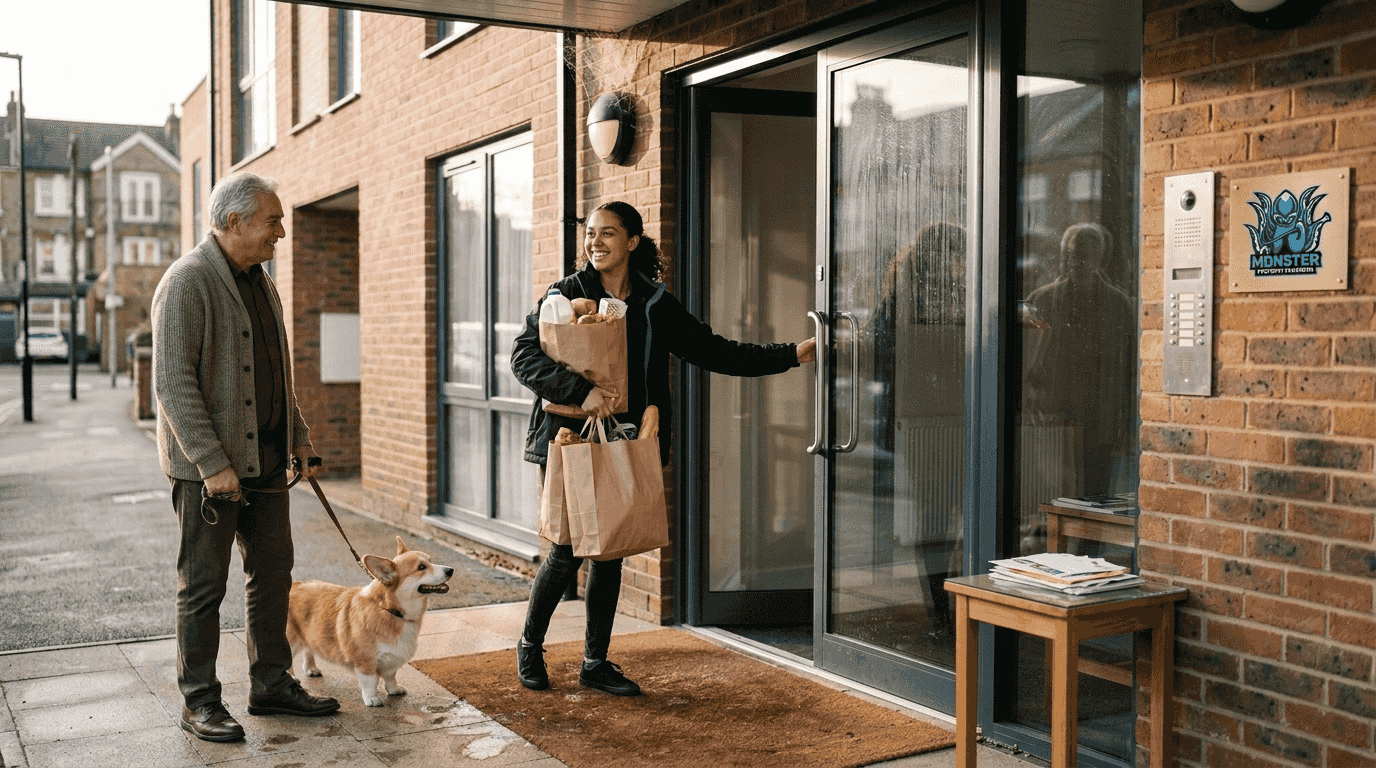
First impressions matter tremendously in competitive rental markets. Prospective tenants touring your property notice exterior cleanliness immediately. Dirty walkways, stained parking lots, and grimy building exteriors suggest neglect, even when interior units shine. These negative impressions drive potential residents toward competing properties with better maintained exteriors. Current tenants also compare your property to others when considering lease renewals. Maintaining clean common areas that boost tenant satisfaction gives you a competitive advantage in retention.
Professional management means addressing problems before tenants need to complain. Reactive cleaning in response to tenant complaints signals that management waits for issues to escalate rather than preventing them. Proactive pressure washing demonstrates you prioritize resident comfort and safety without requiring prompting. This approach builds trust and reinforces your reputation as a responsive, quality focused property manager.
Visible maintenance tasks like pressure washing reassure tenants their concerns matter. Residents notice when crews arrive regularly to clean common areas. They see management investing in property upkeep. These observations create positive associations with your management approach, even among tenants who never directly interact with cleaning crews. The psychological impact of visible maintenance extends beyond the immediate cleaning benefits.
Dirty or slippery common areas generate tenant complaints that consume management time and damage relationships. Residents rightfully expect safe, clean environments in exchange for rent payments. When exterior conditions deteriorate, complaint frequency increases and tenant satisfaction scores drop. Online reviews mention dirty common areas and safety concerns, harming your property's reputation with prospective residents. Understanding professional pressure washing benefits helps you prevent these reputation damaging situations.
Tenant retention directly impacts your bottom line through reduced turnover costs. Marketing vacant units, processing applications, and preparing units for new residents costs significantly more than retaining satisfied current tenants. Clean, well maintained exteriors contribute to the overall resident experience that encourages lease renewals. While pressure washing alone does not guarantee retention, it forms part of the comprehensive maintenance approach that keeps residents satisfied.
Best practices for scheduling and frequency of pressure washing
Determining optimal pressure washing frequency requires balancing cost effectiveness with maintenance needs specific to your property. Climate conditions, building materials, foot traffic levels, and surrounding environment all influence how quickly dirt and organic growth accumulate. Properties in humid climates need more frequent cleaning than those in arid regions. Buildings near busy roads accumulate exhaust residue faster than those in quieter locations.
Industry professionals typically recommend pressure washing frequencies ranging from quarterly to biannual schedules for multifamily properties. High traffic areas like main entrances, parking lots, and pool decks may require quarterly attention, while less used spaces might need only biannual cleaning. Frequency guidelines suggest adjusting schedules based on visual inspections and tenant feedback rather than rigid calendar intervals.
- Conduct quarterly visual inspections of all exterior surfaces to identify areas needing attention
- Schedule pressure washing before peak leasing seasons to maximize curb appeal when prospective tenants tour
- Clean after seasonal events that accelerate dirt accumulation, such as spring pollen or fall leaf debris
- Document all cleaning activities with dates, areas covered, and any issues discovered during service
- Review and adjust frequency annually based on results, costs, and changing property conditions
Proactive scheduling prevents the buildup that requires aggressive cleaning methods potentially damaging to surfaces. Regular light cleaning preserves materials better than infrequent intensive cleaning. Gentle, frequent pressure washing removes contaminants before they bond permanently to surfaces or cause deterioration. This approach extends the lifespan of concrete, paint, and other exterior materials while maintaining consistent appearance.
| Property Type | Recommended Frequency | Priority Areas | Seasonal Considerations |
|---|---|---|---|
| Garden style apartments | Quarterly | Sidewalks, breezeways, patios | Increase after spring pollen, fall leaves |
| High rise buildings | Biannually | Entrance areas, parking garage | Schedule before summer and winter seasons |
| Townhome communities | Every 4 months | Driveways, common walkways | Adjust for local weather patterns |
Budgeting for routine pressure washing becomes easier when you establish consistent schedules. Predictable maintenance costs allow better financial planning than reactive emergency cleaning. Many property managers negotiate annual service contracts with pressure washing providers, securing better rates through volume commitments. These contracts also ensure priority scheduling during peak seasons when demand for cleaning services increases.
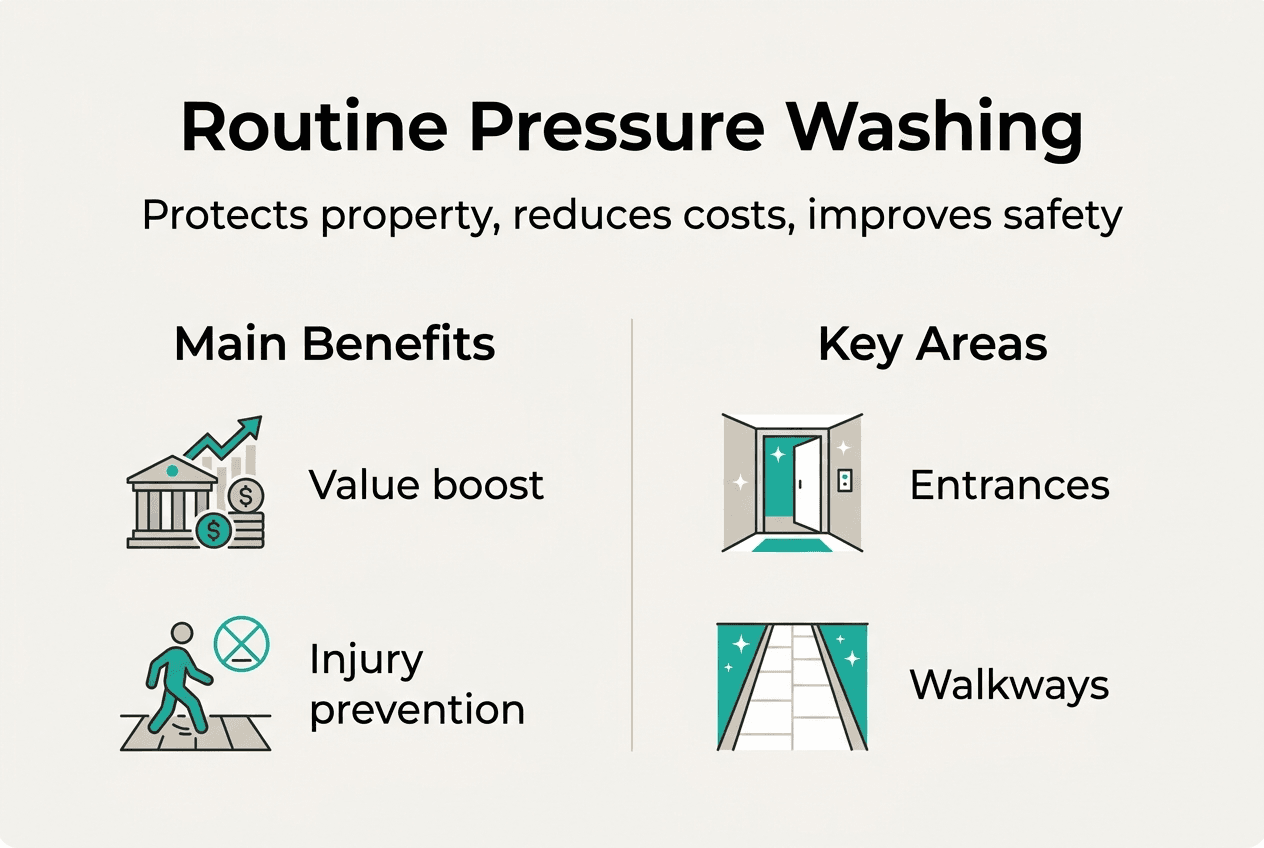
Balancing cost and effectiveness means understanding diminishing returns from excessive cleaning. Over washing wastes money without proportional benefits. Under washing allows problems to develop. The optimal frequency maintains appearance and prevents damage without unnecessary expense. Track results from different schedules to identify the sweet spot for your specific property. Review the pressure washing checklist for essential steps to ensure comprehensive coverage during each service.
Regular inspections help you adjust schedules based on actual conditions rather than assumptions. Walk your property monthly, noting areas where dirt accumulates quickly or organic growth appears. These observations inform scheduling decisions and help you communicate specific needs to service providers. Understanding the difference between proactive versus reactive exterior cleaning approaches clarifies why scheduled maintenance outperforms sporadic attention.
Explore professional pressure washing services for your multifamily property
Property managers juggling multiple responsibilities benefit from partnering with specialized exterior cleaning providers who understand multifamily property needs. Professional services deliver consistent results while freeing your team to focus on core management tasks. At Monster Property Partners, we tailor pressure washing programs specifically for apartment communities and multifamily properties, ensuring comprehensive coverage of sidewalks, parking lots, and common areas where residents gather daily.
Our team brings extensive experience managing large scale exterior cleaning projects with minimal disruption to residents. We understand the importance of reliable scheduling, clear communication, and thorough documentation that property managers need. Whether you require quarterly maintenance or customized cleaning schedules, our multifamily exterior cleaning services adapt to your property's unique requirements and budget constraints.
Scheduling regular professional cleanings protects your investment while reducing liability risks and enhancing tenant satisfaction. Our specialized common area concrete cleaning services target the high traffic surfaces where safety hazards develop and appearance matters most. Partner with a trusted provider committed to helping you maintain property value through consistent, quality exterior maintenance.
FAQ
How often should I schedule pressure washing for multifamily properties?
Most multifamily properties benefit from pressure washing every three to six months, depending on climate and foot traffic levels. Properties in humid environments or high traffic locations need quarterly cleaning, while those in drier climates with moderate use can extend to biannual schedules. Conduct regular inspections between cleanings to identify areas needing attention sooner. Adjust your schedule based on actual conditions rather than rigid intervals.
What areas of a multifamily property should be prioritized for routine pressure washing?
Prioritize sidewalks, parking lots, building entrances, and common areas where residents walk frequently. These high traffic zones accumulate dirt and develop slip hazards faster than other locations. Pool decks, patios, and stairwells also require regular attention due to moisture exposure and safety concerns. Focus on visible areas that influence tenant perceptions and locations where hazards pose liability risks.
Can routine pressure washing reduce my property's insurance premiums?
Regular pressure washing reduces insurance risks by eliminating slip hazards and demonstrating proactive maintenance practices insurers value. While not all carriers offer explicit discounts for cleaning schedules, documented maintenance programs may qualify your property for better coverage terms. Lower claim frequency from prevented accidents helps avoid premium increases over time. Discuss your maintenance practices with your insurance provider to understand potential benefits.
Does pressure washing damage building materials or landscaping?
Professional pressure washing services adjust water pressure and cleaning methods based on surface types to prevent damage. Experienced technicians use appropriate pressure levels for concrete, painted surfaces, and delicate materials. They also protect landscaping with barriers and controlled water flow. Damage typically occurs only when inexperienced operators use excessive pressure or incorrect techniques. Hiring qualified professionals ensures safe, effective cleaning without harming your property.
How do I choose a reliable pressure washing provider for my multifamily property?
Look for providers with specific multifamily property experience who understand the unique challenges of apartment communities. Request references from other property managers and verify insurance coverage protecting against potential damage or liability. Evaluate their communication practices, scheduling flexibility, and documentation processes. Choose providers offering consistent crew assignments so the same trained technicians service your property regularly, ensuring quality and familiarity with your specific needs.