
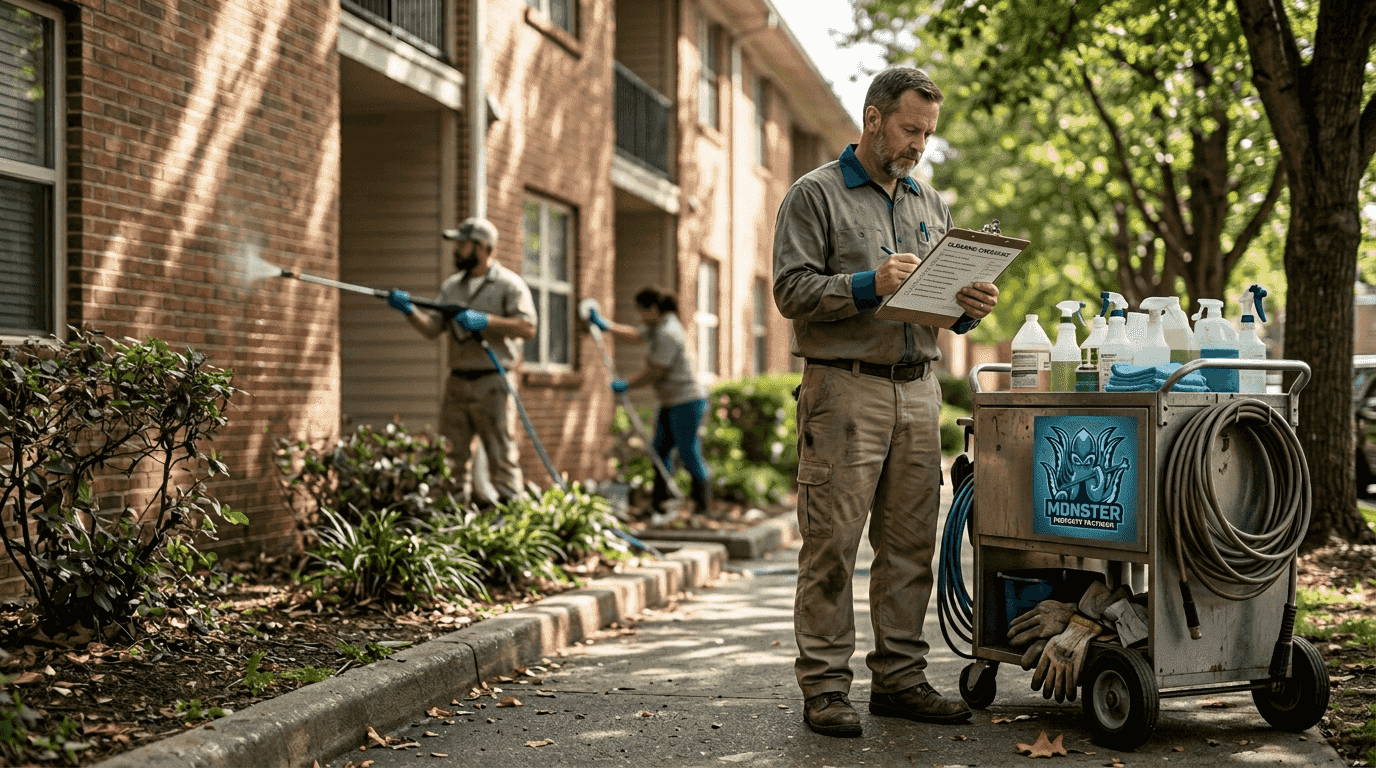
Resident complaints about stained siding and grimy walkways frustrate maintenance managers daily. Exterior cleaning keeps multi-family properties attractive, safe, and valuable, yet many teams struggle with inconsistent schedules, safety protocols, and quality control. This guide delivers practical steps, essential tools, and proven tips to help you execute reliable exterior cleaning operations that extend building life, boost tenant satisfaction, and reduce costly rework.
Table of Contents
- Tools, Equipment, And Knowledge Prerequisites
- Step-By-Step Exterior Cleaning Process For Multi-Family Properties
- Safety And Compliance Best Practices In Exterior Cleaning
- Scheduling And Project Management Tips For Effective Exterior Cleaning
- Common Mistakes Maintenance Managers Make And How To Avoid Them
- Expected Results And Benchmarks From Effective Exterior Cleaning
- Discover Expert Exterior Cleaning Services For Your Property
Key takeaways
| Point | Details |
|---|---|
| Extended lifespan | Regular exterior cleaning extends building lifespan by up to 15 years through proactive maintenance. |
| Safety and training | Proper tools and trained staff ensure safe, effective cleaning that protects workers and surfaces. |
| Quarterly schedule | Scheduling quarterly cleans reduces dirt buildup by 70%, maintaining curb appeal year-round. |
| Resident communication | Clear communication with residents cuts complaints by 35% and improves satisfaction. |
| Pressure control | Avoid excessive pressure above 3000 PSI to prevent surface damage and costly repairs. |
Tools, equipment, and knowledge prerequisites
Before starting any exterior cleaning project, equip your team with the right tools and training to ensure safe, effective operations. Using commercial pressure washers with adjustable settings from 1500-3000 PSI prevents surface damage and improves cleaning effectiveness. Investing in quality equipment upfront saves you from repairs and rework later.
Select eco-friendly, biodegradable cleaning agents that comply with local environmental regulations. These products effectively remove dirt, mold, and stains without harming landscaping or stormwater systems. Many municipalities now require green cleaning solutions, so verify compliance before purchasing chemicals.
Staff training is non-negotiable. Workers must understand chemical handling, pressure washing safety, and surface-specific techniques. Provide hands-on training sessions covering equipment operation, proper dilution ratios, and emergency response procedures. This preparation reduces accidents and ensures consistent cleaning quality across all projects.
Personal protective equipment (PPE) is mandatory for every crew member. Standard gear includes chemical-resistant gloves, safety goggles, waterproof boots, and protective clothing. Requiring PPE protects workers from chemical splashes, high-pressure spray injuries, and slippery surfaces.
Pro Tip: Create laminated pre-cleaning and post-cleaning checklists for your teams to carry on-site. These visual aids enhance thoroughness, ensure nothing gets missed, and provide documentation for quality assurance reviews.
Essential equipment checklist:
- Commercial pressure washer with adjustable PSI settings
- Surface cleaners for large flat areas like sidewalks
- Extension wands for reaching high walls and soffits
- Eco-friendly cleaning concentrates and surfactants
- Chemical injection systems for soap application
- Safety equipment including gloves, goggles, and boots
- Tarps and plastic sheeting to protect landscaping
| Equipment Type | Recommended Specs | Primary Use |
|---|---|---|
| Pressure Washer | 3.5-4.5 GPM, 2500-3000 PSI | Building exteriors, walkways |
| Surface Cleaner | 20-24 inch diameter | Flat surfaces, patios, driveways |
| Extension Wand | 12-24 feet | Upper floors, soffits, trim |
| Chemical Injector | Adjustable ratio 1:10 to 1:50 | Soap application, pre-treatment |
For a comprehensive multi-family property cleaning guide managers can reference, explore additional operational frameworks and vendor selection criteria.
Step-by-step exterior cleaning process for multi-family properties
With your tools ready and team trained, follow this systematic approach to execute thorough, efficient exterior cleaning projects. Start every project with a detailed pre-cleaning inspection. Walk the property perimeter to identify stubborn stains, vulnerable surfaces, damaged areas, and potential hazards like loose siding or cracked concrete. Document findings with photos and notes to guide your cleaning approach and protect against liability claims.
Select equipment settings and cleaning agents suited to each surface type. Vinyl siding tolerates 1500-2000 PSI, while concrete walkways handle up to 3000 PSI safely. Match your nozzle tip to the job: 25-degree tips work well for general washing, while 40-degree tips suit delicate surfaces. Test a small, inconspicuous area first to verify your settings won't cause damage.
Execute the cleaning following a logical pattern that prevents streaking and ensures complete coverage. Work from top to bottom so dirty runoff doesn't re-soil cleaned areas. Apply cleaning solution, allow 5-10 minutes dwell time for chemical action, then rinse thoroughly with controlled pressure strokes. Maintain consistent distance and speed to avoid etching or streaking.
Using a documented cleaning checklist improves completeness by 48%, reducing missed spots and rework. Your checklist should cover building facades, walkways, parking areas, dumpster pads, railings, and common area structures. Assign specific zones to crew members and require sign-off upon completion.
Conduct a thorough post-cleaning inspection to verify quality and identify any areas needing touch-ups. Walk the property with your checklist, comparing results against your pre-cleaning documentation. Address any missed spots immediately while equipment is still on-site. This final verification step ensures resident satisfaction and protects your reputation.
Standardized cleaning sequence:
- Complete pre-cleaning property inspection and documentation
- Set up safety barriers and resident notification signage
- Test pressure settings on inconspicuous surface samples
- Apply cleaning solution starting from highest points
- Allow appropriate dwell time for chemical breakdown
- Rinse thoroughly from top to bottom in overlapping passes
- Inspect results and perform touch-ups as needed
- Remove barriers and update maintenance records
Pro Tip: Schedule cleaning during mild weather between 60-80°F when possible. Extreme heat causes solutions to dry too quickly, while cold temperatures reduce cleaning effectiveness and can damage equipment.
| Surface Type | Recommended PSI | Best Nozzle | Special Considerations |
|---|---|---|---|
| Vinyl Siding | 1500-2000 | 40-degree | Avoid directing spray upward under panels |
| Brick | 2000-2500 | 25-degree | Check mortar condition first |
| Concrete Walkways | 2500-3000 | 15-25 degree | Use surface cleaner for even results |
| Wood Decks | 1200-1500 | 40-degree | Follow wood grain direction |
For detailed guidance on timing and frequency, review this seasonal exterior cleaning checklist property managers use to plan annual maintenance.
Safety and compliance best practices in exterior cleaning
Executing cleaning safely protects your team, residents, and property from accidents and liability. Train staff thoroughly on chemical handling to reduce injuries by 60% compared to untrained crews. Cover proper dilution procedures, safe mixing practices, spill response, and first aid protocols. Require annual refresher training to maintain competency and compliance.
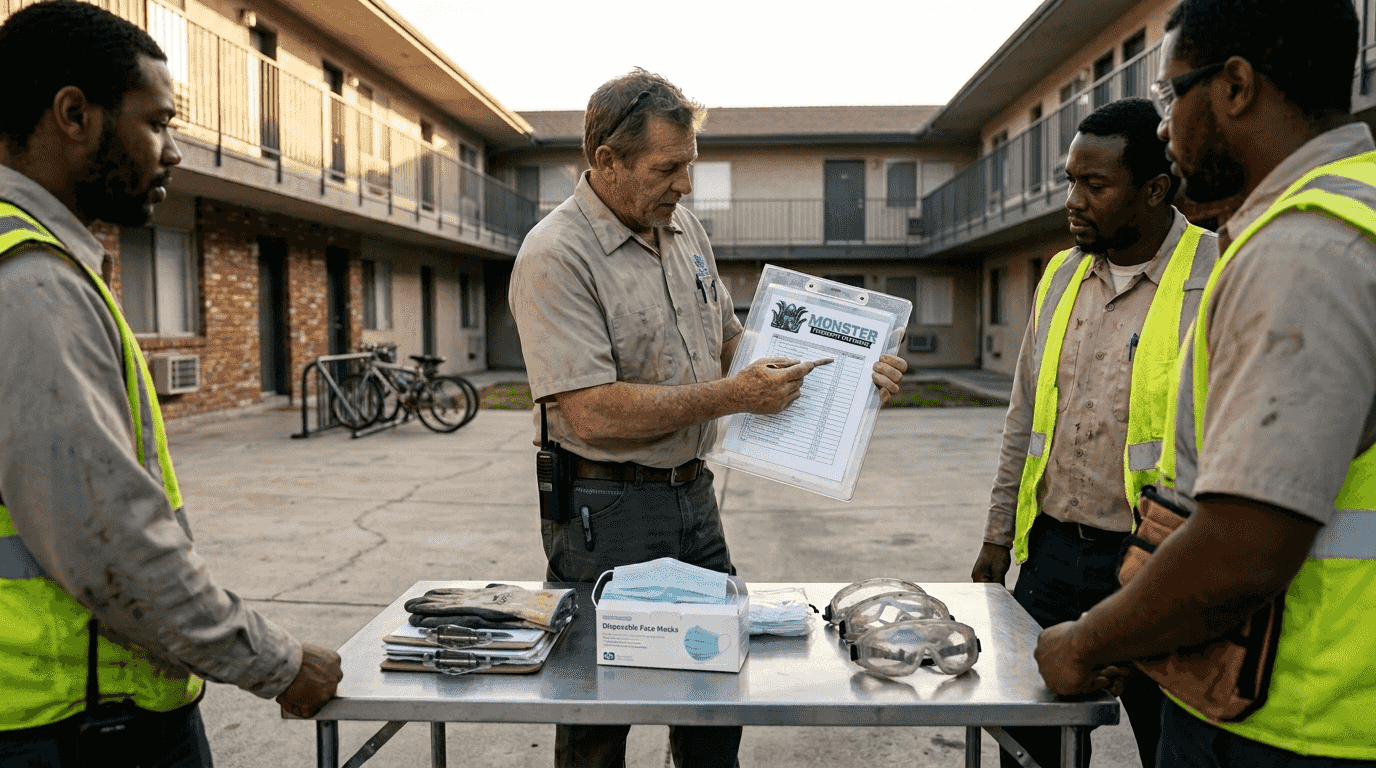
Personal protective equipment must be worn without exception. Standard gear includes chemical-resistant gloves to prevent skin contact, safety goggles to protect eyes from splashes, waterproof boots with slip-resistant soles, and long-sleeved protective clothing. Inspect PPE regularly and replace damaged items immediately.
Follow OSHA pressure washing safety standards to prevent serious accidents. Never point spray guns at people, animals, or yourself. Maintain safe working distances from power lines and electrical equipment. Use proper ladder safety when cleaning elevated areas, and ensure stable footing on wet surfaces. High-pressure spray can cause injection injuries that require immediate medical attention.
Communicating project timelines and safety precautions to residents reduces complaints by 35%. Post notices 48-72 hours before cleaning begins, detailing dates, times, affected areas, and any required actions like moving vehicles or closing windows. Provide contact information for questions or concerns.
Use highly visible signage and physical barriers during active cleaning operations. Caution tape, safety cones, and wet floor signs alert residents and visitors to hazards. Block off work areas to prevent pedestrian traffic through zones with slippery surfaces or airborne chemicals. Remove barriers promptly when areas are safe.
Critical safety protocols:
- Never bypass equipment safety features or guards
- Keep electrical connections away from water sources
- Use ground fault circuit interrupters (GFCI) on all power tools
- Maintain three points of contact when working on ladders
- Store chemicals in labeled, locked areas away from residents
- Post emergency contact numbers at work sites
- Conduct daily safety briefings before starting work
Pro Tip: Create a simple one-page safety Quick Reference Card your crews can keep in their pockets. Include emergency numbers, key PPE requirements, and PSI guidelines for common surfaces. Laminate cards for durability in wet conditions.
"Proactive safety communication transforms resident perception from inconvenience to appreciation, turning routine maintenance into visible property care."
Learn more operational excellence strategies through this comprehensive guide on exterior cleaning property maintenance best practices.
Scheduling and project management tips for effective exterior cleaning
Optimal scheduling maximizes cleaning effectiveness while minimizing disruption to residents and property operations. Quarterly exterior cleaning reduces dirt buildup by 70%, improving building appearance and longevity. This frequency prevents grime from bonding permanently to surfaces, making each cleaning session faster and more effective.
Plan project timelines realistically based on property size and scope. A typical 100-unit property requires 1-2 days for complete exterior cleaning, while larger complexes may need 3-4 days. Factor in weather delays, equipment setup time, and potential touch-up work. Communicate estimated timelines to residents and management to set proper expectations.
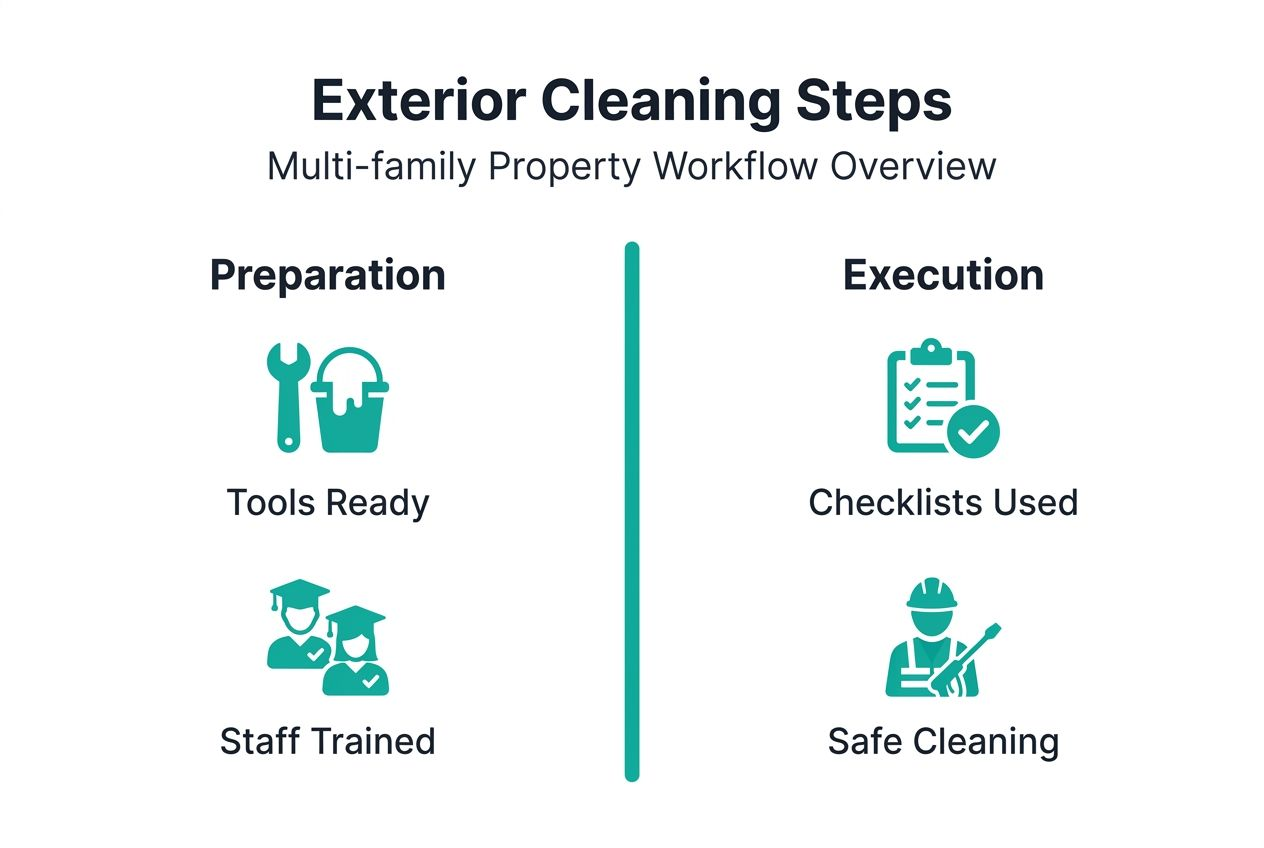
Use formal vendor agreements when outsourcing to hold contractors accountable for quality and timeliness. Specify performance standards, completion deadlines, insurance requirements, and payment terms. Include provisions for re-cleaning deficient areas at no additional cost. Clear contracts prevent disputes and ensure professional service delivery.
Coordinate cleaning schedules around resident activities and property events to minimize conflicts. Avoid scheduling during move-in/move-out peaks, holiday weekends, or planned community gatherings. Check with property management about upcoming events before finalizing dates. This consideration shows respect for residents and reduces complaints.
Track cleaning history and outcomes in maintenance management software for continuous improvement. Record dates completed, areas serviced, products used, crew hours, costs, and any issues encountered. Analyzing this data reveals patterns, identifies recurring problems, and helps refine your processes over time.
Optimal scheduling framework:
- Q1 (January-March): Post-winter deep clean removes salt residue and grime
- Q2 (April-June): Spring refresh prepares property for summer activity
- Q3 (July-September): Mid-year maintenance addresses summer growth and stains
- Q4 (October-December): Fall preparation protects surfaces before winter
| Property Size | Estimated Duration | Crew Size | Best Days |
|---|---|---|---|
| 50-100 units | 1-2 days | 2-3 workers | Tuesday-Thursday |
| 100-200 units | 2-3 days | 3-4 workers | Monday-Wednesday |
| 200+ units | 3-5 days | 4-6 workers | Monday-Thursday |
Pro Tip: Schedule routine cleaning on the same week each quarter to build resident familiarity. When tenants expect cleaning during "the second week of March," they're more likely to prepare and less likely to complain.
For detailed workflow planning, explore this multi-family property cleaning workflow guide with timeline templates and crew coordination strategies.
Common mistakes maintenance managers make and how to avoid them
Understanding frequent operational errors helps you prevent costly damage and rework. Avoiding excessive pressure over 3000 PSI prevents premature surface damage experienced in about 35% of projects without proper protocols. High pressure etches vinyl siding, erodes mortar, and splinters wood. Always test settings on inconspicuous areas first.
Skipping pre-cleaning inspections leads to missed problem areas and approximately 25% rework rates. Without proper assessment, crews overlook heavily soiled zones, fail to identify fragile surfaces, and miss opportunities for targeted treatment. The 15 minutes spent on inspection saves hours of touch-up work later.
Neglecting chemical safety training increases risk of worker accidents, chemical burns, and surface damage from incorrect dilution. Untrained workers may mix incompatible products, use excessive concentrations that harm surfaces, or fail to rinse adequately. Invest in proper training to protect people and property.
Inconsistent communication with residents fuels complaints and dissatisfaction. Last-minute notices, vague timelines, and lack of contact information create frustration. Residents who feel informed and respected tolerate temporary inconvenience far better than those caught by surprise.
Failing to use standardized cleaning checklists allows missed spots, inconsistent quality, and no accountability trail. Without documentation, crews rush through familiar areas while overlooking less visible zones. Checklists ensure thorough coverage and provide proof of work completed.
Critical mistakes to avoid:
- Using damaged or worn pressure washer nozzles that create uneven spray patterns
- Cleaning during extreme temperatures that reduce chemical effectiveness
- Ignoring manufacturer guidelines for surface-specific cleaning methods
- Allowing untrained personnel to operate equipment without supervision
- Failing to protect landscaping, causing plant damage and additional costs
- Rushing projects to meet unrealistic deadlines, sacrificing quality
- Neglecting equipment maintenance, leading to breakdowns mid-project
Pro Tip: Keep a "lessons learned" log after each major cleaning project. Record what worked well, what didn't, and specific improvements for next time. This simple practice transforms mistakes into valuable training material for your team.
Understand the full spectrum of exterior maintenance approaches through this overview of types of exterior cleaning property managers should consider for comprehensive property care.
Expected results and benchmarks from effective exterior cleaning
Understanding realistic outcomes helps you set appropriate expectations and measure success. Quarterly cleaning reduces dirt buildup by 70%, maintaining curb appeal that attracts prospective tenants and retains current residents. Clean exteriors signal professional management and property pride, directly impacting lease renewal rates.
Regular exterior cleaning can extend building material life by up to 15 years and reduce resident complaints by 35%. Removing corrosive substances like mold, algae, and pollutants prevents premature deterioration of siding, paint, and structural components. This proactive maintenance delivers substantial long-term cost savings.
Resident complaints related to exterior appearance drop significantly with proactive communication and consistent cleaning schedules. When tenants see regular maintenance happening on a predictable schedule, they perceive the property as well-managed and their concerns as addressed. This perception boost improves satisfaction scores and online reviews.
Using standardized checklists improves cleaning thoroughness by 48%, reducing the need for expensive rework and follow-up visits. Complete coverage the first time saves labor costs, preserves crew schedules, and maintains resident goodwill. Quality control processes pay for themselves through efficiency gains.
Improved aesthetics can enhance property value and support premium rental pricing. Clean, well-maintained exteriors photograph better for marketing materials, stand out during property tours, and justify higher rents. The investment in regular cleaning delivers measurable returns through improved financial performance.
Measurable success indicators:
- Visible reduction in staining, discoloration, and organic growth
- Decreased resident complaints about property appearance
- Extended intervals between major repairs or repainting
- Improved property inspection scores from management and ownership
- Enhanced curb appeal supporting marketing and leasing efforts
- Lower maintenance costs due to preventive care
Discover how professional maintenance preserves asset value through this resource on exterior cleaning asset preservation strategies for multi-family properties.
Discover expert exterior cleaning services for your property
After mastering interior cleaning management, consider how professional services can complement your operations. Expert multifamily exterior cleaning services ensure proper equipment use, eco-friendly products, and compliance with safety standards you've learned about. Professional crews bring specialized training and commercial-grade tools that deliver consistent, high-quality results.

Vendor partnerships reduce your internal workload while maintaining the thorough cleaning protocols outlined in this guide. Outsourcing allows your maintenance team to focus on other critical tasks while ensuring exterior cleaning happens on schedule with documented quality standards. Formal agreements provide accountability and performance guarantees.
Specialized services like common area concrete cleaning address high-traffic zones that require frequent attention and expert technique. Professional providers understand surface-specific requirements and adjust methods accordingly. Explore comprehensive solutions at exterior cleaning Orlando to support your property maintenance strategy.
Frequently asked questions
How often should exterior cleaning be scheduled for multi-family properties?
Quarterly cleaning is recommended to effectively reduce dirt buildup by 70% and maintain consistent appearance year-round. This frequency prevents grime from bonding permanently to surfaces, making each session faster and more cost-effective. Properties in high-pollution areas or near construction may benefit from more frequent cleaning.
What safety measures are essential during exterior cleaning operations?
Essential safety measures include comprehensive staff training on chemical handling and equipment operation, mandatory personal protective equipment for all crew members, and clear communication with residents about schedules and precautions. Implementing these protocols reduces worker injuries by 60% and resident complaints by 35%. Always follow OSHA pressure washing safety standards and use physical barriers around active work zones.
What pressure settings should be used for different building surfaces?
Pressure washers should be set between 1500-2000 PSI for vinyl siding, 2000-2500 PSI for brick, and 2500-3000 PSI for concrete walkways. Never exceed 3000 PSI, as excessive pressure causes surface damage in approximately 35% of projects without proper protocols. Always test settings on inconspicuous areas first and adjust based on surface response.
Why is a pre-cleaning inspection checklist important?
A pre-cleaning inspection checklist helps identify existing stains, surface vulnerabilities, and damage risks before work begins, enabling targeted treatment and liability protection. Properties using documented checklists experience 48% better cleaning completeness and approximately 25% less rework. The inspection also provides baseline documentation for quality comparison after cleaning.
When should property managers consider professional cleaning services?
Consider professional cleaning services when internal resources are limited, specialized equipment is needed, or consistent quality standards must be maintained across large properties. Professional providers bring expert training, commercial-grade tools, eco-friendly products, and formal accountability through vendor agreements. Outsourcing allows your maintenance team to focus on other critical tasks while ensuring exterior cleaning happens reliably on schedule.