
TL;DR:
- Effective multi-family property upkeep requires strategic prioritization based on risk, lifecycle, and resident needs to prevent costly emergencies. Regular inspections, envelope maintenance, grounds care, and a hybrid maintenance strategy balance safety, budget, and resident satisfaction. Consistent exterior maintenance enhances occupancy, reduces costs, and fosters positive resident perceptions, supported by proactive planning and specialized contractor partnerships.
Keeping a multi-family property attractive, safe, and profitable is genuinely hard without a clear system for prioritizing what gets fixed, when, and why. A reactive approach, where you respond only after something breaks or a tenant complains, drains budgets and quietly erodes property value over time. The good news is that a structured framework built around the right upkeep examples gives you predictable costs, fewer emergency repairs, and residents who stay longer because they feel good about where they live. This article walks through four high-leverage categories of exterior upkeep, with concrete selection criteria and decision tools for multi-family property owners and investors.
Table of Contents
- How to prioritize property upkeep for maximum impact
- 1. Preventive exterior inspections and maintenance routines
- 2. Building envelope care: Keeping water out and comfort in
- 3. Hardscape and landscaping maintenance to prevent complaints
- 4. Choosing preventive, reactive, or hybrid maintenance strategies
- Our perspective: The maintenance conversation most owners avoid
- Protect your property with Monster Property Partners
- Frequently asked questions
Key Takeaways
| Point | Details |
|---|---|
| Prioritize high-risk issues | Safety hazards and water intrusion should always be addressed immediately. |
| Combine preventive and reactive methods | A hybrid approach can optimize costs and property longevity for multi-family assets. |
| Understand service-life triggers | Schedule major renewal work based on expected lifespan, not just visible damage. |
| Invest early in landscape and hardscape | Timely exterior grounds upkeep minimizes resident complaints and future repair expenses. |
| Regular documentation matters | Consistently tracking inspections and repairs reduces repeat issues and improves tenant satisfaction. |
How to prioritize property upkeep for maximum impact
Strategic upkeep is not about doing everything at once. It is about making smart decisions based on risk, cost, lifecycle, and what your residents actually need. Getting this right from the start determines whether your maintenance budget works hard for you or disappears into avoidable emergencies.
Here is a practical framework for setting priorities:
-
Document and schedule. A structured preventive maintenance program means every system has a defined inspection interval, a responsible party, and an escalation path when hazards appear. Per the Exterior Property Maintenance Checklist, implementing structured documentation and escalation procedures is the foundation for keeping properties both compliant and cost-controlled.
-
Safety first, always. Any item that creates an immediate risk of injury or legal liability moves to the front of the line. Trip hazards, leaking roofs, failing exterior lighting, and exposed wiring are non-negotiable priorities regardless of budget cycle.
-
Understand your asset lifecycle. Roofing membranes, exterior sealants, parking lots, and structural elements all have predictable service lives. Building a replacement schedule around those timelines prevents expensive emergencies and allows you to budget years in advance.
-
Match your approach to your property type. A garden-style 20-unit community and a 200-unit mid-rise have completely different maintenance profiles. High-rise facades demand more specialized envelope work, while garden-style buildings often carry more hardscape and grounds exposure.
-
Treat repeat issues as process problems. If the same drain backs up every spring or the same area of a parking lot cracks repeatedly, that is a system failure, not just bad luck. Track trends in your work orders and use them to redesign your maintenance approach.
Research confirms that maintenance costs vary substantially by unit and building characteristics, reinforcing that a one-size-fits-all checklist will not serve your portfolio well. Tailoring your priorities to the specific features of each property is what separates high-performing owners from those constantly chasing their tails. For a deeper look at what belongs on your list, explore maintenance tasks for multi-family properties to see how experienced operators structure their programs.
Pro Tip: Color-code your maintenance schedule by risk level: red for immediate safety items, yellow for items within 90 days, and green for annual or lifecycle work. This visual system helps teams triage quickly without having to re-read every work order.
1. Preventive exterior inspections and maintenance routines
With prioritization in mind, let's start with the most universal and preventive upkeep practice: systematic exterior inspections. Everything else on this list depends on catching problems early, and that requires eyes on your property at regular, documented intervals.
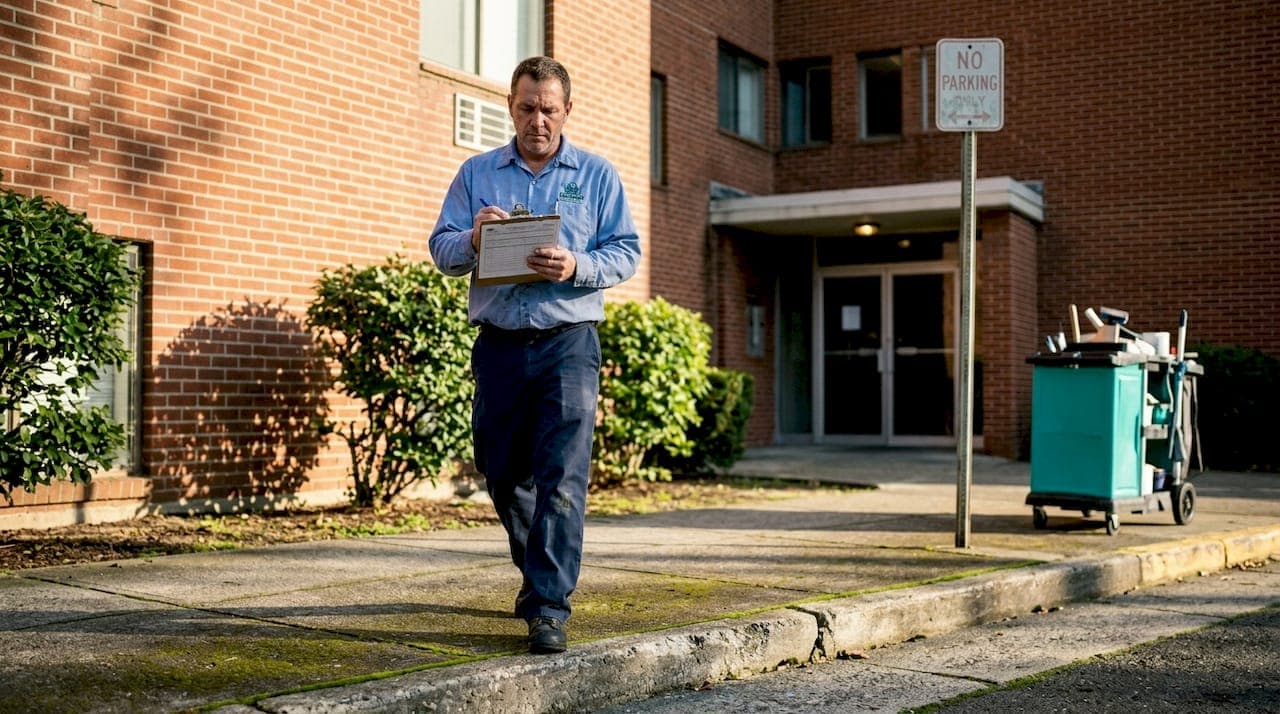
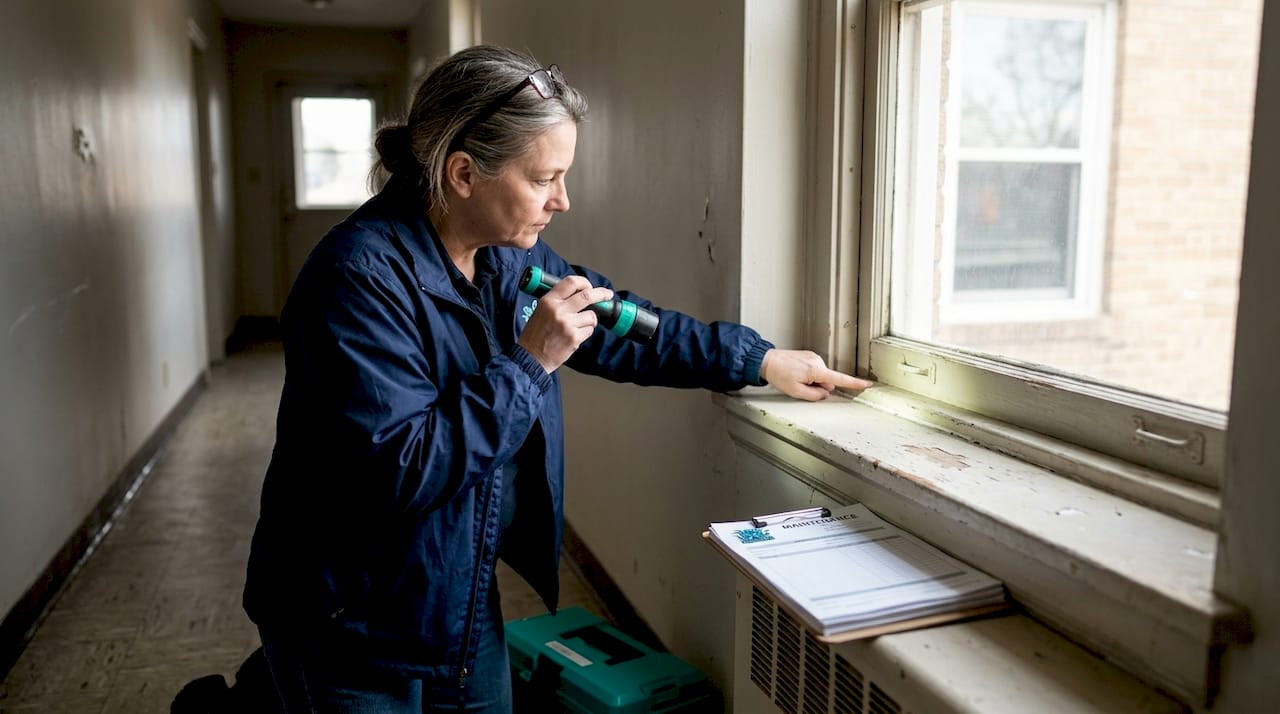
According to best-practice guidance, exterior inspections twice annually are the baseline, with a spring inspection after winter stress and a fall inspection before wet-weather season. Monthly walkthroughs should cover high-priority areas like roof drains, stairwells, and parking lot lighting.
A solid inspection routine covers:
- Roofing and gutters: Check for membrane damage, clogged drains, and flashing failures. Even a small roof leak can produce tens of thousands of dollars in interior damage within one season.
- Foundation and grade: Look for settlement, cracks, or areas where water pools against the building. Water that sits against a foundation is one of the most destructive forces in property maintenance.
- Exterior walkways and stairs: Concrete spalling, heaved sections, and damaged handrails create both liability and habitability issues that residents notice immediately.
- Exterior lighting: Burned-out or misaligned fixtures reduce safety perception and increase liability exposure, especially in parking areas and entry paths.
- Drainage systems: Confirm downspouts discharge away from the foundation and that surface drains are clear and functioning.
After any major storm, conduct a spot inspection of the entire property before the next regular cycle. Storm damage spreads quickly, and waiting weeks to assess it turns a manageable repair into a major project.
"The most expensive thing you can do in property maintenance is discover a problem six months after it started. Every inspection you skip is a blank check you're writing to an emergency contractor."
Pro Tip: Use a mobile inspection app so your maintenance team can log photos, GPS location, and work order assignments in real time during the inspection walk. This creates a permanent, searchable record that is invaluable for insurance claims and capital planning.
For a step-by-step breakdown of what each inspection should cover, the exterior maintenance checklist steps resource is a practical reference. Combine that with a consistent curb appeal care approach to ensure your property makes a strong first impression all year.
2. Building envelope care: Keeping water out and comfort in
Thorough exterior evaluations often reveal the biggest threat: water intrusion. Next, let's address maintenance that keeps the building envelope sound. The building envelope includes every element that separates interior conditioned space from the outdoors: walls, windows, roofing systems, doors, and the sealants that hold it all together.
Key envelope maintenance tasks include:
- Sealant replacement: Facade sealant joints and glazing gaskets are the silent defenders of your building. Per the Building Envelope Maintenance Guide, facade sealants have a typical service life of 10 to 25 years, while roofing membranes like TPO and EPDM last 20 to 30 years. Scheduling replacements based on these timelines eliminates the guesswork.
- Window and door perimeters: Failed caulk around windows and door frames is one of the most common entry points for moisture. It is also one of the easiest and least expensive fixes if caught early.
- Waterproofing membranes: Podium decks, planters, below-grade walls, and parking structures require membrane systems that degrade on a predictable schedule. Build renewal projects into your capital budget years before failure occurs.
- Exterior cleaning as part of envelope care: Dirt, biological growth like algae and mildew, and mineral deposits accelerate surface deterioration. Pressure washing and soft washing are not just cosmetic. Investing in exterior cleaning value means protecting substrates from the organic acids that biological growth produces.
| Envelope component | Typical service life | Failure risk if ignored |
|---|---|---|
| Facade sealant joints | 10 to 25 years | Water intrusion, mold, structural damage |
| TPO/EPDM roofing membranes | 20 to 30 years | Interior flooding, insulation failure |
| Window glazing gaskets | 15 to 20 years | Air/water infiltration, energy loss |
| Below-grade waterproofing | 20 to 25 years | Foundation moisture, mold |
| Exterior caulk at penetrations | 5 to 10 years | Moisture infiltration, wood rot |
For apartment buildings specifically, maintaining this layer of the building directly affects energy costs and resident comfort. A draft in a unit gets reported as a maintenance complaint. Water staining on an interior wall drives residents to look elsewhere at lease renewal. Staying on top of envelope maintenance is one of the highest-return activities in your portfolio. Review the apartment exterior checklist to ensure your building envelope work is fully integrated into your annual planning.
3. Hardscape and landscaping maintenance to prevent complaints
Beyond the building itself, well-kept grounds play a key role. Let's look at how exterior spaces factor into successful upkeep. Grounds maintenance is often underestimated as a liability and resident satisfaction driver. Clean, safe, and visually appealing common areas directly influence lease renewals, online reviews, and the quality of new applicants your property attracts.
Proactive landscape management starting in early spring addresses turf recovery, irrigation system startup, hardscape inspection, drainage clearance, and tree risk assessment, all of which reduce costly problems that compound through the rest of the year.
Here is what a proactive grounds program covers:
- Post-winter debris clearing: Leaves, dead branches, and sediment left over from winter clog drains and create slip hazards that lead to injury claims.
- Walkway and driveway repairs: Cracked concrete and heaved asphalt are trip hazard liabilities. Seal-coat parking lots every three to four years and address individual cracks annually.
- Standing water management: Poor drainage is a breeding ground for mosquitoes and a precursor to foundation damage. Redirect water with grading adjustments or channel drains before it becomes a chronic complaint.
- Tree and shrub trimming: Overgrown branches damage roofing and siding during storms and create concealment opportunities that residents perceive as security risks. Annual trimming keeps risk controlled.
| Grounds item | Maintenance frequency | Consequence of delay |
|---|---|---|
| Debris clearing | Monthly/after storms | Drain blockage, slip claims |
| Walkway crack repair | Annually | Trip hazard liability |
| Parking lot seal coat | Every 3 to 4 years | Accelerated deterioration |
| Tree trimming | Annually | Storm damage, safety risks |
| Irrigation startup/shutdown | Seasonal | System failures, turf loss |
"Curb appeal is not vanity. It is the first value signal your property sends to every prospective resident who drives by before they ever call."
Pro Tip: Walk your property as a prospective resident would, starting from the street and moving through parking areas, walkways, and entry points. Every friction point you notice is something a current or future resident is also noticing. Fix what you see. For a complete breakdown of exterior solutions at the building level, the exterior cleaning solutions guide covers the full range of services that keep grounds and building surfaces in top condition.
4. Choosing preventive, reactive, or hybrid maintenance strategies
With concrete examples covered, it is essential to choose the right strategy for your property. Here is how to think about preventive, reactive, and hybrid approaches.
| Strategy | Upfront cost | Long-term cost | Best for |
|---|---|---|---|
| Preventive | Higher | Lower | Critical systems, high-traffic areas |
| Reactive | Lower | Higher | Low-risk, non-critical items |
| Hybrid | Moderate | Moderate | Most multi-family properties |
A hybrid maintenance approach, where you apply preventive maintenance to critical systems and allow reactive maintenance for less critical items, balances budget pressure with risk management. This is the most realistic and effective approach for most multi-family operators.
Here is how to apply this framework step by step:
-
Categorize every system. Label each building component as critical (roof, HVAC, plumbing, envelope) or non-critical (minor landscaping features, cosmetic elements). Critical systems get preventive schedules. Non-critical items can be reactive.
-
Build a capital reserves plan. For every critical system, document its current age, expected service life remaining, and estimated replacement cost. Spread those costs across your reserve contributions so you are never caught funding a major project from operating cash flow.
-
Set service response standards. Emergency repairs get a two-hour response. Safety-adjacent items like trip hazards and broken lighting get a 24-hour response. Routine non-urgent items get a seven-day window. This tiered standard keeps residents informed and prevents complaints from escalating.
-
Revisit strategy annually. As buildings age and occupancy patterns shift, the right balance of preventive and reactive work changes. An annual strategy review ensures your program matches current risk and budget realities.
For more on implementing these frameworks efficiently, the resources on efficient upkeep tips and prioritizing exterior maintenance provide practical detail for operators at any scale.
Our perspective: The maintenance conversation most owners avoid
Most property owners approach maintenance spending as pure cost. We think that framing is costing them significantly more than they realize. Here is the uncomfortable reality we see across our client portfolio: the properties with the lowest annual maintenance budgets are almost always the ones with the highest tenant turnover, the most online complaints, and the largest deferred capital backlogs.
The real cost of underinvesting in exterior maintenance is not just the repair bill. It is the resident who does not renew because the building looked worn out, the unit that sits vacant two weeks longer because curb appeal is weak, and the insurance rate that increases after a slip-and-fall that a cracked walkway caused.
We have also seen the opposite pattern. Properties that commit to consistent exterior maintenance, including regular pressure washing, proactive envelope care, and documented inspection routines, tend to outperform on both occupancy and rent growth compared to competing properties in the same market. Residents talk. A clean, well-maintained property generates word-of-mouth referrals that no marketing budget can replicate.
The hybrid approach described in this article is not a compromise. It is a genuinely smart allocation of resources when done intentionally and reviewed annually. The key word is intentionally. Reactive maintenance by default is not a strategy. It is a bet that nothing critical fails this year, and that bet rarely pays off.
Protect your property with Monster Property Partners
Consistent exterior maintenance starts with having the right team on the ground. At Monster Property Partners, we specialize in large-scale commercial pressure washing and exterior cleaning for apartment buildings and multi-family communities across the nation.
Whether you manage a 50-unit garden-style community or a 400-unit mid-rise, we bring the operational capacity and communication systems to handle your exterior cleaning efficiently and on schedule. From building facades and walkways to parking structures and dumpster areas, our team coordinates directly with property managers to minimize disruption and deliver results that show. Explore our multi-family exterior services and see how we can become your long-term exterior cleaning partner.
Frequently asked questions
How often should exterior building inspections be performed on multi-family properties?
Exterior inspections should be performed at least twice annually, with additional monthly checks for critical areas and spot inspections after major storms to catch weather-related damage quickly.
What exterior areas should get immediate maintenance attention?
Trip hazards, actively leaking roof areas, broken exterior lighting, and any other safety risks require immediate corrective action, not deferral to the next scheduled maintenance cycle.
What is the average service life of facade sealants and roofing membranes?
Facade sealants last roughly 10 to 25 years, while TPO and EPDM roofing membranes typically provide 20 to 30 years of service life depending on climate conditions and installation quality.
Does landscape maintenance really lower repair costs?
Yes. Proactive landscape management addresses drainage, surface integrity, and tree risk early in the season, directly reducing the frequency and cost of reactive repairs later in the year.
Are routine maintenance costs more affected by building type or tenants?
Research shows that unit and building characteristics have a substantially greater impact on maintenance cost variation than tenant characteristics, meaning your building itself drives most of your maintenance budget.