
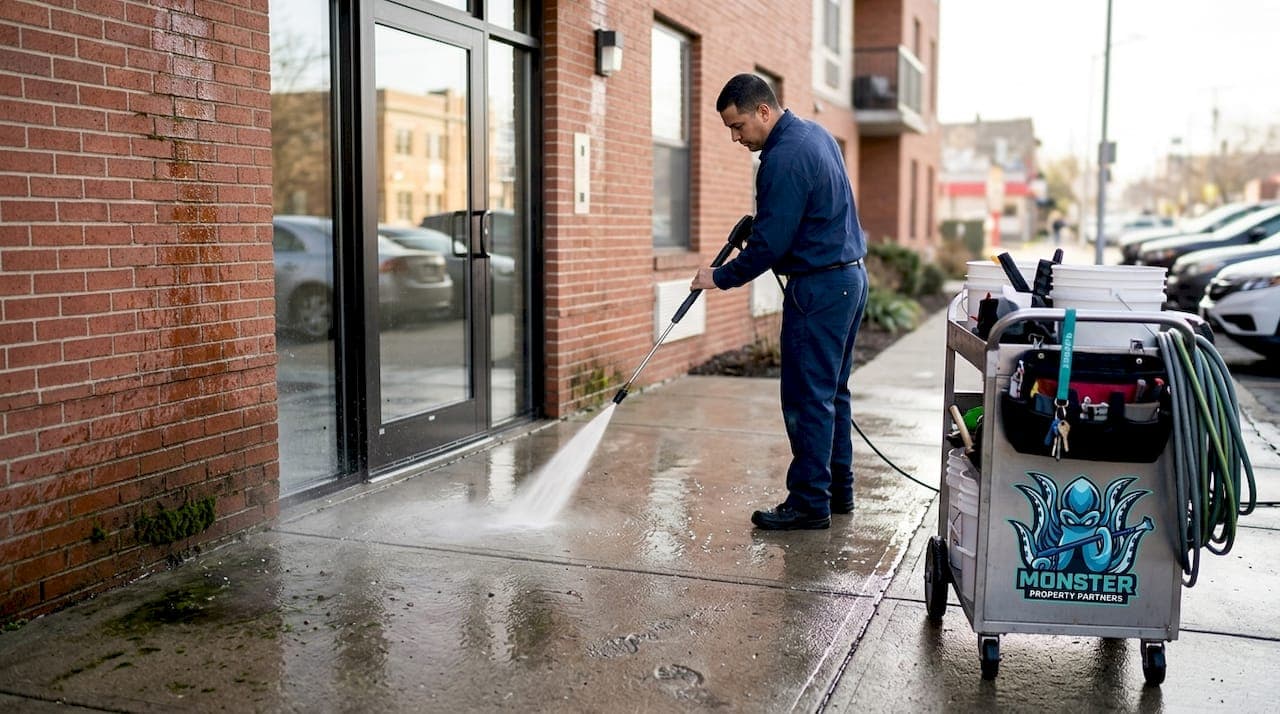
TL;DR:
- Exterior surface maintenance offers a high ROI, saving $3 to $5 per dollar spent and increasing property value.
- Regular exterior care prolongs asset lifespan, enhances curb appeal, and improves tenant satisfaction.
- Proactive, scheduled maintenance plans reduce emergency repairs, costs, and protect long-term asset value.
Most property owners pour money into kitchen upgrades and flooring while their building's exterior quietly loses value. That's a costly blind spot. Preventive maintenance delivers $3 to $5 in savings for every dollar spent, yet exterior surface care remains one of the most underutilized strategies in multi-family real estate. This guide breaks down the financial case for exterior maintenance, shows you how it protects and grows property value, and gives you a practical framework to put a high-ROI plan in motion.
Table of Contents
- The business case for exterior surface care investment
- How exterior surface care protects property value and curb appeal
- Proactive vs. reactive maintenance: What investors need to know
- Implementing a high-ROI exterior surface maintenance plan
- Why most property owners underestimate exterior surface ROI
- Partner with experts for worry-free exterior surface care
- Frequently asked questions
Key Takeaways
| Point | Details |
|---|---|
| Dramatic cost savings | Investing in exterior care can save $3-5 for every dollar spent by preventing major repairs. |
| Increased property value | Routine surface maintenance directly boosts curb appeal and market valuation for multi-family properties. |
| Proactive care leads ROI | A forward-thinking maintenance plan offers much greater returns than waiting for problems to arise. |
| Data-driven decisions | Tracking and benchmarking maintenance investments ensures your property remains competitive and cost-effective. |
The business case for exterior surface care investment
Numbers don't lie. When you look at the actual return on exterior maintenance, the case becomes impossible to ignore. Preventive maintenance ROI can reach 545%, meaning one dollar in prevention saves $5 to $10 in future repairs. For a 50-unit apartment complex, that math translates into tens of thousands of dollars preserved every year.
Neglecting your building's exterior doesn't just look bad. It accelerates material degradation, invites moisture intrusion, and turns minor surface issues into structural problems that cost five times more to fix. The exterior cleanliness impact on property value is measurable and consistent across markets.
| Investment type | Average ROI | Cost savings per $1 spent | Asset value impact |
|---|---|---|---|
| Preventive exterior care | Up to 545% | $5 to $10 | +4% property value |
| Reactive repairs only | Negative to flat | $0.20 to $0.50 | Depreciating |
| Combined proactive plan | 200% to 400% | $3 to $5 | Stable to growing |
Statistic callout: Every dollar invested in preventive exterior maintenance saves $3 to $5 in future repair costs while directly increasing property value.
Owners who track tenant satisfaction benefits alongside maintenance spending consistently report lower vacancy rates and fewer tenant complaints. Clean, well-maintained exteriors signal to prospective tenants that management is attentive and professional. That perception has real dollar value in competitive rental markets.
The business case isn't just about avoiding costs. It's about building a property that commands premium rents, attracts quality tenants, and holds its value through market cycles. Exterior surface care is one of the few maintenance categories where the return is both immediate and compounding over time.
How exterior surface care protects property value and curb appeal
First impressions are made in seconds. A prospective tenant pulling into your parking lot forms a judgment about your property before they ever step inside. Stained concrete, dirty siding, and grimy walkways communicate neglect. Clean, well-maintained surfaces communicate pride of ownership and a well-run operation.
Regular exterior maintenance does more than look good. Preserving property assets through routine surface care extends the functional life of expensive building components like siding, concrete, and painted surfaces. Replacing these materials is far more expensive than maintaining them.
Here are the core value drivers that make exterior surface care a smart investment:
- Asset life extension: Regular cleaning removes mold, mildew, and contaminants that break down surface materials over time, extending lifespan by years.
- Improved marketability: Clean exteriors support higher asking rents and faster lease-up periods in competitive markets.
- Tenant retention: Residents who feel proud of where they live stay longer, reducing costly turnover.
- Reduced emergency repairs: Catching surface issues early prevents small problems from becoming expensive structural failures.
- Stronger appraisal values: Appraisers factor in visible maintenance quality, and curb appeal tips consistently improve assessed value.
"Preventive exterior maintenance reduces emergency repairs by 20 to 30%, cuts overall maintenance costs by 15 to 30%, and extends asset lifespan by 15 to 25%."
Pro Tip: Schedule exterior surface inspections during the same visit as your HVAC and roofing checks. Bundling inspections reduces labor costs and ensures nothing gets missed between maintenance cycles.
The connection between routine care and extending building lifespan is well documented. Concrete that is pressure washed annually lasts significantly longer than concrete that is ignored until it cracks. That's not a minor detail when you're managing a multi-million-dollar asset.
Proactive vs. reactive maintenance: What investors need to know
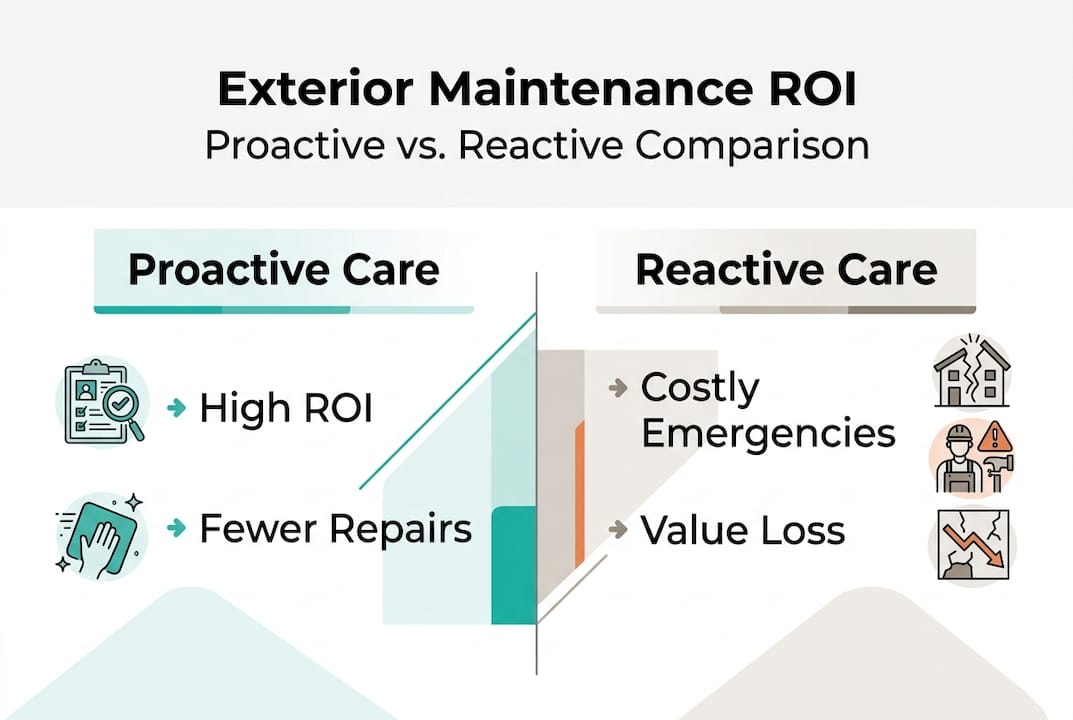
Most investors know reactive maintenance is expensive. Fewer understand just how wide the gap really is. Proactive investments can deliver up to 545% ROI, while reactive repairs typically return far less than the cost of the original neglect.
| Factor | Proactive maintenance | Reactive maintenance |
|---|---|---|
| Average ROI | Up to 545% | Negative to flat |
| Cost per incident | Low, predictable | High, unpredictable |
| Asset lifespan impact | +15 to 25% | Shortened |
| Tenant satisfaction | High | Lower |
| Budget predictability | Strong | Poor |
The proactive vs. reactive exterior care comparison comes down to control. Proactive owners control their costs. Reactive owners get controlled by them.
Here's how to implement a proactive exterior care plan at your property:
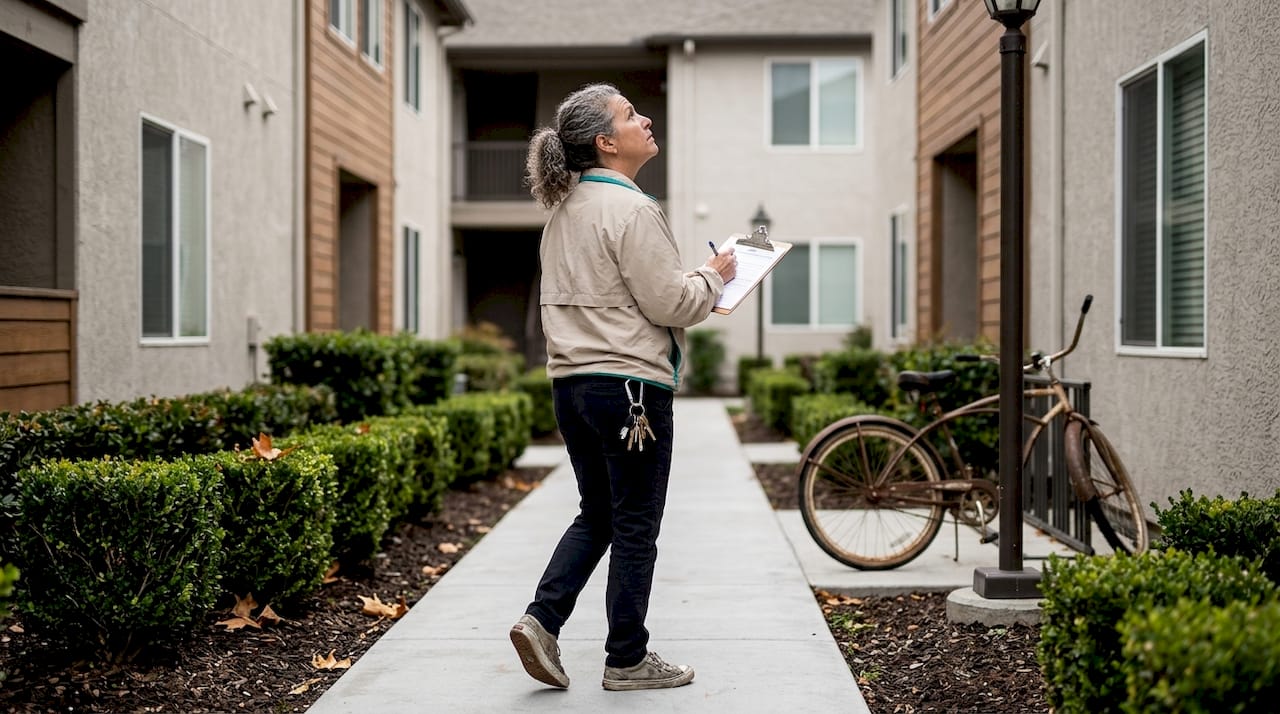
- Conduct a full exterior audit. Walk every surface, document conditions, and photograph problem areas. This becomes your baseline.
- Prioritize by risk and cost. Focus first on surfaces where deterioration leads to the most expensive downstream repairs.
- Set a recurring schedule. Assign cleaning and inspection frequencies for each surface type, whether quarterly, semi-annual, or annual.
- Integrate with your capital budget. Align exterior care with your multi-year capital expenditure plan so nothing surprises you.
- Track repair cost reductions over time. Compare year-over-year emergency repair costs to measure the impact of your proactive approach.
Pro Tip: Track maintenance spending per unit each month. The industry benchmark is $100 to $150 per unit monthly. If you're consistently above that without improving asset condition, your reactive spending is the likely culprit.
Deferred maintenance is one of the most common value destroyers in multi-family real estate. Every month you delay, small surface issues compound into larger structural problems and tenant dissatisfaction quietly builds.
Implementing a high-ROI exterior surface maintenance plan
Knowing you should invest proactively is one thing. Building a plan that actually delivers results is another. The difference between owners who see strong returns and those who don't usually comes down to structure and consistency.
Here's a proven framework for building a high-ROI exterior maintenance plan:
- Start with a condition assessment. Document every exterior surface across your property. Note age, current condition, and estimated remaining useful life.
- Prioritize by value impact. Focus resources on surfaces visible to prospective tenants first, then move to structural and functional priorities.
- Schedule routine cleaning cycles. Pressure washing, surface sealing, and inspection rounds should be on a fixed calendar, not triggered by complaints.
- Integrate with capital planning. Maximizing asset longevity requires aligning surface care with your 3 to 5 year capital budget.
- Measure and adjust. Track emergency repair frequency, tenant satisfaction scores, and cost-per-unit monthly to evaluate what's working.
Pro Tip: Set three KPIs for your exterior maintenance program: cost per unit per month, number of emergency repair calls, and tenant satisfaction scores from move-in surveys. These three numbers will tell you everything about whether your plan is working.
The key exterior cleaning benefits go beyond aesthetics. Properties with documented maintenance programs are easier to refinance, command better appraisals, and attract institutional buyers when it's time to sell. That's a competitive advantage most owners leave on the table.
Consistency is the engine. A plan executed 80% perfectly every quarter outperforms a perfect plan executed once a year. Build routines your team can sustain, and the compounding value gains will follow.
Routine preventive maintenance reduces emergency repairs by 20 to 30% and cuts overall maintenance costs by 15 to 30%. Those aren't marginal gains. For a 100-unit property, that's a meaningful improvement to your net operating income every single year.
Why most property owners underestimate exterior surface ROI
Here's what we see consistently across the industry: owners spend heavily on interior upgrades because they're visible during tours and easy to photograph for listings. Granite countertops get attention. Clean concrete doesn't. That bias is costing owners real money.
Exterior surfaces are where asset degradation starts. Water intrusion, mold growth, and material breakdown all begin outside. By the time the damage is visible inside, the repair bill is already large. Tracking your property management impact through a per-unit maintenance lens reveals exactly where deferred exterior costs are quietly eroding your returns.
The cost-per-unit benchmark of $100 to $150 monthly is a useful diagnostic. Owners consistently above that number without improving asset condition are almost always carrying deferred exterior maintenance that's inflating reactive repair costs.
Challenge your standard operating procedures. If your exterior care schedule is driven by complaints rather than a calendar, you're already behind. The owners who win long-term treat exterior surfaces like financial instruments, not cosmetic concerns.
Partner with experts for worry-free exterior surface care
Managing a high-ROI exterior maintenance program takes expertise, reliable scheduling, and the right equipment. Most property management teams are stretched thin, and exterior surface care is the first thing that slips.
At Monster Property Partners, we specialize in multifamily exterior cleaning services designed specifically for apartment buildings and large multi-family properties. From building facades to common area concrete cleaning, our team handles the scale and complexity that general contractors can't. We help property owners and investors protect their assets, improve curb appeal, and reduce long-term maintenance costs without adding to your team's workload. Let us handle the exterior so you can focus on growing your portfolio.
Frequently asked questions
How much can preventive exterior care really save on repairs?
Preventive exterior maintenance saves $3 to $5 for every dollar spent by reducing emergency repairs and lowering long-term costs across your property.
Does exterior maintenance affect property value directly?
Yes. Regular exterior surface care boosts property value by 4% by improving curb appeal, tenant satisfaction, and reducing the asset degradation that lowers appraisal values.
Should exterior maintenance be done proactively or only when repairs are needed?
A proactive approach delivers significantly higher ROI. Preventive maintenance ROI can reach 545%, far outpacing the cost of waiting until repairs are unavoidable.
How do I build a high-ROI exterior maintenance plan?
Conduct a condition assessment, prioritize surfaces by value impact, schedule routine cleaning cycles, integrate with your capital budget, and track cost-per-unit and emergency repair frequency monthly to measure results.