
TL;DR:
- Tenant satisfaction increases lease renewal likelihood more than upgrades or incentives.
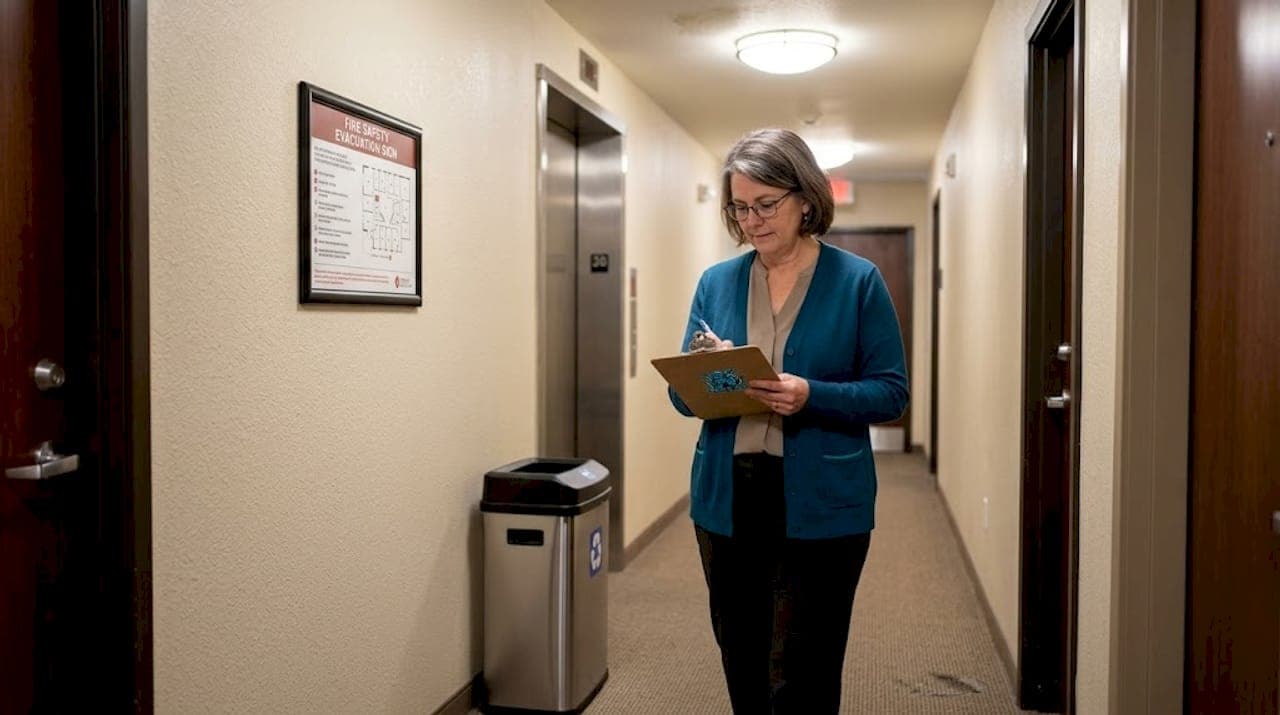
- Consistent cleanliness of entryways, hallways, laundry areas, and outdoor spaces reduces tenant turnover.
- Proactive, documented cleaning programs and expert partnerships improve maintenance, retention, and reduce disputes.
Most landlords assume that upgraded appliances or a month of free rent keeps tenants around. The real driver is simpler and far less glamorous: a one-point increase in satisfaction scores correlates with an 8.6% higher lease renewal likelihood, and cleanliness is consistently one of the top contributors to that score. Not gym access. Not granite countertops. The daily experience of walking through a clean hallway, smelling fresh air in the laundry room, and seeing maintained entryways. This guide breaks down the data, the common mistakes, and the exact strategies that help property owners move the needle on tenant retention in a measurable way.
Table of Contents
- Why tenant retention hinges on property cleanliness
- Common cleanliness pitfalls that trigger tenant turnover
- Effective cleaning strategies for higher lease renewals
- Measuring ROI: How to track cleanliness-driven retention
- Why many landlords misjudge cleaning's impact—and what actually works
- Partner with experts for lasting tenant retention
- Frequently asked questions
Key Takeaways
| Point | Details |
|---|---|
| Cleanliness drives renewals | Tenants are far more likely to renew when units and common areas are consistently clean. |
| Early impressions matter most | The first 90 days and move-in experience have a lasting effect on tenant satisfaction and retention. |
| Prevention saves money | Regular cleaning prevents costly turnover and deposit disputes, improving your bottom line. |
| Proactive strategies work best | Landlords who implement proactive cleaning routines see higher satisfaction and lower churn. |
Why tenant retention hinges on property cleanliness
Tenant turnover is expensive in ways that go beyond a vacant unit. You lose rent, spend on marketing, and absorb the time cost of screening new applicants. What most owners underestimate is how predictable turnover actually is and how much of it traces back to how clean and well-maintained their property feels to the people living there.
Industry benchmarks confirm that cleaning as part of regular maintenance boosts retention by 12 to 18%, with renewal rates landing between 55% and 85% depending on service consistency. That is not a marginal gain. That is the difference between a stable portfolio and one you are constantly refilling.
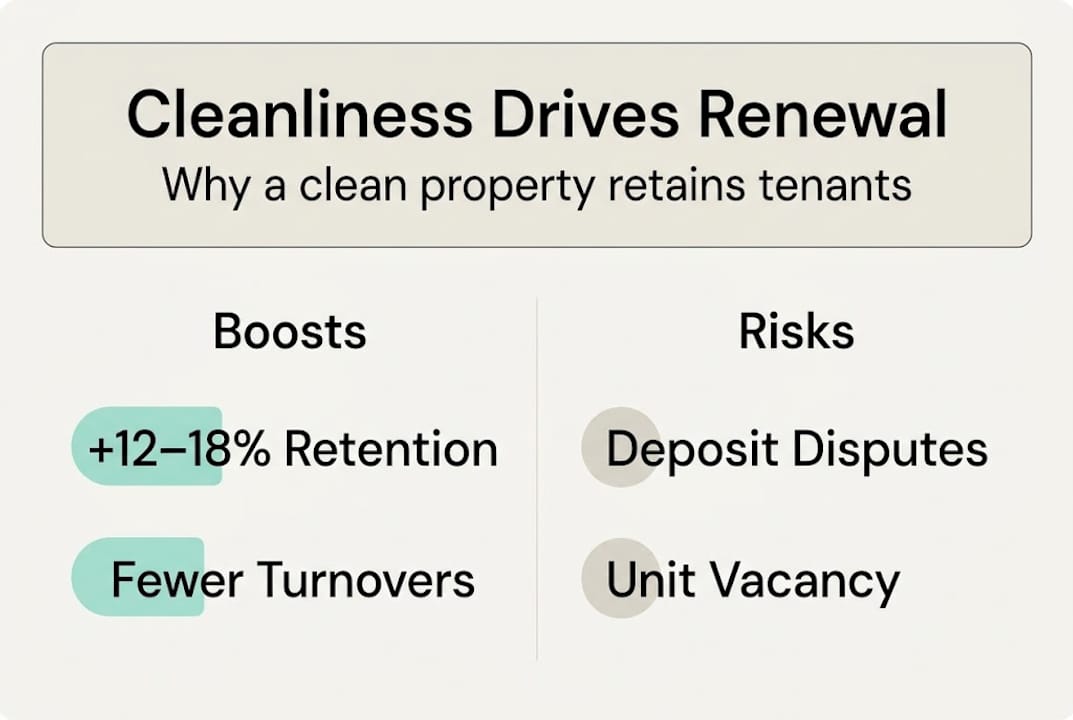
Research on maintenance and renewals shows that maintenance predicts lease renewal more reliably than any other factor, and the first 90 days after move-in account for 73% of that predictive power. First impressions do not just matter for new residents; they set the emotional baseline that tenants return to every time a renewal decision comes around.
For a direct comparison, here is what the data shows:
| Factor | Renewal Impact | Notes |
|---|---|---|
| Cleanliness and maintenance | 12–18% retention boost | Strongest single predictor |
| Amenity upgrades | 3–5% estimated boost | Diminishing returns past baseline |
| Rent incentives (one-time) | Short-term only | Does not sustain long-term loyalty |
| Responsive communication | Moderate | Amplifies cleaning/maintenance results |
That table tells a clear story. Cleaning and maintenance outperform the tools most landlords spend the most money on.
Tenant turnover costs between $4,200 and $6,800 per unit. Every renewal you secure by investing in cleanliness is real money staying in your portfolio rather than being spent on vacancy costs.
Here is the part that surprises many owners: cleaning boosts retention more than one-time amenity investments because it is cumulative. Each positive experience builds trust. Each clean common area reinforces the idea that management actually cares. That emotional ledger is what drives renewals.
Common cleanliness pitfalls that trigger tenant turnover
Knowing that cleanliness matters is one thing. Knowing exactly where most properties fail is where the real leverage is. 31% of tenants cite maintenance issues including cleanliness as a top reason for not renewing. That is nearly a third of your potential churn, preventable with better systems.
The most damaging pitfalls tend to cluster around a few specific areas:
- Entryways and lobbies: These are the first things tenants see every single day. Grime buildup, scuffed walls, and stale odors signal neglect before a tenant even reaches their unit.
- Hallways and stairwells: Foot traffic collects dirt fast. Infrequent cleaning here creates visible evidence that common maintenance is not a priority.
- Laundry facilities: Lint traps, spilled detergent, and mold in corners are tenant complaints waiting to happen.
- Trash and recycling areas: Overflow, odor, and pests are predictable outcomes when trash service is not scaled to actual resident volume.
- Outdoor surfaces and parking areas: Oil stains, algae on concrete, and debris around dumpsters lower perceived property value immediately.
Deposit disputes are another hidden cost here. A significant share of those disputes, roughly 23%, stem directly from cleaning disagreements. When tenants feel the property was not well-maintained throughout their lease, they push back on move-out charges. That creates legal exposure and poisons any chance of a positive referral.
The fix for the first 90 days is simple but requires intention. Make sure move-in units are cleaned to a documented standard. Use a cleaning checklist for managers to set a baseline every team member follows, not just when someone remembers to ask.
Pro Tip: Implement a formal move-out cleaning checklist before every tenant departure. Document the condition with photos, timestamps, and sign-off. This one step prevents most deposit disputes before they start.
Consistently cleaned common areas also reduce liability. Slips, falls, and pest infestations often trace back to neglected shared spaces. Beyond the safety issue, those incidents generate complaints and sometimes legal action that damages your reputation with existing tenants.
Effective cleaning strategies for higher lease renewals
Understanding what goes wrong makes it clear why targeted cleaning strategies are essential for long-term retention. The question is not whether to clean but how to structure the effort so it is consistent, cost-effective, and visible to tenants.
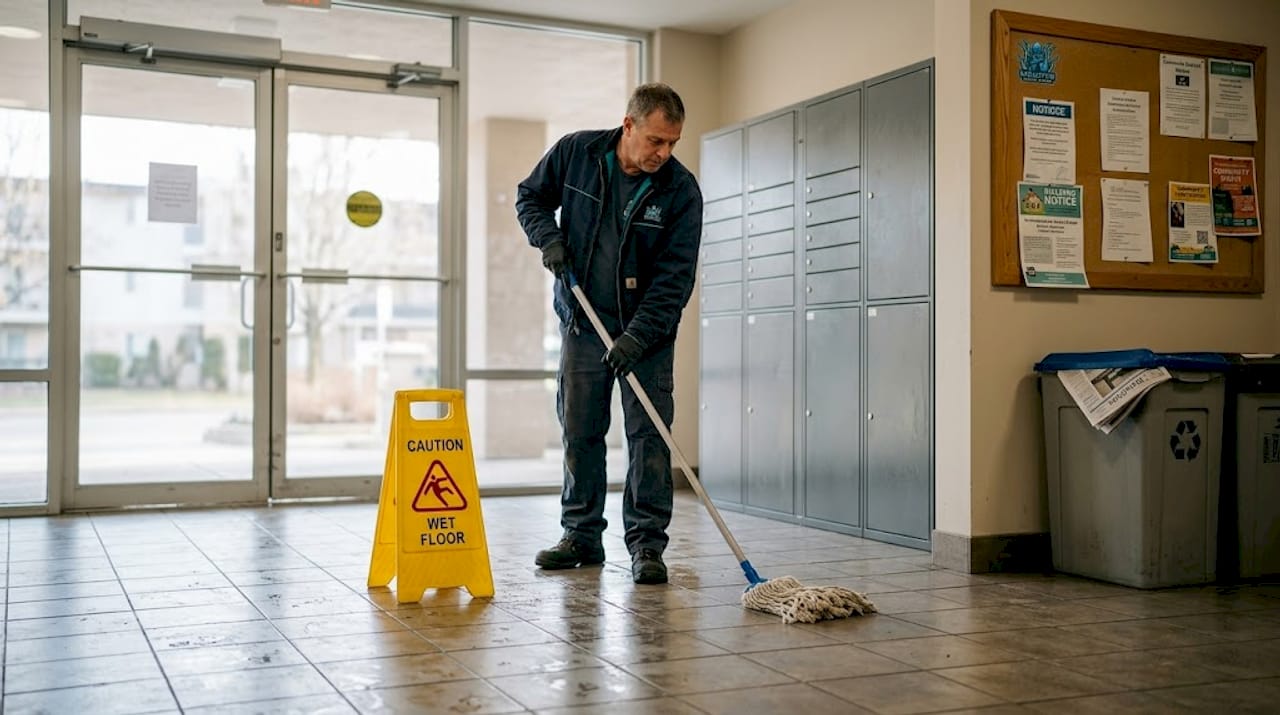
Start with your highest-traffic, highest-risk zones. Entry points, trash areas, laundry rooms, and HVAC access zones accumulate problems fastest. Prioritizing these areas with greater frequency protects both your property condition and your tenant satisfaction scores.
Here is a comparison of professional cleaning versus in-house DIY approaches:
| Criteria | Professional service | In-house DIY |
|---|---|---|
| Consistency | High, documented schedules | Variable, dependent on staff |
| Equipment quality | Commercial grade | Consumer grade |
| Tenant perception | Strongly positive | Neutral to mixed |
| Cost per visit | Higher upfront | Lower per visit, higher oversight cost |
| Long-term ROI | Strong, fewer complaints | Moderate, more gaps |
For most multi-family properties with 20 or more units, professional service wins on ROI once you factor in complaint reduction and the staff time saved on oversight.
A practical routine that works for most apartment buildings looks like this:
- Daily: Trash area inspection and overflow removal, entryway debris sweep
- Weekly: Hallway and stairwell mopping, laundry room wipe-down, elevator cleaning
- Monthly: Deep clean of lobby and common room surfaces, exterior walkways
- Quarterly: Bulk trash pick-up events, HVAC vent cleaning, pressure washing of exterior surfaces
- Annually: Full exterior wash, parking area treatment, deep clean of all shared amenities
Resident education matters too. A short note about bulk trash scheduling or proper recycling habits reduces the workload on your team and gives tenants a sense of shared responsibility. Proactive strategies like bulk pick-ups and resident communication consistently appear in the data as high-value, low-cost retention tools.
The payoff is significant. Tenants satisfied with maintenance are three times more likely to renew. That multiplier alone justifies a structured cleaning investment over reactive spot-cleaning.
Review your multi-unit cleaning checklist quarterly and adjust based on seasonal needs or tenant feedback patterns. Pair that with awareness of cleaning trends for 2026 to stay ahead of what tenants now expect as a baseline standard.
Measuring ROI: How to track cleanliness-driven retention
With effective practices in place, it is crucial to know what success looks like and how to quantify your return. Good intentions without measurement drift into inconsistency over time.
The core KPIs (key performance indicators) you should track are straightforward:
- Lease renewal rate: Percentage of eligible tenants who renew. Benchmark against your pre-cleaning-program baseline.
- Tenant satisfaction score: Collected via short surveys at move-in, 90 days, and annually. Even a simple 1 to 5 scale works.
- Cost per lost lease: Add up vacancy losses, marketing spend, and turnover prep costs for each unit that churns.
- Complaint volume by category: Track how many maintenance or cleanliness complaints come in each month. Declining volume is a direct indicator of program success.
| Metric | Before cleaning program | After structured program |
|---|---|---|
| Annual renewal rate | 58% | 71% |
| Avg. cost per turnover | $5,800 | $5,800 |
| Turnovers per year (50 units) | 21 | 15 |
| Annual savings | Baseline | ~$34,800 |
Those numbers reflect a realistic mid-size property scenario. Tenant turnover costs $4,200 to $6,800 per unit, and proactive maintenance retains up to 40% of otherwise at-risk tenants. Even moderate gains compound quickly across a portfolio.
Pro Tip: Send a short three-question survey within one week of move-in and immediately after any major maintenance visit. Early dissatisfaction signals rarely come to management on their own. Surveys surface them before tenants decide quietly not to renew.
The financial case for investing in cleaning also extends to exterior cleaning benefits that tenants notice before they even enter the building. Curb appeal affects the renewal decision more than most landlords realize, especially in competitive rental markets.
Why many landlords misjudge cleaning's impact—and what actually works
Here is the uncomfortable truth: most property owners treat cleaning as overhead rather than strategy. They react to complaints instead of preventing them. They budget for amenity upgrades while letting common area cleaning slide to bi-monthly.
We have seen this pattern repeat. A landlord invests in a rooftop deck or updated gym equipment, then loses tenants who are frustrated by persistent odors in the elevator or inconsistent trash service. Amenities attract tenants. Clean, well-maintained properties keep them.
The first 90 days insight is one that many experienced owners still underuse. That window is when tenant expectations are formed. A property that feels cared-for in month one earns enormous goodwill that carries through renewal time.
Reading the data on tenant communication for retention reinforces this point. Tenants who feel management is proactive about maintenance and cleanliness complain less, pay on time more often, and renew at higher rates. The trust that consistent cleaning builds is not just emotional. It shows up directly in your financials.
Proactivity is the actual differentiator. Not the fanciest amenity package. Not the lowest rent in the market. The landlords with the strongest retention numbers are the ones who treat cleaning as a repeating commitment, not a reaction to a complaint.
Partner with experts for lasting tenant retention
Running a consistent, professional cleaning program across a multi-family property is genuinely hard to do in-house at scale. Scheduling gaps, inconsistent quality, and staff turnover all chip away at the tenant experience you are trying to build.
At Monster Property Partners, we work specifically with apartment building owners and multi-family operators to handle the exterior cleaning work that most in-house teams cannot sustain at a professional level. From concrete cleaning for apartments to full-scale multifamily exterior cleaning services, our team brings documented schedules, commercial equipment, and the consistency your tenants will notice. If you are ready to make retention a system instead of a hope, we are the partner to call.
Frequently asked questions
How much can cleaning actually increase tenant retention?
Industry data shows that cleaning as part of regular maintenance drives a 12 to 18% boost in tenant retention rates, making it the strongest single operational lever available to landlords.
What are the most commonly overlooked cleaning areas that hurt retention?
Hallways, trash rooms, entryways, and laundry facilities are the most neglected spaces and generate the most complaints that lead directly to non-renewal decisions.
Can proactive cleaning reduce deposit disputes?
Yes. 23% of deposit disputes trace back to cleaning disagreements, and routine move-out checklists combined with documented condition reports eliminate most of them before they escalate.
How can landlords measure if their cleaning strategy works?
Track lease renewal rates, tenant satisfaction scores, and per-unit turnover costs. First 90-day surveys are particularly predictive because that window sets the emotional baseline tenants carry through their entire lease term.