
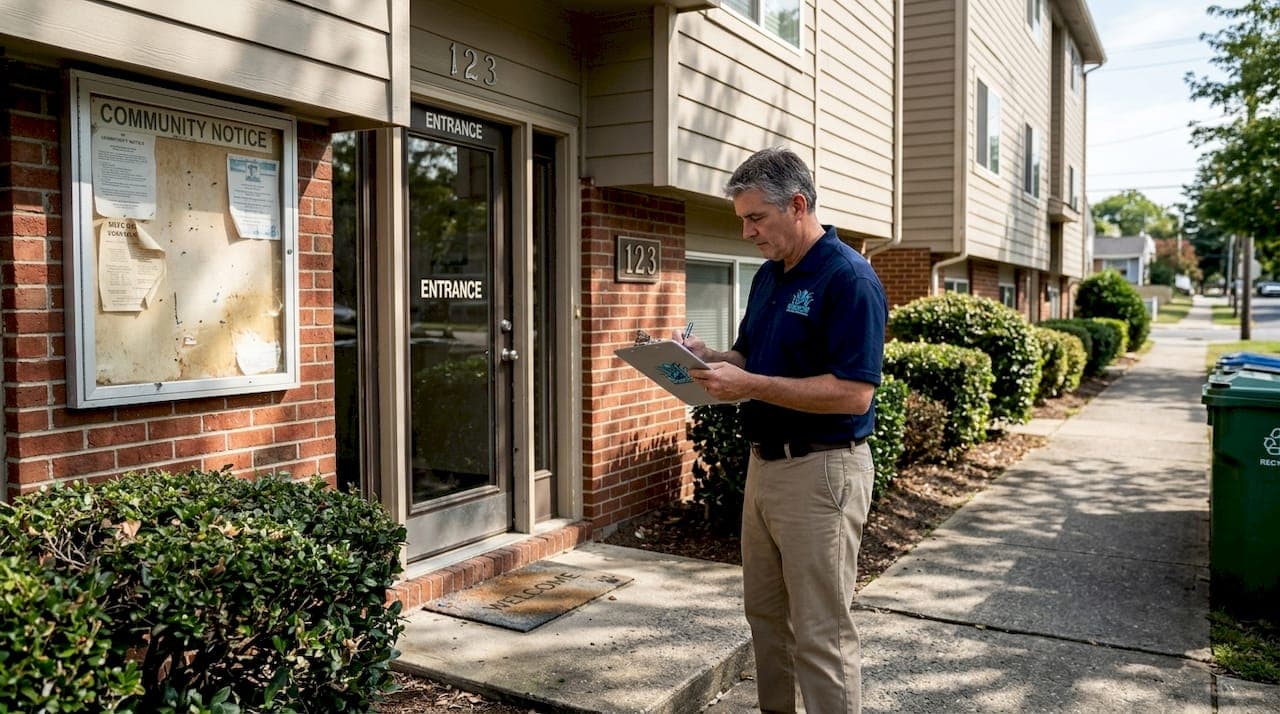
Keeping a multi-family building's exterior in top shape is one of the most demanding parts of property management. Weather cycles, tenant traffic, and tight maintenance budgets all push against each other, and the exterior is always the first thing prospective tenants notice. A cracked walkway or peeling paint can cost you a lease before a prospect ever steps inside. This guide gives you a practical, field-tested framework for exterior care that protects your building's value, keeps tenants satisfied, and prevents small issues from turning into expensive repairs.
Table of Contents
- Set your exterior care criteria
- Inspect methodically: What to look for each season
- Clean and maintain surfaces for long-term protection
- Pay attention to caulking, sealants, and water barriers
- Compare repair costs: Preventative vs. reactive approach
- Integrating exterior care with your maintenance workflow
- Partner with experts for superior exterior care results
- Frequently asked questions
Key Takeaways
| Point | Details |
|---|---|
| Proactive inspections | Regular, systematic checks prevent costly long-term exterior damage. |
| Surface cleaning matters | Routine cleaning boosts curb appeal and prevents material deterioration. |
| Sealant upkeep saves money | Maintaining caulking and sealants locks out moisture, avoiding leaks and energy loss. |
| Preventative beats reactive | Minor annual investments cost far less than major emergency repairs. |
| Integrated workflow | Digital tools and multi-year planning streamline ongoing care. |
Set your exterior care criteria
Every solid maintenance program starts with clear priorities. Without defined criteria, teams end up reacting to emergencies instead of preventing them, and budgets get consumed by avoidable repairs. The right framework keeps your crew focused and your spending predictable.
Start by organizing your priorities around four pillars:
- Safety: Walkways, railings, stairwells, and lighting must meet code and protect residents from injury.
- Compliance: Local ordinances and HOA rules often set minimum standards for paint condition, landscaping, and structural integrity.
- Curb appeal: First impressions drive leasing decisions. Clean, well-maintained exteriors signal that management cares.
- Resilience: Materials and coatings that hold up to your local climate reduce long-term replacement costs.
Multi-year plans with checklists are essential for property managers, and digital tools make tracking far more reliable than paper logs. Once you have your criteria locked in, build them into a repeatable system using property maintenance tips that your team can follow without constant oversight.
Pro Tip: Schedule a full exterior inspection every six months, once in spring and once in fall. This cadence catches winter damage early and prepares the building for summer heat before it causes problems.
Inspect methodically: What to look for each season
With care criteria in place, it's time to look at exactly what to check and when for your building's exterior. A structured inspection routine is what separates proactive managers from reactive ones.
Here is a numbered inspection sequence that covers the most critical exterior elements:
- Walls and siding: Look for cracks, gaps, bubbling paint, or discoloration. These are early signs of moisture intrusion.
- Windows and door frames: Check for failed caulking, fogged glass, and frame rot. Drafts around frames signal energy loss.
- Roof edges and gutters: Sagging gutters, rust stains, and standing water near the foundation are red flags.
- Walkways and driveways: Cracks wider than a quarter inch, uneven surfaces, and pooling water all create liability exposure.
- Paint and coatings: Peeling or chalking paint exposes substrate materials to UV and moisture damage.
- Utility penetrations: Pipes, conduit, and HVAC lines that pass through exterior walls need sealed edges checked every season.
Seasonal inspections catch issues like stucco cracks, peeling paint, rust, water intrusion, damaged caulking, and exposed wood before they escalate. Use your exterior cleaning checklist to document findings digitally so nothing gets missed between visits.
"Preventative inspection is the single most cost-effective tool a property manager has. Catching a $200 caulking failure before it becomes a $15,000 water damage claim is not luck, it's process."
For a deeper look at what your inspection should cover, the cleaning checklist essentials and exterior cleaning guide are worth bookmarking for your team.
Clean and maintain surfaces for long-term protection
Now that you know what to inspect, let's explore how regular cleaning protects your investment. Cleaning is not just about aesthetics. Algae, moss, and grime are actively breaking down your building materials while they sit there.
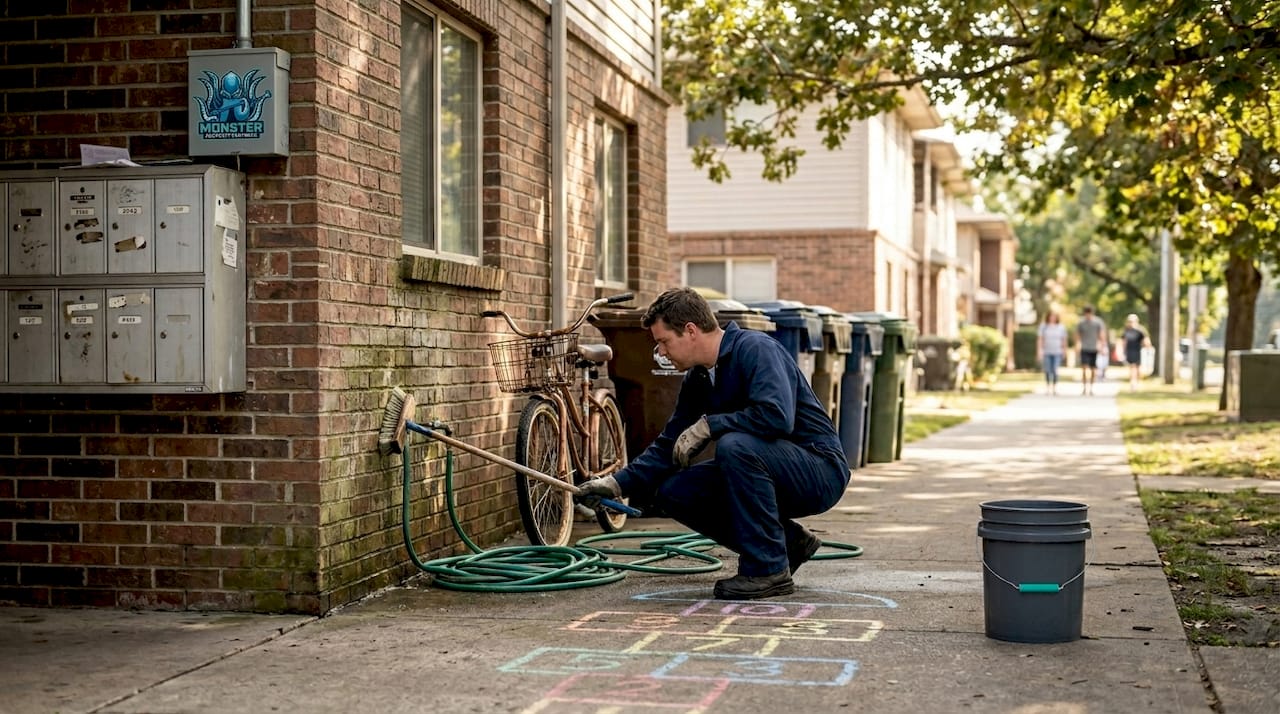
Organic growth like algae and moss traps moisture against siding and concrete, accelerating deterioration. Debris in gutters forces water to back up under roofing materials. Grease and oil stains on driveways penetrate and weaken asphalt over time. Pests, including rodents and insects, are attracted to debris buildup around foundations and dumpster areas.
Here is a surface-by-surface breakdown of what needs attention and how often:
- Siding (vinyl, stucco, wood): Soft wash annually to remove algae and mildew without damaging the surface.
- Concrete walkways and driveways: Pressure wash twice a year. Use a surface cleaner attachment for even results.
- Decks and breezeways: Scrub with a low-pressure wash and inspect for wood rot or loose fasteners.
- Roofs: Soft wash to remove moss and lichen. Never use high pressure on shingles.
- Dumpster pads and loading areas: Monthly pressure washing reduces odors and pest attraction.
Proactive maintenance prevents small issues from escalating, reduces liability, boosts tenant retention, and supports higher rents and net operating income. Review your approach to prioritizing exterior maintenance and build a regular cleaning schedule that fits your property's specific surface types.
Pro Tip: Always spot-test a small, hidden area before applying any cleaning solution to a new surface. Some siding colors and coatings react poorly to certain detergents, and a test patch saves you from a costly mistake.
For a complete breakdown of surface-specific methods, the apartment maintenance checklist is a practical starting point.
Pay attention to caulking, sealants, and water barriers
Beyond cleaning, sealing out moisture and air makes a dramatic difference in your building's resilience. Failed caulking is one of the most underestimated sources of structural damage in multi-family buildings.
Here is where to focus your sealant inspections:
- Window and door frames: These joints expand and contract with temperature changes. Caulk here fails faster than anywhere else on the building.
- Expansion joints: Large buildings shift slightly over time. Expansion joints need flexible sealant that moves with the structure.
- Utility penetrations: Every pipe or conduit that exits the building is a potential water entry point if the seal degrades.
- Roof-to-wall transitions: Flashing and sealant at these junctions are critical. Water that gets behind siding here causes hidden rot.
Signs of sealant failure include visible cracks, gaps wider than a hairline, discoloration (often black or green from mold), and drafts felt near window frames on windy days. When you find failed material, remove it completely before applying new sealant. Caulking over old, cracked material traps moisture and fails faster.
Stat callout: Refreshing caulking and sealants on windows, doors, and expansion joints regularly prevents leaks, mold growth, and energy loss that can add hundreds of dollars per unit to annual utility costs.
For more on why this work matters at scale, the exterior cleaning importance resource breaks down the financial case clearly.
Compare repair costs: Preventative vs. reactive approach
All of these best practices have a financial side. See how the numbers favor a preventative approach when you lay them out side by side.
Annual maintenance costs benchmark at $1,000 to $3,000 per unit or $0.90 to $1.30 per square foot, and preventative care keeps you at the lower end of that range. Deep restoration work runs two to five times more than routine upkeep.
| Maintenance task | Preventative cost | Reactive/deferred cost | Cost multiplier |
|---|---|---|---|
| Exterior caulking refresh | $300 to $600 per building | $4,000 to $12,000 water damage repair | 10 to 20x |
| Annual pressure washing | $500 to $1,500 | $3,000 to $8,000 surface restoration | 4 to 6x |
| Gutter cleaning (2x/year) | $200 to $500 | $5,000 to $20,000 foundation repair | 15 to 40x |
| Paint touch-up (annual) | $800 to $2,000 | $8,000 to $25,000 full repaint + substrate repair | 8 to 12x |
| Siding inspection and seal | $400 to $900 | $10,000 to $30,000 siding replacement | 15 to 30x |
The pattern is consistent across every line item. Small, scheduled spending prevents enormous surprise expenses. Tenant impact is also significant. Reactive repairs often require scaffolding, noise, and temporary disruptions that frustrate residents and increase turnover risk. The maintenance manager guide walks through how to structure your budget around this preventative model.
Integrating exterior care with your maintenance workflow
An effective maintenance strategy keeps all exterior care steps organized and repeatable. The best inspection checklist in the world does nothing if it sits in a drawer.
Here is how to fold exterior care into your existing workflow:
- Build an annual calendar: Map every recurring task (pressure washing, caulking checks, gutter cleaning, paint inspections) to specific months. Assign each task to a named team member or vendor.
- Use digital tracking tools: Platforms like AppFolio, Buildium, or even a shared Google Sheet let you log completed tasks, attach photos, and flag items for follow-up. Digital tools aid tracking and reduce the chance of tasks falling through the cracks.
- Communicate with tenants: Give residents at least 48 hours notice before exterior work that affects parking, access, or noise. A simple email or posted notice reduces complaints significantly.
- Review and adjust quarterly: At the end of each quarter, review what was completed, what was deferred, and what new issues emerged. Adjust the next quarter's plan accordingly.
- Document everything: Photos before and after each cleaning or repair create a record that protects you in liability disputes and helps vendors quote accurately next time.
For ongoing ideas and updates on exterior care best practices, the exterior cleaning insights blog is a resource worth checking regularly.
Partner with experts for superior exterior care results
Implementing these tips boosts outcomes, and expert help takes your exterior care program even further. Managing exterior cleaning across dozens or hundreds of units is a logistics challenge that dedicated professional teams handle every day.

At Monster Property Partners, we work exclusively with apartment buildings and multi-family properties, so our crews understand the scale, scheduling, and communication demands that come with the territory. From common area concrete cleaning to full-building soft wash programs, we build maintenance plans around your property's specific needs and your budget cycle. Our goal is to be the most reliable exterior cleaning partner your team works with, handling the complexity so your staff can focus on tenant experience and operations. Explore our full range of multifamily exterior cleaning services and reach out to schedule a site walkthrough or get a tailored maintenance plan for your portfolio.
Frequently asked questions
How often should exterior inspections be conducted for multi-family properties?
Inspections should be completed at minimum once a year, but a semi-annual schedule in spring and fall gives you the best chance of catching issues before they escalate.
What is the average cost of multi-family exterior maintenance?
Costs range from $1,000 to $3,000 per unit annually or $0.90 to $1.30 per square foot, depending on market, building age, and surface types.
Which areas are most often missed during exterior maintenance?
Exposed wood, damaged caulking around windows and doors, gutters, and utility penetration seals are the most frequently overlooked spots during routine walkthroughs.
How do digital tools support multi-family exterior care?
Digital tracking platforms let property managers schedule recurring tasks, log completed work with photos, and centralize documentation so nothing gets missed between inspection cycles.