
Managing exterior maintenance for multi-family properties demands balancing cost efficiency with tenant satisfaction and asset protection. Property managers face constant pressure to minimize expenses while preventing issues that escalate into costly emergencies. This guide delivers expert-backed maintenance strategies, seasonal schedules, and decision frameworks to help you optimize exterior upkeep, reduce repair costs, and enhance property value through proactive planning.
Table of Contents
- Establish Clear Criteria For Effective Exterior Maintenance
- Top Tips For Multi-Family Exterior Maintenance: Gutters, Roofs, And Seasonal Schedules
- Implement Predictive Maintenance And Pest Control For Sustained Property Health
- Compare Maintenance Approaches: Reactive Vs. Preventive Vs. Predictive
- Enhance Your Property Maintenance With Expert Exterior Cleaning Services
- Frequently Asked Questions About Multi-Family Property Maintenance
Key takeaways
| Point | Details |
|---|---|
| Proactive maintenance reduces costs | Regular exterior maintenance significantly lowers long-term repair expenses and extends property lifespan. |
| Seasonal schedules prevent issues | Structured quarterly maintenance plans reduce emergency service calls by up to 20%. |
| Gutter and roof care are critical | Proper maintenance prevents water damage to foundations and roofs, avoiding expensive emergency repairs. |
| Predictive maintenance cuts costs | Transitioning from reactive to predictive strategies reduces equipment downtime and maintenance expenses. |
| Maintenance impacts tenant retention | Quality exterior upkeep directly correlates with resident satisfaction and lease renewals. |
Establish clear criteria for effective exterior maintenance
Effective multi-family exterior maintenance requires clear evaluation criteria to guide your priorities and resource allocation. Cost savings and asset preservation form the foundation. Preventative maintenance over reactive repairs saves substantial money and maintains property value.
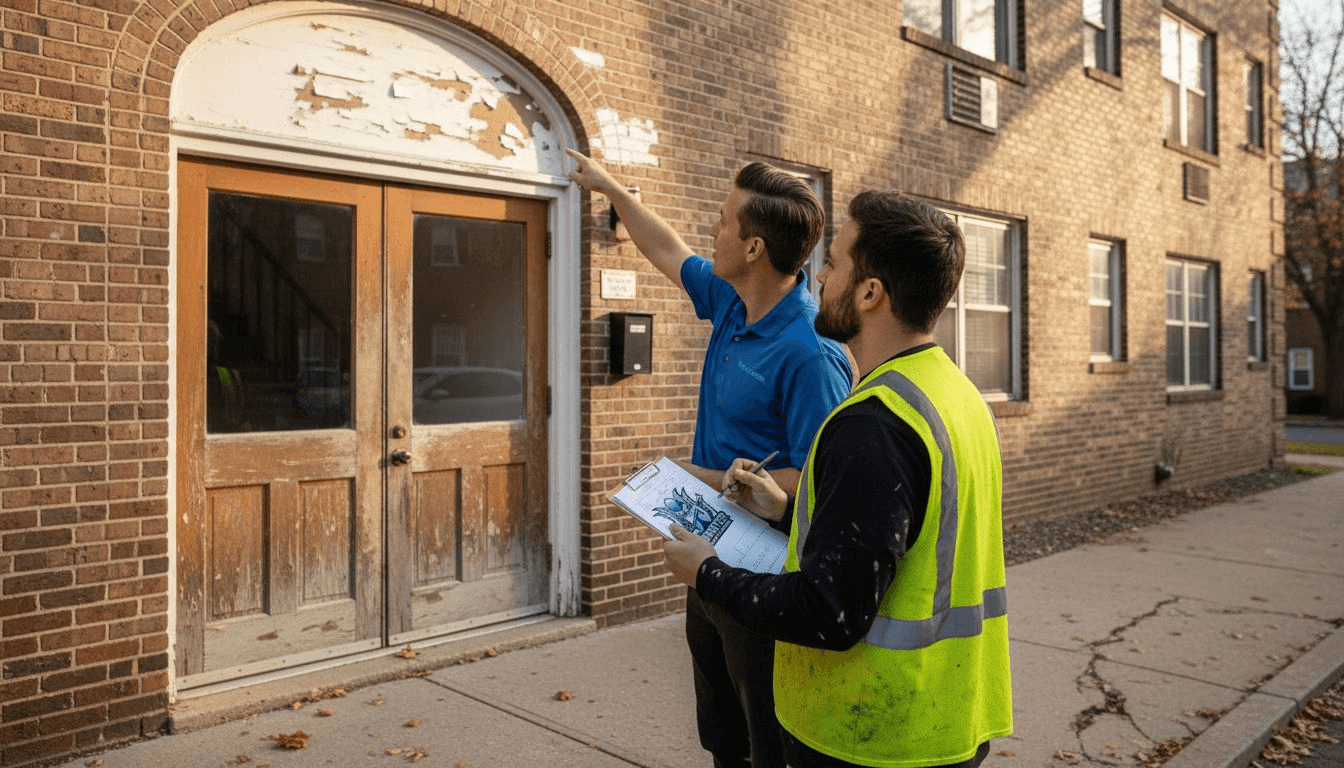
Tenant satisfaction directly connects to maintenance quality. Residents notice peeling paint, overflowing gutters, and cracked walkways. These visible issues affect their perception of management responsiveness and property value. Quick resolution of exterior problems demonstrates your commitment to their living environment.
Safety and legal compliance cannot be compromised. Cracked sidewalks create liability exposure. Water intrusion from poor roof maintenance leads to mold issues and potential health code violations. Your maintenance strategy must prioritize these risk areas.
Pro Tip: Document every maintenance activity with photos and completion dates. This creates accountability, helps identify recurring issues, and provides evidence for insurance claims or disputes.
Efficiency through scheduled preventative plans transforms operations. Consider these priorities:
- Safety hazards requiring immediate attention
- High visibility areas impacting curb appeal
- Systems with the highest failure rates
- Seasonal maintenance windows for optimal conditions
- Budget allocation matching urgency and impact
The trade-off between reactive and predictive maintenance defines your operational philosophy. Reactive approaches feel cheaper initially but compound costs through emergency calls, tenant complaints, and accelerated deterioration. Building a robust exterior maintenance prioritization system pays dividends across every property metric.
Top tips for multi-family exterior maintenance: gutters, roofs, and seasonal schedules
Gutter maintenance prevents catastrophic damage. Proper gutter cleaning and maintenance are crucial for preventing water damage to foundations and roofs. Clogged gutters overflow during storms, channeling water against building foundations and causing structural issues costing tens of thousands to repair.
Inspect gutters quarterly, with thorough cleanings in spring and fall. Remove debris, check for proper slope, and ensure downspouts direct water at least six feet from foundations. Look for rust spots, loose fasteners, and sagging sections indicating structural stress.
Regular roof maintenance extends apartment roof lifespan and prevents expensive emergency repairs. Schedule professional inspections twice yearly, focusing on flashing around chimneys and vents, sealant condition, and any pooling water. Small issues caught early cost hundreds; ignored problems escalate to full roof replacements costing hundreds of thousands.
Seasonal maintenance schedules reduce emergency calls by organizing tasks around weather patterns and system vulnerabilities:
| Quarter | Priority Tasks | Focus Areas |
|---|---|---|
| Q1 (Winter) | Roof ice dam prevention, walkway de-icing, exterior lighting checks | Safety and weather protection |
| Q2 (Spring) | Gutter cleaning, exterior paint inspection, concrete sealing | Water management and curb appeal |
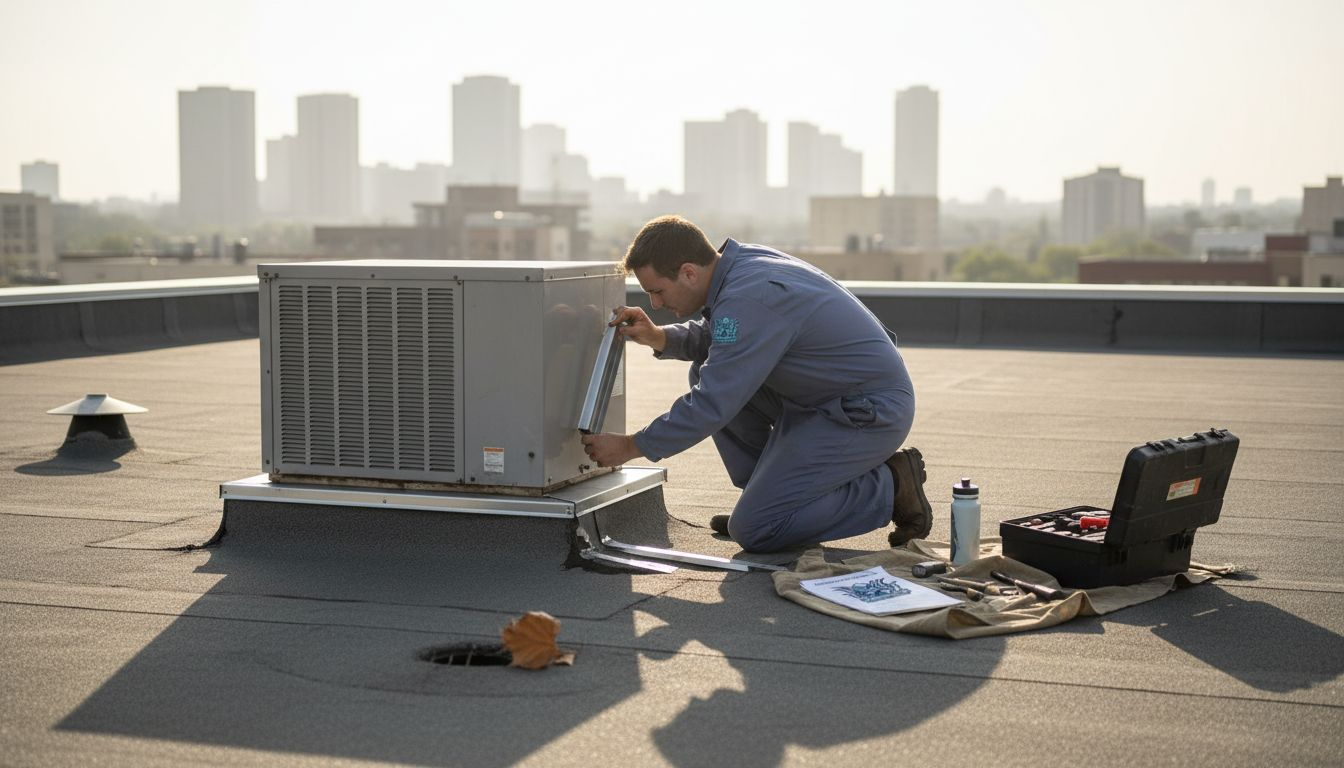
| Q3 (Summer) | Pressure washing, window cleaning, HVAC exterior unit maintenance | Deep cleaning and system prep |
| Q4 (Fall) | Gutter cleaning, roof inspection, winterization prep | Storm readiness and prevention |
Pro Tip: Schedule exterior maintenance during mild weather windows. Spring and fall offer optimal conditions for painting, sealing, and repairs, while extreme summer heat or winter cold complicates work and material performance.
Tenant satisfaction improves when exterior issues receive prompt attention. Create visual inspection routes covering all visible exterior elements weekly. Address minor problems before residents notice them. This proactive visibility demonstrates management excellence and prevents complaint escalation.
Coordinate maintenance planning for cost savings by bundling related tasks. When contractors arrive for gutter work, have them inspect nearby roof sections. Combine pressure washing with window cleaning services for efficiency. Use a comprehensive exterior maintenance checklist to ensure nothing falls through cracks.
Implement predictive maintenance and pest control for sustained property health
Transitioning from reactive to predictive maintenance reduces equipment downtime and maintenance costs. Predictive approaches leverage IoT sensors and AI analytics to forecast failures before they occur. Smart building systems monitor roof moisture levels, detect abnormal vibrations in mechanical systems, and alert you to developing problems.
Reactive maintenance creates a vicious cycle. Equipment fails unexpectedly, causing tenant complaints and forcing expensive emergency repairs during off-hours. You pay premium rates for immediate service while dealing with angry residents. This approach maximizes costs while minimizing satisfaction.
Predictive maintenance flips this dynamic. By analyzing patterns and monitoring conditions, you schedule repairs during normal business hours at standard rates. Equipment lasts longer because you address wear before it causes failure. Tenants experience fewer disruptions.
"Property managers who adopt predictive maintenance strategies report 25 to 30 percent reductions in maintenance costs and significantly improved tenant satisfaction scores. The initial investment in monitoring technology pays for itself within 18 months through avoided emergency repairs and extended equipment life."
Pest control represents an essential but often overlooked exterior maintenance component. Implementing a comprehensive pest control program protects properties from infestations that damage buildings and affect residents. Exterior maintenance directly impacts pest pressure.
Regular inspections catch issues before they escalate:
- Seal cracks and gaps in exterior walls where pests enter
- Maintain proper drainage to eliminate standing water attracting mosquitoes
- Keep vegetation trimmed back from buildings to reduce rodent pathways
- Inspect dumpster enclosures weekly for sanitation and seal integrity
- Address moisture issues promptly as they attract termites and other pests
Integrate pest prevention into your quarterly exterior reviews. Train maintenance staff to recognize warning signs like droppings, nesting materials, or unusual odors. Early detection saves thousands compared to addressing established infestations.
Implement a multi-family cleaning guide that includes pest deterrent protocols. Clean common areas regularly, remove debris that provides harborage, and maintain landscaping to minimize pest-friendly conditions. These practices support both curb appeal and pest prevention simultaneously.
Compare maintenance approaches: reactive vs. preventive vs. predictive
Understanding maintenance philosophy differences helps you choose the right approach for your properties and budget. Each method carries distinct cost structures, operational impacts, and long-term consequences.
Reactive maintenance operates on a "fix it when it breaks" philosophy. This approach seems economical initially since you only pay for repairs when absolutely necessary. However, deferred maintenance is significantly more expensive. Emergency repairs cost 3 to 4 times more than planned work. Equipment failures cascade into secondary damage. A neglected roof leak ruins interior finishes, requiring extensive restoration.
Preventive maintenance follows scheduled inspections and routine service regardless of apparent need. Preventive maintenance reduces emergency repairs by up to 30 percent. You replace components based on manufacturer recommendations and historical performance data. This approach extends asset life and provides budget predictability.
Predictive maintenance uses real-time monitoring and data analytics to forecast failures. Sensors track equipment performance, identifying degradation patterns before breakdown occurs. This represents the most sophisticated and cost-efficient approach for large portfolios.
| Approach | Cost Structure | Planning Complexity | Emergency Frequency | Asset Lifespan Impact |
|---|---|---|---|---|
| Reactive | High per incident, unpredictable | Minimal | High (frequent) | Reduced 20 to 30% |
| Preventive | Moderate, scheduled | Moderate | Low (rare) | Extended 15 to 25% |
| Predictive | Lower total cost | High initially | Minimal | Maximized 25 to 40% |
Transitioning from reactive to predictive maintenance requires systematic steps:
- Audit current maintenance practices and identify highest-cost problem areas
- Implement basic preventive schedules for critical systems like roofs and HVAC
- Document all maintenance activities to establish baseline performance data
- Invest in monitoring technology for highest-value or highest-failure-rate equipment
- Train staff on new protocols and technology platforms
- Analyze data quarterly to refine predictive models and scheduling
- Expand predictive coverage as ROI demonstrates value
Pro Tip: Start predictive maintenance with your newest properties or recent capital improvements. These assets have the longest remaining useful life, maximizing your return on monitoring investment. Once you prove the model, expand to older properties where preventing failures delivers even greater savings.
The transition delivers repair cost reductions averaging 35 percent while dramatically improving tenant satisfaction. Residents appreciate fewer disruptions and visible evidence of proactive management. This translates directly to higher retention rates and reduced turnover costs.
For properties under 100 units, preventive maintenance often provides the best balance of cost and complexity. Larger portfolios justify predictive technology investments through economies of scale. Evaluate your specific situation based on property age, system complexity, and available capital.
Enhance your property maintenance with expert exterior cleaning services
Professional exterior cleaning services complement comprehensive maintenance plans by addressing specialized needs beyond routine staff capabilities. Expert teams bring commercial-grade equipment, proven techniques, and efficiency that DIY approaches cannot match.
Regular professional cleaning boosts curb appeal while preventing costly repairs. Pressure washing removes harmful contaminants from building exteriors before they cause permanent damage. Window cleaning enhances natural light and resident satisfaction. Common area concrete cleaning eliminates slip hazards and extends surface life.
At Monster Property Partners, we specialize in multifamily exterior cleaning services designed specifically for property managers facing your challenges. Our team handles projects of any scale with reliable scheduling and clear communication, ensuring minimal disruption to residents. We understand multi-family properties require coordinated logistics, flexible scheduling around tenant needs, and consistent quality across multiple buildings. Contact us to discuss customized maintenance solutions that integrate seamlessly with your property operations.
Frequently asked questions about multi-family property maintenance
What are the benefits of seasonal maintenance schedules?
Seasonal schedules align tasks with optimal weather conditions and system vulnerabilities. Spring cleaning addresses winter damage, summer allows intensive projects during mild weather, fall prepares properties for harsh conditions, and winter focuses on safety. This timing reduces costs, improves work quality, and prevents weather-related complications.
How often should gutters and roofs be inspected?
Inspect gutters and roofs at minimum twice yearly, ideally in spring and fall. Properties with significant tree coverage require quarterly gutter inspections. Schedule professional roof inspections annually, with additional checks after severe storms. This frequency catches problems early when repairs cost hundreds rather than thousands.
What technologies support predictive maintenance?
IoT sensors monitor moisture, vibration, temperature, and performance metrics in real-time. AI analytics platforms identify patterns indicating impending failures. Building automation systems integrate data across multiple systems for comprehensive monitoring. Mobile apps enable staff to document conditions and track work orders efficiently.
How does maintenance impact tenant satisfaction?
Tenant satisfaction correlates directly with visible maintenance quality and response times. Well-maintained exteriors signal management competence and property value. Quick resolution of issues demonstrates respect for residents. Properties with strong maintenance programs achieve 15 to 20 percent higher retention rates, reducing costly turnover.
What are the risks of deferred maintenance?
Deferred maintenance compounds exponentially. Small leaks cause structural damage, mold, and interior destruction. Ignored cracks in concrete create liability exposure. Systems running to failure damage connected components. Total costs often reach 4 to 6 times what timely repairs would have required, while creating tenant dissatisfaction and potential legal liability.