
TL;DR:
- Routine exterior cleaning significantly boosts property value and tenant retention.
- Regular maintenance prevents costly repairs and extends building material lifespan.
- Effective scheduling and professional services ensure consistent cleaning and maximize ROI.
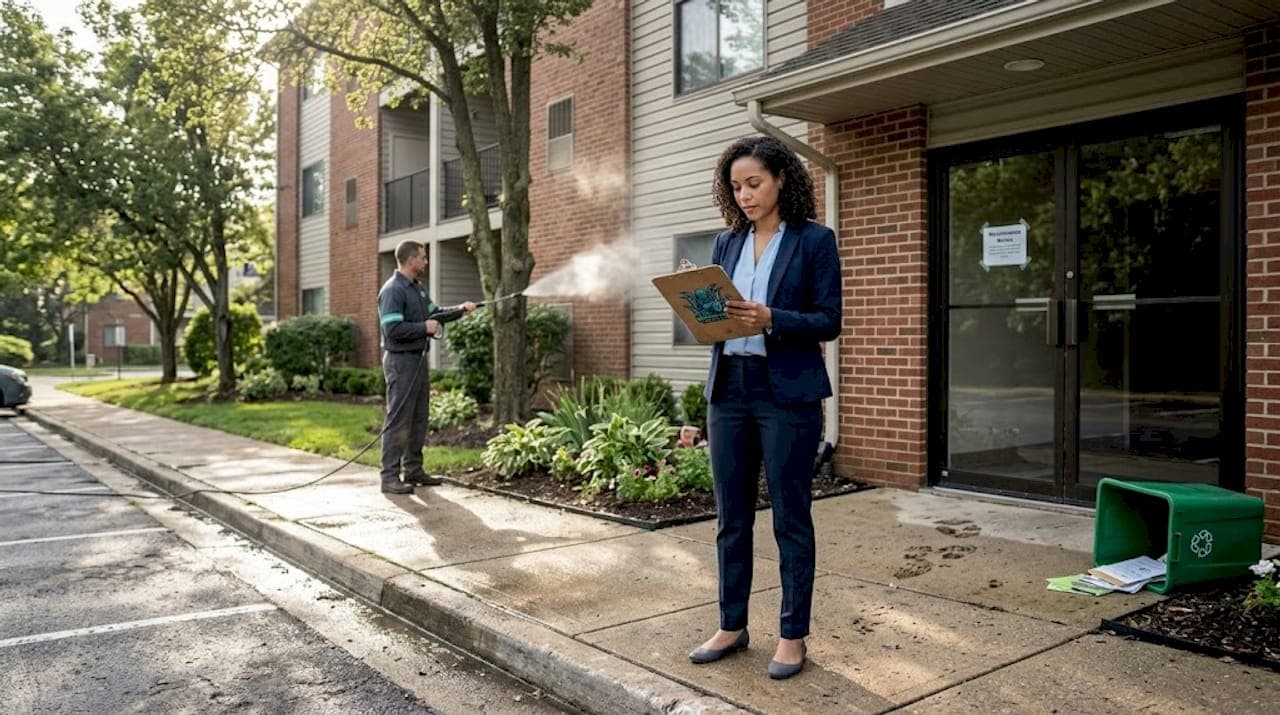
Routine exterior cleaning is one of the most undervalued tools in a property owner's arsenal. Most investors pour money into kitchen upgrades and new flooring while ignoring the one thing tenants and buyers notice first: how the building looks and feels from the outside. Preventive maintenance programs can deliver a 545% ROI over 25 years, yet cleaning rarely makes it onto the capital improvement list. This guide breaks down the real, measurable case for routine cleaning at multi-family properties, backed by data, practical frameworks, and the hard lessons we've learned managing large-scale exterior cleaning operations nationwide.
Table of Contents
- The link between cleanliness and tenant retention
- How routine cleaning protects and grows property value
- Best practices for multi-family cleaning schedules
- Common cleaning pitfalls and how to avoid them
- Our hard-won lesson: Cleaning is your highest-ROI maintenance move
- Protect your investment with professional cleaning
- Frequently asked questions
Key Takeaways
| Point | Details |
|---|---|
| Cleaning drives retention | Routine cleaning makes tenants happier and lowers costly turnover in multi-family units. |
| Big return on investment | Every dollar spent on cleaning delivers $3–5 in increased property value long term. |
| Prevent costly repairs | Scheduled cleaning prevents expensive damage and keeps your property appealing year-round. |
| Start with a clear routine | Using set cleaning schedules and checklists achieves maximum financial and tenant benefits. |
The link between cleanliness and tenant retention
Clean buildings send a message before a single word is spoken. When a prospective tenant walks up to a building with stained walkways, grimy entryways, and algae-streaked siding, they make a judgment call in seconds. That judgment doesn't just affect leasing decisions. It affects how current tenants feel about renewing their lease.
Cleaning boosts retention in ways that go beyond aesthetics. A clean exterior signals that ownership is attentive and professional. Tenants who feel proud of where they live are far more likely to renew, refer neighbors, and treat the property with respect. That community pride compounds over time, reducing the friction and cost that comes with high turnover.
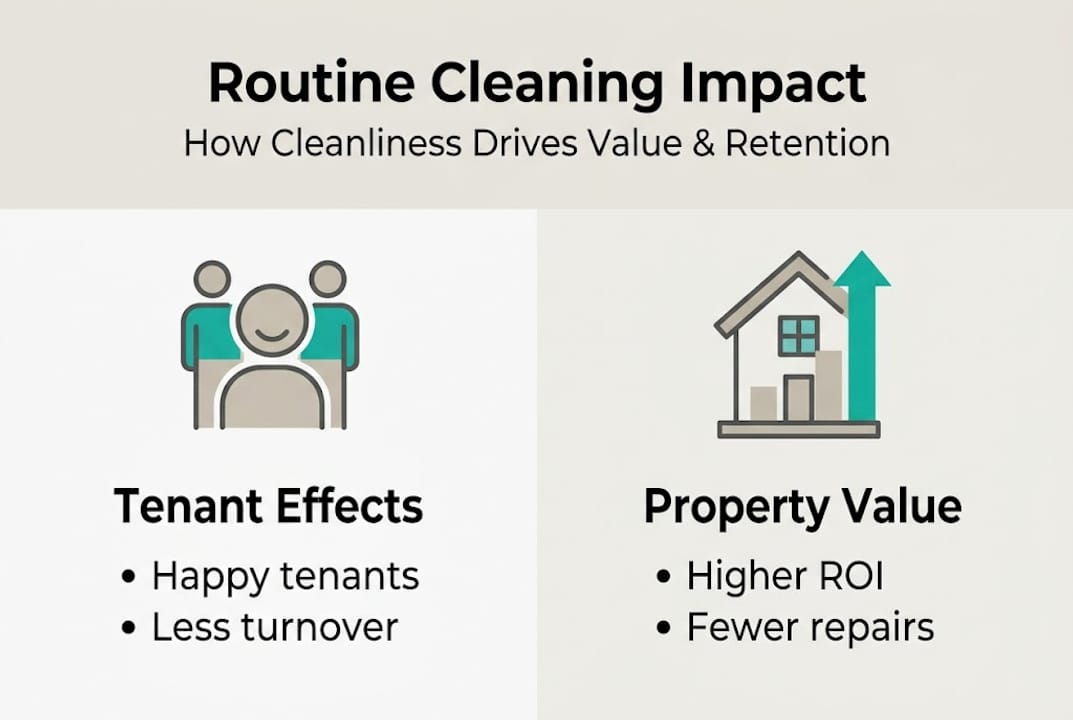
Turnover is brutally expensive. Between lost rent, unit preparation, advertising, and leasing fees, a single vacancy can cost $3,000 to $5,000 or more. Routine cleaning that keeps tenants satisfied and engaged is a fraction of that cost.
Here are the cleanliness factors tenants consistently point to as drivers of satisfaction:
- Exterior siding and façade appearance: First impressions form at the curb.
- Walkways and common area surfaces: Daily-use areas must feel safe and maintained.
- Dumpster enclosures and parking areas: Neglect here breeds resentment fast.
- Entryways and mailbox areas: High-traffic zones that set the daily tone for residents.
- Stairwells and breezeways: Often overlooked but frequently complained about.
"Pressure washing and routine exterior cleaning improves tenant satisfaction, retention, and reduces turnover costs. Clean exteriors signal care and promote pride in the community."
One tactic that rarely gets enough attention is communication. Notifying residents in advance of cleaning schedules, explaining what areas will be serviced, and inviting them to flag problem spots builds a sense of partnership. Tenant communication during cleaning consistently shows up as a retention multiplier in well-run properties. When tenants feel included rather than inconvenienced, they become allies instead of complainers.
Ultimately, cleanliness drives tenant retention through a simple chain reaction: clean property leads to proud tenants, proud tenants stay longer, longer stays mean lower vacancy costs, and lower vacancy costs go straight to your bottom line.
How routine cleaning protects and grows property value
Tenant satisfaction is important, but cleaning offers even greater financial benefits when it comes to property value. The numbers here are hard to argue with.
Every dollar spent on preventive property maintenance yields $3 to $5 in increased property value. Curb appeal alone can add $10,000 to $15,000 to a property's sale price. These are not estimates pulled from theory. They reflect what buyers and appraisers actually factor into valuations.
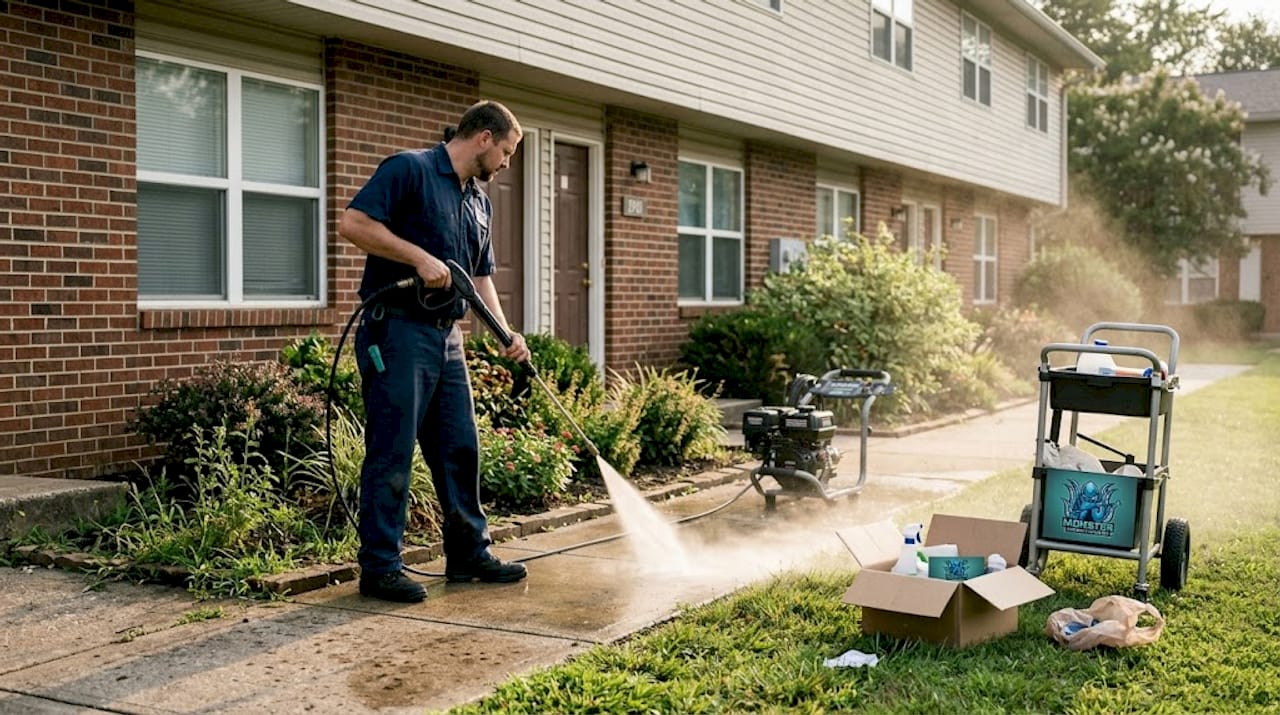
The exterior cleaning benefits extend well beyond aesthetics. Pressure washing removes mold, mildew, algae, and mineral deposits that actively degrade building materials over time. Concrete that isn't cleaned regularly develops cracks. Siding that holds moisture deteriorates faster. Wood surfaces exposed to biological growth rot from the inside out. Cleaning is preservation, not just presentation.
| Maintenance action | Estimated value impact |
|---|---|
| Routine exterior pressure washing | Preserves material lifespan by 5 to 10 years |
| Curb appeal improvement | Adds $10,000 to $15,000 to sale price |
| $1 preventive maintenance spend | Returns $3 to $5 in asset value |
| Deferred cleaning (2+ years) | Increases repair costs by 30 to 50% |
545% ROI over 25 years is what structured preventive maintenance programs deliver, according to industry research. That figure accounts for reduced emergency repairs, extended material life, and sustained rental income from lower vacancy.
Pro Tip: Schedule a professional exterior cleaning before any lease renewal period. Clean properties command higher renewal rates and allow you to justify rent increases with a visible, tangible improvement tenants can see and feel.
Deferred cleaning is where owners quietly destroy value. Waiting 18 to 24 months between cleanings allows biological growth to penetrate surfaces, which turns a $400 pressure wash into a $3,000 remediation project. Cleanliness boosts property value in direct proportion to how consistently it's practiced. Sporadic cleaning gives sporadic results.
Best practices for multi-family cleaning schedules
To gain these rewards, owners need the right routines. Here's how to structure an effective cleaning program that actually gets followed.
The most effective multi-family cleaning programs operate on three time horizons: seasonal, monthly, and annual. Each layer catches different problems before they escalate.
- Quarterly (seasonal) cleaning: Full exterior pressure washing of siding, walkways, breezeways, and parking surfaces. This catches seasonal debris, pollen, mold growth, and winter salt damage before it sets in.
- Monthly spot cleaning: Target high-traffic areas including entryways, dumpster pads, and stairwells. These areas accumulate grime faster and need more frequent attention.
- Annual deep cleaning: A full property walkthrough with professional-grade equipment targeting areas that accumulate the most biological growth. Window tracks, roof overhangs, fence lines, and drainage areas belong here.
- Post-event cleaning: After major weather events, storms, or seasonal transitions, a targeted clean prevents damage from compounding.
- Pre-listing or pre-inspection cleaning: Always schedule professional cleaning before a property valuation, sale listing, or municipal inspection.
A cleaning checklist for multifamily properties gives your team a repeatable system that removes guesswork and prevents areas from falling through the cracks.
| Factor | DIY cleaning | Professional service |
|---|---|---|
| Equipment quality | Consumer grade | Commercial grade |
| Coverage consistency | Variable | Standardized |
| Time investment | High | Minimal for staff |
| Documentation | Rarely tracked | Typically logged |
| Long-term cost | Higher (missed areas) | Lower (complete coverage) |
Pro Tip: Build seasonal cleanings for multi-family into your annual operating budget line by line. When it's budgeted, it gets done. When it's discretionary, it gets skipped.
Communicating your cleaning schedule to tenants isn't just courtesy. It's strategy. Residents who know when cleaning happens plan around it, avoid parking in treated areas, and report problem spots proactively. This transforms tenants into a free inspection network. Review your property management checklist items regularly to make sure your schedule covers every zone. Preventive programs deliver 545% ROI precisely because they eliminate the reactive, expensive scrambles that erode margins.
Common cleaning pitfalls and how to avoid them
Having a routine is crucial, but beware these common pitfalls that can undermine even the best intentions.
The most expensive cleaning mistake isn't choosing the wrong vendor. It's choosing to delay. Skipping a cleaning cycle to save a few hundred dollars routinely leads to repair bills that are 10 to 20 times higher. Lack of cleaning leads directly to structural degradation, and the savings from skipped services evaporate quickly when concrete needs resurfacing or siding needs replacement.
Here are the pitfalls we see most often at multi-family properties:
- Ignoring shared outdoor spaces: Courtyards, BBQ areas, and pool decks become tenant flashpoints when neglected. These areas generate the most complaints and the fastest lease non-renewals.
- Treating cleaning as cosmetic only: Owners who see cleaning as a luxury cut it first when budgets tighten, not realizing it's actually load-bearing maintenance.
- Using unqualified vendors: Low-cost providers using incorrect pressure settings or wrong cleaning agents can strip sealants, etch concrete, and damage siding. Always verify experience with multi-family scale properties.
- No documentation or tracking: Without records of what was cleaned, when, and by whom, you lose both accountability and the paper trail that protects you in insurance or liability situations.
- Skipping problem-area audits: Behind buildings, under stairwells, and around utility areas accumulate grime that becomes a health hazard. Out of sight should never mean out of schedule.
Pro Tip: When evaluating sustainable cleaning methods for your property, look for vendors who use biodegradable detergents and water-recovery systems. These protect landscaping, meet municipal runoff regulations, and signal professionalism to environmentally conscious tenants.
Another overlooked pitfall is neglecting clean common areas in favor of only cleaning building exteriors. The common areas are where tenants spend daily life. A gleaming façade paired with a stained, cracked walkway sends a mixed message that erodes the credibility cleaning is supposed to build.
Our hard-won lesson: Cleaning is your highest-ROI maintenance move
Beyond avoiding mistakes, here's what our experience has taught us about routine cleaning and asset value.
We've worked with hundreds of multi-family property owners, and a pattern shows up without fail. The owners who invest consistently in routine cleaning outperform those who prioritize renovations every single time on the metrics that actually move the needle: lower vacancy, higher renewals, stronger appraised values.
We've watched properties sit neglected for two to three years between cleanings lose twice as much value as comparable properties that received quarterly attention. Not because of anything dramatic, but because small surface degradation compounds silently until it becomes a structural problem no renovation budget can easily fix.
The uncomfortable truth is that a $50,000 kitchen upgrade in a building with stained, mold-streaked siding doesn't move the needle the way owners expect. Buyers and tenants see the outside first. Always. The case for exterior cleaning isn't a marketing argument. It's a financial one. Treat cleaning as an investment category, not a maintenance line item to be trimmed, and the returns follow with predictable consistency.
Protect your investment with professional cleaning
If you're ready to stop leaving money on the table and get expert help with routine cleaning, here's how we can help.
At Monster Property Partners, we deliver commercial-grade exterior cleaning built specifically for apartment buildings and multi-family communities. Routine cleaning is proven to drive tangible ROI, and our team brings the equipment, experience, and systems to make it happen at scale.
Explore our full range of multifamily exterior cleaning services or take a closer look at our common area concrete cleaning solutions designed to keep shared spaces looking sharp and safe. Partnering with professionals means you avoid the pitfalls, protect your materials, and maximize the retention and value gains this article covers. Reach out to schedule a property walkthrough and get a tailored cleaning plan built for your portfolio.
Frequently asked questions
How does routine exterior cleaning increase my property value?
Routine cleaning preserves building materials, reduces future repair needs, and boosts curb appeal, which can add $10,000–$15,000 to a property's sale price.
How often should multi-family properties be cleaned?
Most experts recommend scheduling cleaning at least seasonally, with more frequent attention to high-traffic areas. Properties with superior curb appeal consistently show lower tenant turnover rates.
What's the financial ROI on routine cleaning?
Studies show every $1 spent on preventive cleaning yields $3–5 in property value, and structured preventive programs deliver a 545% return over 25 years.
Does cleaning impact tenant satisfaction and retention?
Yes. Clean exteriors reduce turnover by increasing tenant satisfaction and building the community pride that drives long-term lease renewals.
What are the most commonly neglected cleaning areas?
Walkways, entryways, shared outdoor amenities, and behind buildings are frequently missed. Clean exteriors signal care and these overlooked zones directly affect first impressions and daily tenant comfort.