
TL;DR:
- Specialized cleaning equipment offers quick ROI by reducing liability risks and enhancing property value.
- Matching equipment to property size and surfaces optimizes cleaning efficiency and cost-effectiveness.
- Effective ROI tracking requires trained operators, structured processes, and measurement of key performance metrics.
Most property owners look at specialized cleaning equipment and see a line item expense. What they miss is the return hiding in plain sight: fleet-mounted rigs ROI in as little as 2 to 4 months when deployed correctly. This guide breaks down why that matters for multi-family properties specifically, what equipment types are available, how to match tools to your property's profile, and how to track whether your investment is actually working. If you manage apartment buildings or multi-family units and you're still relying on a garden hose and a crew with mops, this will change how you think about exterior maintenance.
Table of Contents
- Why specialized cleaning equipment matters for multi-family properties
- Types of specialized cleaning equipment explained
- Selecting the right equipment for your property needs
- Best practices for implementation and ROI tracking
- A practical take: What most decision-makers miss about specialized cleaning equipment
- Unlock professional results with Monster Property Partners
- Frequently asked questions
Key Takeaways
| Point | Details |
|---|---|
| Rapid ROI | Specialized cleaning equipment can pay for itself in as little as 2 to 4 months through reduced claims and better property values. |
| Enhanced safety | Consistent exterior cleaning with the right equipment lowers accident risks and liability for property owners. |
| Improved property appeal | Professional-grade cleaning boosts tenant satisfaction and helps meet inspection requirements. |
| Informed equipment selection | Choosing the right tools requires matching your property’s needs, budget, and maintenance plan. |
Why specialized cleaning equipment matters for multi-family properties
There's a difference between cleaning a property and maintaining it. Basic cleaning handles the visible dirt. Specialized equipment handles the risks you don't see until they cost you: slip-and-fall claims, failed inspections, rising vacancy rates, and declining asset value. These aren't theoretical concerns. They show up in your operating costs and in your cap rate.
Routine cleaning boosts value and keeps properties inspection-ready. More specifically, regular cleaning reduces slip claims and improves property value over time. For multi-family owners, this matters because liability exposure is multiplied across dozens or hundreds of residents sharing common spaces.
Here's what specialized equipment actually protects and improves:
- Walkways and entryways: High-traffic zones accumulate algae, mold, and debris faster than any other surface. Commercial pressure washers clear this buildup before it becomes a hazard.
- Parking structures and driveways: Oil stains and grime create genuine slip risks and reduce curb appeal.
- Building exteriors: Stained facades communicate neglect to prospective tenants. First impressions drive leasing decisions.
- Pool decks and recreation areas: These surfaces need consistent maintenance to stay compliant with safety standards.
"Specialized cleaning isn't a luxury service. It's liability management, asset protection, and tenant retention bundled into one operational decision."
Tenant satisfaction is directly tied to how clean and well-maintained clean common areas feel. When residents see that shared spaces are consistently maintained, they renew leases. When they see neglect, they start shopping.
Pro Tip: Document your property's condition before and after each major cleaning cycle. Photo records protect you during liability disputes and demonstrate due diligence to insurers and inspectors.
The ROI argument is straightforward. If specialized equipment costs $100 to $300 per vehicle or unit of coverage and that investment returns in 2 to 4 months through reduced claims, better inspection scores, and improved tenant retention, the math isn't close. The question isn't whether you can afford it. It's whether you can afford to delay it.
Types of specialized cleaning equipment explained
Not all cleaning equipment is created equal, and the differences matter when you're managing a property at scale. Understanding what each tool does helps you stop overpaying for the wrong solution and start investing in what your property actually needs.
Here are the primary categories you'll encounter:
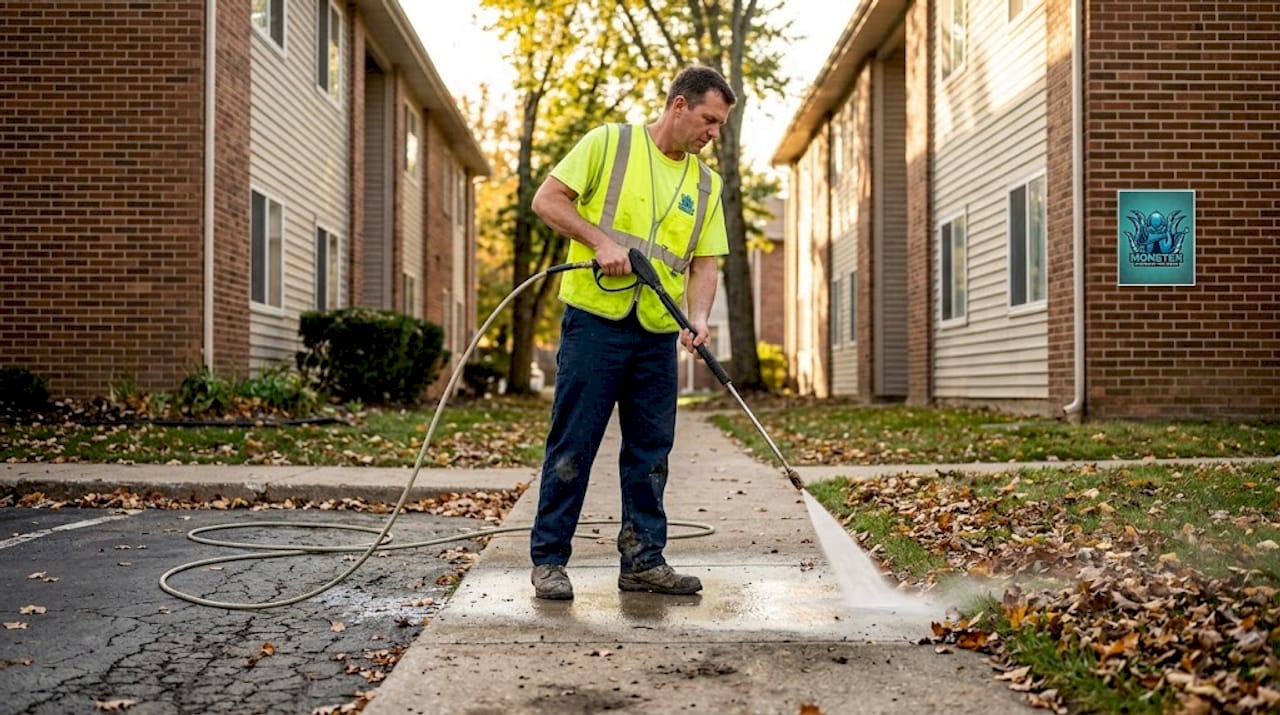
- Commercial pressure washers: High-pressure water systems that strip away grime, mold, mildew, and organic buildup from hard surfaces. They come in electric and gas-powered models, with varying PSI ratings for different surface types.
- Surface cleaners: Rotating disc attachments that connect to pressure washers and clean large flat areas like parking lots and sidewalks with even, consistent coverage. They eliminate the striping pattern you get from a standard wand.
- Power scrubbers: Mechanized brushing systems designed for textured surfaces like concrete and brick where high-pressure water alone doesn't remove embedded dirt.
- Fleet-mounted rigs: Trailer or truck-mounted systems that carry their own water supply and generate high output. These are the workhorses for large multi-family complexes. Fleet rigs ROI is realized in 2 to 4 months with consistent, efficient usage.
| Equipment type | Best application | Coverage speed | Typical ROI timeline | Ideal property size |
|---|---|---|---|---|
| Commercial pressure washer | Building exteriors, walkways | Medium | 3 to 6 months | Small to mid-size |
| Surface cleaner | Parking lots, pool decks | Fast | 2 to 4 months | Mid to large |
| Power scrubber | Textured concrete, brick | Slow | 4 to 8 months | Any size |
| Fleet-mounted rig | Full-property exterior cleaning | Very fast | 2 to 4 months | Large complexes |
The cleaning equipment guide for multi-family managers breaks this down further by surface type. For practical deployment, maintenance manager cleaning tips are worth reviewing before you commit to a tool.

Pro Tip: Before selecting equipment, audit your property's water access points, parking and site layout for vehicle access, and whether you'll need a self-contained water supply. These logistics determine which systems are actually viable for your site.
Selecting the right equipment for your property needs
Choosing equipment is not about picking the most powerful option. It's about matching capability to context. A fleet-mounted rig is overkill for a 12-unit building. A residential pressure washer is completely inadequate for a 300-unit complex with a multi-level parking structure.
Here's a step-by-step process to make the right call:
- Audit your surfaces. List every surface type you maintain: concrete, asphalt, brick, painted wood, vinyl siding, metal railings. Each material responds differently to pressure and heat.
- Measure your square footage. Total the square footage of all exterior hard surfaces. This determines coverage requirements and how long each cleaning cycle will take.
- Assess traffic and pollution levels. A property near a highway will accumulate grime faster than one in a quiet suburb. High-traffic common areas need more frequent cleaning cycles.
- Set your cleaning frequency. Quarterly, monthly, or weekly needs will change which equipment makes economic sense. High-frequency use justifies more capable and durable systems.
- Calculate your budget against ROI expectations. Fleet rigs show positive ROI with regular use on multi-family properties, so factor this into your payback period projection.
| Property profile | Recommended equipment | Cleaning frequency |
|---|---|---|
| Under 50 units, low traffic | Commercial pressure washer | Quarterly |
| 50 to 150 units, mixed surfaces | Pressure washer plus surface cleaner | Monthly |
| 150 to 300 units, parking structure | Fleet-mounted rig | Monthly to bi-weekly |
| Over 300 units, high traffic | Full fleet-mounted rig with surface cleaners | Bi-weekly to weekly |
Review the cleaning checklist for 2026 to build your property's specific maintenance calendar. For hands-on guidance on workflow, the step-by-step exterior cleaning guide for multi-family properties offers a practical framework you can apply immediately.
Pro Tip: Build an ROI tracking sheet before you purchase or contract any equipment. Note your baseline slip incident count, current inspection scores, and vacancy rate. You need a before-and-after comparison to justify future investment decisions to stakeholders.
Best practices for implementation and ROI tracking
Buying the right equipment is half the job. The other half is making sure it gets used correctly, consistently, and in a way that produces measurable outcomes. Most properties that underperform on cleaning ROI aren't using the wrong equipment. They're deploying it without structure.
Here's an implementation checklist that works:
- Train every operator on the specific equipment being used, including PSI settings, surface-appropriate techniques, and safety protocols.
- Create a written cleaning schedule tied to seasonal conditions and property usage patterns.
- Assign accountability so that each cleaning cycle has a named responsible party and a completion record.
- Inspect within 48 hours of each cleaning to catch missed areas before they become liability risks.
- Log every cleaning event with date, surfaces covered, time spent, and any issues found.
Tracking ROI requires measuring what actually changes. Cleaning ROI often comes in 2 to 4 months when tracked against reduced claims and improved inspection scores. Without measurement, you're guessing.
Key metrics to monitor:
- Number of slip-and-fall incidents per quarter, compared to baseline
- Property inspection scores before and after implementing a cleaning program
- Tenant satisfaction scores or survey results related to common area cleanliness
- Vacancy rate trends correlated with exterior maintenance improvements
- Insurance premium changes over time
"The properties that realize the fastest ROI from specialized cleaning aren't the ones with the most expensive equipment. They're the ones tracking outcomes and adjusting their approach quarter over quarter."
To optimize cleaning workflows across your portfolio, integrate cleaning data into your regular property management reporting. Explore top cleaning solutions for multi-family buildings to see how others are structuring their programs.
A practical take: What most decision-makers miss about specialized cleaning equipment
Here's what field experience has shown us: most property owners who invest in specialized cleaning equipment focus on the hardware and ignore the system around it. They buy a fleet-mounted rig, use it inconsistently, never train their operators properly, and then wonder why the ROI never materializes.
ROI tracking fails not because the numbers aren't there, but because no one sets up the measurement framework before the equipment arrives. The indirect benefits, like fewer tenant complaints, faster lease-ups, and better inspection outcomes, are real. But they're invisible unless someone is looking for them.
The hidden cost isn't the equipment. It's the untrained operator who damages a surface, the skipped cleaning cycle that lets mold establish a foothold, or the failed inspection that triggers costly repairs. These outcomes show up quietly, months after the decision that caused them.
The decision-makers who win long-term view specialized cleaning as a system, not a purchase. They build processes, train people, measure outcomes, and treat exterior maintenance as a proactive property management insights strategy rather than a reactive fix. That mindset shift is worth more than any single piece of equipment.
Pro Tip: Focus on systems, not just hardware. The best equipment underperforms without trained operators, clear schedules, and outcome tracking built in from day one.
Unlock professional results with Monster Property Partners
For those ready to implement these strategies with confidence, working with a specialized partner makes all the difference. At Monster Property Partners, we bring both the equipment and the operational expertise to large-scale exterior cleaning projects for apartment buildings and multi-family communities.
Our team focuses on measurable outcomes: reduced liability exposure, stronger inspection scores, and cleaner properties that retain tenants. From multifamily exterior cleaning services to targeted common area concrete cleaning, we deliver results you can track. If you're ready to build a smarter cleaning program for your property, reach out and we'll assess your needs directly.
Frequently asked questions
What is considered specialized cleaning equipment for multi-family properties?
Specialized cleaning equipment includes tools like commercial pressure washers, surface cleaners, and fleet-mounted rigs designed for large-scale, high-frequency exterior cleaning tasks. These systems are built for output levels and durability that consumer-grade equipment cannot match.
How quickly can you see ROI from investing in this equipment?
Property owners typically see returns in 2 to 4 months due to reduced slip claims, improved inspection scores, and stronger tenant retention rates. The speed of return depends on how consistently the equipment is used and how well outcomes are tracked.
Does using specialized equipment reduce liability for slip-and-fall claims?
Yes, regular professional cleaning lowers the risk of accidents in common areas by removing mold, algae, and debris buildup before they create hazardous conditions. Consistent cleaning logs also provide documentation that supports your defense in liability disputes.
What are the most important metrics to track in cleaning ROI?
Track reductions in slip claims, inspection scores, tenant satisfaction ratings, vacancy rate trends, and any changes in insurance premiums. These metrics together give you a clear picture of whether your cleaning program is delivering financial and operational value.