
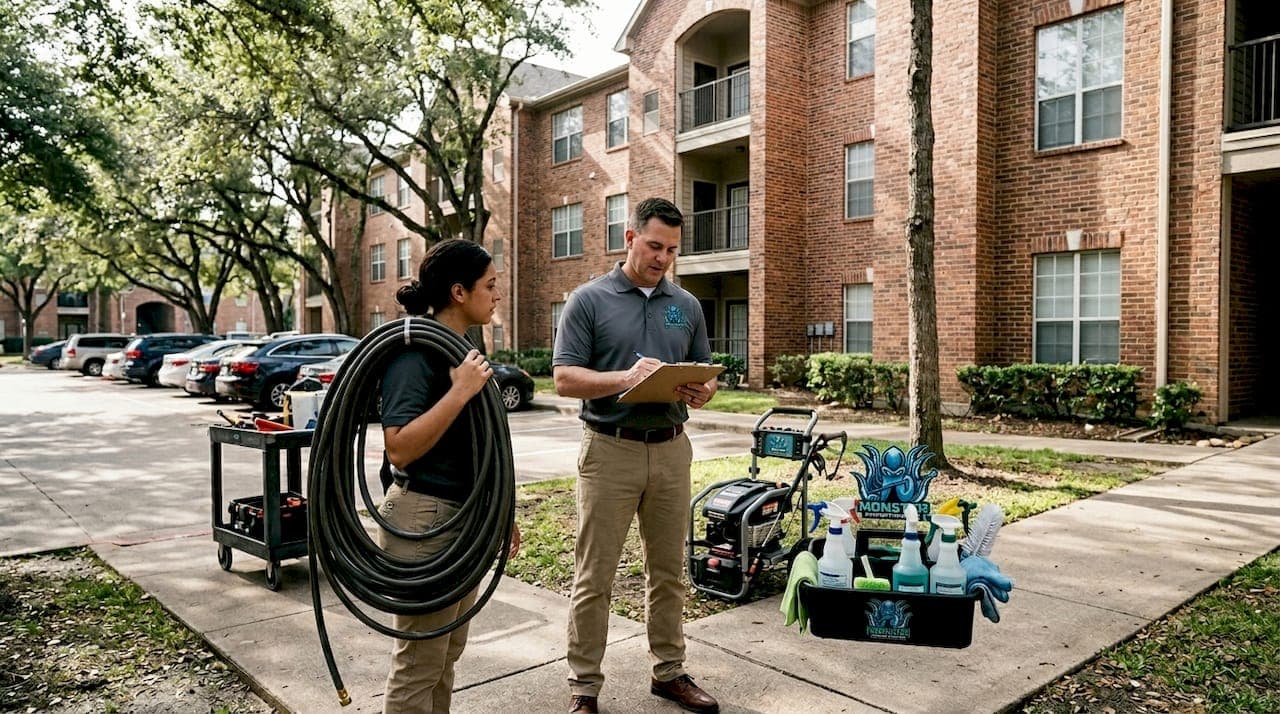
Managing exterior cleanliness for multifamily properties presents unique challenges. Between coordinating tenant schedules, ensuring safety compliance, and maintaining curb appeal across multiple units, property managers need a systematic approach that delivers consistent results without disrupting residents. This guide walks you through each phase of exterior cleaning, from initial preparation through long-term maintenance, giving you a proven framework to keep your properties looking professional while operating efficiently. You'll learn practical techniques that save time, reduce costs, and enhance property value through strategic cleaning practices tailored specifically for apartment buildings and multifamily complexes.
Table of Contents
- Key takeaways
- Preparing for exterior cleaning at multifamily properties
- Step-by-step instructions for exterior cleaning execution
- Troubleshooting common exterior cleaning challenges
- Verifying results and maintaining exterior cleanliness long-term
- Explore professional exterior cleaning services for your multifamily property
- Frequently asked questions
Key Takeaways
| Point | Details |
|---|---|
| Preparation framework | Successful exterior cleaning starts with planning equipment, staff readiness, and environmental factors to improve safety and efficiency. |
| Weather and timing | Schedule cleaning in mild conditions between fifty and eighty five degrees Fahrenheit to maintain chemical effectiveness and reduce slip hazards. |
| Resident friendly timing | Plan midweek morning sessions and notify tenants at least seventy two hours in advance to minimize parking conflicts and noise complaints. |
| Site walkthrough | Brief the team on building specific requirements by walking the property to identify sensitive areas and establish clear communication protocols. |
| Structured execution | Use a structured cleaning sequence to ensure thorough coverage without backtracking and to sustain consistent results. |
Preparing for exterior cleaning at multifamily properties
Successful exterior cleaning starts well before anyone picks up a pressure washer. Proper preparation ensures safer, more efficient exterior cleaning for apartment buildings, reducing both time spent on-site and potential complications. Your preparation phase should cover equipment selection, staff readiness, and environmental factors that impact cleaning effectiveness.
Start by gathering your essential tools and materials. The specific items you need depend on your building's exterior surfaces, but most multifamily properties require a core set of equipment. Here's a comparison of cleaning agents and their best applications:
| Cleaning Agent | Best For | Avoid Using On | Dilution Ratio |
|---|---|---|---|
| Alkaline degreaser | Concrete, metal railings | Wood, painted surfaces | 1:10 with water |
| Mild detergent solution | Vinyl siding, windows | Natural stone | 1:20 with water |
| Specialized stone cleaner | Brick, natural stone | Aluminum, glass | Follow manufacturer specs |
| Biodegradable all-purpose | General surfaces | Delicate finishes | 1:15 with water |
Your equipment checklist should include pressure washers with adjustable PSI settings, soft-bristle brushes for delicate surfaces, extension poles for high areas, and appropriate personal protective equipment for your team. Safety gear is non-negotiable: eye protection, non-slip footwear, gloves resistant to cleaning chemicals, and high-visibility vests when working near parking areas or streets.
Weather and timing considerations directly impact your results. Schedule cleaning during mild weather when temperatures stay between 50°F and 85°F. Extreme heat causes cleaning solutions to evaporate too quickly, while cold temperatures reduce chemical effectiveness and create slip hazards. Check your seasonal exterior cleaning checklist property managers use to identify optimal windows for your climate zone.
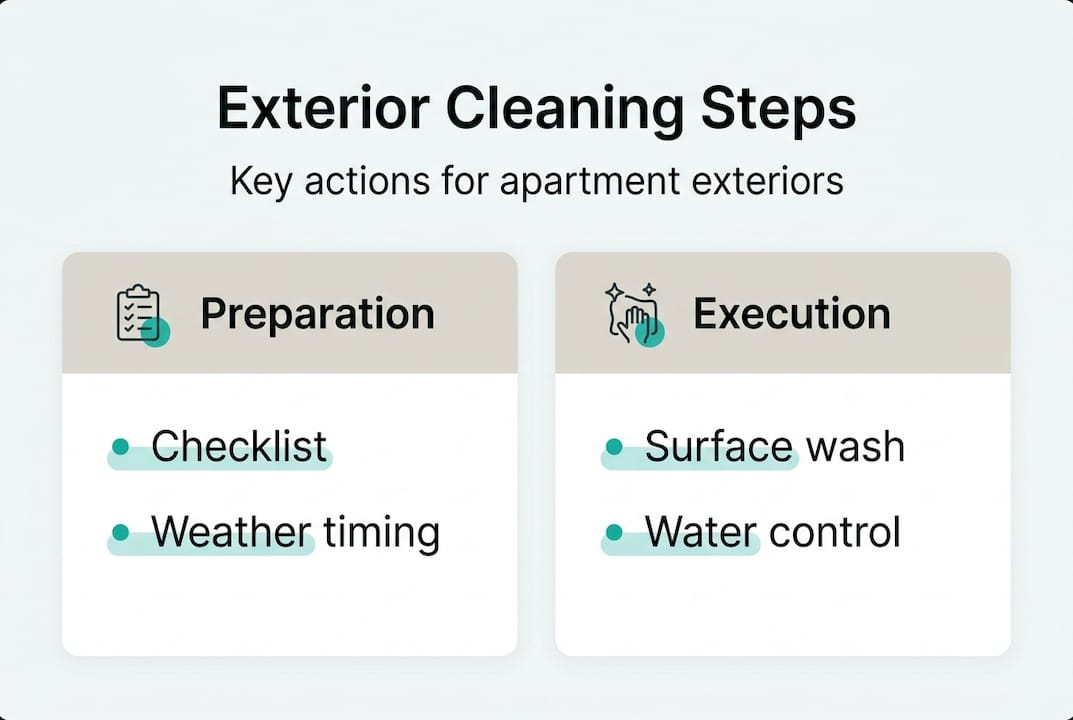
Pro Tip: Schedule exterior cleaning during mid-week mornings when most residents are at work. This timing minimizes parking conflicts, reduces noise complaints, and gives surfaces time to dry before evening activities. Send notices to tenants 72 hours in advance, specifying which areas will be cleaned and any temporary access restrictions.
Brief your cleaning team on building-specific requirements before starting work. Walk the property together to identify sensitive areas like electrical panels, HVAC units, and tenant storage spaces that need special protection. Establish clear communication protocols so team members can quickly address unexpected issues without halting the entire operation. Review your multi-family cleaning preparation guide with new team members to ensure everyone understands safety procedures and quality standards.
Step-by-step instructions for exterior cleaning execution
With preparation complete, you're ready to execute the actual cleaning process. Following a structured step sequence improves thoroughness and property appearance, ensuring you don't miss critical areas or waste time backtracking. This systematic approach works for properties of any size, from small complexes to large apartment communities.
Follow these numbered steps for consistent, efficient cleaning:
-
Remove loose debris and obstacles. Walk the entire cleaning area and clear away leaves, trash, portable furniture, and decorative items. This prevents debris from becoming embedded in surfaces during pressure washing and protects items from water damage.
-
Pre-treat heavily soiled areas. Apply appropriate cleaning solutions to stained concrete, mildewed siding, and grimy entryways. Let solutions dwell for 5-10 minutes to break down buildup before scrubbing or pressure washing.
-
Start pressure washing from top to bottom. Begin with upper-level siding and work downward so dirty water doesn't streak over already-cleaned surfaces. Use lower pressure settings (1,500-2,000 PSI) for vinyl siding and painted surfaces, higher pressure (2,500-3,000 PSI) for concrete and brick.
-
Clean windows and glass surfaces separately. Use squeegees and streak-free glass cleaner rather than pressure washers, which can force water into window seals and cause interior damage. Work on overcast days when direct sunlight won't cause cleaning solution to dry too quickly.
-
Address metal fixtures and railings. Hand-scrub metal railings, light fixtures, and door hardware with appropriate cleaners to remove oxidation and grime. Rinse thoroughly to prevent chemical residue that could cause corrosion.
-
Rinse all surfaces completely. Use clean water to remove all cleaning solution residue. Incomplete rinsing leaves streaks and can damage surfaces over time as chemical residue concentrates.
-
Inspect and touch up missed spots. Walk the property while surfaces are still damp to identify areas needing additional attention. Address these immediately rather than scheduling a return visit.
Different surface materials require specific techniques for optimal results. Concrete walkways and parking areas tolerate higher pressure and stronger alkaline cleaners that remove oil stains and tire marks effectively. Vinyl siding needs gentler treatment with lower pressure and wider spray patterns to avoid cracking or warping panels. Brick and masonry surfaces benefit from rotating turbo nozzles that provide deeper cleaning without surface damage. Consult your building exterior maintenance checklist 7 essential steps for surface-specific guidance.
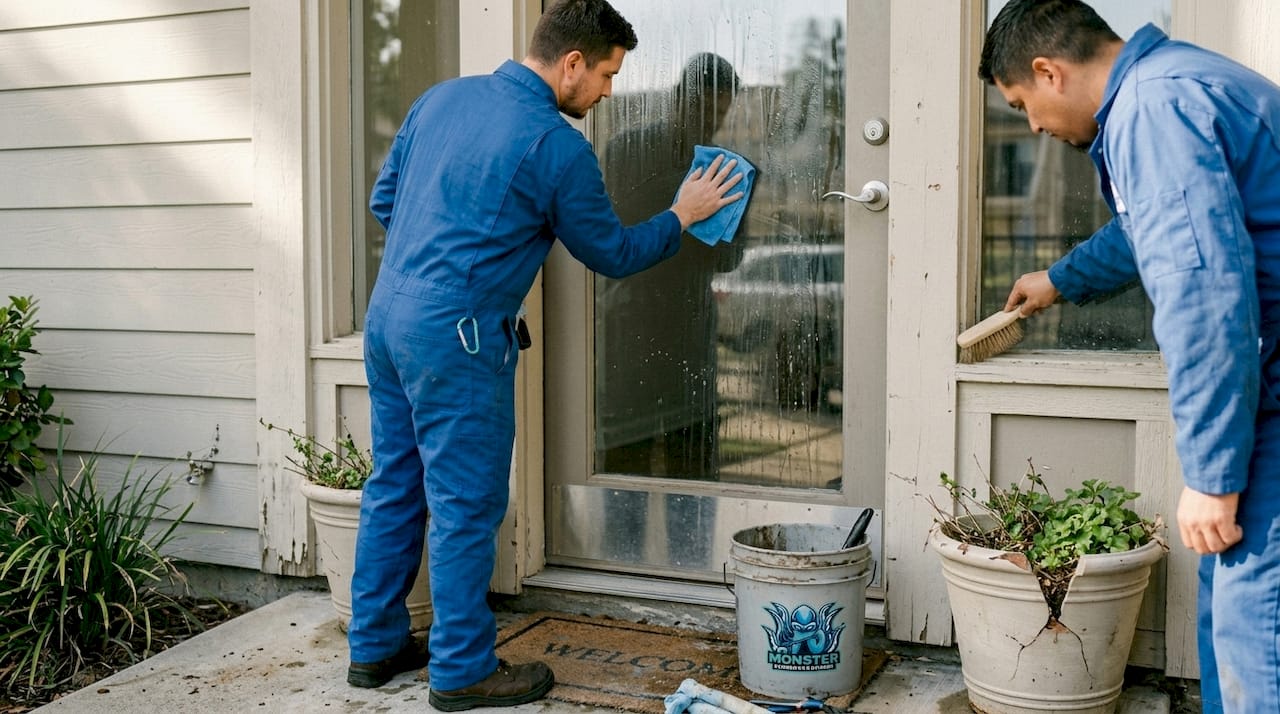
Pro Tip: Keep a spray bottle of pH-neutral cleaner and microfiber cloths handy for quick touch-ups on glass doors and windows that get splashed during pressure washing. This prevents water spots and maintains a polished appearance throughout the cleaning process.
Water management prevents property damage and tenant complaints. Direct runoff away from building foundations, basement windows, and landscaping that could be damaged by high water volume or cleaning chemicals. Use berms or temporary barriers to control water flow in parking areas. Understanding different types of exterior cleaning property managers can use helps you select methods that minimize water waste and environmental impact.
Troubleshooting common exterior cleaning challenges
Even with thorough preparation, exterior cleaning projects encounter obstacles that require quick problem-solving. Recognizing and addressing common cleaning problems reduces rework and maintains compliance, keeping your project on schedule and within budget. Property managers who anticipate these challenges and have solutions ready maintain better control over cleaning operations.
These frequent issues require specific approaches:
-
Stubborn stains that resist initial cleaning. Rust stains on concrete need oxalic acid-based cleaners, while organic stains respond better to enzymatic products. Test stronger solutions on inconspicuous areas first to ensure they won't discolor or damage surfaces. For persistent stains, apply cleaner, let it dwell longer, then agitate with a stiff brush before rinsing.
-
Limited access to upper floors and difficult areas. Extension wands reach most second-story surfaces, but some areas require lifts or scaffolding for safe access. Budget time and equipment rental costs for these situations. Never compromise safety by overreaching or working from unstable positions.
-
Weather changes during cleaning operations. Sudden rain can dilute cleaning solutions and leave streaky results. Monitor forecasts closely and have contingency plans for rescheduling partially completed work. Wind above 15 mph makes pressure washing dangerous and ineffective as spray misdirects.
-
Tenant concerns about noise, water intrusion, or parking disruption. Address complaints immediately with empathy and solutions. If water accidentally enters a unit, stop work and help resolve the issue before continuing. Maintaining positive tenant relationships protects your property's reputation and reduces turnover.
-
Equipment failures mid-project. Pressure washer breakdowns, clogged nozzles, and chemical dispenser malfunctions happen. Keep backup nozzles, extra hoses, and basic repair tools on-site. Know your equipment rental company's emergency support procedures if you're using rented machines.
Warning: Never mix different cleaning chemicals, even if both seem appropriate for your surface type. Chemical reactions can produce toxic fumes, reduce cleaning effectiveness, or damage surfaces. Always rinse equipment thoroughly between different cleaning agents and follow manufacturer safety guidelines for storage and disposal.
Surface damage from improper technique requires immediate attention. If you notice paint peeling, siding cracks, or mortar erosion during cleaning, stop work on that surface type immediately. Assess whether your pressure setting is too high, you're holding the wand too close, or the surface material is more delicate than expected. Adjust your approach before continuing and document any pre-existing damage you discover to avoid liability issues.
Review your exterior cleaning compliance list 7 key steps regularly to ensure your troubleshooting methods align with industry standards and local regulations. Some jurisdictions have specific requirements for chemical disposal, water runoff management, and noise restrictions that affect how you handle problems during cleaning operations.
Verifying results and maintaining exterior cleanliness long-term
Completing the physical cleaning work is only part of the job. Regular verification and maintenance prolong the lifespan of exterior cleaning efforts and enhance property appeal, protecting your investment and keeping properties competitive in the rental market. Systematic inspection and ongoing care prevent small issues from becoming expensive problems.
Different inspection methods reveal different aspects of cleaning quality:
| Inspection Method | What It Reveals | When To Use | Tools Needed |
|---|---|---|---|
| Visual walkthrough | Overall appearance, missed spots | Immediately after cleaning | Checklist, camera |
| Close-up examination | Surface damage, residue | During final inspection | Flashlight, magnifying glass |
| Water bead test | Proper rinsing, surface preparation | On concrete and masonry | Spray bottle with water |
| Tenant feedback collection | Practical issues, satisfaction | 24-48 hours post-cleaning | Survey forms, email |
Conduct your initial inspection while surfaces are still damp, making it easier to spot streaks, missed areas, and cleaning solution residue. Take photos of completed work for your records and to document the property's condition. These images prove valuable for insurance purposes, lease renewals, and demonstrating maintenance diligence to property owners.
Establish an ongoing maintenance schedule using these steps:
-
Create a property-specific maintenance calendar. Schedule quarterly inspections of high-traffic areas like entryways, stairwells, and parking structures. Plan comprehensive annual cleaning for entire building exteriors. Adjust frequency based on your climate, surrounding environment, and tenant density.
-
Assign responsibility for routine spot cleaning. Designate maintenance staff to address spills, graffiti, and localized dirt buildup between scheduled deep cleanings. Quick response to small issues prevents them from requiring intensive treatment later.
-
Document all cleaning activities and results. Maintain detailed records showing dates, areas cleaned, products used, and any issues discovered. This documentation supports budget requests, helps identify recurring problems, and demonstrates regulatory compliance.
-
Review and adjust your cleaning approach seasonally. Different weather patterns create different cleaning challenges. Your exterior maintenance checklist guide apartment managers use should reflect seasonal variations in your area.
-
Budget proactively for preventive maintenance. Allocate funds quarterly rather than waiting for exterior conditions to deteriorate. Regular cleaning costs less than emergency deep cleaning and prevents permanent staining or surface damage.
Tenant education enhances your maintenance efforts. Share information about proper disposal of cigarette butts, food waste, and other items that create exterior cleaning challenges. When residents understand how their actions affect property appearance, many become more conscientious about maintaining cleanliness.
Learn to assess exterior cleaning needs apartments present by conducting monthly visual surveys. Look for early signs of mildew growth, staining patterns, and wear on high-contact surfaces. Addressing these issues promptly prevents them from spreading and reduces the intensity of cleaning required during scheduled maintenance.
Explore professional exterior cleaning services for your multifamily property
While this guide equips you with knowledge to manage exterior cleaning effectively, many property managers find that partnering with specialists delivers superior results with less operational burden. Professional services bring specialized equipment, trained crews, and systematic processes that ensure consistent quality across all your properties.

Monster Property Partners specializes in multifamily exterior cleaning services designed specifically for apartment buildings and multi-unit complexes. Our team handles everything from routine maintenance to intensive restoration projects, coordinating seamlessly with your schedule and tenant needs. We understand the unique challenges property managers face and deliver solutions that enhance curb appeal while maintaining operational efficiency. Our common area concrete cleaning services address high-traffic zones that impact first impressions and tenant satisfaction. Visit Monster Property Partners to explore how professional exterior cleaning partnerships can simplify your property management responsibilities while delivering exceptional results.
Frequently asked questions
How often should multifamily property exteriors be cleaned?
Most multifamily properties benefit from comprehensive exterior cleaning twice annually, typically in spring and fall. High-traffic areas like entryways, stairwells, and parking structures need quarterly attention to maintain appearance and safety. Climate factors significantly influence frequency, with humid regions requiring more frequent mildew treatment and urban properties needing additional cleaning to combat pollution buildup. Review your property's specific conditions using a seasonal exterior cleaning checklist to determine optimal timing.
What are the safest cleaning methods for sensitive building surfaces?
Sensitive surfaces like painted wood, decorative stone, and architectural details require low-pressure washing techniques combined with pH-neutral cleaning solutions. Use wide-angle spray nozzles that distribute pressure evenly and maintain at least 12 inches distance from surfaces. Soft-bristle brushes work better than high pressure for delicate materials, preventing damage while still removing dirt effectively. Always test cleaning methods on inconspicuous areas first and explore different types of exterior cleaning to match techniques with your specific surface materials.
How can property managers coordinate exterior cleaning with tenants effectively?
Effective coordination starts with advance notice, ideally 72 hours before cleaning begins. Clearly communicate which areas will be affected, expected duration, and any access restrictions like temporary parking changes. Provide multiple notice channels including posted signs, email, and text messages to ensure all residents receive information. Schedule work during business hours when most tenants are away, and designate a point person tenants can contact with concerns. Following the guidance in this maintenance manager cleaning guide helps minimize disruption while maintaining positive resident relationships.
What documentation should property managers keep for exterior cleaning?
Maintain comprehensive records including before and after photos, detailed service logs noting dates and areas cleaned, products and methods used, and any damage or issues discovered during cleaning. Keep copies of tenant notifications, safety briefings for cleaning crews, and inspection reports verifying work completion. Document weather conditions that affected scheduling and any complaints or compliments received from residents. This documentation supports insurance claims, regulatory compliance, budget planning, and demonstrates diligent property maintenance to owners and prospective tenants.
How do you prevent water damage during exterior pressure washing?
Prevent water intrusion by inspecting and sealing gaps around windows, doors, and utility penetrations before cleaning begins. Use lower pressure settings near potential entry points and angle spray away from vulnerable areas. Cover electrical outlets, light fixtures, and HVAC vents with waterproof protection. Direct water runoff away from building foundations and basement windows using berms or temporary drainage channels. Train your crew to recognize signs of water entering the building and stop work immediately if intrusion occurs, addressing the issue before continuing cleaning operations.