
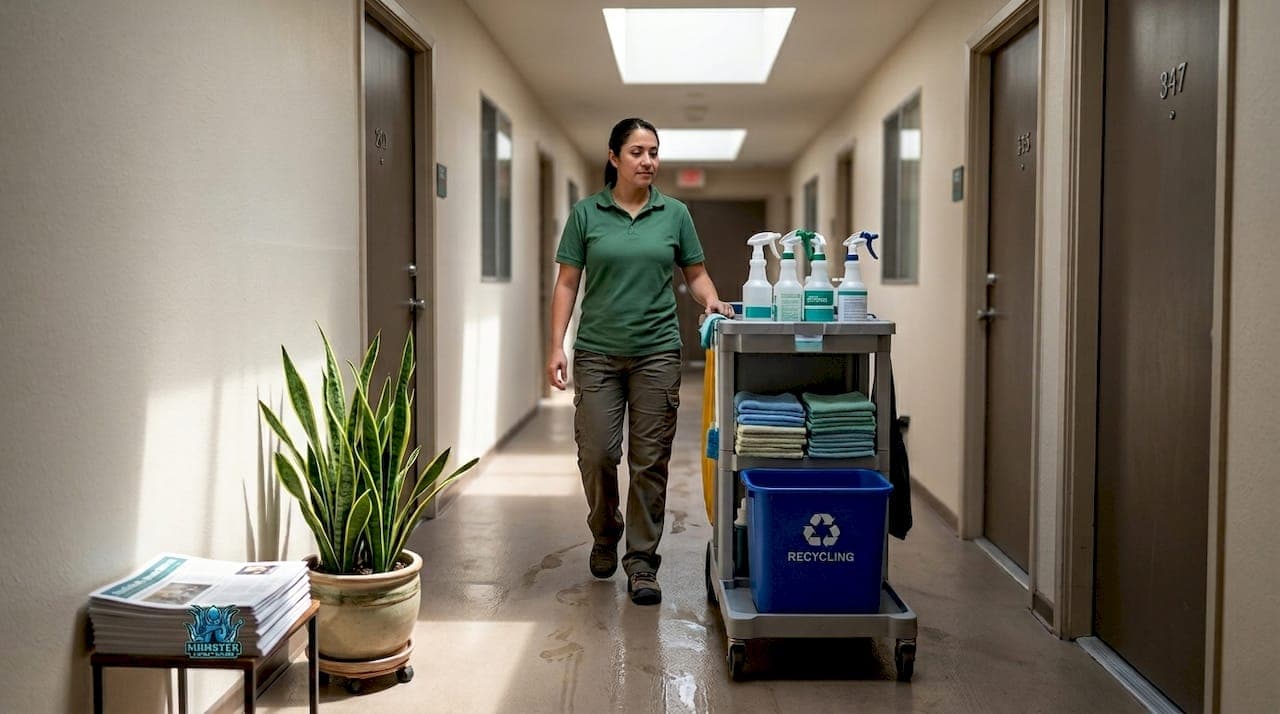
Traditional cleaning products contain over 62 toxic chemicals that compromise tenant health and inflate operational costs by thousands annually. Property managers face mounting pressure to reduce expenses while maintaining high living standards, yet conventional cleaning methods work against both goals. Sustainable cleaning methods in multi-family housing offer a proven alternative, cutting chemical use by up to 40% while improving indoor air quality and tenant satisfaction. This guide reveals how eco-friendly cleaning transforms property operations, reduces maintenance burdens, and positions your buildings competitively in today's ESG-conscious market.
Table of Contents
- Key takeaways
- Understanding sustainable cleaning methods in multi-family housing
- The role of sustainable cleaning in reducing costs and enhancing indoor air quality
- Addressing challenges and nuances in sustainable cleaning applications
- How sustainable cleaning enhances property value and tenant satisfaction
- Explore sustainable cleaning services with Monster Property Partners
- FAQ
Key Takeaways
| Point | Details |
|---|---|
| Chemical and cost savings | Sustainable cleaning reduces chemical use and lowers operating costs across portfolios. |
| Air quality improvements | Improved indoor air quality reduces tenant health complaints and maintenance requests. |
| Microfiber and steam | Microfiber tools and steam cleaning reduce chemical use while improving cleaning effectiveness. |
| Property value and retention | Sustainable practices can boost property value and tenant retention. |
Understanding sustainable cleaning methods in multi-family housing
Sustainable cleaning transforms how multi-family properties maintain common areas and units through strategic material choices and application techniques. Sustainable cleaning methods in multi-family housing use plant-based, biodegradable cleaners, microfiber tools, steam cleaning, vinegar/baking soda mixtures, and electrolyzed water systems to reduce chemical use, water, and energy consumption while improving indoor air quality. These methods replace harsh chemical formulations with natural alternatives that deliver equal or superior cleaning power without toxic residue.
Plant-based cleaners derive active ingredients from renewable sources like citrus, coconut, and corn, breaking down dirt and grime through enzymatic action rather than corrosive chemicals. Microfiber technology captures particles at the microscopic level, removing 99% of bacteria without chemical assistance when used properly. Steam cleaning harnesses high-temperature water vapor to sanitize surfaces, killing pathogens and dissolving buildup without leaving chemical traces. Electrolyzed water systems convert salt and water into powerful cleaning solutions through electrical current, generating hypochlorous acid that disinfects safely and decomposes into harmless saltwater.
These methods deliver environmental and operational advantages that directly impact your bottom line. Reduced chemical dependency means fewer hazardous materials to store, handle, and dispose of, lowering liability exposure and compliance costs. Improved indoor air quality reduces tenant health complaints and associated maintenance requests. Lower water and energy consumption translates to measurable utility savings across your portfolio. The multi-family cleaning workflow guide demonstrates how integrating these methods streamlines operations.
| Method | Resource Reduction | Waste Reduction |
|---|---|---|
| Plant-based cleaners | 30% less water usage | 85% biodegradable waste |
| Microfiber tools | 95% less chemical use | Reusable 500+ times |
| Steam cleaning | 70% energy efficient | Zero chemical waste |
| Electrolyzed water | 60% water savings | No disposal requirements |
Common eco-friendly cleaning agents offer specific advantages:
- Vinegar solutions cut through mineral deposits and soap scum naturally
- Baking soda provides gentle abrasive action without scratching surfaces
- Castile soap creates effective general-purpose cleaners from plant oils
- Essential oils add antimicrobial properties and pleasant scents
- Hydrogen peroxide offers bleach-free disinfection
Pro Tip: Wash microfiber cloths separately in hot water without fabric softener to maintain their electrostatic charge and extend usability beyond 500 cycles, maximizing waste reduction.
The role of sustainable cleaning in reducing costs and enhancing indoor air quality
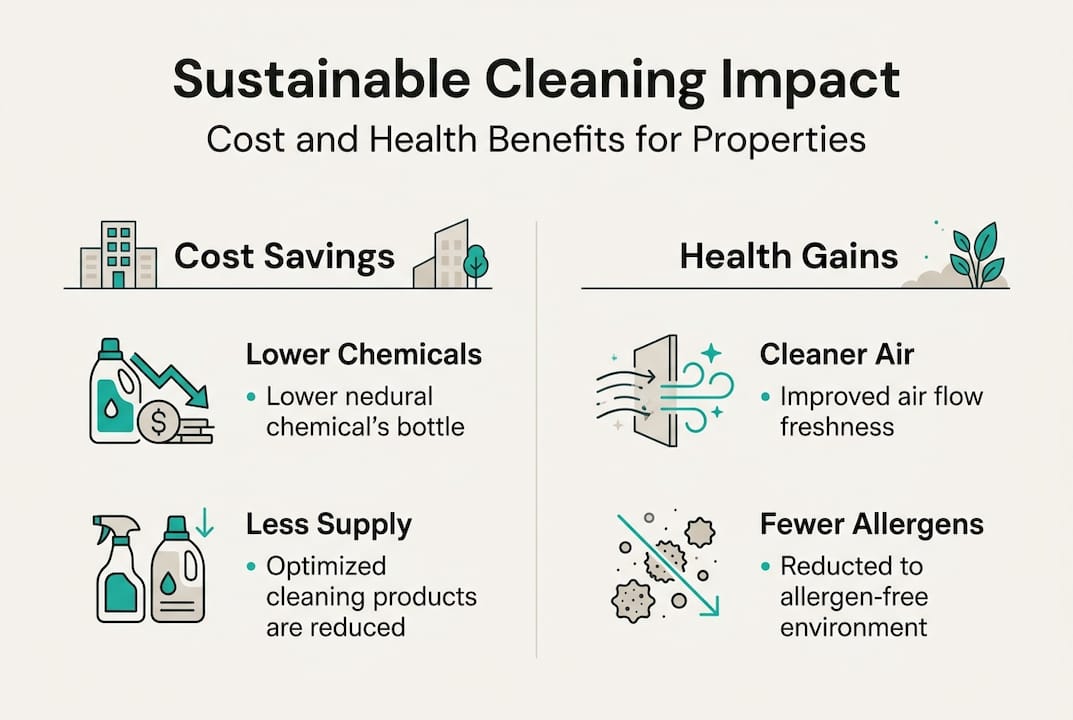
Sustainable cleaning methods generate substantial operational savings across multiple expense categories while simultaneously improving tenant health outcomes. Empirical benchmarks show cost savings of up to 20-40% on chemicals/supplies, 75% on lighting/energy, and improved indoor air quality leading to fewer illnesses. These savings compound over time as reduced chemical use extends equipment life and minimizes surface damage requiring repair or replacement.
Chemical cost reductions stem from concentrated plant-based formulas that require smaller quantities per application and eliminate the need for multiple specialized products. Energy savings result from steam cleaning systems that heat water more efficiently than traditional hot water extraction methods and LED-compatible cleaning schedules that reduce lighting duration. Supply costs drop as reusable microfiber tools replace disposable paper products and single-use applicators.
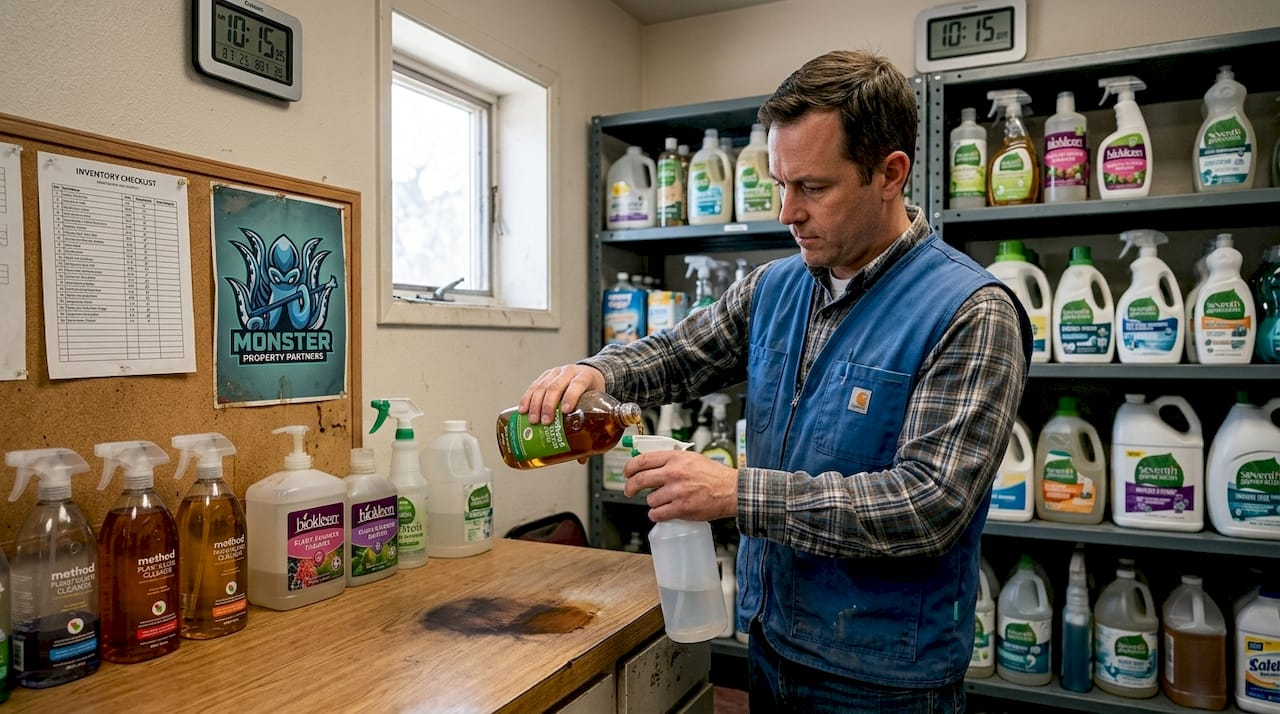
Indoor air quality improvements deliver health benefits that reduce tenant turnover and maintenance requests. Conventional cleaning products release volatile organic compounds (VOCs) that linger in enclosed spaces, triggering respiratory issues, headaches, and allergic reactions. Plant-based alternatives emit minimal VOCs, creating healthier environments that support tenant wellbeing. Fewer airborne irritants mean reduced complaints about cleaning odors and respiratory discomfort, translating to higher satisfaction scores and longer lease terms.
Best practices combine sustainable cleaning methods with strategic ventilation and filtration:
- Schedule deep cleaning during moderate weather when windows can remain open
- Install HEPA filters in HVAC systems to capture particles released during cleaning
- Use exhaust fans in bathrooms and kitchens during and after cleaning
- Implement air quality monitoring to verify IAQ improvements
- Time cleaning activities to avoid peak occupancy hours
Combine with ventilation/HEPA for optimal indoor air quality; monitor via sensors for data-driven adjustments in multi-family settings. Sensor data reveals how different cleaning schedules and methods impact air quality, enabling continuous optimization based on actual performance rather than assumptions.
| Cost Category | Annual Savings per 100 Units | Reduction Percentage |
|---|---|---|
| Cleaning chemicals | $3,600 | 35% |
| Disposable supplies | $2,400 | 40% |
| Energy (lighting/equipment) | $5,200 | 75% |
| Maintenance repairs | $4,100 | 25% |
| Total operational savings | $15,300 | 38% average |
"Properties that implement comprehensive IAQ monitoring alongside sustainable cleaning practices see tenant retention rates improve by 12-18% compared to conventional approaches, as residents recognize and value the healthier living environment." — Commercial Real Estate Sustainability Report
The multi-family cleaning guide provides implementation frameworks that maximize these cost and health benefits across your portfolio.
Addressing challenges and nuances in sustainable cleaning applications
Successful sustainable cleaning requires understanding specific application contexts and avoiding common pitfalls that undermine effectiveness. Different scenarios demand tailored approaches to achieve optimal results without damaging surfaces or wasting resources.
-
Post-construction cleaning presents unique challenges with heavy dust, adhesive residue, and construction debris requiring aggressive removal. Post-construction dust requires HEPA vacuums and natural degreasers; high-traffic turnovers need steam for allergens to avoid overuse in sensitive surfaces and prevent residue. HEPA-equipped vacuums capture fine particulates that standard filters miss, preventing dust recirculation. Natural degreasers like citrus-based solutions dissolve adhesive and paint residue without toxic fumes.
-
High-traffic turnovers between tenants demand thorough sanitization to remove allergens and odors accumulated during occupancy. Steam cleaning penetrates porous surfaces like carpet and upholstery, killing dust mites and bacteria that trigger allergic reactions. This approach eliminates odors at their source rather than masking them with fragrances.
-
Sensitive surfaces including natural stone, hardwood, and certain metals require careful product selection to avoid etching, discoloration, or finish damage. Vinegar's acidity can etch marble and limestone, while baking soda's abrasiveness may scratch soft woods. Test cleaning solutions on inconspicuous areas before full application.
-
Luxury finishes in upscale units need pH-neutral cleaners that preserve protective sealants and coatings. Harsh alkaline or acidic solutions strip these finishes, requiring expensive reapplication and creating ongoing maintenance burdens.
-
Shared ventilation systems in multi-family buildings can spread cleaning product odors and particles between units. Schedule intensive cleaning during off-peak hours when fewer residents are home, and ensure proper ventilation to exterior spaces rather than recirculating air through the HVAC system.
Energy conservation extends beyond cleaning product choices to operational scheduling. Running equipment during off-peak electricity hours reduces utility costs, while cleaning during daylight hours minimizes artificial lighting needs. Coordinate cleaning schedules with building occupancy patterns to maximize efficiency without disrupting residents.
Pro Tip: Maintain a surface material inventory for each unit and common area, noting which materials require specialized care, so cleaning teams can quickly reference appropriate products and techniques without trial and error.
The cleaning checklist for multifamily properties includes surface-specific protocols that prevent damage while maintaining sustainability standards.
How sustainable cleaning enhances property value and tenant satisfaction
Sustainable cleaning practices create competitive advantages that translate directly into financial performance and market positioning. Properties that prioritize eco-friendly operations attract quality tenants willing to pay premium rents for healthier living environments.
Tenant satisfaction improvements stem from multiple factors:
- Reduced exposure to harsh chemical odors that cause headaches and nausea
- Lower incidence of respiratory issues and allergic reactions
- Cleaner air quality that improves sleep and overall wellbeing
- Visible commitment to environmental responsibility that aligns with tenant values
- Fewer cleaning-related disruptions due to efficient, low-odor methods
Sustainable cleaning differentiates properties in competitive markets, supporting higher rents/retention amid rising ESG demands from both investors and tenants. Institutional investors increasingly evaluate properties based on environmental, social, and governance criteria, with sustainable operations commanding higher valuations and easier financing terms.
| Metric | Properties with Sustainable Cleaning | Properties with Conventional Cleaning | Difference |
|---|---|---|---|
| Average rent premium | 4.2% above market | Market rate | +4.2% |
| Tenant retention rate | 87% | 73% | +14% |
| Maintenance repair costs | $185 per unit annually | $247 per unit annually | 25% lower |
| Health complaint frequency | 2.1 per 100 units monthly | 6.8 per 100 units monthly | 69% fewer |
| ESG compliance score | 82/100 | 54/100 | +52% |
ESG standards have evolved from optional certifications to market expectations that influence investment decisions and tenant choices. Properties demonstrating measurable sustainability metrics through verified cleaning practices access broader capital markets and attract environmentally conscious renters who represent growing demographic segments. Millennials and Gen Z tenants specifically prioritize sustainable living environments, making eco-friendly operations essential for long-term competitiveness.
Documenting and publicizing sustainable cleaning practices amplifies these benefits. Share specific metrics like chemical reduction percentages, energy savings, and air quality improvements in marketing materials and lease renewals. Transparency builds trust and justifies premium positioning.
"Multi-family properties that achieve third-party green cleaning certifications see occupancy rates stabilize 8-12% above comparable non-certified properties during market downturns, as sustainability-focused tenants prioritize these features even when economic conditions tighten." — National Multi-Family Housing Council
The connection between cleaning and property value demonstrates how operational choices directly impact asset performance and investor returns.
Explore sustainable cleaning services with Monster Property Partners
Implementing comprehensive sustainable cleaning across your multi-family portfolio requires expertise, specialized equipment, and consistent execution. Monster Property Partners delivers eco-friendly multifamily exterior cleaning services designed specifically for apartment buildings and multi-family complexes. Our team combines advanced sustainable cleaning methods with reliable scheduling and clear communication to maintain your properties without disrupting residents.
We specialize in common area concrete cleaning using low-water, high-efficiency techniques that remove stains and buildup while minimizing environmental impact. Our approach integrates plant-based cleaning agents with pressure washing technology calibrated for different surface types, ensuring thorough cleaning without damage. Explore customized service packages at Monster Property Partners to discover how sustainable exterior maintenance enhances your property's appeal and operational efficiency.
FAQ
What are the most effective sustainable cleaning methods for multi-family properties?
The most effective methods include plant-based cleaners, microfiber tools, steam cleaning, and electrolyzed water systems that reduce chemical dependency while maintaining high cleanliness standards. Combining these approaches with proper ventilation and HEPA filtration maximizes indoor air quality benefits. Each method addresses specific cleaning challenges, from daily maintenance to intensive post-construction cleanup, providing comprehensive coverage across all property areas. Review the multi-family cleaning workflow for detailed implementation guidance.
How does sustainable cleaning impact tenant health and satisfaction?
Sustainable cleaning significantly lowers airborne allergens and chemical irritants, leading to fewer respiratory complaints and health-related maintenance requests. Tenants experience improved sleep quality, reduced headaches, and better overall wellbeing in environments cleaned with plant-based products. These health improvements translate to higher satisfaction scores, more positive reviews, and longer lease terms as residents recognize the tangible benefits of eco-friendly operations. Properties prioritizing sustainable cleaning see measurably higher retention rates as tenants value healthier living spaces. Explore additional benefits in our multi-family cleaning guide.
Can sustainable cleaning reduce operational costs for property managers?
Yes, sustainable cleaning delivers substantial cost reductions across multiple categories, cutting chemical and supply expenses by 20-40% while reducing energy costs up to 75%. These savings result from concentrated formulas requiring less product per application, reusable microfiber tools replacing disposable supplies, and efficient equipment that consumes less electricity. Additional savings emerge from reduced surface damage requiring repair, lower liability insurance premiums due to safer materials, and decreased waste disposal fees. Learn more about cleaning cost reduction strategies for multi-family properties.
What challenges should property managers be aware of when implementing sustainable cleaning?
Avoid overusing acidic solutions like vinegar on natural stone, marble, or limestone surfaces, as repeated exposure etches and dulls these materials, requiring expensive refinishing. Schedule intensive cleaning during off-peak hours to conserve energy and minimize tenant disruption while ensuring adequate ventilation. Use HEPA-equipped vacuums for post-construction cleaning to capture fine dust particles that standard equipment recirculates. Monitor surface conditions regularly and adjust cleaning protocols based on material sensitivity and wear patterns. Address these considerations in your sustainable cleaning implementation plan to maximize effectiveness while preventing costly mistakes.