
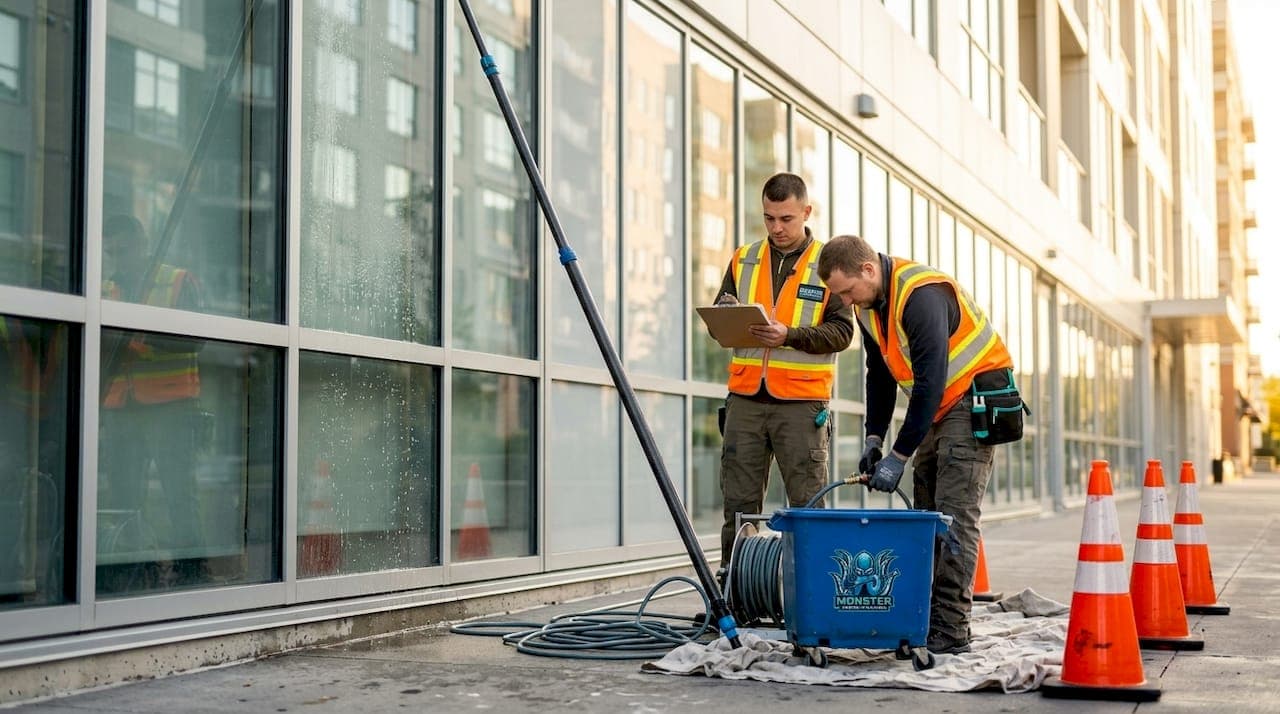
Facade cleaning is one of those line items that property managers often treat as optional, something to schedule when the budget allows or when a tenant complains. That assumption is expensive. Neglected building exteriors accumulate biological growth, pollutant deposits, and moisture-trapping grime that quietly accelerate structural deterioration, inflate repair costs, and in many jurisdictions, trigger regulatory violations. This article breaks down exactly what facade cleaning involves, which methods work for which buildings, how material risks and compliance requirements shape your decisions, and what the real financial return looks like when you treat exterior cleaning as a maintenance investment rather than a cosmetic expense.
Table of Contents
- What is building facade cleaning?
- Methods and technologies: From pressure washing to robotic cleaning
- Material matters: Risks and compliance for apartment buildings
- Understanding costs and ROI: Budgeting for facade cleaning
- Partner with a team built for multifamily exteriors
- Frequently asked questions
Key Takeaways
| Point | Details |
|---|---|
| More than aesthetics | Facade cleaning is essential for asset protection, compliance, and tenant satisfaction. |
| Match method to material | Choosing the wrong cleaning technique can damage facades and violate regulations. |
| Plan for ROI | Regular facade cleaning prevents costly repairs and boosts property value. |
| Expertise required | Certified professionals and compliant access methods are mandatory for high-rise and historic buildings. |
What is building facade cleaning?
Facade cleaning is the systematic removal of dirt, biological growth such as algae and mold, atmospheric pollutants, staining, and other surface contaminants from the exterior envelope of a building. For multifamily and apartment properties, this means everything visible from the street: brick, concrete, glass, metal cladding, stone, and painted surfaces.
The process is not a single method. Facade cleaning includes water-based, steam, chemical, abrasive, and advanced methods, as well as various access strategies depending on building height and surface type. Choosing the wrong approach for a given substrate can cause permanent damage, which is why professional assessment matters before any work begins.
For property managers, the stakes go well beyond appearance:
- Structural protection: Biological growth and moisture retention accelerate material decay in brick, mortar, and concrete.
- Tenant satisfaction: Clean exteriors directly affect how current and prospective tenants perceive the property.
- Regulatory compliance: Many cities require periodic facade inspections, and visible deterioration can trigger mandatory remediation orders.
- Asset value: Exterior cleaning extends lifespan of surface materials, deferring costly replacements.
"A scheduled cleaning program is one of the most cost-effective tools a property manager has to prevent small surface problems from becoming structural repair emergencies."
Think of facade cleaning the way you think about HVAC filter changes. Skipping it saves nothing in the short term and costs significantly more when the system fails.
Methods and technologies: From pressure washing to robotic cleaning
Not every building gets the same treatment. Method selection depends on the surface material, the type of contamination, building height, and proximity to occupied units. Here is a breakdown of the primary options:
Comparison of facade cleaning methods
| Method | Best for | Risk level | Notes |
|---|---|---|---|
| Pressure washing | Concrete, brick, hardy surfaces | Medium | Fast and scalable; wrong PSI damages soft materials |
| Soft washing | Painted surfaces, EIFS, wood | Low | Uses low pressure with chemical agents |
| Steam cleaning | Historic stone, delicate facades | Low | Effective without chemical runoff |
| Chemical cleaning | Graffiti, efflorescence, heavy staining | Medium | Substrate-specific formulas required |
| Abrasive cleaning | Severe deposits, industrial buildup | High | Reserved for specialty applications only |
| Robotic/laser | High-rise, precision work | Low to medium | Emerging technology; reduces worker risk |
Water-based, steam, chemical, abrasive, and advanced methods including laser, dry ice, and robotic systems are all used in the industry, with selection driven by substrate type and soil category. A commercial exterior cleaning guide can help you map the right method to your specific building profile.
For high-rise and multifamily properties, access strategy is just as important as the cleaning method itself. The main options are:
- Rope access: Trained technicians descend from the roof using rigging systems. Flexible and cost-effective for tall buildings with limited ground clearance.
- Scaffolding: Provides a stable platform but is expensive and disruptive for occupied buildings.
- Boom lifts and aerial work platforms: Effective for mid-rise buildings with accessible ground space.
- Building maintenance units (BMUs): Permanent systems installed on high-rises for ongoing facade access.
For exterior cleaning projects on occupied multifamily buildings, rope access and boom lifts are typically preferred because they minimize disruption to residents and common areas.
Pro Tip: Always request a test patch before full-scale cleaning begins. A small, inconspicuous area treated with the proposed method will reveal any adverse reactions before they become a costly problem across the entire facade.
Material matters: Risks and compliance for apartment buildings
The material your building is made of is not just a design choice. It is a constraint that determines which cleaning methods are safe and which ones will cause irreversible damage.
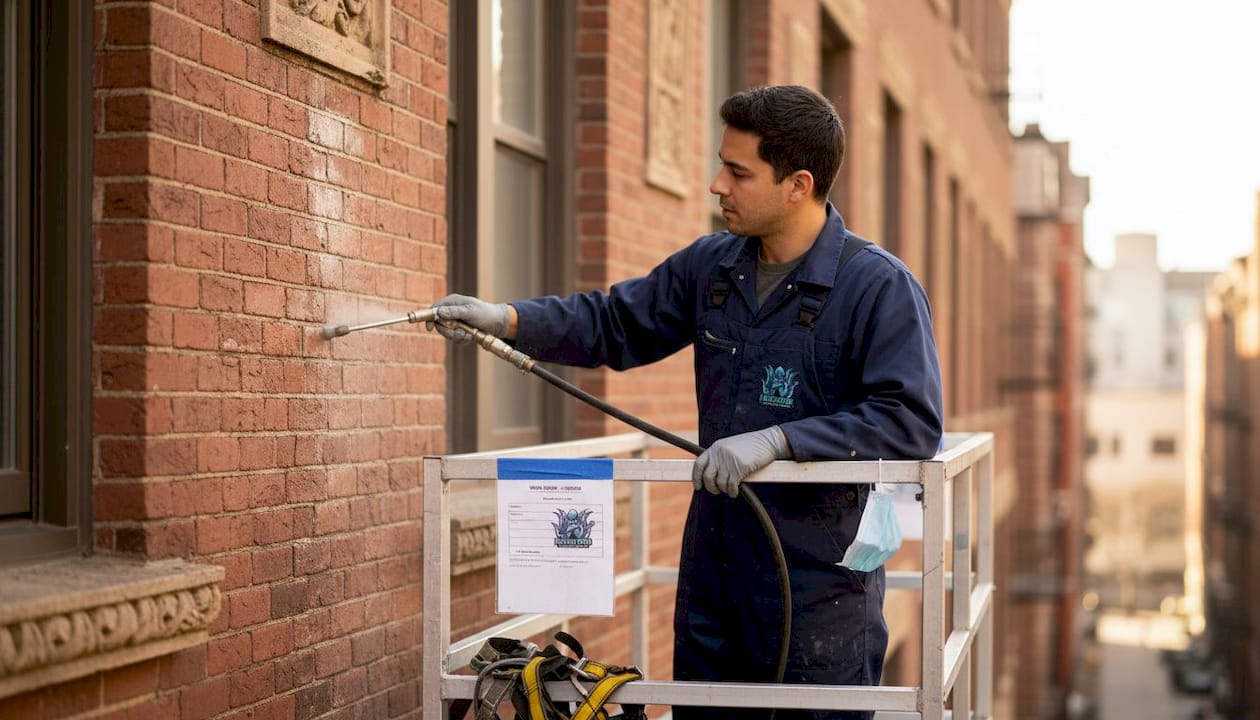
High-pressure washing can etch limestone and damage historic brickwork, making rope access and gentler methods the safer choice for high-rise buildings that require certified technicians. Porous materials like natural stone and older brick absorb water and cleaning agents deeply, which means the wrong chemical can cause staining, spalling, or accelerated weathering.
Here is a quick reference for material-specific risk levels:
| Material | Recommended method | High-pressure safe? |
|---|---|---|
| Concrete | Pressure or soft wash | Yes, with correct PSI |
| Brick (modern) | Soft wash or low-pressure | Caution |
| Brick (historic) | Steam or chemical | No |
| Limestone/sandstone | Steam or chemical | No |
| Glass and metal cladding | Soft wash or manual | No |
| EIFS/stucco | Soft wash only | No |
Compliance is the other side of this equation. DOB/FISP-compliant professionals are essential for multi-story buildings, and regular cleaning helps avoid costly repair orders or SWARMP status, which stands for Safe With A Repair and Maintenance Program, a designation that triggers mandatory remediation timelines in cities like New York.
Key compliance considerations for property managers:
- Verify that your cleaning contractor carries proper liability insurance and certifications for the access method used.
- In cities with facade inspection mandates, cleaning records can serve as supporting documentation during inspections.
- Chemical runoff must comply with local stormwater regulations. Containment and neutralization are often required.
- Common area concrete cleaning and window cleaning for apartment buildings should be coordinated with facade work to avoid cross-contamination and scheduling conflicts.
Pro Tip: Before hiring any contractor for high-rise facade work, ask specifically for proof of OSHA 10 or OSHA 30 certification for their access crew. This is non-negotiable for occupied buildings.
Understanding costs and ROI: Budgeting for facade cleaning
Property managers often hesitate on facade cleaning because the upfront cost feels discretionary. The financial reality tells a different story.
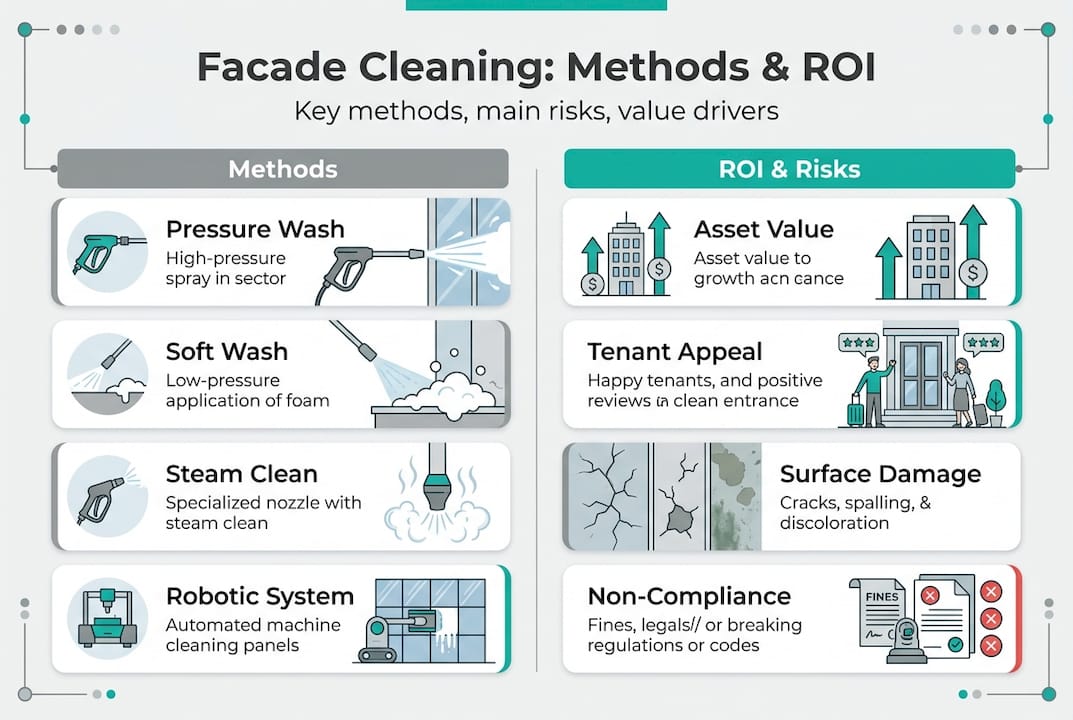
Facade cleaning typically costs one-third to one-half the price of exterior repainting, and regular cleaning can prevent major repairs while increasing property value. When you frame it that way, cleaning is not an expense. It is a deferral of a much larger one.
Here are realistic cost benchmarks to use in your planning:
- Small multifamily (under 20 units, 2-3 stories): $800 to $2,500 per cleaning cycle
- Mid-rise apartment building (20-80 units, 4-8 stories): $3,000 to $10,000 depending on method and access
- High-rise (80+ units, 9+ stories): $12,000 to $40,000 or more, driven heavily by access complexity and surface area
- Specialty treatments (graffiti removal, efflorescence, biological staining): Priced separately and can add 20-40% to base costs
The ROI case for regular facade cleaning comes from multiple directions. The top exterior cleaning benefits for multifamily managers include deferred structural repairs, extended paint and coating life, and reduced liability exposure from deteriorating surfaces. Exterior cleanliness boosts multifamily property value in measurable ways, particularly in competitive rental markets where curb appeal directly influences lease-up rates.
There is also a tenant retention angle. Exterior cleaning delivers tenant value by signaling active management and property pride, which reduces turnover. And regular exterior cleaning for apartments on a consistent schedule is almost always cheaper than reactive cleaning after years of neglect, when biological growth has penetrated surfaces and staining has set permanently.
The bottom line: A building cleaned every two years costs far less over a decade than one cleaned reactively after visible deterioration sets in. Budget for it as a recurring maintenance line, not a one-time project.
Partner with a team built for multifamily exteriors
At Monster Property Partners, we work exclusively with property managers and maintenance teams who need reliable, scalable exterior cleaning for apartment buildings and multifamily communities. We understand the compliance pressures, the tenant communication requirements, and the logistical complexity of cleaning occupied buildings efficiently.
Our crews are trained for large-scale facade projects, from mid-rise soft washing to high-rise pressure washing programs, and we coordinate directly with your maintenance team to minimize disruption. If you are building out your 2026 exterior maintenance calendar or need a partner who can handle multiple properties across a portfolio, we are ready to talk. Visit Monster Property Partners to learn more about our commercial exterior cleaning services and request a site assessment.
Frequently asked questions
How often should an apartment building facade be cleaned?
Most multifamily facades should be cleaned every one to three years, depending on local climate, surface material, and city inspection requirements. Regular cleaning intervals support both compliance and long-term asset preservation.
What cleaning method is safest for historic or delicate facades?
Low-pressure washing, steam, and substrate-specific chemical cleaning are the safest options for historic or delicate materials. High-pressure etches limestone and damages historic brickwork, so abrasive and high-pressure techniques should be avoided entirely on these surfaces.
Do you need special certification to clean high-rise buildings?
Yes. High-rise cleaning requires certified access professionals, particularly when rope access is used near occupied units and public areas. Always verify credentials before contracting any high-rise facade work.
Why not just repaint instead of cleaning?
Facade cleaning costs far less than repainting, often one-third to one-half the price, and it extends the life of existing paint and surface materials rather than simply covering deterioration.