
TL;DR:
- Proper pressure washing improves safety, aesthetics, and long-term concrete durability.
- Using correct equipment settings and professional services reduces damage risk and liability.
- Regular maintenance with sealing extends surface life and enhances resident satisfaction.
Routine concrete pressure washing is one of those property investments that skeptical managers dismiss as cosmetic until the moment a resident photographs a slippery, algae-covered walkway and posts it online. The reality is that clean concrete surfaces directly affect safety compliance, resident satisfaction, and the long-term structural integrity of your property's hardscape. This guide covers what concrete pressure washing is, how the process works, how to choose the right equipment, and the best practices that keep multi-family properties safe, attractive, and protected year after year.
Table of Contents
- What is concrete pressure washing?
- Step-by-step: The concrete pressure washing process
- Choosing the right equipment and settings
- Why property managers choose professional services
- Best practices: Maintaining clean, safe concrete surfaces
- What most property managers overlook about concrete pressure washing
- Professional solutions for multi-family properties
- Frequently asked questions
Key Takeaways
| Point | Details |
|---|---|
| Proper PSI is critical | Using the correct pressure for each surface type prevents costly concrete damage. |
| Follow proven process | A structured cleaning process maximizes safety and results for multi-family properties. |
| Professional services mitigate risk | Experts prevent common DIY mistakes and help maintain compliance and safety. |
| Routine maintenance extends results | Regular inspections and upkeep keep concrete safer, cleaner, and more attractive longer. |
| Aesthetics boost property value | Well-maintained concrete surfaces significantly improve tenant retention and curb appeal. |
What is concrete pressure washing?
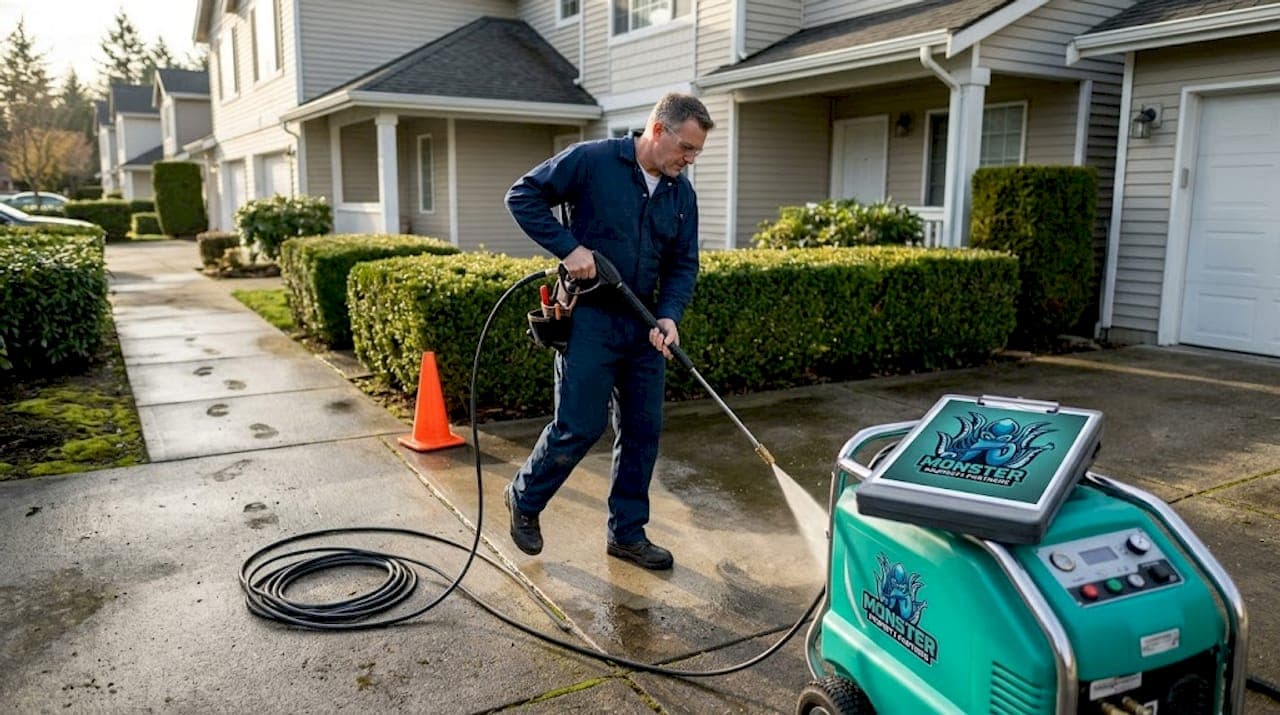
Concrete pressure washing is far more than running water over a dirty driveway. It is a specialized cleaning method that delivers high-pressure water streams, typically at 2,500 to 3,000 PSI (pounds per square inch) for residential concrete, designed to strip away dirt, grime, oil, mold, algae, and other contaminants from driveways, sidewalks, patios, and parking areas in multi-family properties.
PSI is the measure of water pressure the machine generates. The higher the PSI, the more force the water exerts on the surface. For property managers overseeing large concrete areas, this number is critical because too little pressure fails to remove embedded contaminants, while too much pressure etches and weakens the surface over time.
Common contaminants on multi-family concrete include:
- Oil and grease stains from parking areas and dumpster pads
- Mold and algae growth on shaded walkways and pool decks
- Mineral deposits from irrigation systems or rainwater runoff
- Tire marks on driveways and garage aprons
- Organic debris like leaf tannins and bird droppings
"Clean concrete is not just about first impressions. It signals that management is attentive to the details that protect residents' daily safety."
Unlike standard garden hose cleaning or manual scrubbing, pressure washing penetrates the porous surface of concrete to flush out contaminants at the source. The professional pressure washing benefits extend well beyond aesthetics, touching on structural longevity and slip prevention for high-traffic areas like covered parking structures, pool decks, and main entry walkways.
For multi-family properties, the sheer volume of concrete surfaces, combined with constant foot and vehicle traffic, means contamination builds faster and penetrates deeper than in single-family settings. That scale is exactly why understanding the method matters before committing to a maintenance program.
Step-by-step: The concrete pressure washing process
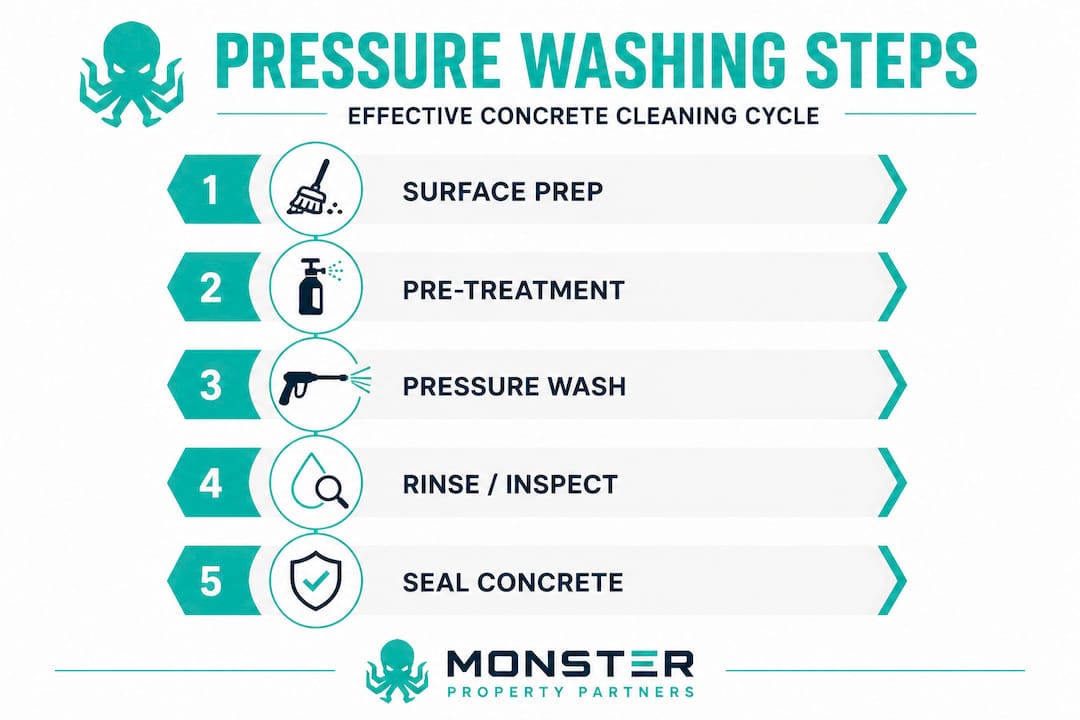
Knowing what to expect during a professional cleaning visit helps you oversee the work confidently and catch shortcuts before they cause damage. A proper concrete pressure washing process follows a clear sequence.
- Clear debris and pre-treat stains. Remove loose material like gravel, leaves, and litter. Apply degreasers or appropriate pre-treatment solutions to oil stains, rust marks, or heavy organic buildup. Let the solution dwell for the recommended time before washing.
- Select the correct nozzle and pressure setting. A 25-degree nozzle is standard for most concrete surfaces. Hold the wand 12 to 18 inches from the surface and use sweeping overlapping strokes to avoid streaking or surface etching.
- Use surface cleaners on large areas. Rotary surface cleaners (flat spinning heads that attach to the wand) distribute pressure evenly across wide driveways or parking lots, delivering consistent results while reducing operator fatigue.
- Rinse thoroughly. After cleaning, flush the surface completely to remove all dislodged debris and chemical residue. Residual chemicals can attract dirt faster or damage the concrete finish.
- Consider sealing. Applying a concrete sealer after washing extends the benefits by reducing porosity. This step slows the reabsorption of oil, moisture, and biological contaminants.
Pro Tip: Before any cleaning visit, use a pressure washing prep checklist to ensure all vehicles are moved, drainage paths are clear, and residents are notified well in advance. Missed prep steps are the leading cause of rescheduled jobs and unnecessary costs.
"Surface cleaners are not optional on large concrete areas. They prevent the tiger-striping effect that leaves visible lines and uneven cleaning patterns across parking lots."
For property managers reviewing proposals from vendors, the essential washing checklist is a useful benchmark to compare what each contractor includes in their standard scope of work. If a vendor skips pre-treatment or thorough rinsing, those omissions show up in the quality and longevity of the results.
Choosing the right equipment and settings
Getting the process right depends almost entirely on matching equipment settings to the specific concrete surface. Not all concrete on your property is the same age, condition, or finish, and treating it uniformly is one of the most common mistakes in multi-family maintenance programs.
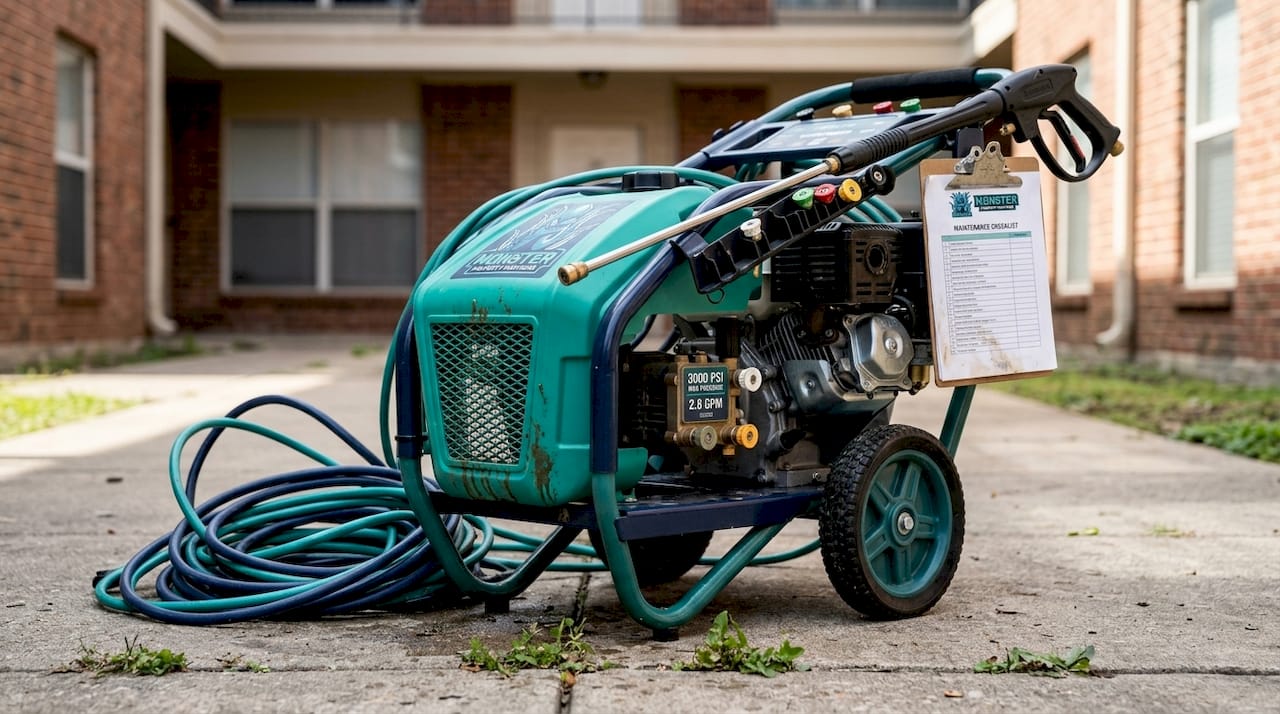
Referencing industry guidance on avoiding damage, the recommended PSI thresholds break down as follows:
| Surface type | Recommended PSI | Notes |
|---|---|---|
| Standard concrete (driveways, walkways) | 2,500 to 3,000 PSI | Safe for most cured concrete |
| New, stamped, or damaged concrete | 2,000 to 2,500 PSI | Lower pressure prevents surface erosion |
| Industrial or heavily soiled areas | 3,500 to 4,000 PSI | Requires surface cleaners |
| Pool decks and decorative finishes | 1,500 to 2,000 PSI | High sensitivity to etching |
GPM (gallons per minute) is equally important. A machine operating at 2.5 GPM or higher rinses more effectively and reduces the time contaminated water sits on the surface. Low GPM equipment may have adequate pressure but will leave residue behind, defeating the purpose of the cleaning.
Nozzle selection also plays a critical role. A 0-degree nozzle delivers a concentrated pinpoint stream capable of damaging concrete quickly. A 15-degree nozzle is appropriate for stubborn stains in small areas. The 25-degree nozzle is the standard workhorse for most concrete surfaces, and a 40-degree nozzle is appropriate for delicate or decorative finishes.
Pro Tip: Ask vendors to share their equipment specifications before awarding contracts. If a contractor is using residential-grade equipment rated at 1,800 PSI on your commercial parking structure, they are not delivering the cleaning results you are paying for. Check out these maintenance manager pro tips for a full breakdown of what to request.
Investing in understanding pressure washing systems is not just technical curiosity. It protects your property from well-intentioned but damaging cleaning work and gives you the knowledge to hold contractors accountable to a professional standard.
Why property managers choose professional services
The case for professional pressure washing in multi-family environments is not just about better results on the day of cleaning. It is about risk management, liability reduction, and resident retention across the entire property portfolio.
Professional services minimize damage risk, with 70% of DIY damage traced directly to excess PSI. Maintenance teams using borrowed or rented equipment without proper training regularly etch driveways, strip sealers, and create surface irregularities that increase slip risk. The cost to repair or resurface damaged concrete far exceeds the cost of a professional cleaning contract.
Key advantages of professional concrete pressure washing services include:
- Liability protection. Clean, slip-free walkways reduce your exposure to premises liability claims from resident falls. Documentation of regular cleaning also strengthens your defense in any incident investigation.
- Compliance with health and safety standards. Many municipalities require property owners to maintain exterior surfaces free of mold, standing water, and biological growth. Professional cleaning ensures you meet those standards consistently.
- Improved resident retention. First impressions matter in the leasing process, but ongoing property appearance drives whether residents renew. Residents who see a management team actively maintaining common areas report higher satisfaction scores.
- Consistent results at scale. Professional crews with commercial equipment cover large parking lots and walkway networks in a fraction of the time it takes a maintenance team, reducing disruption to residents.
- Environmental compliance. Licensed contractors manage wastewater runoff properly, which matters in areas with strict storm drain regulations.
The business case for common area concrete cleaning is especially strong when you account for the compounding effect of deferred maintenance. Algae and mold trapped in concrete pores accelerate surface degradation over time. Properties that clean regularly spend less on surface repair and extend the functional life of hardscape investments significantly.
The apartment exterior value connection is well documented: properties with clean, well-maintained exteriors command higher rents and shorter vacancy periods. That return on investment becomes visible in your next operating review.
Best practices: Maintaining clean, safe concrete surfaces
Pressure washing is not a once-and-done task. Ongoing maintenance between cleaning cycles determines how quickly contamination rebuilds and how much each subsequent cleaning costs.
Routine inspection checklist items to review monthly:
- Visible staining or discoloration near dumpster pads and parking areas
- Moss or algae growth on shaded walkways and stairwells
- Drainage blockages or standing water that accelerates biological growth
- Cracks or spalling that may trap contaminants and worsen with cleaning
- Slip-risk areas near pool decks, mailbox stations, and building entries
Setting a maintenance schedule based on property conditions:
Most multi-family properties benefit from a minimum of one full concrete pressure washing cycle per year. However, properties in humid climates, those with heavy tree canopy coverage, or sites with high parking density often need cleaning twice per year. High-traffic entry walkways may benefit from spot cleaning quarterly. Reviewing routine pressure washing cycles for comparable property types helps calibrate your schedule to local conditions.
Resident safety during cleaning operations:
Always post visible wet surface signage before, during, and after washing. Notify residents at least 48 hours in advance so they can make parking arrangements. Establish a clear dry time estimate before the area is re-opened to foot and vehicle traffic. Coordinate with maintenance staff so they are available to respond to any resident concerns on cleaning day.
Pro Tip: Partner with your routine cleaning provider to build a written maintenance schedule into your service agreement. A contracted schedule eliminates the planning burden from your team and ensures cleaning happens before conditions deteriorate to a complaint-generating level.
Sealing concrete after each major cleaning cycle adds another layer of protection. Sealed surfaces resist staining, repel moisture, and dry faster after rain, reducing ongoing slip risk. While sealing adds a line item to the cleaning budget, it extends the interval between full cleaning cycles and lowers long-term maintenance costs.
What most property managers overlook about concrete pressure washing
Most property managers measure the success of a pressure washing program by how good the concrete looks the next morning. That is the wrong metric. The real value is in what you do not see: the liability claims that never happen, the concrete replacement that gets deferred by five years, and the renewal letters that come in because residents feel good about where they live.
There is a legal and operational dimension to concrete maintenance that rarely gets discussed in vendor proposals. When a resident slips on a mold-covered walkway that was on your monthly inspection list but never actioned, the conversation shifts from maintenance to negligence. Documenting your maintenance program creates a paper trail that protects you and your ownership group in those conversations.
The second blind spot is staff training. Maintenance teams are often handed a pressure washer and told to clean the parking lot. Without training on PSI settings, nozzle selection, and proper technique, they frequently damage the surfaces they are trying to clean. We see this repeatedly on properties that contact us after DIY cleaning stripped the top layer of stamped concrete near a clubhouse entrance. The repair bill was three times the annual cleaning contract they were trying to avoid.
Environmental conditions are the third overlooked variable. A property surrounded by mature trees in a humid climate is going to grow algae on concrete surfaces twice as fast as a property in a dry, open environment. Your maintenance plan should reflect your actual microclimate, not a generic annual schedule. Walk your property in the early morning after a warm night and look for the shaded areas where biological growth starts. Those spots need targeted attention before they spread to adjacent surfaces.
The operational reality is that reactive concrete maintenance always costs more than proactive maintenance. By the time a surface looks bad enough to generate complaints, the contamination is already embedded deeply enough to require more aggressive cleaning, additional pre-treatment, and in some cases surface repair. Building a structured, proactive program around real inspection data is the approach that separates well-run properties from the rest.
Professional solutions for multi-family properties
If you manage a portfolio of multi-family properties and want consistent, professional concrete cleaning without adding operational complexity to your team, we can help. At Monster Property Partners, we specialize in multi-family exterior cleaning scaled specifically for property managers who need reliable scheduling, documented results, and crews who understand the communication standards your residents expect.

Our teams use commercial-grade equipment matched to your specific surface types, handle all wastewater compliance, and provide service documentation your ownership group can use to support asset valuations and liability defense. We work with property managers across large portfolios to build maintenance schedules that reduce reactive spending and keep curb appeal consistent. Visit Monster Property Partners to learn more about how we can support your exterior maintenance program and request a site assessment for your properties.
Frequently asked questions
How often should concrete in multi-family properties be pressure washed?
For most multi-family properties, concrete should be pressure washed at least once per year, with high-traffic or shaded areas potentially requiring more frequent cleaning every six months or seasonally.
What PSI is safe for new or delicate concrete?
For new, stamped, or delicate concrete, use a pressure setting of 2,000 to 2,500 PSI to avoid surface damage or etching.
Does pressure washing concrete remove all stains?
Pressure washing removes most surface stains, but oil and deeply embedded contaminants may require pre-treatment with a degreaser or repeated cleaning cycles before full removal is achieved.
Can improper pressure washing create safety hazards?
Yes, incorrect technique or excess pressure can cause surface damage, leading to trip hazards or increased slip risk. 70% of DIY damage on concrete surfaces results directly from using excess PSI without proper training.
Is it necessary to seal concrete after pressure washing?
Sealing is optional but strongly recommended. It extends the benefits of thorough rinsing and sealing by protecting against stains, moisture intrusion, and weathering between cleaning cycles.