
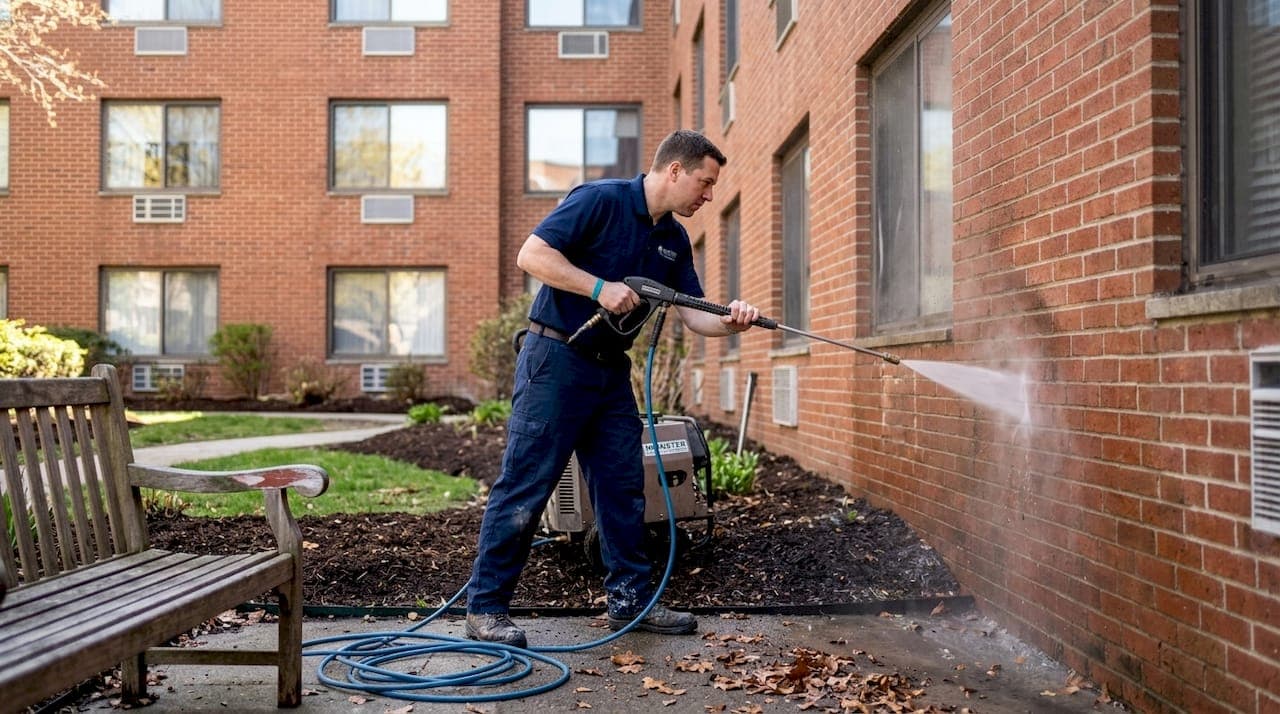
Seasonal pressure washing is one of the most underestimated tools in a property manager's maintenance arsenal. Most owners treat it as a cosmetic task, something to schedule when the building looks dirty. But that thinking costs money. Seasonal buildup like winter road salt, spring pollen, summer mold, and fall leaf grime actively degrades exterior surfaces between cleanings. A timed, seasonal approach stops that damage cycle before it starts, protects your investment, and keeps tenants happy enough to renew their leases.
Table of Contents
- What is seasonal pressure washing?
- Why timing matters: The science and strategy
- The economic impact: Saving money and boosting value
- Tangible benefits for property managers and owners
- How to schedule and execute seasonal pressure washing
- Let us help you protect and enhance your property
- Frequently asked questions
Key Takeaways
| Point | Details |
|---|---|
| Seasonal timing matters | Cleaning with the seasons prevents costly damage and protects property value. |
| Maximize ROI and savings | Seasonal washing extends the life of surfaces and reduces repair costs dramatically. |
| Boost tenant satisfaction | Regular exterior cleaning creates a healthier, more appealing environment for tenants. |
| Professional approach is safest | Hiring experts minimizes risk, maximizes effect, and ensures proper scheduling. |
What is seasonal pressure washing?
Seasonal pressure washing is a structured cleaning schedule aligned with the natural weather cycle, not just a one-time annual rinse. Instead of reacting to visible dirt, you proactively clean at the moments when specific types of buildup are at their worst and most damaging. That distinction matters enormously for multi-family properties, where dozens of surfaces face constant exposure.
Each season deposits a different threat on your building's exterior:
- Winter: Road salt and ice melt chemicals penetrate concrete and corrode metal fixtures
- Spring: Heavy pollen coats siding, walkways, and railings, trapping moisture against surfaces
- Summer: Heat accelerates mold and mildew growth, especially in shaded common areas
- Fall: Decomposing leaves leave tannin stains and create slip hazards on walkways
As seasonal-specific buildup accumulates, it doesn't just look bad. It chemically and physically breaks down the materials underneath. For a multi-family property with hundreds of linear feet of walkways, parking surfaces, and building facades, that degradation adds up fast. A solid seasonal cleaning checklist gives your team a repeatable framework so nothing gets missed between cycles.
Why timing matters: The science and strategy
Knowing what to clean is only half the equation. Knowing when to clean is where the real value lives. Pressure washing right after winter ends removes corrosive salt before it has months to work deeper into concrete. Cleaning in late spring eliminates pollen and moisture before summer heat turns damp surfaces into mold factories.
Here's a practical sequence most property managers benefit from following:
- Late winter or early spring: Remove road salt, sand, and winter grime from parking lots, walkways, and building bases before temperatures rise
- Late spring: Clear pollen and organic debris from siding, railings, and common area surfaces after peak bloom
- Late summer: Target mold, mildew, and algae growth on shaded surfaces before fall moisture compounds the problem
- Late fall: Clean decomposing leaf matter and prepare surfaces before freezing temperatures lock in stains
The financial logic is hard to argue with. Extending surface lifespan by 30 to 50 percent through timely cleaning means you're pushing back expensive replacements by years. Concrete replacement runs $8 to $12 per square foot, while professional pressure washing costs $0.10 to $0.30 per square foot. That's a cost difference of 40 to 1 in favor of maintenance.
Pro Tip: The optimal cleaning window varies by climate. Properties in humid southern states need more frequent mold-focused cleanings in summer, while northern properties should prioritize post-winter salt removal. A regional vendor who understands your local weather patterns will always outperform a generic national schedule.
The economic impact: Saving money and boosting value
Once you see the timing logic, the financial case becomes obvious. Seasonal pressure washing isn't a cost center. It's a return-generating maintenance strategy.
Consider the direct and indirect ROI drivers:
- Reduced repair costs: Proactive cleaning prevents surface degradation that leads to costly replacements
- Extended material lifespan: Surfaces last 30 to 50 percent longer with consistent seasonal maintenance
- Higher property value: Clean, well-maintained exteriors command stronger appraisals and attract quality tenants
- Lower vacancy rates: Curb appeal directly influences prospective tenant decisions during property tours
- Fewer liability claims: Clean walkways and parking areas reduce slip-and-fall incidents
Here's a side-by-side look at the numbers:
| Maintenance approach | Cost per sq ft | Surface lifespan | Repair frequency |
|---|---|---|---|
| Reactive (annual wash) | $0.25 to $0.35 | Standard | High |
| Seasonal (4x per year) | $0.10 to $0.30 | Extended 30 to 50% | Low |
| No washing (replacement) | $8 to $12 | Replaced | N/A |
The ROI on a consistent seasonal program runs 150 to 300 percent when you factor in avoided repairs, extended surface life, and the value added to the property. Boosting property value through exterior maintenance is one of the highest-leverage moves available to a property manager, and cutting repair costs by up to 35 percent compounds those gains over time.
Tangible benefits for property managers and owners
The numbers tell part of the story, but the real-world benefits extend far beyond budgets. Tenants notice when a property is well cared for. Clean common areas, fresh-looking walkways, and stain-free building facades signal that management takes pride in the property. That perception directly influences lease renewals.

Seasonal pressure washing boosts tenant satisfaction and enhances retention in ways that are hard to replicate with other maintenance investments. A tenant who feels proud of where they live is far less likely to move out at lease end.
Here's how to build a seasonal washing plan that actually gets executed:
- Audit your property: Walk every exterior surface and document current condition, staining, and high-traffic zones
- Map your seasonal calendar: Assign cleaning windows to each season based on your regional climate
- Identify priority surfaces: Walkways, parking areas, building bases, and common area concrete typically need the most attention
- Select a qualified vendor: Look for commercial experience with multi-family properties specifically
- Build it into your maintenance budget: Treat it as a fixed line item, not a discretionary expense
"The properties that maintain the highest tenant satisfaction scores are almost always the ones with consistent exterior maintenance programs. Clean common areas aren't a luxury. They're a baseline expectation for today's renters."
Pro Tip: Never schedule pressure washing right before a cold snap. Water trapped in surface cracks will freeze and expand, causing the exact damage you're trying to prevent. Always check the 48-hour forecast before any exterior cleaning. Reviewing a tenant satisfaction and value resource can help you connect maintenance decisions to measurable retention outcomes. A maintenance manager's guide built for multi-family exteriors gives you the operational detail to run this efficiently.
How to schedule and execute seasonal pressure washing
Ready to act on these insights? Here's how to put seasonal pressure washing into practice for your property. The first decision most managers face is whether to handle it in-house or hire a professional service. The answer depends on scale, but for most multi-family properties, professional service wins on every metric.
| Factor | DIY approach | Professional service |
|---|---|---|
| Equipment quality | Consumer grade | Commercial grade |
| Surface damage risk | High | Low |
| Timing optimization | Generic | Climate-specific |
| Labor cost | Staff time diverted | Dedicated crew |
| Liability coverage | Property owner | Vendor insured |
| Consistency | Variable | Scheduled and documented |
Professionals prevent damage and align cleaning with optimal windows for each surface type and climate zone. That expertise is especially valuable for large multi-family properties where one misstep on siding or aged concrete can create repair costs that dwarf the cleaning fee.
When evaluating vendors, ask these questions before signing anything:
- Do you have experience with multi-family or commercial properties specifically?
- Are you licensed, bonded, and insured for commercial work?
- Can you provide references from similar property types?
- How do you adjust your schedule for weather delays?
- Do you document completed work with photos?
Integrating seasonal washing with your existing maintenance calendar is straightforward once you have a vendor locked in. Tie each cleaning cycle to a natural trigger, like the end of winter or the first week after peak pollen season, so it happens automatically without requiring a separate decision each time. Resources like how to schedule exterior cleaning for apartment complexes and a step-by-step cleaning guide for multi-family properties can help you build a system that runs itself.
Let us help you protect and enhance your property
Seasonal pressure washing is a smart, proven investment that protects your surfaces, reduces repair costs, and keeps tenants satisfied enough to stay. The data is clear, and the operational framework is straightforward once you have the right partner in place.

At Monster Property Partners, we specialize in large-scale exterior cleaning for apartment buildings and multi-family communities. Our team understands the seasonal demands of commercial properties and builds cleaning programs around your specific climate, surface types, and maintenance calendar. From multifamily exterior cleaning services to targeted common area cleaning, we handle the complexity so you can focus on running your property. Reach out today to get a tailored seasonal cleaning plan built for your portfolio.
Frequently asked questions
How often should multifamily properties be pressure washed?
Best practice is a seasonal approach every 3 to 4 months, which aligns cleaning cycles with weather patterns and prevents buildup from causing lasting surface damage.
What surfaces benefit most from seasonal pressure washing?
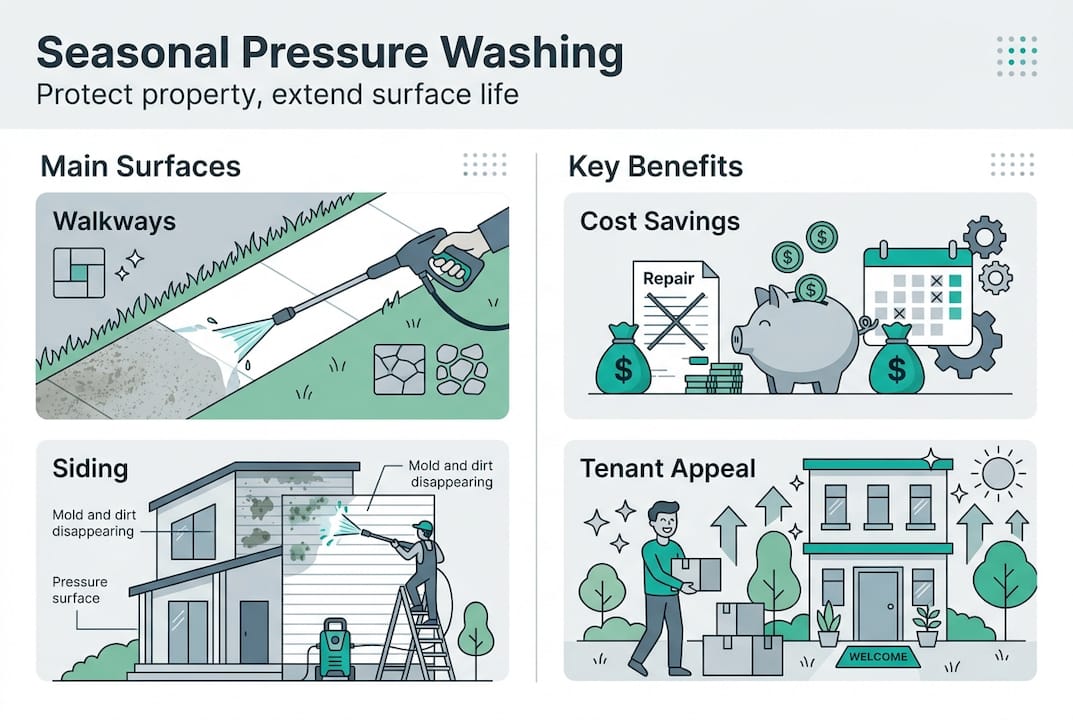
Walkways, parking lots, building siding, and common area concrete see the greatest gains. These surfaces extend lifespan by 30 to 50 percent with consistent seasonal maintenance compared to reactive cleaning.
Can seasonal pressure washing really cut costs in the long run?
Yes. A consistent seasonal program reduces repair costs significantly and pushes back expensive surface replacements by years. The cost difference between washing and replacing concrete alone makes the case.
Is professional pressure washing better than DIY for apartments?
For multi-family properties, professional service is almost always the better choice. Pros use commercial-grade equipment, carry liability coverage, and optimize timing for your specific climate and surface conditions, reducing the risk of accidental damage.