
TL;DR:
- Regular pressure washing prevents surface degradation and reduces long-term repair costs.
- It improves tenant satisfaction, enhances curb appeal, and boosts property value.
- Building a scheduled cleaning program ensures ongoing maintenance and operational predictability.
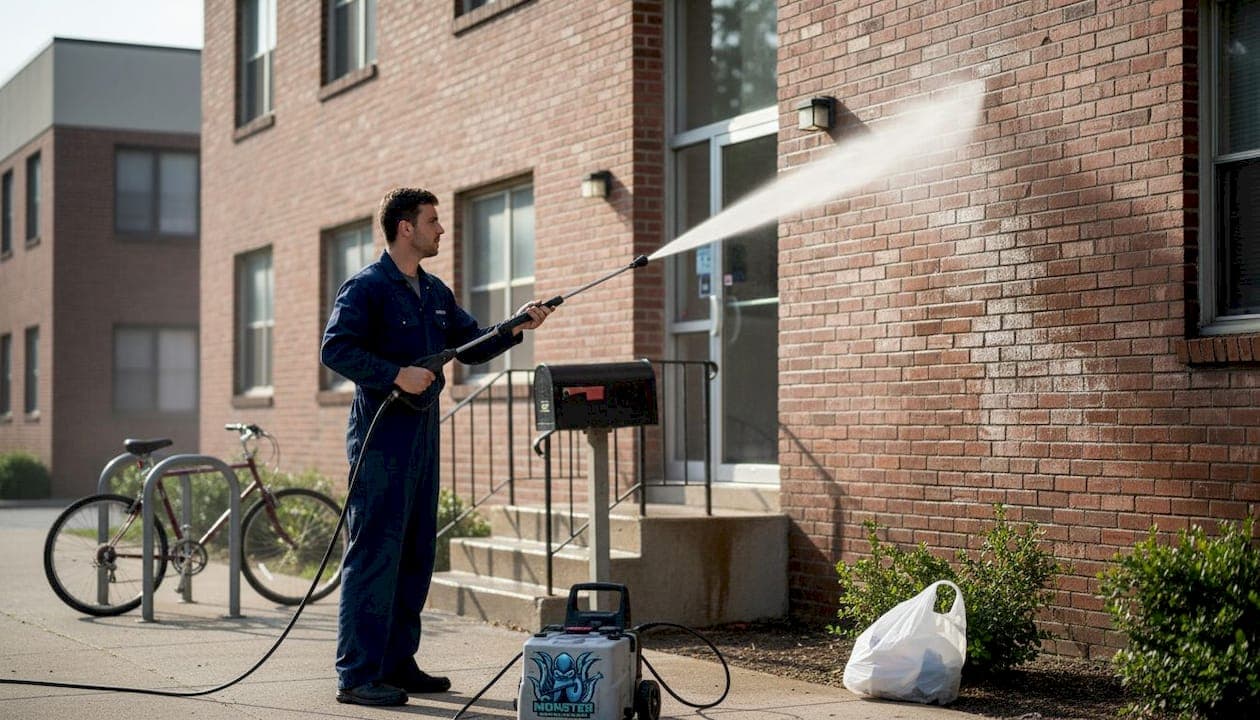
Routine pressure washing cuts multi-family repair costs by up to 30%, yet most property managers treat exterior cleaning as a cosmetic afterthought. That's a costly mistake. Dirty siding, stained walkways, and grimy entryways do far more damage than they look like they do. They accelerate structural wear, push tenants toward competitors, and quietly shrink your net operating income. This article walks you through the real financial case for professional pressure washing, how it protects your building materials, what it does for tenant retention, and the practical steps to build it into your maintenance program.
Table of Contents
- Understanding the true costs of neglecting exterior cleaning
- How pressure washing protects building materials and systems
- The impact on tenant retention and property image
- Best practices for pressure washing apartment buildings
- Our perspective: What property managers often overlook about exterior washing
- Get professional help with your apartment building's exterior cleaning
- Frequently asked questions
Key Takeaways
| Point | Details |
|---|---|
| Reduces maintenance costs | Routine pressure washing can lower apartment repair costs by up to 30% and prevent major structural damage. |
| Enhances tenant retention | Clean exteriors increase tenant satisfaction and directly improve leasing rates and occupancy. |
| Boosts curb appeal and value | Exterior cleanliness can raise apartment property value by 4% and helps drive positive reviews. |
| Protects building integrity | Pressure washing removes damaging mold, mildew, and grime from key surfaces, extending their lifespan. |
Understanding the true costs of neglecting exterior cleaning
Let's first break down why skipping professional cleaning often costs more in the long run.
When exterior surfaces go unwashed for extended periods, you're not just dealing with an eyesore. Mold, mildew, algae, and embedded grime eat into concrete, siding, and painted surfaces at a rate that accelerates over time. What starts as surface discoloration becomes cracked concrete, peeling paint, and rotting wood. Repainting a single building facade can run tens of thousands of dollars. Concrete replacement is even more expensive. Mold remediation, especially in humid climates, can cost more than a full year of routine cleaning contracts.
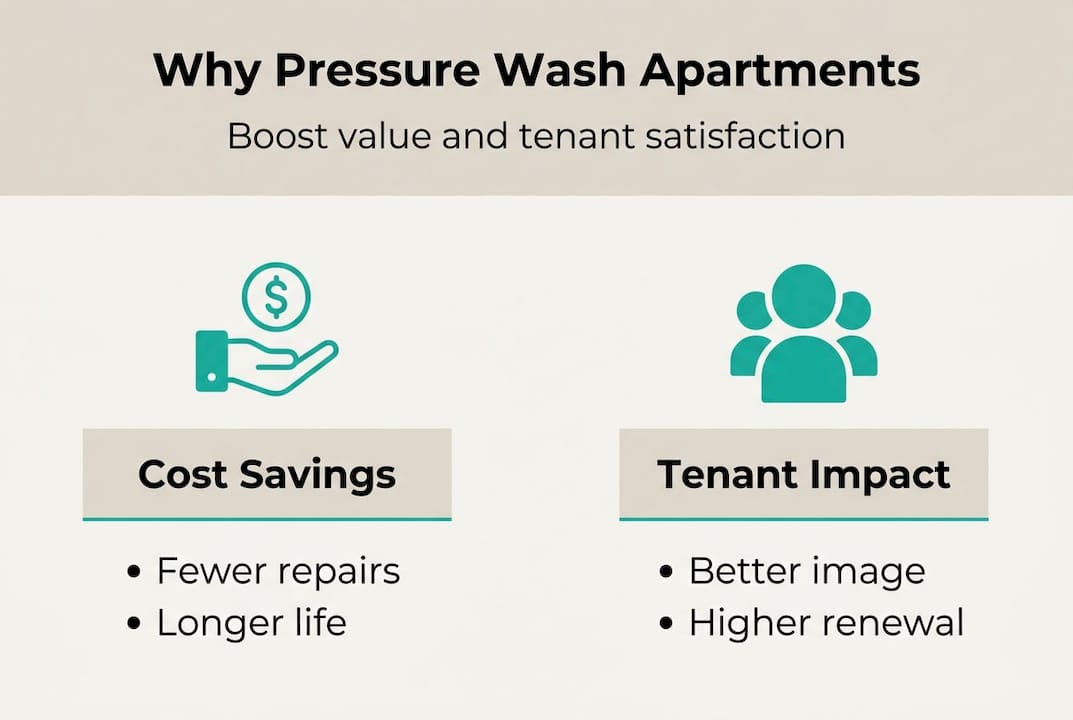
Neglected properties see measurably higher long-term repair and retention costs compared to properties on consistent cleaning schedules. The compounding effect is real: one deferred cleaning season leads to surface damage, which leads to repair costs, which leads to budget overruns that crowd out other improvements.
Tenant turnover is the other hidden cost. Dirty exteriors lower curb appeal and resident satisfaction in ways that show up in reviews and lease renewal decisions. When a prospective tenant pulls into a parking lot with stained asphalt and grimy building faces, they're already forming a negative impression before they see the unit.
Here's a quick comparison of typical costs with and without routine pressure washing:
| Maintenance item | Without routine washing | With routine washing |
|---|---|---|
| Exterior repaint cycle | Every 4 to 5 years | Every 7 to 10 years |
| Concrete repair frequency | High (annual patching) | Low (every 5 to 7 years) |
| Mold remediation events | 1 to 2 per year | Rare |
| Tenant turnover rate | Above market average | At or below market average |
| Annual repair budget impact | 20 to 30% higher | Baseline |
The impact on property value is just as significant. Properties with clean exteriors command higher rents and lower vacancy rates. Clean buildings boost property value in ways that show up directly on your balance sheet.
Key financial risks of deferred exterior cleaning:
- Accelerated surface degradation on siding, concrete, and painted surfaces
- Increased mold and mildew remediation expenses
- Higher tenant turnover and longer vacancy periods
- Reduced ability to justify rental rate increases
- Negative online reviews that hurt future leasing performance
How pressure washing protects building materials and systems
Beyond cost savings, regular pressure washing delivers essential preventive care for your entire property.
Every apartment building faces a constant assault from the environment. Rain carries pollutants that settle into porous surfaces. Foot traffic grinds dirt into walkways. Algae and mildew colonize shaded walls and rooflines. Left alone, these contaminants don't just sit there. They break down surface materials at the molecular level, weakening concrete, compromising paint adhesion, and creating conditions for structural moisture intrusion.
Regular washing protects surfaces against premature degradation by removing these contaminants before they cause irreversible damage. Think of it like changing the oil in a vehicle. You don't wait until the engine seizes. You maintain it on a schedule because prevention is always cheaper than repair.
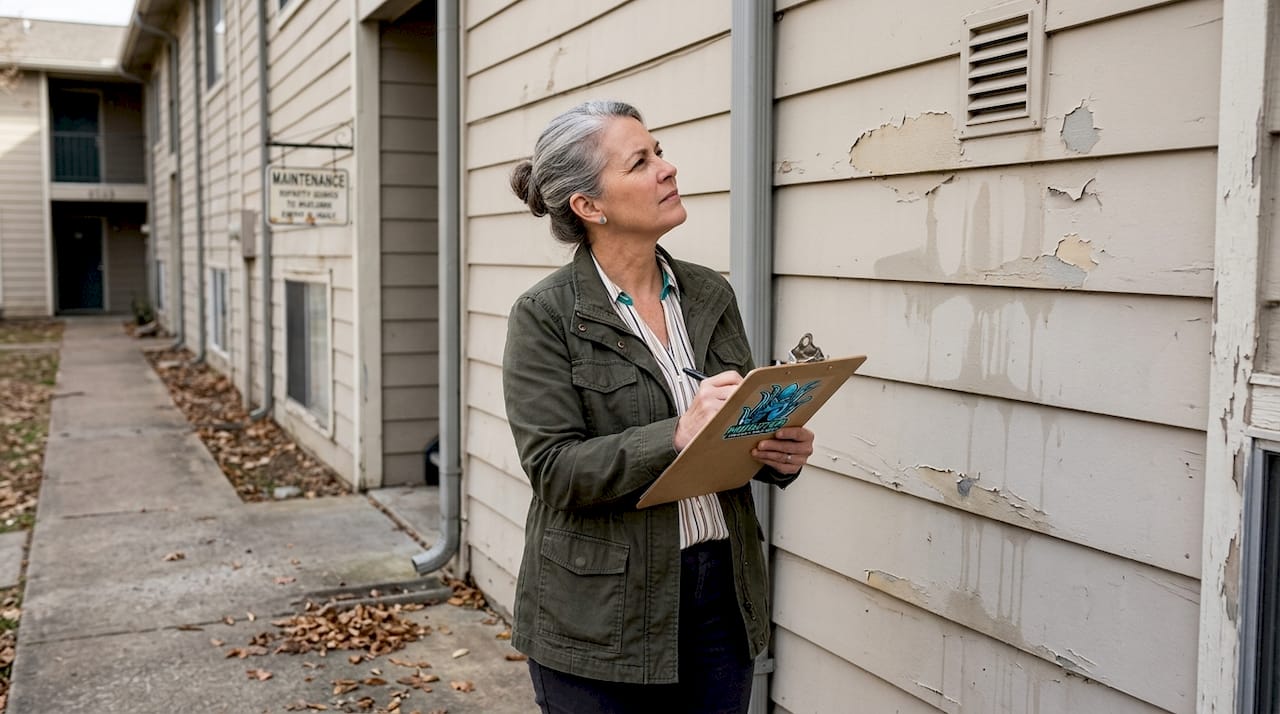
Pressure washing also addresses slip, mold, and structural risks that create liability exposure for property owners. Algae-covered walkways are a slip-and-fall waiting to happen. Mold near HVAC intakes can affect indoor air quality across entire buildings.
Here's how routine washing compares to reactive repairs:
| Approach | Cost profile | Risk level | Disruption to tenants |
|---|---|---|---|
| Routine pressure washing | Low and predictable | Minimal | Low |
| Reactive surface repairs | High and variable | Elevated | Moderate to high |
| Full material replacement | Very high | Resolved but costly | Significant |
Essential areas to include in your apartment pressure washing schedule:
- Building siding and facades (all exterior wall surfaces)
- Walkways, sidewalks, and common area pathways
- Parking lots and garage surfaces
- Balconies and stairwells
- Dumpster enclosures and service areas
- Rooflines, gutters, and downspouts
- Pool decks and recreational areas
For delicate surfaces like painted wood or older siding materials, soft washing for multifamily buildings is a safer approach that uses lower pressure and specialized cleaning solutions to achieve the same results without surface damage.
Pro Tip: Inspect building surfaces after every major storm or seasonal weather event. Early identification of contaminant buildup lets you schedule targeted cleaning before damage sets in, which is far cheaper than waiting for your annual service window.
The impact on tenant retention and property image
Keeping your building clean doesn't just help the structure. It shapes your business success, too.
Tenants make leasing decisions with their eyes first. A prospective renter who drives past a clean, well-maintained building is already predisposed to pay more and stay longer. A current tenant who sees management actively maintaining common areas feels respected. That feeling translates directly into lease renewals.
Apartment residents notice and value visible cleanliness in ways that show up in satisfaction scores and renewal rates. It's not just about pride of ownership on your end. It's about the daily experience of living in a place that feels cared for.
Unclean common areas do the opposite. Stained entryways, grimy pool decks, and dirty parking lots generate complaints. Those complaints become online reviews. Those reviews affect your ability to lease units at competitive rates.
Clean exteriors drive positive online reviews and strengthen community reputation in ways that compound over time. A strong reputation lowers your marketing costs and reduces vacancy periods.
How exterior cleanliness directly affects your leasing performance:
- First impressions during property tours drive application decisions
- Visible maintenance signals management quality to prospective tenants
- Clean common areas reduce noise and complaint volume from current residents
- Positive reviews on major rental platforms increase organic traffic to your listings
- Higher perceived value supports above-market rent pricing
Regular exterior cleaning can boost property value by 4%, making it one of the highest-return maintenance investments available to multifamily owners.
Pro Tip: Schedule a full exterior pressure wash two to four weeks before your peak leasing season. Your property will look its absolute best when foot traffic from prospective tenants is highest. Use this timing to assess exterior needs and address any visible issues before tours begin.
Best practices for pressure washing apartment buildings
Once you recognize the value and impact of routine washing, here's how to do it effectively.
The biggest mistake property managers make is treating pressure washing as a one-time event rather than a scheduled program. Effective exterior cleaning is a system, not a reaction. Here's how to build one that works for your property.
Professional exterior cleaning plans should include regular assessments and tailored service schedules based on your building's specific materials, climate exposure, and usage patterns. A coastal property in a humid environment needs more frequent service than an inland property in a dry climate.
Step-by-step approach to building your pressure washing program:
- Conduct a full exterior audit. Walk every surface of your property and document current conditions with photos. Note areas with visible staining, biological growth, or surface damage.
- Identify surface types. Different materials require different pressure levels and cleaning agents. Concrete, painted wood, vinyl siding, and brick all have specific requirements.
- Set a cleaning frequency by zone. High-traffic areas like entryways and walkways may need quarterly attention. Facades and rooflines may only need annual or semi-annual service.
- Hire a qualified commercial provider. Look for companies with multifamily-specific experience, proper insurance, and documented cleaning protocols.
- Schedule around tenant activity. Plan washes during low-traffic hours or days to minimize disruption to residents.
- Review results and adjust. After each service, compare before and after photos. Use this data to refine your schedule and justify the maintenance budget to ownership.
Your pressure washing checklist should cover:
- All building facades and siding
- Entry doors, lobbies, and covered walkways
- Stairwells and balcony railings
- Parking structures and surface lots
- Trash enclosures and utility areas
- Pool decks, courtyards, and amenity spaces
Refer to a maintenance checklist guide to make sure you're not missing critical touchpoints during your planning process.
Pro Tip: Document every cleaning session with timestamped before and after photos. This creates a maintenance record that supports insurance claims, demonstrates due diligence to ownership, and helps you track the ROI of your cleaning investment over time.
Our perspective: What property managers often overlook about exterior washing
Let's step back and reflect on the bigger picture, and what it means for your role as a property leader.
Most conversations about pressure washing focus on curb appeal. That's the surface-level argument, and while it's valid, it misses the deeper financial reality. What we've seen working directly with multifamily properties is that deferred exterior maintenance quietly erodes NOI (net operating income) in ways that don't show up on a single line item. The damage is distributed across repair budgets, higher turnover costs, and compressed rental rates. By the time ownership notices the pattern, the compounding effect has already done real harm.
The properties that perform best over time are the ones where management treats regular washing for multifamily as a fixed operational cost, not a discretionary expense. Predictable cleaning leads to predictable surfaces, predictable maintenance costs, and ultimately, predictable profits. That's the mindset shift that separates reactive managers from high-performing ones.
Get professional help with your apartment building's exterior cleaning
If you're ready to increase your property value and satisfaction, here's how to get started.
At Monster Property Partners, we specialize in large-scale exterior cleaning programs built specifically for apartment buildings and multi-family communities. Our team handles everything from full facade washes to targeted common area concrete cleaning, with service plans designed around your property's unique needs and schedule.
We make it easy to get started. Request a property assessment and we'll evaluate your building's current condition, recommend a cleaning frequency, and build a tailored program that fits your budget. Explore our full range of multifamily exterior cleaning services and take the first step toward a cleaner, more valuable property today.
Frequently asked questions
How often should apartment buildings be pressure washed?
Apartment buildings should be pressure washed at least once or twice a year, though cleaning schedules vary based on regional climate, building materials, and foot traffic levels.
Which areas of apartment complexes benefit most from pressure washing?
Sidewalks, entryways, siding, common areas, and parking lots benefit most, as these high-traffic surfaces collect grime fastest and have the greatest impact on tenant satisfaction.
Does pressure washing increase property value?
Yes. Regular exterior cleaning can boost property value by up to 4% through enhanced curb appeal and reduced deferred maintenance costs.
Can pressure washing reduce maintenance and repair costs?
Routine pressure washing can cut repair costs by up to 30% by preventing early surface wear and stopping structural damage before it starts.
Is professional pressure washing better than DIY cleaning for apartment properties?
For large apartment complexes, professional services deliver proper technique and results that DIY methods can't match, with the added benefit of liability coverage and commercial-grade equipment.