
TL;DR:
- Proper hazard assessment, equipment selection, staff training, and ongoing monitoring are essential for exterior cleaning safety.
- Documented procedures, PPE, and regular inspections help reduce incident rates and legal liabilities.
- Investing in safety measures improves property value, lowers insurance costs, and prevents costly accidents.
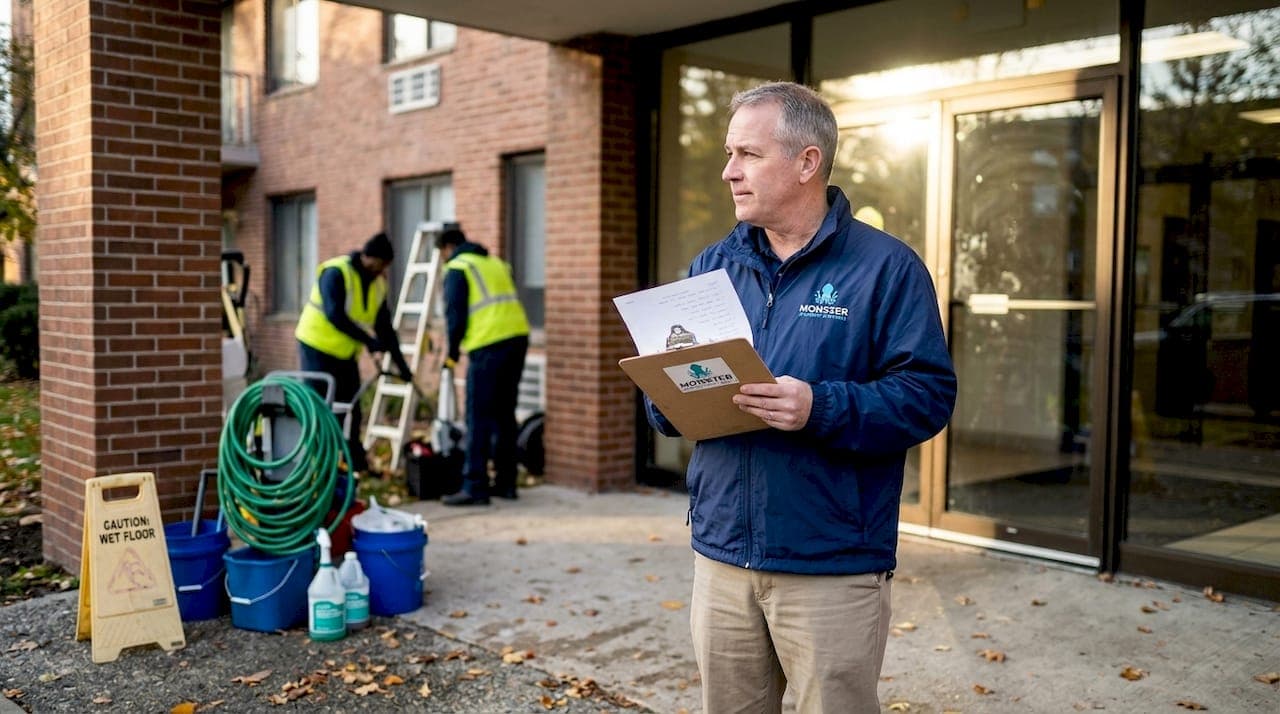
One slip on a wet walkway, one worker overcome by chemical fumes, one pressure washer accident near an exposed electrical panel. Any of these can turn a routine exterior cleaning day into a liability nightmare that costs tens of thousands of dollars and months of legal headaches. For property managers overseeing apartment buildings and multi-family units, exterior cleaning is not optional maintenance. It is a recurring operational risk that demands a structured safety approach. This guide walks you through hazard assessment, equipment selection, staff training, and ongoing monitoring so you can protect your residents, your crew, and your bottom line.
Table of Contents
- Assessing exterior cleaning hazards and compliance
- Selecting the right tools, equipment, and PPE
- Developing and training for safe work procedures
- Monitoring, documenting, and correcting safety issues
- Why safety-focused cleaning leads to fewer headaches and better returns
- Get professional help with your exterior cleaning safety plan
- Frequently asked questions
Key Takeaways
| Point | Details |
|---|---|
| Assess hazards first | Every safe exterior cleaning project starts with identifying site-specific risks and legal requirements. |
| Use proper equipment | Investing in high-quality tools and PPE reduces incidents and improves cleaning efficiency. |
| Formalize procedures | Written policies and regular training keep teams prepared and reduce liability. |
| Monitor and document | Regular inspections and incident logs help catch and prevent recurring safety problems. |
| Professional help pays off | Outsourcing or consulting with experts can prevent costly mistakes and ensure full compliance. |
Assessing exterior cleaning hazards and compliance
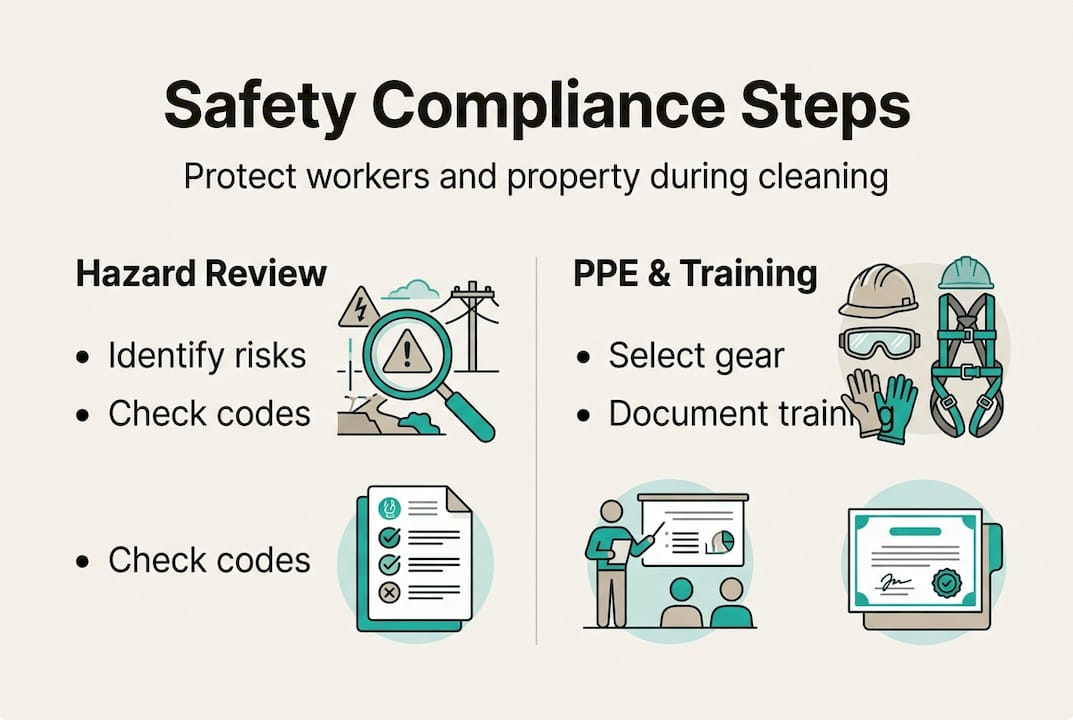
Before a single pressure washer fires up, you need a clear picture of what can go wrong on your property. The most common hazards in multifamily exterior cleaning fall into four categories: slips and falls on wet or elevated surfaces, chemical exposure from cleaning agents, electrical risks near outlets and HVAC units, and equipment failures from poorly maintained gear. Each of these hazards carries real consequences if ignored.
OSHA's general industry standards and local municipal codes set the baseline for what is legally required on your property. Most jurisdictions require written hazard assessments before any elevated or chemical cleaning work begins. Staying compliant with local safety regulations can reduce liability and insurance costs significantly, which is a direct financial incentive beyond just avoiding fines.
Here is a quick look at the most common hazards and their risk levels:
| Hazard | Risk level | Mitigation priority |
|---|---|---|
| Falls from ladders or scaffolding | High | Immediate |
| Chemical skin or eye exposure | High | Immediate |
| Electrical contact near panels | Critical | Pre-work inspection |
| Slips on wet surfaces | Medium | Signage and barriers |
| Equipment malfunction | Medium | Scheduled maintenance |
A solid hazard assessment checklist should cover the following before every cleaning project:
- Identify all electrical panels, outlets, and HVAC units within the cleaning zone
- Map drainage paths to prevent chemical runoff into storm drains
- Confirm surface conditions (cracks, loose material, wet areas)
- Review the cleaning types planned for each surface
- Verify that all workers have reviewed the relevant safety data sheets for chemicals in use
Documentation is not just a legal formality. It is your best defense when something goes wrong. Keep signed copies of hazard assessments, chemical data sheets, and pre-work inspections on file. Following a seasonal cleaning checklist helps ensure these steps happen consistently across every cleaning cycle, not just when someone remembers.
"The properties that handle incidents best are always the ones that documented everything before the incident happened, not after." This is a pattern every experienced exterior cleaning contractor recognizes immediately.
Reviewing exterior maintenance tips from industry peers can also surface hazards you may not have considered for your specific building type or climate.
Selecting the right tools, equipment, and PPE
With hazards mapped out, the next step is picking the safest and most effective tools for the job. The wrong equipment does not just produce poor results. It creates new hazards. A pressure washer set to the wrong PSI on aging brick can send debris flying. A ladder without the right stabilizers on an uneven surface is an injury waiting to happen.
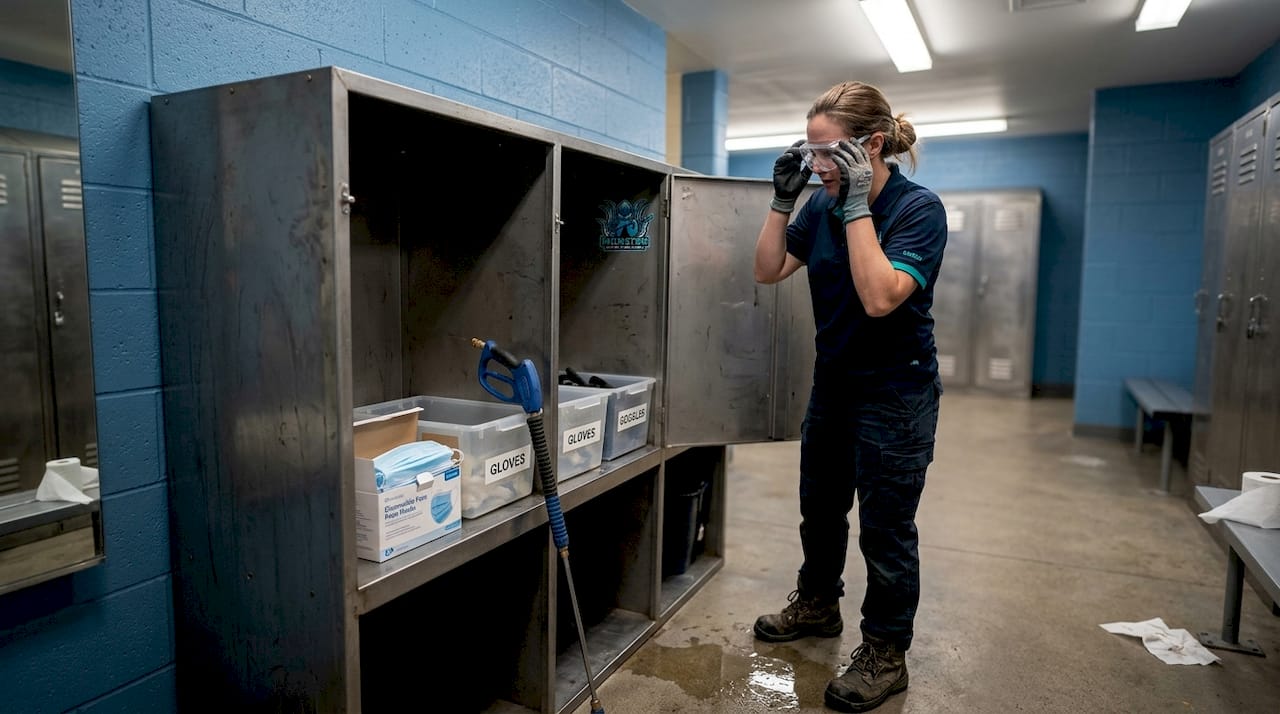
Using the correct tools greatly reduces incident rates during cleaning operations. This is not just about brand preference. It is about matching the tool's specifications to the task and the surface.
Here is a comparison of basic versus advanced cleaning setups for multifamily properties:
| Feature | Basic setup | Advanced setup |
|---|---|---|
| Pressure washer | Consumer grade, under 2000 PSI | Commercial grade, adjustable PSI |
| Ladder safety | Standard A-frame | Stabilized extension with standoffs |
| Chemical handling | Manual mixing | Proportioning system with labels |
| PPE | Gloves and safety glasses | Full face shield, chemical-resistant suit, harness |
| Inspection schedule | As needed | Pre-use checklist every shift |
For PPE specifically, the task determines the gear. Chemical cleaning requires nitrile gloves, splash goggles, and chemical-resistant footwear at minimum. Working above six feet requires a full harness and a spotter on the ground. Any work near electrical components requires insulated gloves and rubber-soled boots.
Key equipment safety checks before every job:
- Inspect hoses and fittings for cracks or wear
- Confirm pressure washer safety valves are functional
- Check ladder feet for damage and confirm weight ratings
- Verify harness buckles and straps show no fraying
- Confirm all PPE fits properly and is not expired
Pro Tip: Look for PPE rated by ANSI (American National Standards Institute) or NIOSH (National Institute for Occupational Safety and Health). These ratings confirm the gear has been independently tested for the specific hazard it claims to protect against. Generic or unrated gear may look identical but offer significantly less protection.
Referencing your project checklist before each job helps ensure no equipment step gets skipped under time pressure. It is also worth noting that eco-friendly cleaning facts show that safer chemical formulas often reduce PPE requirements and lower the risk of resident exposure during cleaning.
Developing and training for safe work procedures
Once you have the right equipment, it is critical to translate safe practices into clear procedures everyone follows. A verbal walkthrough is not enough. Documented procedures give your team a consistent reference point and give you a defensible record if a safety issue is ever disputed.
Here is a five-step process for building your exterior cleaning safety procedures:
- Identify all tasks involved in your cleaning program, from surface prep to chemical disposal
- Write step-by-step instructions for each task, including what to do if something goes wrong
- Assign responsibility so every procedure has a named role accountable for execution
- Review with legal or compliance counsel to confirm alignment with OSHA and local codes
- Distribute and train before any new procedure goes live on the property
Well-trained teams are 60% less likely to experience safety incidents. That statistic alone makes a strong case for investing time in formal training rather than relying on on-the-job learning.
Training should be documented every time it happens. Record the date, topics covered, trainer name, and each participant's signature. When you introduce new equipment or change a chemical product, that triggers an immediate refresher, not a wait until the next scheduled cycle. Drills for emergency scenarios, such as a chemical spill or a fall, should happen at least once per year.
Pro Tip: Build safety reminders into daily routines rather than treating them as separate events. A two-minute equipment check at the start of each shift takes almost no time but creates a habit that catches problems before they become incidents.
Near-miss reporting is one of the most underused tools in property maintenance safety. When something almost goes wrong, that is your warning signal. Create a no-blame reporting culture so workers feel safe flagging close calls. Review each report in your next team meeting and update procedures accordingly. Following your compliance steps consistently makes this loop much easier to maintain.
"Near-misses are free lessons. Ignoring them means you are paying for the same education later, at a much higher price."
Monitoring, documenting, and correcting safety issues
Procedures are only as effective as their execution, so consistent monitoring and correction are the final ingredient in a mature safety program. Writing a great policy and then never checking whether it is followed is one of the most common gaps we see in multifamily exterior cleaning programs.
Here is a practical workflow for ongoing safety monitoring:
- Schedule weekly walkthroughs of all exterior cleaning zones during and after work
- Use a digital log (a simple shared spreadsheet works) to record inspection dates, findings, and corrective actions
- Assign a point person for each property to own the inspection schedule
- Review logs monthly with your maintenance team to spot patterns
- Escalate unresolved issues within 48 hours to avoid repeat violations
Ongoing monitoring and documentation are key to reducing recurring safety violations. The properties that struggle most with safety compliance are almost always the ones that treat monitoring as optional.
When an incident does occur, your response speed matters. A quick correction checklist:
- Secure the area immediately to prevent additional exposure or injury
- Document the scene with photos and written notes before cleanup
- File an incident report within 24 hours
- Identify the root cause, not just the symptom
- Update the relevant procedure or checklist before the next cleaning cycle
Tying your incident logs to your seasonal documentation creates a year-over-year record that shows regulators and insurers you run a serious operation. Over time, this record becomes one of your most valuable risk management assets.
Properties with active safety monitoring programs report significantly fewer repeat incidents than those relying on reactive responses alone. The investment in a simple digital log and a weekly walkthrough pays for itself the first time it catches a hazard before it becomes a claim.
Why safety-focused cleaning leads to fewer headaches and better returns
Here is something most exterior cleaning guides will not say directly: cutting corners on safety never actually saves money. It just delays the cost and multiplies it. We have seen properties skip the hazard assessment step to save an hour of prep time, only to spend weeks managing a worker's compensation claim and a resident complaint about chemical odors.
The real return on a mature safety culture is not just fewer incidents. It is lower insurance premiums, faster vendor approvals, and residents who renew leases because the property feels well managed. Tenants notice when a building is maintained with care. That perception directly affects occupancy rates.
Documentation is the piece most managers undervalue until they need it. When an insurance adjuster or a regulator asks what your safety process looks like, a well-maintained log answers that question immediately and credibly. Properties that outsource exterior cleaning to experienced partners often gain this documentation infrastructure as part of the service, which is one of the less obvious advantages of working with a specialized contractor.
The uncomfortable truth is that safety is not a cost center. It is a margin protector.
Get professional help with your exterior cleaning safety plan
Ready to put these best practices to work on your properties? At Monster Property Partners, we specialize in safe, compliant exterior cleaning for apartment buildings and multi-family units across the country. Our team arrives with documented procedures, properly rated PPE, and the experience to handle everything from routine facade washing to complex chemical treatments.
We offer proactive safety assessments before any project begins, so you know exactly what to expect and what risks are being managed. Whether you need ongoing multifamily cleaning services or targeted work like common area concrete cleaning, we bring the compliance infrastructure your properties need. Reach out today to schedule a consultation and take the guesswork out of exterior cleaning safety.
Frequently asked questions
What PPE is required for exterior cleaning in multifamily properties?
Basic PPE includes gloves, goggles, and nonslip footwear. Working at heights may also require harnesses and helmets, as outlined in the step-by-step equipment guide.
How often should exterior cleaning safety training be refreshed?
Safety training should be conducted at least annually and whenever new equipment or procedures are introduced, with scheduled refreshers and drills recommended between cycles.
What injuries are most common during exterior cleaning?
Falls and chemical exposure are the most commonly reported injuries in multifamily exterior cleaning, both of which are addressed directly in industry standards for this type of work.
How should property managers monitor cleaning safety compliance?
Use regular inspections and digital incident logs to track compliance and correct issues quickly, following the framework in the 2026 property manager guide.
What's the best way to stay updated on exterior cleaning regulations?
Follow OSHA guidelines consistently and review industry standards regularly, since local codes and chemical handling requirements can change from year to year.