
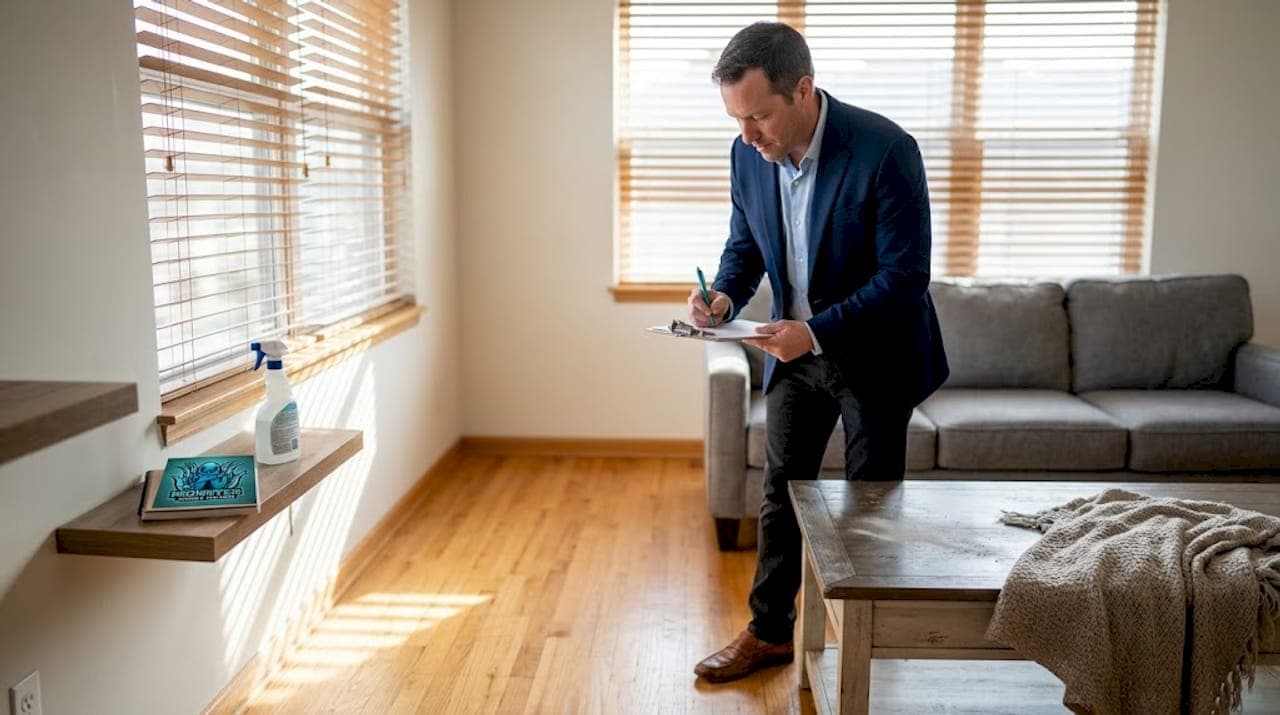
TL;DR:
- A structured cleaning checklist with proper sequence and accountability prevents rework and tenant complaints.
- Attention to detail in kitchens, bathrooms, and common areas is critical for tenant retention and reputation.
- Efficient turnover strategies involve parallel tasks, proper staffing, and thorough final inspections to minimize vacancy time.
A single missed cleaning detail during a unit turnover can cost you far more than a re-clean. Tenant complaints spike, online reviews suffer, and vacancy days add up fast. Managing cleaning across dozens or hundreds of units requires more than good intentions. It demands a structured, repeatable system that every crew member can follow without supervision. This checklist gives property managers and maintenance teams a proven framework to reduce complaints, cut turnover time, and keep every unit move-in ready. Whether you oversee 20 units or 2,000, the right checklist is the difference between a smooth operation and a costly scramble.
Table of Contents
- Core criteria for an effective multi-family unit cleaning checklist
- Room-by-room cleaning tasks you can't afford to skip
- Common areas and amenities: The secret to high tenant retention
- Advanced strategies for turnover: Speed, staffing, and maximizing ROI
- Final inspection and quality assurance: Checking your work
- Our perspective: Why most cleaning checklists fail before the first unit
- Ready to take your exterior cleaning to the next level?
- Frequently asked questions
Key Takeaways
| Point | Details |
|---|---|
| Systematic cleaning matters | A methodical, top-down approach ensures no area is overlooked and reduces tenant complaints. |
| Focus on high-traffic spots | Kitchens, bathrooms, and amenities require extra attention to prevent most cleaning re-dos. |
| Benchmark for efficiency | Use industry production rates and checklists to optimize staffing and minimize vacancy times. |
| Final inspection pays off | A detailed, checklist-driven walkthrough is your best defense against costly oversight. |
Core criteria for an effective multi-family unit cleaning checklist
Not all checklists are created equal. A checklist that simply lists rooms without a logical sequence creates confusion and missed spots. The foundation of an effective cleaning checklist is a systematic approach that your team can execute consistently, even under pressure.
The most reliable method is top-down, dry-before-wet methodology, which is the industry standard for turnover cleaning because it eliminates rework. Dust falls down, so you always clean high surfaces first. Wet mopping comes last, after all dry tasks are done. This one rule alone prevents crews from re-contaminating surfaces they already cleaned.
Here is the sequence that works for a full unit reset:
- Whole-unit dry reset: Dust ceiling fans, vents, and light fixtures before anything else.
- Kitchen first: Grease and grime require the most dwell time for cleaning products.
- Bathrooms second: Disinfectants need time to work, so apply them early and return to wipe.
- Living areas and bedrooms: Dust blinds, baseboards, and surfaces after wet areas are done.
- Detail work: Wipe switches, handles, and cabinet faces.
- Floors last: Vacuum, then mop in a single pass from back to front.
- Final 10-minute quality check: Walk every room with the checklist in hand.
"A checklist without a sequence is just a list. The sequence is what turns a list into a system."
Transparency and accountability matter just as much as the sequence itself. When cleaning staff sign off on each section, you create a paper trail that protects your team and your property. Review your cleaning guide for managers to align your internal standards with proven benchmarks, and use cleaning checklist benchmarks to measure your team's performance against industry norms.
Pro Tip: Assign one team leader per unit to own the final sign-off. When one person is accountable for the whole unit, quality gaps close fast.
Room-by-room cleaning tasks you can't afford to skip
With the framework in place, the real work is in the details. Often-missed spots like window tracks, behind toilets, cabinet handles, and oven edges are the exact areas that drive most re-clean requests, and they are all in kitchens and bathrooms. That is where your crew needs to slow down.
Kitchen essentials:
- Degrease the stovetop, oven interior, and hood filter
- Wipe inside every appliance, including the microwave ceiling
- Clean cabinet faces, handles, and drawer pulls
- Scrub the sink, faucet base, and garbage disposal rim
- Check under the refrigerator for debris and grease buildup
Bathroom essentials:
- Disinfect all fixtures: toilet bowl, tank, base, and behind the toilet
- Scrub tile grout with a stiff brush
- Clean under and behind the sink cabinet
- Wipe the exhaust fan cover and check for mold at the ceiling line
- Polish mirrors and wipe the entire vanity top
Bedrooms and living areas:
- Dust all blinds, slat by slat
- Wipe baseboards and door frames
- Clean all vents and registers
- Check closet shelves and rods for dust and debris
Final sweep:
- Clean all window tracks with a small brush
- Wipe every light switch and outlet cover
- Vacuum and mop all floors
- Do a smell test in every room. If it smells like cleaning products, it is clean. If it smells like anything else, something was missed.
Pro Tip: Walk the unit as if you are the incoming tenant. Open every cabinet, run your finger along the baseboard, and flush the toilet. If something catches your attention, it will catch theirs too.
For a deeper look at how cleaning decisions affect your bottom line, the maintenance manager cleaning guide and this breakdown of how cleaning can cut repairs and boost value are worth reviewing before your next turnover cycle.
Common areas and amenities: The secret to high tenant retention
Unit cleanliness gets tenants in the door. Common area cleanliness keeps them there. Tenants notice the gym, the lobby, the laundry room, and the trash area every single day. A dirty common area signals neglect, and neglect drives lease non-renewals.
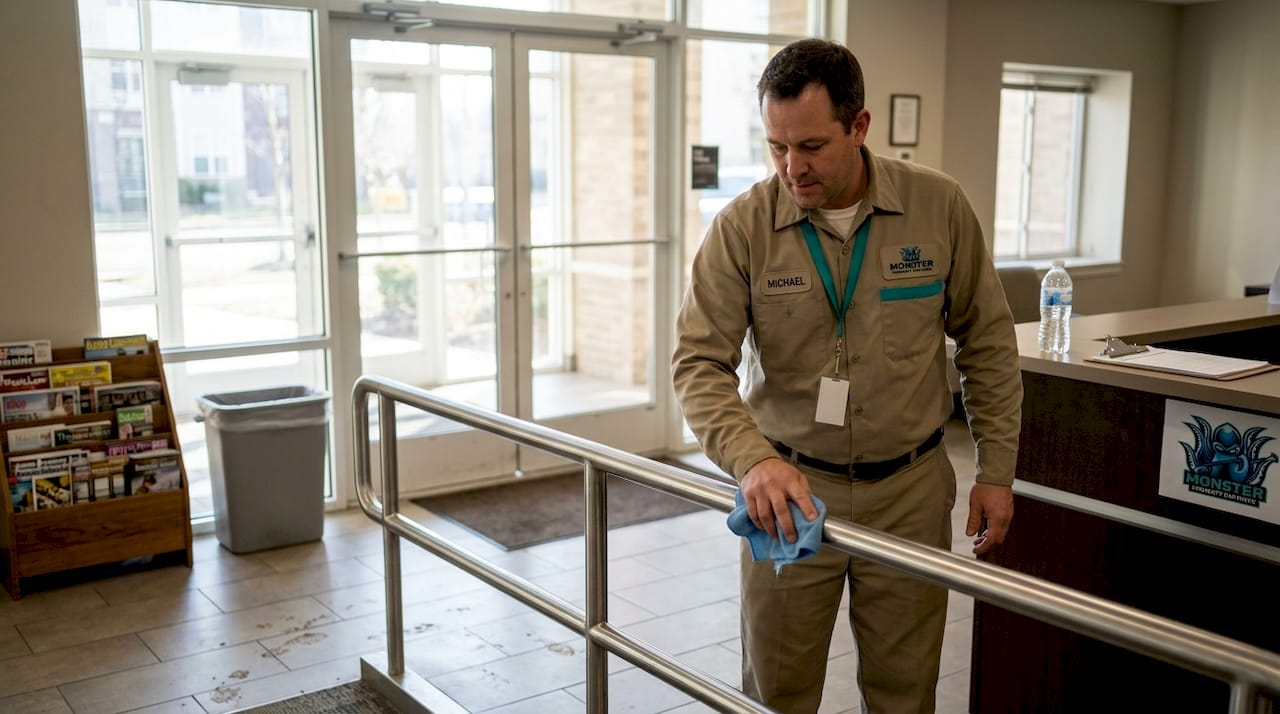
High-traffic amenities require daily attention: gym equipment and floors need daily wipe-downs, garbage rooms need daily emptying and deodorizing, and outdoor areas need daily litter pickup. Monthly power washing of garbage areas and outdoor surfaces keeps odors and staining from becoming permanent problems.
Here is a practical frequency guide for common area cleaning:
| Area | Daily | Weekly | Monthly |
|---|---|---|---|
| Lobby and entryways | Sweep, spot mop | Deep mop, wipe surfaces | Polish floors, clean windows |
| Gym | Wipe equipment, sweep | Deep clean floors | Disinfect all surfaces |
| Laundry room | Wipe machines, sweep | Mop, clean lint traps | Deep clean machines |
| Garbage room | Empty, deodorize | Wipe walls and doors | Power wash |
| Outdoor areas | Litter pickup | Blow debris | Power wash walkways |
| Lounges | Wipe surfaces, vacuum | Deep vacuum, mop | Shampoo rugs, clean vents |
For staffing efficiency, ISSA 612 standards set production rates that help you allocate labor correctly: lobbies and corridors clean at roughly 5,500 sq ft per hour, while restrooms under heavy soil conditions run closer to 1,000 sq ft per hour. These numbers matter when you are scheduling crews across a large property.
"Common areas are your brand. Every tenant and every prospect sees them. A dirty lobby communicates everything about how you manage the property."
For more on how shared space cleanliness drives retention, see how to boost property value and retention and how cleaning directly helps increase tenant retention.
Advanced strategies for turnover: Speed, staffing, and maximizing ROI
Speed matters in turnovers. Every vacant day costs you money. Turnover benchmarks show that a standard unit takes 2 to 4 hours to clean, cleaning costs range from $200 to $800, and total turnover costs can hit $3,000 to $5,000 per unit. The target is to keep vacancy under 21 days.
Here is how those numbers break down by unit type:
| Unit type | Cleaning time | Cleaning cost | Total turnover cost |
|---|---|---|---|
| Studio | 1.5 to 2 hrs | $150 to $250 | $1,500 to $2,500 |
| 1-bedroom | 2 to 3 hrs | $200 to $400 | $2,000 to $3,500 |
| 2-bedroom | 3 to 4 hrs | $300 to $600 | $3,000 to $4,500 |
| 3-bedroom | 4 to 6 hrs | $500 to $800 | $4,000 to $5,500 |
To hit those benchmarks consistently, follow these strategies:
- Stagger your crews: Start cleaning the day before move-out inspection so repairs and cleaning can run in parallel.
- Use ISSA-guided staffing rates: Top-down workflow can cut turnover time by 20 to 40 percent when combined with proper labor allocation.
- Prioritize deep cleaning over cosmetic repairs: A unit that smells and looks clean rents faster than one with fresh paint but lingering odors.
- Run parallel task tracks: One crew handles kitchens and baths while another handles bedrooms and living areas simultaneously.
- Document everything: Photo documentation before and after protects you from deposit disputes and tracks cleaning quality over time.
Pro Tip: Build a 30-minute buffer into every turnover schedule. Something always takes longer than expected. That buffer is the difference between a smooth handoff and a delayed move-in.
For workflow optimization tools and staffing frameworks, the optimize cleaning workflow guide and cleaning solutions for multi-family buildings are practical starting points.
Final inspection and quality assurance: Checking your work
The final inspection is not optional. It is the last line of defense before a tenant walks in. Kitchens and bathrooms drive most re-clean requests, and a smell test is essential before any unit is signed off as complete.
Here is a repeatable 10-minute final walkthrough sequence:
- Start at the front door: Check the threshold, door frame, and entry light fixture.
- Move to the kitchen: Open every cabinet, check appliance interiors, and smell the space.
- Check bathrooms: Look behind the toilet, under the sink, and at the grout lines.
- Walk each bedroom: Run a finger along the baseboard and check closet shelves.
- Check living areas: Look at vents, blinds, and window tracks.
- Finish with floors: Look for streaks, debris, or missed spots near walls.
- Final smell test: Stand in the center of each room and breathe. Clean rooms smell neutral.
Assign the final inspection to a team leader or the property manager, not the person who cleaned the unit. Fresh eyes catch what familiarity misses. When the same person cleans and inspects, they overlook their own work every time.
Pro Tip: Use a digital checklist app with photo upload for final inspections. It creates a timestamped record for every unit, which is invaluable during deposit disputes.
For a complete framework that ties inspection standards back to your cleaning operations, the cleaning guide for managers covers the full cycle from turnover to move-in.
Our perspective: Why most cleaning checklists fail before the first unit
We have seen a lot of checklists. Most of them fail not because they are incomplete but because they are not enforced. A checklist that lives in a binder or a shared drive that nobody opens is just documentation theater. It gives the appearance of a system without the accountability of one.
The real problem is that property managers treat cleaning as a cost to minimize rather than a lever to pull. When you cut corners on a turnover clean to save $150, you risk a tenant complaint, a re-clean, and a delayed move-in that costs you three to five times more in lost rent. That math never works in your favor.
What actually moves the needle is pairing a solid checklist with a culture of accountability. That means team leaders who own outcomes, not just tasks. It means photo documentation that makes quality visible. It means reviewing re-clean requests as data, not just problems to fix.
The exterior is part of this equation too. A spotless interior in a building with stained walkways and grimy entryways still communicates neglect. Tenants and prospects form impressions before they ever reach the front door. Interior cleaning checklists and exterior maintenance need to operate as one integrated system, not two separate afterthoughts.
The properties that retain tenants longest are not always the newest or the most renovated. They are the ones where every surface, inside and out, signals that someone is paying attention.
Ready to take your exterior cleaning to the next level?
Your interior checklist is only half the picture. First impressions start at the curb, and dirty building exteriors, stained walkways, and grimy entryways undermine everything your interior cleaning team works to achieve.
At Monster Property Partners, we specialize in large-scale commercial pressure washing for apartment buildings and multi-family properties. Our crews are trained to work efficiently across high-unit-count properties, coordinating with your maintenance schedule to minimize disruption. If you are ready to build a complete cleaning system that covers every surface your tenants see, visit Monster Property Partners and let us show you what a professional exterior cleaning program looks like at scale.
Frequently asked questions
What are the most commonly missed cleaning spots during multi-family turnovers?
Window tracks, behind toilets, cabinet handles, and oven edges are the spots most crews skip, and they are the first things tenants notice during move-in.
How long should it take to clean a 2-bedroom apartment?
A standard 2-bedroom unit should take between 3 and 4 hours for a thorough turnover clean, including all appliances, fixtures, and floors.
What production rates should we expect for cleaning common areas like lobbies or restrooms?
ISSA 612 standards set lobbies and corridors at roughly 5,500 sq ft per hour and restrooms at around 1,000 sq ft per hour under heavy soil conditions.
What is the most effective cleaning sequence for optimal coverage?
Always work top-down and dry-before-wet: dust high surfaces first, wipe down mid-level areas, and finish with floors to avoid re-contaminating clean surfaces.
How can cleaning speed and efficiency be improved during turnovers?
Adopting ISSA-guided staffing rates alongside a top-down workflow can reduce turnover time by 20 to 40 percent, cutting vacancy days and labor costs simultaneously.