
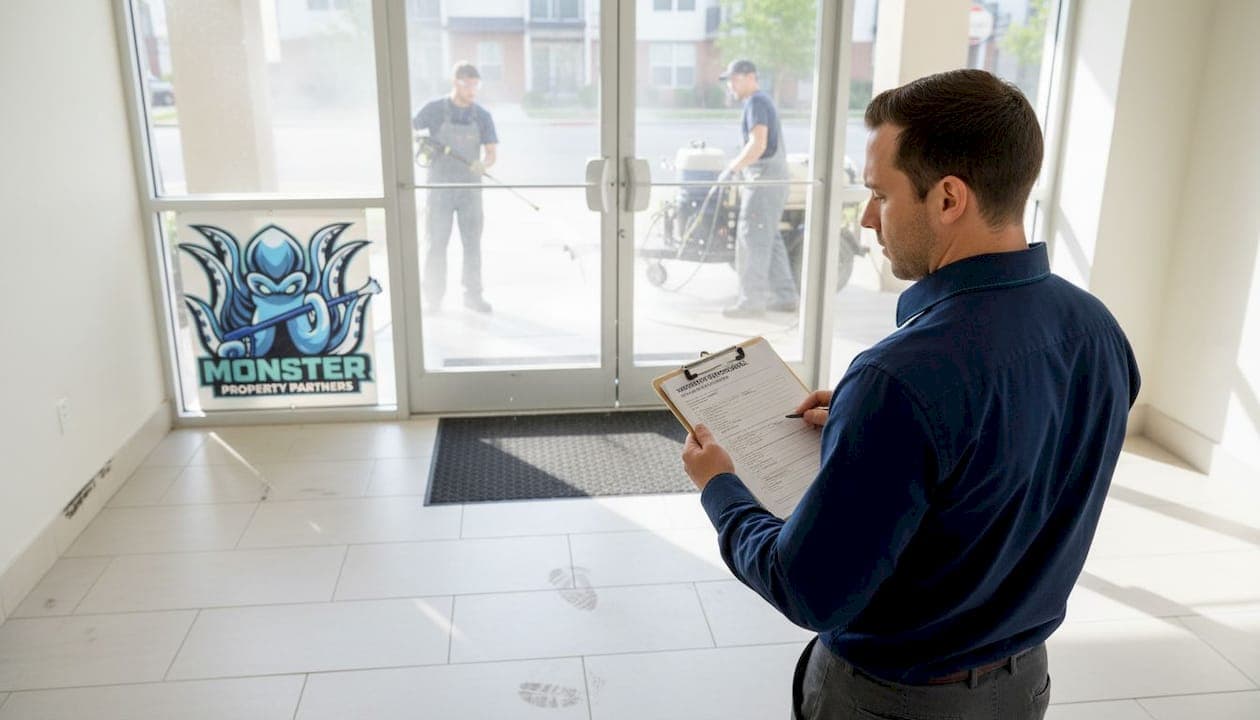
You receive a proposal for pressure washing your 150-unit apartment complex, and the vendor mentions 3000 PSI, 4 GPM, and soft washing. You nod along, but internally you wonder if those numbers mean you're getting a good deal or risking damage to your property. Many property managers face this exact confusion, which can lead to costly mistakes, damaged surfaces, and tenant complaints. Understanding the technical language of pressure washing transforms you from a passive approver into an informed decision maker who protects property investments and ensures quality service delivery.
Table of Contents
- Key takeaways
- Understanding fundamental pressure washing terms
- Nuances in pressure washing: soft wash vs high PSI and nozzle considerations
- Application of pressure washing terminology in multi-family property management
- Enhance your multi-family property maintenance with expert cleaning services
- FAQ
Key Takeaways
| Point | Details |
|---|---|
| PSI and GPM basics | PSI measures pressure while GPM measures flow, and Cleaning Units combines both into one metric for comparing cleaning power. |
| Surface safety cautions | Higher PSI delivers stronger cleaning but can damage delicate surfaces like painted wood and asphalt shingles if misapplied. |
| Nozzle selection matters | Choosing the wrong nozzle can concentrate pressure and damage surfaces even with appropriate equipment specifications. |
| Soft washing benefits | Soft washing uses low PSI and chemical dwell time to remove contaminants without harming sensitive surfaces or warranties. |
| Impact on roofs | High PSI on asphalt shingle roofs can strip protective granules and shorten roof life, making soft washing the safer option. |
Understanding fundamental pressure washing terms
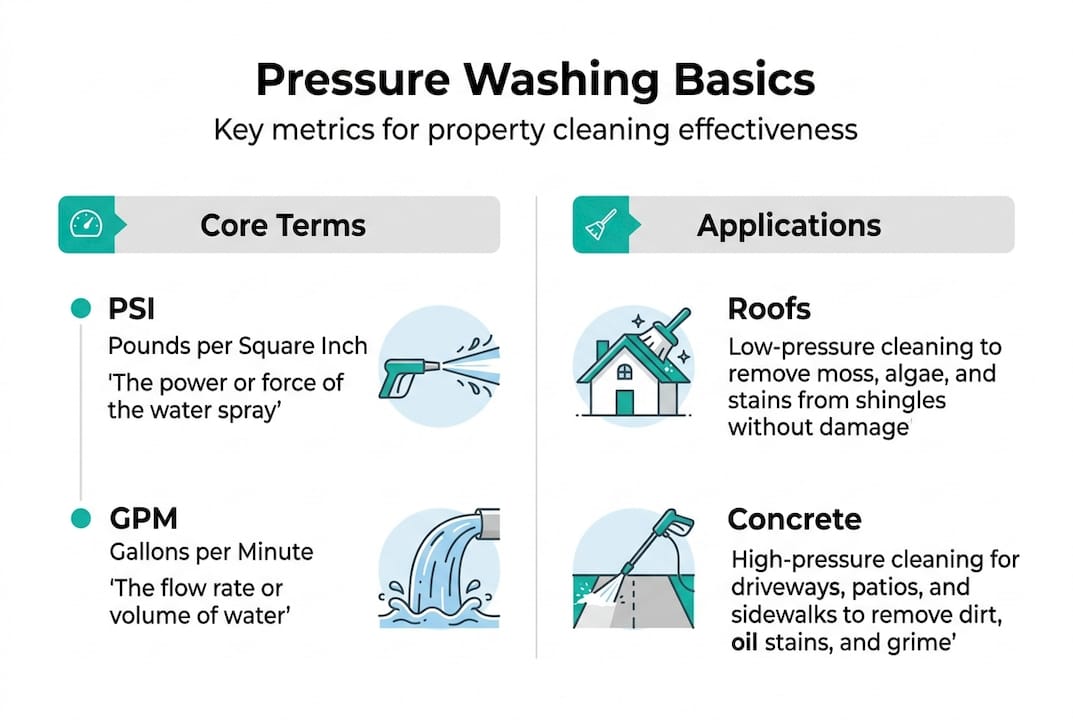
When evaluating exterior cleaning projects multifamily buildings require, three core metrics define cleaning power and safety. PSI (Pounds per Square Inch) measures the pressure force of water on a surface. Typical residential house washing operates between 1,300 and 3,000 PSI, while commercial applications may push higher depending on surface type and contamination level.
Higher PSI delivers more aggressive cleaning that removes stubborn stains, mold, and years of accumulated grime. However, excessive pressure damages delicate surfaces like painted wood siding, asphalt shingles, and even concrete if applied incorrectly. You must match PSI levels to surface durability to avoid repair costs that exceed cleaning savings.
GPM (Gallons per Minute) measures water flow rate through the system. Residential equipment typically delivers 2 to 4 GPM, while commercial units push 4 to 6 GPM or higher. Higher flow rates flush debris away faster and cover larger surface areas in less time, directly impacting your project timeline and labor costs.
The relationship between PSI and GPM determines actual cleaning effectiveness. A 3000 PSI machine with only 2 GPM may struggle with heavy buildup, while a 2000 PSI unit with 5 GPM might complete the job faster through superior rinsing action. This interaction explains why Cleaning Units (CU) = PSI x GPM provides a more accurate metric for overall cleaning power comparison.
Consider this practical example: Equipment A delivers 3000 PSI at 4 GPM, creating 12,000 Cleaning Units. Equipment B offers 2500 PSI at 5 GPM, generating 12,500 CU. Despite lower pressure, Equipment B provides slightly more total cleaning power through superior flow. This calculation helps you evaluate vendor proposals objectively rather than assuming higher PSI always means better results.
Pro Tip: When reviewing maintenance manager cleaning guide multi family exteriors, ask vendors to specify both PSI and GPM, then calculate CU yourself to compare proposals accurately.
Nozzle selection further complicates the equation. Different pressure washer nozzle chart options alter spray patterns and effective pressure at the surface. A zero-degree nozzle concentrates all pressure into a pinpoint stream, while a 40-degree nozzle spreads pressure across a wider area for gentler cleaning. Property managers should understand that vendors using inappropriate nozzles can damage surfaces even with appropriate equipment specifications.
Nuances in pressure washing: soft wash vs high PSI and nozzle considerations
Beyond basic PSI and GPM specifications, application method determines success or failure for multi-family property cleaning. Pressure washing (1500-4000 PSI, mechanical force) vs Soft washing (<500 PSI, chemical dwell) represents a critical distinction for protecting sensitive surfaces. Soft washing relies on specialized cleaning solutions that break down organic growth, allowing low pressure rinses to remove contaminants without surface trauma.
Asphalt shingle roofs illustrate why this matters. High PSI washing strips protective granules from shingles, accelerating deterioration and voiding manufacturer warranties. A single aggressive pressure washing session can reduce a 20-year roof's lifespan by 5 to 7 years, creating a massive unplanned capital expense. Soft washing achieves the same aesthetic result while preserving roof integrity and warranty coverage.
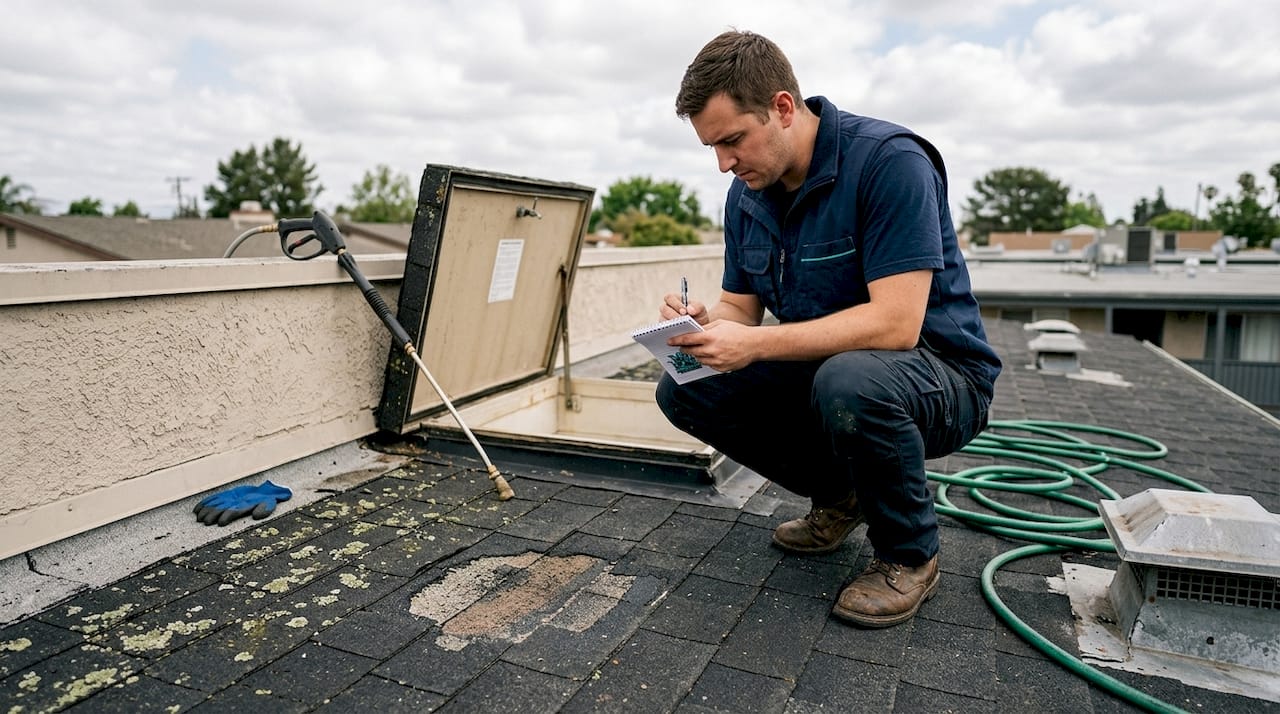
Vinyl siding presents similar risks. Excessive pressure forces water behind siding panels, saturating insulation and creating mold growth inside wall cavities. You address a cosmetic exterior concern only to create a far more expensive interior remediation project. Soft washing eliminates this risk while effectively removing mildew, algae, and atmospheric污染.
When evaluating routine pressure washing multifamily properties proposals, verify that vendors specify appropriate methods for each surface type. Red flags include proposals offering a single PSI specification for all surfaces or vendors who cannot articulate the difference between pressure washing and soft washing applications.
"The biggest mistake property managers make is assuming all exterior cleaning uses the same approach. Concrete walkways need high PSI mechanical cleaning, while building facades require gentle soft washing. Mixing these methods destroys property value instead of enhancing it."
Nozzle orifice must match PSI/GPM specifications to avoid pump damage or inadequate pressure delivery. An oversized orifice allows too much flow, reducing pressure below effective cleaning levels. An undersized orifice restricts flow, forcing the pump to work harder and accelerating wear. Professional contractors use calculators to select proper orifice sizes, especially for surface cleaners covering large concrete areas.
Surface cleaners add another variable. These rotating bar attachments distribute pressure evenly across flat surfaces like pool decks and parking areas, preventing the striping patterns that wand-only cleaning creates. However, surface cleaners require specific nozzle configurations to maintain proper pressure while covering 20 to 30 inch cleaning paths. Improper setup leaves you with uneven results and extended project timelines.
Pro Tip: Request a step by step exterior cleaning guide from potential vendors that specifies PSI, GPM, chemical solutions, and nozzle selections for each surface type at your property. Vendors who cannot provide this detail lack the expertise to protect your assets.
Chemical selection deserves equal attention to equipment specifications. Sodium hypochlorite (bleach-based) solutions effectively kill organic growth but require careful dilution and application to avoid landscape damage. Sodium hydroxide works well on grease and oil but can etch certain surfaces. Property managers should verify that vendors carry proper insurance and use environmentally responsible products that comply with local regulations.
Application of pressure washing terminology in multi-family property management
Translating technical knowledge into practical property management requires a systematic approach. Follow this five-step process when planning exterior cleaning projects:
-
Inventory all surfaces requiring cleaning by material type, condition, and contamination level. Separate concrete areas, building facades, roofs, and specialty surfaces like decorative stone or brick.
-
Research appropriate PSI and GPM specifications for each surface category using manufacturer guidelines and industry standards. Document these requirements in your project specifications.
-
Request detailed proposals specifying equipment specs, cleaning methods, chemical solutions, and surface-specific approaches. Reject vague proposals that lack technical detail.
-
Calculate Cleaning Units for proposed equipment and compare against surface requirements. Verify that vendors plan appropriate methods for sensitive areas.
-
Establish quality checkpoints throughout the project where you verify proper techniques before contractors proceed to additional areas. This prevents widespread damage from improper methods.
Understanding specifications helps you evaluate true project costs. A vendor proposing 2000 PSI soft washing for your building facades at a premium price delivers better value than a budget contractor offering 3500 PSI pressure washing that risks siding damage. The terminology knowledge lets you distinguish between appropriate premium services and overpriced mediocre work.
| Surface type | Recommended PSI | Recommended GPM | Wash type | Frequency for multi-family |
|---|---|---|---|---|
| Concrete walkways | 3000-4000 | 4-6 | Pressure wash | Quarterly |
| Vinyl siding | 1300-1600 | 2-3 | Soft wash | Annually |
| Brick facades | 1500-2500 | 3-4 | Pressure wash | Annually |
| Asphalt shingle roofs | 100-500 | 2-3 | Soft wash | Every 2-3 years |
| Wood decks | 500-1200 | 2-3 | Pressure wash | Annually |
| Pool decks | 3000-3500 | 4-5 | Pressure wash | Monthly during season |
Clean concrete (high PSI), siding/roofs (low PSI/soft wash) maintenance prevents damage accumulation while boosting curb appeal. Regular cleaning extends surface lifespans by removing contaminants that cause deterioration. Mold and mildew on siding create moisture retention that accelerates rot. Oil stains on concrete parking areas penetrate deeper over time, eventually requiring expensive resurfacing.
Budgeting becomes more accurate when you understand how specifications affect pricing. Higher GPM equipment costs more to operate due to increased water consumption and longer setup times for water supply. Soft washing requires specialized chemical applicators and trained technicians who command higher labor rates. However, these premium costs often deliver better ROI through damage prevention and extended surface lifespans.
Tenant satisfaction improves dramatically with proper exterior maintenance. Clean buildings signal professional management and attention to detail. Residents renew leases more readily when common areas maintain attractive, well-maintained appearances. Prospective tenants form first impressions during property tours, making exterior cleanliness a direct factor in occupancy rates and achievable rents.
Pro Tip: Integrate pressure washing into your preventive maintenance calendar by schedule regular pressure washing based on the frequency table above. Scheduled maintenance costs less than emergency cleaning before inspections or when tenant complaints force action. Use a seasonal exterior cleaning checklist property managers to ensure comprehensive coverage.
Property value preservation represents the ultimate benefit. Well-maintained exteriors delay major capital improvements like siding replacement or concrete resurfacing. Insurance companies may offer premium reductions for properties demonstrating proactive maintenance programs. Lenders view maintenance records favorably during refinancing evaluations. These financial benefits compound over time, justifying the operational expense of regular exterior cleaning property maintenance.
Enhance your multi-family property maintenance with expert cleaning services
Mastering pressure washing terminology empowers you to make informed decisions, but executing complex cleaning projects across multiple buildings requires specialized expertise and commercial-grade equipment. Monster Property Partners delivers comprehensive multifamily exterior cleaning services designed specifically for property managers overseeing apartment complexes and multi-family communities.
Our team understands the critical differences between surface types and applies appropriate PSI, GPM, and chemical solutions to protect your property investments. We provide detailed project specifications showing exactly how we'll clean each surface, giving you the transparency to verify proper methods before work begins. From common area concrete cleaning that removes years of traffic stains to apartment building soft washing that preserves delicate facades, we match methods to materials.
Contact us to develop a customized maintenance plan that keeps your properties looking exceptional while extending surface lifespans and protecting your capital investment.
FAQ
What PSI is safe for pressure washing apartment building roofs?
Soft washing (<500 PSI) is required for asphalt shingle roofs to avoid granule loss and premature deterioration. Higher pressure strips the protective granule layer, voiding manufacturer warranties and reducing roof lifespan by 5 to 7 years. Professional roof cleaning relies on chemical solutions to break down organic growth, followed by gentle rinsing that preserves shingle integrity while achieving thorough cleaning results.
How do Cleaning Units (CU) help in choosing pressure washers?
Cleaning Units (CU) = PSI x GPM provides a single metric comparing overall cleaning effectiveness across different equipment specifications. A machine with 3000 PSI and 4 GPM (12,000 CU) delivers similar cleaning power to one with 2400 PSI and 5 GPM (12,000 CU), despite different pressure ratings. This calculation helps property managers objectively evaluate vendor proposals and equipment capabilities rather than focusing solely on PSI numbers that tell an incomplete story.
Why is nozzle orifice size important in pressure washing?
Nozzle orifice must match PSI/GPM specifications to prevent pump damage and maintain proper cleaning pressure. An oversized orifice allows excessive flow that drops pressure below effective levels, while an undersized orifice restricts flow and forces the pump to work harder, accelerating wear and risking equipment failure. Professional contractors use orifice calculators to select proper sizes for each application, especially when using surface cleaners on large concrete areas.
What is the difference between pressure washing and soft washing?
Pressure washing uses high PSI (1500-4000) mechanical force to remove contaminants through water pressure alone, ideal for durable surfaces like concrete and brick. Soft washing applies low PSI (<500) with specialized chemical solutions that break down organic growth, perfect for sensitive surfaces like roofs, siding, and painted wood. Property managers must specify appropriate methods for each surface type to avoid damage, as using high pressure on delicate materials causes costly repairs that exceed cleaning savings.
How does GPM affect pressure washing project timelines?
Higher GPM equipment flushes debris faster and covers larger surface areas in less time, directly reducing labor hours and project duration. A 6 GPM commercial unit completes jobs 50% faster than a 4 GPM residential machine when cleaning extensive concrete areas or multiple building facades. However, higher flow rates increase water consumption and require adequate supply capacity. Property managers should balance efficiency gains against water costs and site logistics when evaluating proposals for large-scale exterior cleaning projects.