
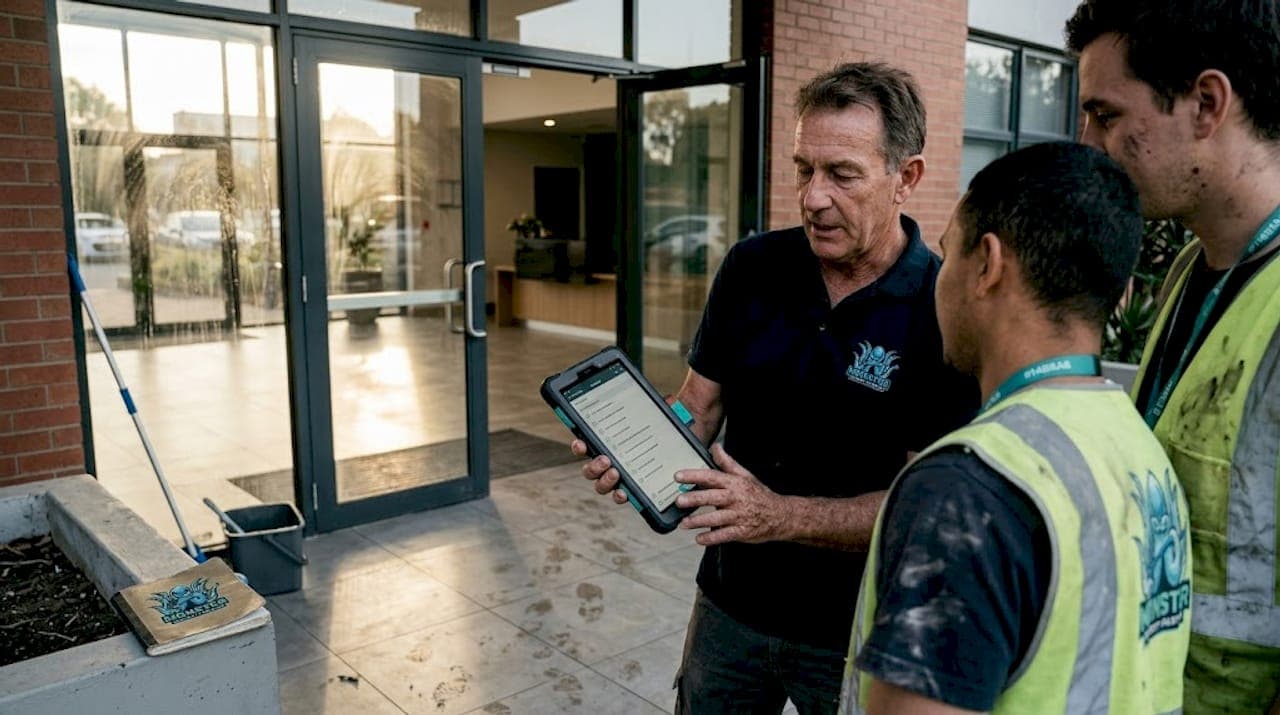
TL;DR:
- Regular, documented quality control reduces repair costs and maintains property value.
- A structured process includes inspections, proper tools, staff responsibilities, and thorough documentation.
- Consistent verification and accountability ensure lasting results and tenant satisfaction.
Neglected exteriors cost property owners far more than a cleaning bill. Dirt buildup, algae growth, and surface deterioration compound quietly until you're facing a five-figure repair instead of a routine wash. Many apartment building owners and real estate investors run cleaning programs with no repeatable process, no documentation, and no real accountability. The result is inconsistent outcomes, frustrated tenants, and accelerating asset decline. BOMA's exterior maintenance guidance outlines preventive plans covering roofs, windows, parking, and housekeeping inspections as the foundation of any serious property management program. This guide gives you a structured, evidence-based quality control framework to protect your investment and keep your properties performing.
Table of Contents
- Why quality control matters in exterior cleaning
- Tools, materials, and prep: Setting the stage for quality
- Step-by-step exterior cleaning quality control process
- Common quality pitfalls and how to avoid them
- Verifying results: Inspection, documentation, and follow up
- A fresh perspective on quality control in exterior cleaning
- Get professional results with Monster Property Partners
- Frequently asked questions
Key Takeaways
| Point | Details |
|---|---|
| Preventive care saves money | Quality control in exterior cleaning significantly cuts repair costs over time. |
| Preparation is essential | Having the right tools and checklists upfront ensures a smooth quality control process. |
| Documentation drives accountability | Systematic records and inspections are the real key to long-term improvements. |
| Verify and improve | Routine inspections and follow-ups help maintain high standards and property value. |
Why quality control matters in exterior cleaning
Skipping quality control in exterior cleaning isn't a minor oversight. It's a slow leak in your property's value. Without a consistent process, cleaning crews miss spots, use the wrong products, or rush through jobs. Those gaps invite mold, efflorescence (mineral salt deposits on masonry), and surface corrosion that are far more expensive to fix than prevent.
The financial case is straightforward. Regular exterior maintenance reduces overall repair costs by 35%, according to industry research. That's not a marginal improvement. For a portfolio of multi-family units, that number translates into tens of thousands of dollars preserved per year.
"A structured quality control program isn't overhead. It's the most reliable return on investment a property owner can make in exterior upkeep."
Beyond cost savings, quality control directly affects tenant satisfaction. Tenants notice when a building looks clean and well-maintained. They also notice when it doesn't. A building with stained facades, grimy walkways, or algae-covered parking structures signals neglect. That perception affects lease renewals, referral rates, and your ability to command competitive rents.
Here's what consistent quality control delivers:
- Fewer surprise repairs from undetected surface damage
- Longer material lifespan for concrete, siding, and masonry
- Higher tenant retention driven by a well-maintained environment
- Stronger curb appeal that supports property valuation
- Compliance alignment with BOMA's standards for preventive exterior upkeep
For property owners managing multiple units, the only way to achieve these outcomes consistently is through a repeatable, documented quality control process. Gut-feel cleaning schedules and informal crew check-ins aren't enough. You need a system. Investing in efficient exterior upkeep pays dividends across every property in your portfolio.
With the stakes clearly defined, the next step is understanding what you need to get quality control right.
Tools, materials, and prep: Setting the stage for quality
No quality control program works without the right equipment, the right people, and a clear pre-job preparation routine. Rushing into a cleaning cycle without these in place is how missed spots and surface damage happen.
Essential cleaning tools and materials:
- Commercial-grade pressure washers (1,500 to 4,000 PSI depending on surface)
- Soft-wash systems for delicate surfaces like stucco or painted wood
- Rotating surface cleaners for flat concrete and parking decks
- Eco-friendly, pH-balanced cleansers appropriate for each surface type
- Extension wands and telescoping brushes for upper-story access
- Personal protective equipment: gloves, eye protection, non-slip footwear
Personnel and responsibilities:
| Role | Responsibility |
|---|---|
| Site supervisor | Pre-job walkthrough, crew briefing, final sign-off |
| Lead technician | Equipment setup, chemical mixing, primary cleaning |
| Quality inspector | Spot checks during and after cleaning |
| Documentation lead | Photo capture, checklist completion, report filing |
BOMA's guidance stresses the importance of preparation and routine housekeeping inspections as a prerequisite for consistent quality. That means your prep checklist should cover area access, surface type identification, weather conditions, and safety gear verification before any equipment is turned on.
A solid maintenance manager guide will walk your team through how to assign oversight roles clearly so nothing falls through the cracks. Pair that with a detailed maintenance checklist to standardize your pre-job routine across all properties.
Pro Tip: Always use manufacturer-approved cleaning solutions for each surface type. Using the wrong product can void material warranties and cause irreversible damage to siding, concrete sealers, or window frames.
Equipped with the right tools and planning, you're ready for the core process.
Step-by-step exterior cleaning quality control process
A strong process is what separates a one-time clean from a repeatable, high-quality program. BOMA's preventive maintenance routines recommend systematizing both cleaning and inspections to eliminate variability. Here's how to do it:
- Pre-job inspection Review all exterior surfaces for existing damage, staining, or areas requiring special treatment. Flag problem zones before cleaning begins.
- Surface preparation Clear debris, protect landscaping, cover electrical fixtures, and confirm all access points are open.
- Cleaning execution Work top to bottom, section by section. Apply appropriate cleaning solutions with correct dwell times before rinsing.
- Mid-job spot checks The quality inspector reviews each completed section before the crew moves on. Catch issues in real time, not after the job is done.
- Post-cleaning rinse and review Thoroughly rinse all surfaces. Inspect for residue, streaking, or missed areas.
- Final walkthrough and sign-off The site supervisor conducts a full property review and signs off before the crew leaves.
- Documentation and reporting Submit completed checklists, time-stamped photos, and any flagged issues to the property manager.
Standard vs. enhanced quality control:
| Control level | Inspection frequency | Documentation | Accountability |
|---|---|---|---|
| Standard | Post-job only | Basic checklist | Crew self-report |
| Enhanced | Mid-job and post-job | Photos, checklist, report | Independent inspector sign-off |
The enhanced model is what serious property owners use. It catches errors before they become complaints or repair bills. Review the exterior cleaning compliance steps and align your process with a seasonal cleaning checklist to stay consistent across weather changes.
Pro Tip: Use digital checklists and time-stamped photos for every cleaning cycle. These records protect you in tenant disputes, insurance claims, and contractor accountability conversations.
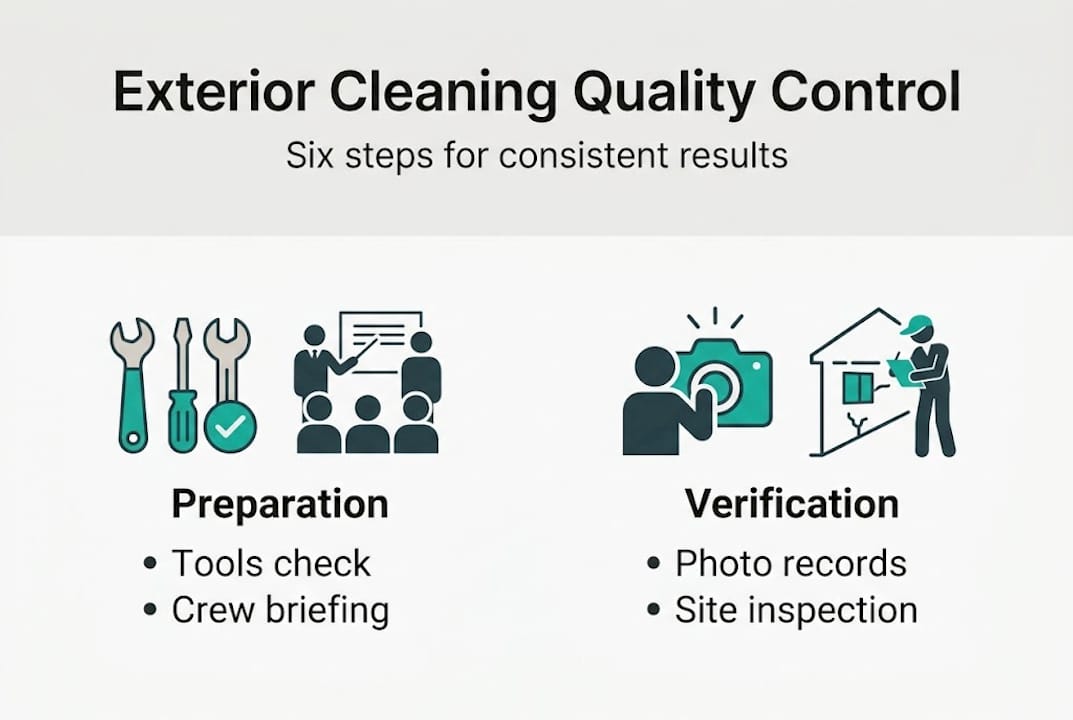
While a strong process prevents most errors, it's essential to prepare for the most common quality control pitfalls.
Common quality pitfalls and how to avoid them
Even well-planned cleaning programs run into problems. Knowing what to watch for, and how to respond, is what keeps your quality control program from breaking down.
Top quality control pitfalls:
- Missed spots High-traffic areas like entryways and stairwells get cleaned while upper facades or drainage channels are skipped
- Inconsistent methods Different crew members using different pressures or chemicals on the same surface type
- Weather delays with no rescheduling plan Jobs interrupted by rain or wind with no formal follow-up process
- Documentation gaps Cleaning completed but checklists left blank, leaving no record of what was done
- No accountability loop Errors identified but never formally reported or corrected
"Routine housekeeping inspections are the cornerstone of BOMA's exterior quality guidance. Without them, problems compound silently."
When you spot a missed area mid-job, stop the crew and address it before moving forward. Don't rely on the next scheduled cleaning to catch it. Build a correction protocol into your standard process so the response is automatic, not reactive.
For warning signs, watch for streaking on glass, white mineral deposits on brick, dark staining near downspouts, and slippery walkway surfaces. These are signals that either the cleaning method was wrong or the job wasn't completed properly.
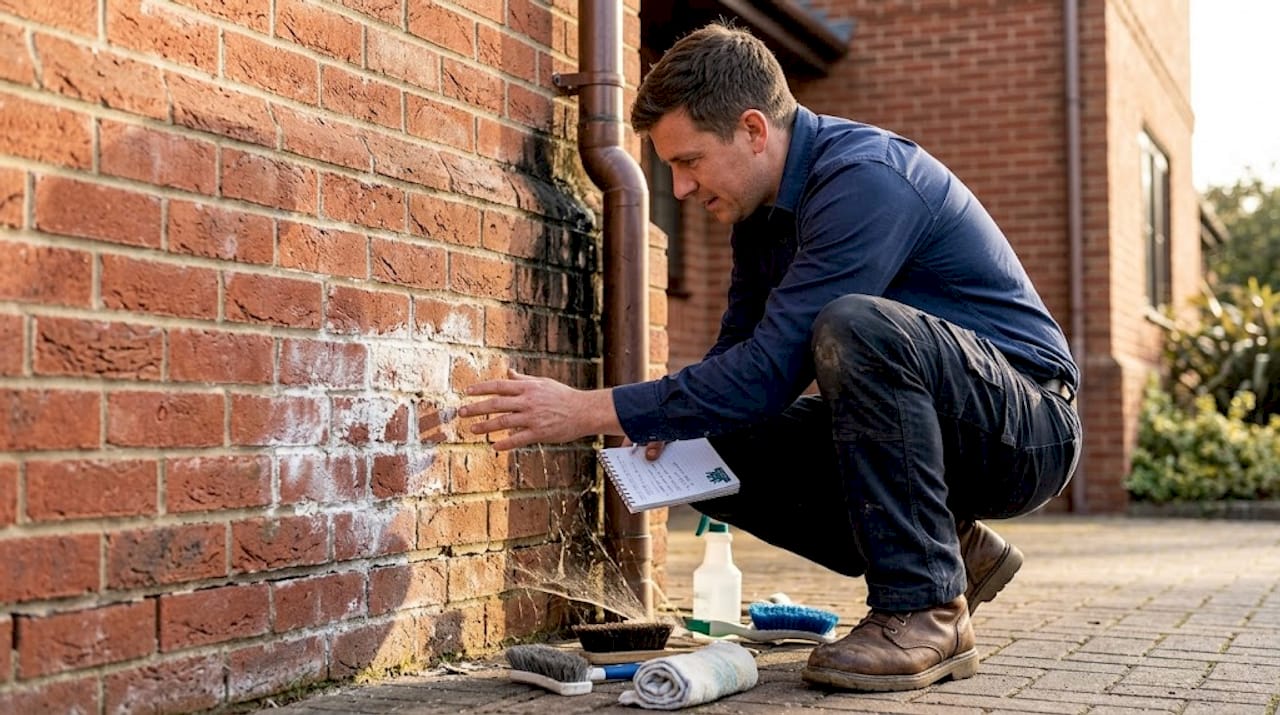
Start by assessing cleaning needs for each property individually. Surface types, tenant density, and local climate all affect what your quality control program needs to catch. Use a seasonal checklist to build accountability into every cycle, not just the ones that feel urgent.
Once you're proactive about avoiding mistakes, it's important to know how quality control translates into visible, lasting results.
Verifying results: Inspection, documentation, and follow up
Completing a cleaning job is not the same as verifying it was done right. Verification is its own step, and skipping it is one of the most common mistakes property owners make.
Post-cleaning inspection process:
- Walk every cleaned surface systematically, section by section
- Check for streaking, residue, or areas with inconsistent cleaning coverage
- Inspect drainage points and gutters for debris left behind
- Verify that all protected areas (landscaping, fixtures) are restored
- Confirm no surface damage occurred during the cleaning process
Post-cleaning inspections and thorough documentation form the backbone of BOMA's recommendations for exterior quality management. Without this step, you have no way to confirm the job met your standards or to hold contractors accountable.
Documentation checklist for every job:
- Completed pre-job and post-job checklists
- Time-stamped before and after photos for each building section
- Notes on any flagged issues or corrective actions taken
- Crew sign-off and inspector sign-off records
- Scheduled date for the next cleaning cycle
For deeper guidance on records management, review the inspection and documentation tips in our commercial exterior cleaning guide. After verification, schedule your next cycle and send a brief update to tenants. That communication builds trust and reinforces the perception of a well-managed property. Consistent curb appeal follow-up is what separates properties that retain tenants from those that don't.
With your program in place and verification dialed in, let's look at where many property owners misjudge the process.
A fresh perspective on quality control in exterior cleaning
Here's what most property owners get wrong: they think quality control is about the cleaning itself. It isn't. The cleaning is the easy part. The hard part is the documentation, the accountability, and the follow-through.
We've seen properties with premium cleaning equipment and experienced crews still produce inconsistent results. Why? Because nobody closed the loop. No inspector signed off. No photos were taken. No one reviewed what was flagged last quarter. Routine without verification is just activity, not quality.
Quick-fix cleaning services are particularly guilty of this. They show up, run the pressure washer, and leave. No checklist. No report. No record that the job was done to any standard at all. For a property owner, that's not cleaning. That's liability.
Real quality control is a management function, not just a field function. It requires someone with authority to review, reject, and require correction. Our team's approach to asset longevity insights is built on exactly this principle: documentation and accountability are what produce lasting results, not just the products you use.
Get professional results with Monster Property Partners
If you've worked through this guide and realized your current exterior cleaning program has gaps in documentation, accountability, or consistency, you're not alone. Most property owners discover this only after a costly repair or a tenant complaint.

At Monster Property Partners, our teams handle every step of the quality control process, from pre-job inspection through final sign-off and documentation. We specialize in large-scale exterior cleaning for apartment buildings and multi-family units, and we build accountability into every job. Explore our exterior cleaning services to see how we protect your asset while delivering consistent, documented results your tenants and investors will notice.
Frequently asked questions
What is the most important part of exterior cleaning quality control?
Consistent inspection and documentation are critical for ensuring high-quality and lasting results. Post-cleaning inspections form the backbone of BOMA's recommendations for exterior quality management.
How often should exterior quality control checks be conducted?
Schedule checks after every cleaning cycle and at least seasonally for best results. BOMA recommends preventive plans and routine housekeeping inspections as the standard for professional property management.
Can quality control reduce exterior repair costs?
Yes, consistent quality control can reduce repair costs by up to 35% according to industry research, making it one of the highest-return investments a property owner can make.
What documentation is needed for exterior quality control?
Keep a standardized checklist and photo records for each cleaning cycle to track performance over time. Documentation and checklists are a core part of BOMA's quality approach for exterior property maintenance.