

TL;DR:
- Effective scheduling improves cleaning efficiency, tenant satisfaction, and property management scalability.
- Layered, proactive schedules tailored to traffic and building needs optimize resource use and reduce costs.
- Automation tools enhance scheduling accuracy, tracking, and communication, boosting tenant retention and operational smoothness.
Tenant satisfaction doesn't happen by accident. Cleanliness ranks as the top factor in whether tenants renew their leases, recommend your property, or quietly move on. Yet most property managers focus heavily on hiring good cleaners while underestimating the system that puts those cleaners in the right place at the right time. Scheduling is that system. It determines whether your team runs like a well-oiled machine or scrambles from one reactive call to the next. This guide breaks down the principles, methods, technology, and measurable outcomes that make scheduling the most underrated lever in multi-family property cleaning operations.
Table of Contents
- Why scheduling is the backbone of property cleaning efficiency
- Layered scheduling: Adapting frequency, traffic, and building needs
- The power of automation in property cleaning schedules
- How effective scheduling drives tenant satisfaction and retention
- Perspective: Why systematic scheduling beats reactive approaches every time
- How Monster Property Partners can streamline your cleaning scheduling
- Frequently asked questions
Key Takeaways
| Point | Details |
|---|---|
| Smart scheduling boosts efficiency | Using data-driven schedules cuts cleaning time, cost, and resource waste in multi-family properties. |
| Layering tasks prevents gaps | Daily, weekly, and monthly frequency-based cleaning keeps all zones consistently maintained. |
| Automation eliminates guesswork | Automated scheduling tools ensure that cleaning teams receive timely, accurate task lists every time. |
| Satisfied tenants drive retention | Properties with well-maintained, visibly clean common areas see higher lease renewal rates. |
Why scheduling is the backbone of property cleaning efficiency
Reactive scheduling is expensive. When your team responds to complaints rather than following a proactive plan, you burn labor hours, delay service, and leave tenants frustrated. The fix isn't more staff. It's a smarter structure.
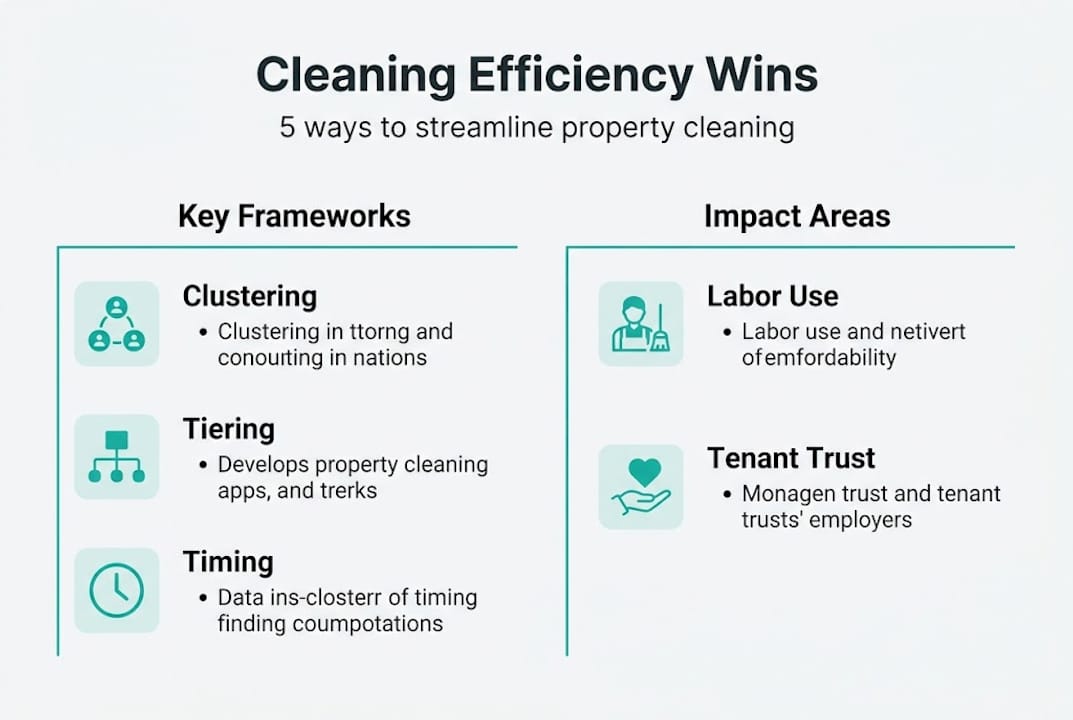
Optimizing cleaning efficiency comes down to three core frameworks: geographic clustering, complexity tiering, and time right-sizing. Geographic clustering means grouping properties by location so crews aren't crisscrossing the city between jobs. Complexity tiering means assigning different time blocks based on whether a unit is a studio or a three-bedroom with heavy foot traffic. Time right-sizing means not scheduling every unit for the same duration when their actual needs vary.
Here's a quick comparison of reactive versus systematic scheduling:
| Factor | Reactive scheduling | Systematic scheduling |
|---|---|---|
| Labor use | Unpredictable, often wasted | Optimized by task and location |
| Supply costs | Overstocked or understocked | Right-sized per property tier |
| Tenant satisfaction | Inconsistent | Consistently high |
| Manager workload | High, constant firefighting | Lower, proactive |
| Scalability | Poor | Strong |
The research on cleaning time allocation is striking. Over two-thirds of hotel room cleaning time is consumed by just five tasks. That same concentration of effort applies in multi-family settings. If your schedule doesn't account for where time actually goes, you're guessing, and guessing costs money.
Effective cleaning workflow strategies also reduce supply waste. When crews know exactly what they're cleaning and when, they carry the right products in the right quantities. No more over-ordering or running short mid-shift.
Key benefits of systematic scheduling include:
- Reduced travel time between properties
- Consistent service quality across all units
- Better crew accountability through clear task assignments
- Lower overtime costs from predictable workloads
- Faster response to genuine emergencies because the baseline is already covered
Scheduling isn't administrative busywork. It's the architecture that makes everything else in your cleaning operation function.
Layered scheduling: Adapting frequency, traffic, and building needs
Not every area in your property needs the same attention every day. That's the core insight behind layered scheduling, and it's what separates efficient operations from bloated ones.
Multi-tenant buildings rely on layered approaches that separate tasks by frequency, traffic volume, and access windows. Lobbies and restrooms get daily attention because they see constant use. Hallways and stairwells might be scheduled three times per week. Deep cleans for common areas, laundry rooms, and parking structures happen monthly or quarterly.
Here's a practical breakdown of task frequency by area type:
| Area | Recommended frequency | Rationale |
|---|---|---|
| Lobbies and entryways | Daily | Highest foot traffic, first impression |
| Restrooms (common) | Daily | Hygiene critical |
| Hallways and stairwells | 3x per week | Moderate traffic |
| Fitness and amenity rooms | 2-3x per week | Equipment and surface buildup |
| Parking and exterior | Monthly or seasonal | Lower urgency, higher effort |
| Unit turnovers | On demand | Tied to move-out dates |
Zoning is another powerful tool. Divide your property into traffic zones based on actual usage patterns. High-traffic zones get more frequent visits. Lower-traffic zones get scheduled less often but with deeper attention when the crew does arrive. This prevents over-cleaning quiet areas while under-serving busy ones.
Here's how to build a layered schedule for a mid-size apartment complex:
- Map all areas and assign a traffic tier (high, medium, low)
- Set baseline frequencies for each tier
- Build access windows around tenant schedules and building policies
- Layer in monthly deep-clean rotations for each zone
- Add a dynamic slot each week for last-minute turnovers or unexpected needs
Pro Tip: Always reserve 10-15% of your weekly crew capacity for unplanned turnovers. Back-to-back move-outs are common, and a rigid schedule with no buffer will leave units unprepared for new tenants.
For a ready-to-use property manager cleaning checklist, you can build your layered schedule from a proven template. And if you're looking for broader cleaning guides for managers, there are resources that walk through the full scope of multi-family maintenance planning.
The power of automation in property cleaning schedules
Manual scheduling works until it doesn't. Once your portfolio grows beyond a handful of units, the complexity of coordinating crews, tracking task completion, and adjusting for real-time changes becomes unmanageable without technology.
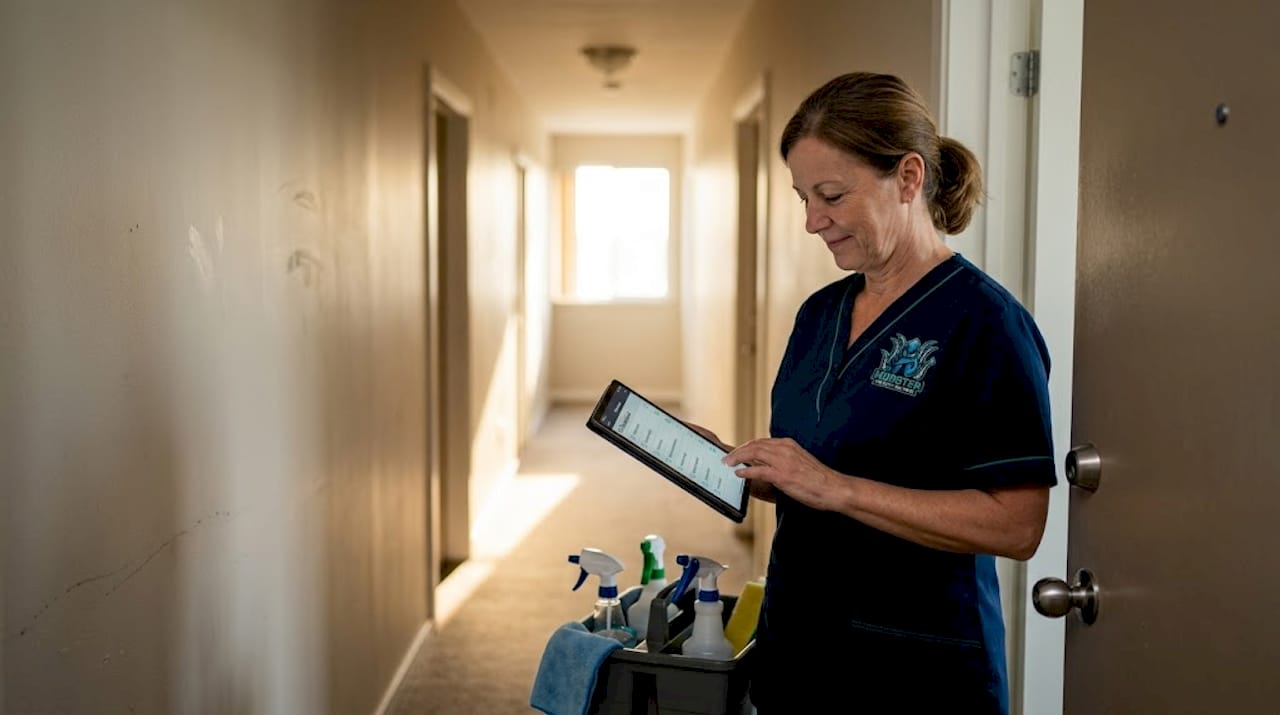
Automation tools auto-generate tasks from bookings, update dynamically when plans change, track progress in real time, and standardize checklists so nothing gets missed. A new move-out triggers a turnover task automatically. A booking extension pushes the cleaning window without anyone making a phone call.
Here's what a modern cleaning automation setup handles:
- Task generation: New bookings or move-outs automatically create cleaning assignments
- Dynamic updates: Schedule changes cascade instantly to crew apps
- Progress tracking: Managers see real-time completion status without calling anyone
- Digital checklists: Standardized task lists ensure consistency across all crews
- Integrations: Connects with property management software, calendar tools, and communication platforms
The standardization piece is underrated. When every cleaner follows the same digital checklist, you eliminate the variability that comes from different crew members having different habits. Quality becomes repeatable, not personality-dependent.
Pro Tip: When evaluating automation tools, prioritize ones that integrate with your existing property management software. A standalone cleaning app that doesn't talk to your leasing system creates more manual work, not less.
Automation does have limits. Complex situations like a flooded unit, a tenant who refuses entry, or a last-minute deep clean request still need human judgment and direct communication. The goal is to automate the predictable so your team has bandwidth for the unpredictable.
For properties managing exterior surfaces, scheduling exterior cleaning follows similar principles. Automated reminders for seasonal pressure washing cycles keep your building's curb appeal consistent without relying on someone to remember.
How effective scheduling drives tenant satisfaction and retention
Here's where the operational work pays off in real numbers. Scheduling isn't just about efficiency. It directly shapes how tenants feel about living in your property.
Poor cleaning leads to complaints and reduced retention, while consistent, visible cleanliness builds the kind of trust that keeps tenants renewing. The data is specific and compelling. A 1-point increase in tenant satisfaction correlates with an 8.6% higher lease renewal rate, an 11.5% higher likelihood of recommending the property, and a 23.1% lower probability of moving out. Those aren't soft metrics. They translate directly to revenue and vacancy costs.
The connection between scheduling and these outcomes runs through consistency. Tenants notice when common areas are reliably clean. They also notice when they're not. A lobby that's spotless on Monday but neglected by Thursday sends a message about how the property is managed overall.
Key scheduling practices that improve tenant satisfaction:
- Visible routine cleaning during hours tenants are home builds confidence in management
- Proactive communication about scheduled cleaning days reduces friction and complaints
- Fast turnover readiness signals professionalism to incoming tenants from day one
- Consistent deep-clean cycles prevent the gradual decline that tenants notice before managers do
Communication is part of the system. When tenants know that hallway cleaning happens every Tuesday and Thursday, they're less likely to report it as neglected on Wednesday. Predictability reduces complaints even when the schedule isn't perfect.
For a closer look at how cleaning and resident retention connect at the unit level, the research is consistent. Properties that invest in clean common area benefits see measurable improvements in satisfaction scores. And tenant communication tips around cleaning schedules are one of the simplest, most overlooked retention tools available.
"Cleanliness isn't just a maintenance task. It's a signal to tenants that their home is being cared for, and that signal drives every satisfaction metric that matters to your bottom line."
Perspective: Why systematic scheduling beats reactive approaches every time
After working with apartment complexes and multi-family portfolios of all sizes, the pattern is unmistakable. The properties that struggle with tenant complaints, high turnover, and unpredictable cleaning costs almost always share one trait: they schedule reactively.
Reactive scheduling feels manageable when your portfolio is small. But it doesn't scale. Every new unit added to a reactive system adds more chaos, not just more work. The contrast between reactive and systematic approaches is stark once you're managing 50 or more units. Manual coordination breaks down. Tasks fall through the cracks. Tenants notice before you do.
What years of hands-on work have taught us is that the switch to systematic scheduling pays back faster than most managers expect. The first month feels like overhead. By month three, crew efficiency improves, complaints drop, and managers reclaim hours they used to spend on reactive calls.
The edge cases are where systematic scheduling proves its real value. Back-to-back turnovers, seasonal demand spikes, and unexpected deep-clean needs are all manageable when your baseline is automated and your team has clear capacity buffers. Without that foundation, edge cases become crises.
Seasonal cleaning strategies are a perfect example. Properties that plan seasonal exterior cleaning cycles in advance never scramble for crews in peak season. Those that don't plan ahead pay premium rates and get lower-priority service. Systematic scheduling isn't just about daily operations. It's about positioning your property for every demand cycle the year brings.
How Monster Property Partners can streamline your cleaning scheduling
The frameworks in this article work best when paired with a reliable exterior cleaning partner who understands the operational demands of multi-family properties.
At Monster Property Partners, we specialize in building exterior cleaning programs that integrate with your existing scheduling systems. From pressure washing building facades to concrete cleaning services for parking areas and walkways, our team handles the high-effort exterior work that keeps your property looking its best year-round. Our multifamily cleaning services are designed to fit your schedule, not disrupt it. If you're ready to stop reacting and start running a proactive, tenant-first cleaning operation, we're the partner built for that.
Frequently asked questions
How does scheduling reduce property cleaning costs?
Efficient scheduling clusters jobs by location, cuts travel time between properties, and assigns the right amount of time per unit, so crews aren't paid to wait or rush.
What are the best practices for scheduling cleaning in multi-family properties?
Layered schedules that separate daily, weekly, and monthly tasks by traffic zone ensure every area gets the right attention without overlap or gaps.
Why does cleaning schedule automation matter for property managers?
Automation assigns tasks based on real-time bookings and changes, which eliminates manual errors and ensures no unit or common area is accidentally skipped.
How does good scheduling affect tenant retention?
Consistent, visible cleaning raises satisfaction scores, and a 1-point satisfaction increase links to an 8.6% higher lease renewal rate and a 23.1% lower move-out probability.