
TL;DR:
- Effective apartment turnover management requires structured workflows, thorough preparation, and precise cleaning sequences to minimize costs and tenant complaints.
- Long-term relationships between property managers and cleaning teams foster better communication, adaptability, and consistent quality.
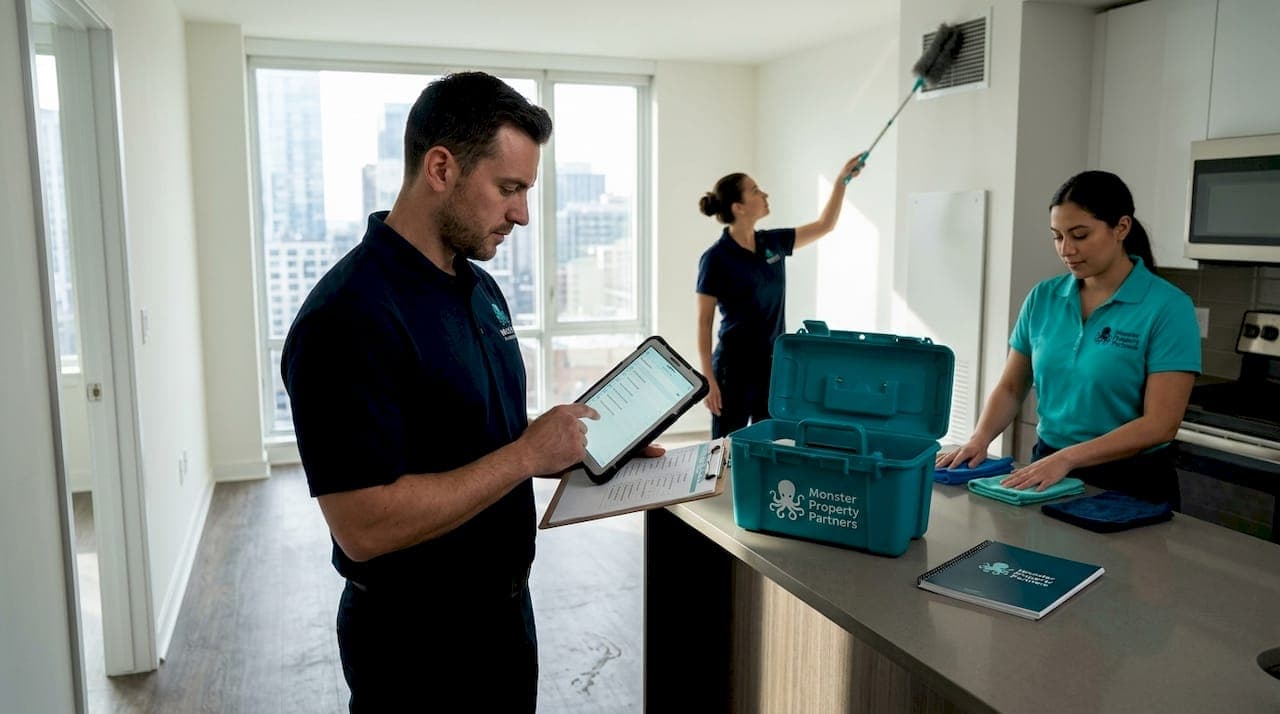
Every day a unit sits vacant costs you money. Apartment turnover costs average $3,872 per unit when you factor in cleaning, painting, lost rent, and leasing expenses, and the biggest driver of delays is not damage or deferred maintenance. It is a disjointed cleaning process that forces re-cleans, triggers tenant complaints, and pushes your move-in date back by days. Property management executives and maintenance leaders who want to protect net operating income (NOI) need more than a to-do list. They need a structured, repeatable workflow that gets every unit rent-ready on the first pass.
Table of Contents
- What you need before cleaning: Preparation essentials
- Step-by-step cleaning workflow: A proven order of operations
- Detailed turnover checklist: Room-by-room essentials
- Edge cases and troubleshooting: What to do when things get tricky
- Verification and auditing: Ensuring 'done right' means 'done'
- Perspective: What most guides miss about multi-family cleaning workflow
- Partner with cleaning experts for hassle-free multifamily turnovers
- Frequently asked questions
Key Takeaways
| Point | Details |
|---|---|
| Preparation is crucial | Pre-scheduling and supply readiness prevent costly turnover delays. |
| Follow a consistent order | Always clean top-to-bottom and prioritize kitchens and bathrooms for best results. |
| Use checklists and audits | Standardized steps and photo verifications reduce complaints and re-cleans. |
| Plan for challenging scenarios | Specific protocols for pet and odor problems keep workflows on track. |
| Partnership drives outcomes | Trusted cleaning partners enable reliable, scalable turnovers. |
What you need before cleaning: Preparation essentials
Now that we have established the stakes, let's start with what needs to be lined up before cleaners set foot in the unit.
The difference between a smooth turnover and a chaotic one is almost always decided before the first cleaning supply is opened. Tight turnover windows of one to two days are achievable, but only when the make-ready phase spanning five to seven days is coordinated in advance. That means scheduling cleaning crews before the outgoing tenant moves out, not after.
Supply ordering is a practical bottleneck that many teams overlook. Running out of grout cleaner or microfiber pads mid-unit forces stoppages that snowball into overtime costs. Order PPE, multi-surface cleaners, grout solutions, stainless steel polish, and degreaser in bulk quantities based on the number of units turning that month. Track consumption by unit type so your orders match reality.
Crew role clarity is equally critical. Who handles kitchens? Who owns the bathrooms? Who is responsible for the final walkthrough? When those lines blur, tasks fall through the cracks, and you end up paying for a second visit. Define handoff points clearly in your crew briefing before each shift.
Standardized multi-family unit cleaning checklists are your enforcement mechanism. A checklist does not replace training, but it eliminates the "I thought someone else did that" problem that plagues high-volume operations.
| Preparation task | Timing | Responsible party |
|---|---|---|
| Schedule cleaning crew | 3-5 days before move-out | Property manager |
| Order supplies and PPE | 5-7 days before | Maintenance supervisor |
| Assign crew roles and zones | Day before cleaning | Lead technician |
| Print/distribute checklists | Morning of cleaning | Lead technician |
| Confirm utility access | Day before | Property manager |
Key preparation steps:
- Inspect the unit before cleaning to flag damage, broken fixtures, or needed repairs
- Confirm elevator access and parking for cleaning vehicles in advance
- Notify any remaining tenants in adjacent units about potential disruptions
- Ensure all keys, fobs, and access codes are updated and available
- Pre-stage supplies outside the unit the evening before to cut setup time
Pro Tip: Pair your property manager cleaning checklist with a digital sign-off tool so each crew member timestamps their completion. This creates an audit trail without adding paperwork to your day.
Step-by-step cleaning workflow: A proven order of operations
Once preparation is in place, it is vital to follow a workflow that maximizes cleaning impact and team efficiency.
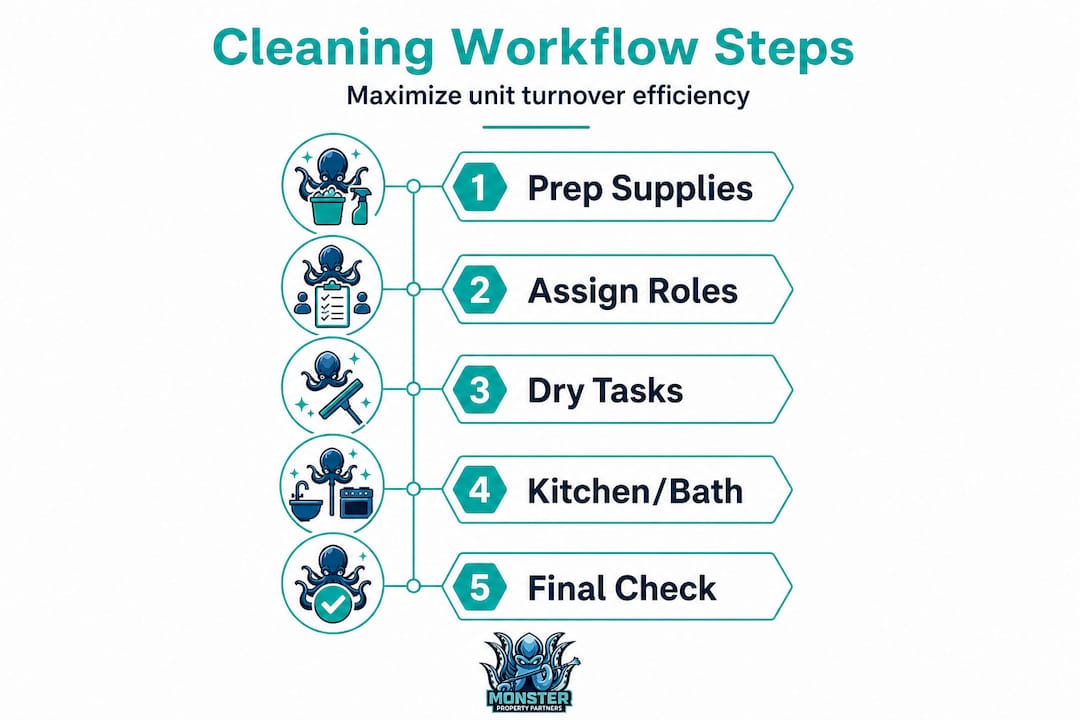
Order matters. A crew that mops floors before cleaning countertops will track debris back across the clean surface and trigger a second pass. Top-to-bottom, dry-to-wet workflows are the industry standard for a reason: they eliminate rework by ensuring that debris and cleaning solutions only travel in one direction, down and out.
Start every unit with dry tasks. Dust ceiling fans, HVAC vents, light fixtures, and crown molding before anything wet is introduced. Grime loosened from these surfaces falls down, so if you have already mopped, you have just created more work for yourself. This step takes roughly 20 minutes per unit but saves significantly more time by preventing rework.
Kitchens and bathrooms come next, and the reason is strategic. Kitchens and bathrooms generate the highest rate of tenant complaints related to odors and visible soiling. Tackling them early in the shift when your crew is fresh and fully stocked ensures those high-stakes spaces get the attention they deserve. Bedrooms and living areas follow, and floors are always last.
| Workflow stage | Typical task examples | Why it matters |
|---|---|---|
| Dry phase (first) | Dust vents, fans, baseboards, blinds | Prevents debris from contaminating wet surfaces |
| Wet phase: kitchen | Degrease appliances, wipe cabinets, clean sink | Highest complaint area; requires fresh energy |
| Wet phase: bathrooms | Scrub grout, disinfect fixtures, clean mirrors | Second highest complaint area |
| Bedrooms and living rooms | Wipe switches, clean windows, spot walls | Lower complaint risk but high visibility |
| Floors (last) | Vacuum, mop, or steam clean | Captures all debris from earlier stages |
Numbered workflow sequence:
- Remove all trash and bulk items left behind
- Dust all high surfaces: ceilings, vents, fans, light fixtures
- Deep clean kitchen appliances inside and out
- Disinfect and scrub all bathroom surfaces including grout lines
- Wipe down bedroom and living room surfaces, switches, and hardware
- Clean all windows, mirrors, and glass interior surfaces
- Vacuum all carpets, then mop all hard floors
- Perform a final visual and smell check before locking up
Reference a detailed cleaning workflow guide to document this sequence as your team's official standard operating procedure (SOP). Revisit the cleaning tips to boost satisfaction as you refine your process each quarter. For a thorough external reference, the move-out cleaning checklist breaks down expectations at a granular level.
Pro Tip: Use a color-coded microfiber system across your crew. Red cloths for bathrooms only, blue for kitchens, green for general surfaces. It prevents cross-contamination and speeds up audits because inspectors can tell at a glance if protocols were followed.
Detailed turnover checklist: Room-by-room essentials
Understanding the order of operations is only half the battle. The specific items tackled in each room can make or break your tenant turnover experience.
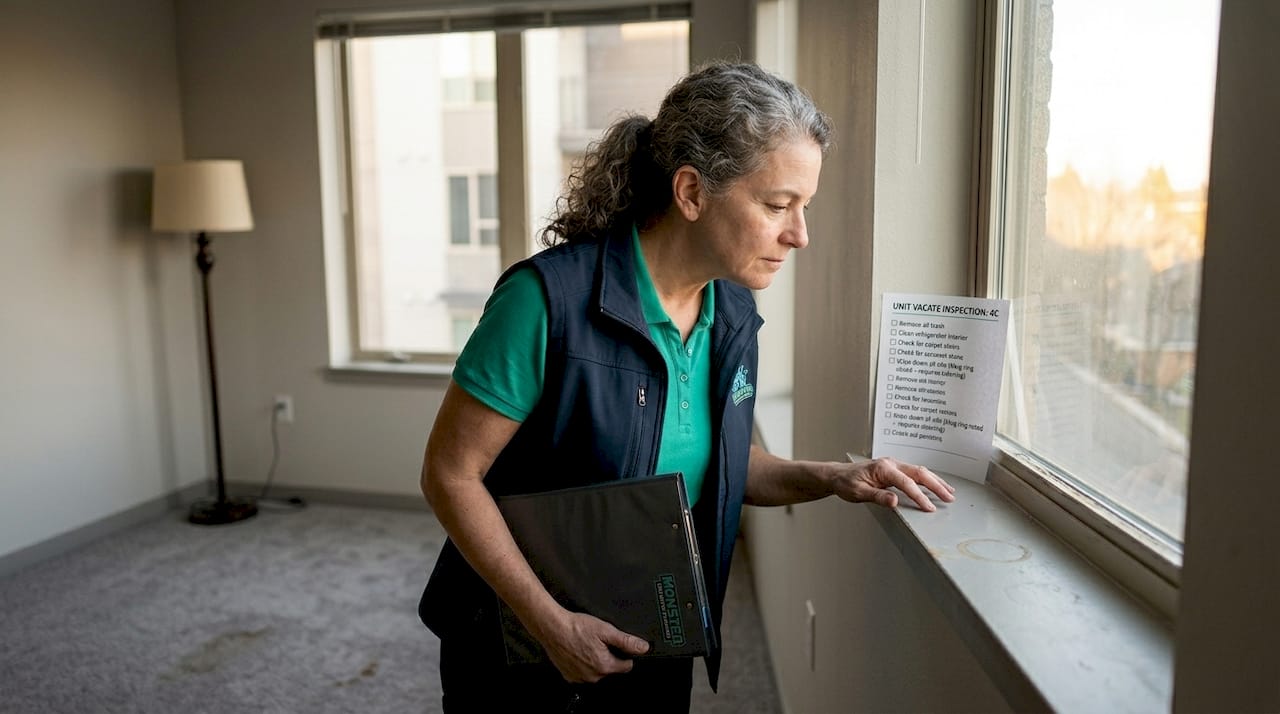
A standard turnover cleaning checklist covers the whole-unit reset, detailed kitchen tasks, bathrooms, bedrooms, living spaces, floors, and a final quality check including smell test and streak-free mirrors. But the items most often skipped are the ones that generate the most complaints.
Kitchen essentials:
- Clean inside the oven, including the broiler drawer and racks
- Degrease range hood filters and wipe down fan blades
- Empty and sanitize the refrigerator including door gaskets and drip pan
- Wipe down all cabinet interiors and drawer tracks
- Descale the faucet aerator and clean the garbage disposal
Bathroom essentials:
- Scrub tile grout lines with a stiff brush and appropriate cleaner
- Disinfect the toilet base, tank exterior, and seat hinges
- Clean exhaust fan cover and inspect for mold on the ceiling
- Remove mineral deposits from showerheads and faucet handles
- Wipe down all caulk lines and look for signs of mildew buildup
Bedrooms and living areas:
- Clean inside closets including shelves and rods
- Wipe all light switch plates and outlet covers
- Spot-clean scuff marks on walls and baseboards
- Clean window tracks and blinds or shades
- Check under radiators and behind doors for debris
For a complete room-by-room breakdown, the cleaning checklist for property managers offers a proven template your team can adopt immediately. You can also review the apartment move-in and move-out checklist for additional task reference.
Statistic to keep in mind: Cleaning accounts for $150 to $400 of the average $3,872 turnover cost per unit. Getting it right the first time is one of the highest-leverage actions you can take to protect that budget.
Pro Tip: Always do a smell test before signing off on any unit. Walk in from outside after a 10-minute break and immediately note your first sensory impression. Incoming tenants will do exactly the same thing on move-in day, and odors that staff stop noticing after hours in the unit can still be deal-breakers for new residents.
Edge cases and troubleshooting: What to do when things get tricky
Even the best workflow faces tough cases. Let us cover tactics for common headaches that can disrupt your workflow.
Some turnovers present conditions that a standard checklist does not fully address. Pet damage, heavy smoke saturation, and last-minute occupied-unit cleanings are three scenarios where unprepared teams lose both time and money.
Handling pet odors and stains:
- Use a UV blacklight to identify all urine-affected areas before cleaning begins. Treated areas that are not identified will reactivate with humidity and cause complaints weeks after move-in
- Apply enzymatic cleaners to pet urine on subflooring, not just the surface. Standard disinfectants mask the odor temporarily but do not break down uric acid crystals
- Seal concrete or wood subflooring with an odor-blocking primer before installing new flooring if saturation is deep
Handling smoke-damaged units:
- Wipe down all walls, ceilings, and surfaces with a degreaser before painting or repainting. Painting over nicotine residue without cleaning causes yellowing bleed-through
- Replace HVAC filters and clean the ductwork if the unit has been a heavy smoke environment
- Use an ozone generator or hydroxyl machine for 24 to 48 hours after surface cleaning to neutralize embedded smoke odors. Do not occupy the unit during ozone treatment
Post-paint debris and occupied turns:
- After painting, fine drywall dust and paint overspray settle on every surface. Schedule a post-paint clean that specifically targets dust on hardware, inside cabinets, and on trim
- Occupied-unit turns for lease renewals require coordination with the current tenant. Provide a 24-hour notice, remove all personal items from surfaces you need to clean, and focus on appliances and fixtures only
For specialized situations involving heavy-duty exterior soiling or common area buildup, investing in specialized cleaning equipment dramatically reduces labor time and increases first-pass quality. You can also consult resources on reliable move-out apartment cleaning for service benchmarking.
"The units that look easiest on paper are often the ones with hidden issues. A routine clean that reveals smoke damage or pet saturation mid-job needs a clear escalation path, or your crew will improvise and you will pay for it later."
Verification and auditing: Ensuring 'done right' means 'done'
After cleaning is technically finished, robust verification is what cements a property manager's reputation, for better or worse.
No cleaning workflow is complete without a closing audit loop. Crews that know their work will be photographed and reviewed consistently perform at a higher standard. Audits using photos and smell tests combined with standardized SOPs ensure consistency across all teams, regardless of who is on shift.
Effective verification steps:
- Conduct a walkthrough immediately after cleaning is declared complete, before the crew leaves the property
- Photograph all high-risk areas: oven interior, grout lines, under-sink cabinets, and bathroom fixtures
- Perform a smell test in every room, paying special attention to kitchens and bathrooms
- Cross-reference each completed item against the original checklist and flag any gaps
- Log deficiencies in a shared system so patterns can be identified across multiple units over time
Tracking your audit results over time creates performance data that improves your SOPs. If unit 204 consistently fails the grout check, that is a training issue, not a one-time mistake. If your smoke-unit protocol always takes three hours longer than projected, you need a separate pricing and scheduling tier for those units.
Pro Tip: Require photo documentation for at least five specific line items per unit, not just a general "all done" photo. Focus on the oven interior, toilet base, under-sink area, and window tracks. These are the four spots most likely to generate move-in complaints.
"A final audit done correctly takes 15 minutes. A re-clean triggered by a missed item takes half a day and costs far more than the audit would have."
Leverage your audit data to cut repairs and boost value by identifying recurring maintenance issues that surface during cleaning, such as persistent mold, failing caulk, or appliances that cannot be restored to rentable condition through cleaning alone.
Perspective: What most guides miss about multi-family cleaning workflow
Every guide worth reading will tell you to use SOPs. Build checklists. Follow the sequence. That advice is correct, and it is also incomplete.
After working with property management teams across large-scale multifamily portfolios, the pattern is clear: the facilities that run the tightest turnovers are not the ones with the longest checklists. They are the ones with the strongest relationships between property managers and their cleaning partners. Staff who trust each other communicate faster when edge cases arise. A crew that has been with you for two years knows your standards without being told. A transactional vendor hired from a bidding site does not.
The cleaning guide for managers that actually works in practice is one that is built collaboratively with your cleaning team, not handed down from corporate as a rigid document. Workflows need room to flex. A last-minute same-day move-in does not follow the same sequence as a planned five-day turn, and your team needs the judgment to adapt rather than freeze waiting for instructions.
Invest in your cleaning relationships the same way you invest in your maintenance vendors. Long-term partnerships produce institutional knowledge that has real dollar value. And when the tough situations arrive, including the flooded unit on a Friday afternoon or the smoke-saturated apartment that needs an ozone treatment before anyone can even start cleaning, the team that knows your properties will handle it faster and better than anyone you call off a list.
Partner with cleaning experts for hassle-free multifamily turnovers
Turnover cleaning is one of the highest-leverage opportunities to protect NOI, reduce complaints, and hit your occupancy targets. But getting it right at scale requires more than a checklist.
At Monster Property Partners, we work directly with property management executives and maintenance leaders to deliver commercial cleaning that integrates with your existing workflow. Whether you need exterior building washes, multifamily exterior cleaning between tenants, or full-scale common area concrete cleaning that reflects your property standards, we bring reliable operations, clear communication, and consistent results. Our goal is simple: you focus on leasing and operations while we handle the cleaning execution with the detail and accountability your residents expect.
Frequently asked questions
How much time does the typical multi-family unit turnover clean take?
Most turnovers are completed in one to two days, with complex units or those requiring extensive remediation extending to a full five to seven day make-ready phase.
What are the most frequently missed cleaning steps that lead to tenant complaints?
Odors in kitchens and bathrooms are the most common driver of re-cleans and complaints, typically from oven grease, toilet bases, or drain buildup that visual-only checklists miss.
What's the average cost breakdown for a full apartment turnover including cleaning?
The average total turnover runs $3,872 per unit, with cleaning representing $150 to $400 of that figure alongside painting, lost rent, and leasing costs.
How can I ensure that each turnover is consistent regardless of the team assigned?
Standardized checklists combined with photo audits and smell tests create accountability and consistency regardless of which crew handles the unit.
What's the best way to address pet odor or smoke issues during cleaning?
Use UV blacklights and enzymatic cleaners for pet urine, and combine surface degreasing with ozone or hydroxyl treatment for smoke-saturated units before occupancy.