
TL;DR:
- Prioritize cleaning high-traffic exteriors like entries, walkways, and parking areas to boost tenant satisfaction.
- Consistent cleaning schedules guided by APPA standards reduce costs and improve property appeal.
- Maintaining exterior cleanliness is a key driver of lease renewals and long-term property value.
Tenant turnover is one of the most expensive problems a property manager faces, and the root cause is often hiding in plain sight. Dirty building exteriors, grimy sidewalks, and neglected parking lots signal to tenants that management does not care. Research shows that higher cleaning standards translate directly to 8.6% more lease renewals per satisfaction point increase. This article walks you through the exact priorities, frequencies, and benchmarks that top-performing multi-family portfolios use to keep tenants happy, reduce costly disputes, and protect long-term property value.
Table of Contents
- How to set cleaning priorities: High-traffic exteriors first
- Recommended cleaning frequencies for exteriors
- Benchmarking standards: APPA levels for commercial exteriors
- The business case: How cleaning standards drive renewals and ROI
- Why exterior cleaning is property management's top ROI play
- Get the results your property deserves
- Frequently asked questions
Key Takeaways
| Point | Details |
|---|---|
| Prioritize high-traffic areas | Focus cleaning resources on entries, sidewalks, and parking for maximum tenant satisfaction. |
| Stick to data-driven schedules | Follow evidence-based frequency guidelines and adjust for seasonal changes. |
| Use APPA benchmarks | Adopt Level 2 or 3 standards to audit and communicate your cleaning quality. |
| Cleaning boosts retention | Higher cleaning standards directly drive lease renewals, reduce turnover, and minimize disputes. |
How to set cleaning priorities: High-traffic exteriors first
With the stakes and benefits clear, let's identify which parts of your property to prioritize for maximum impact.
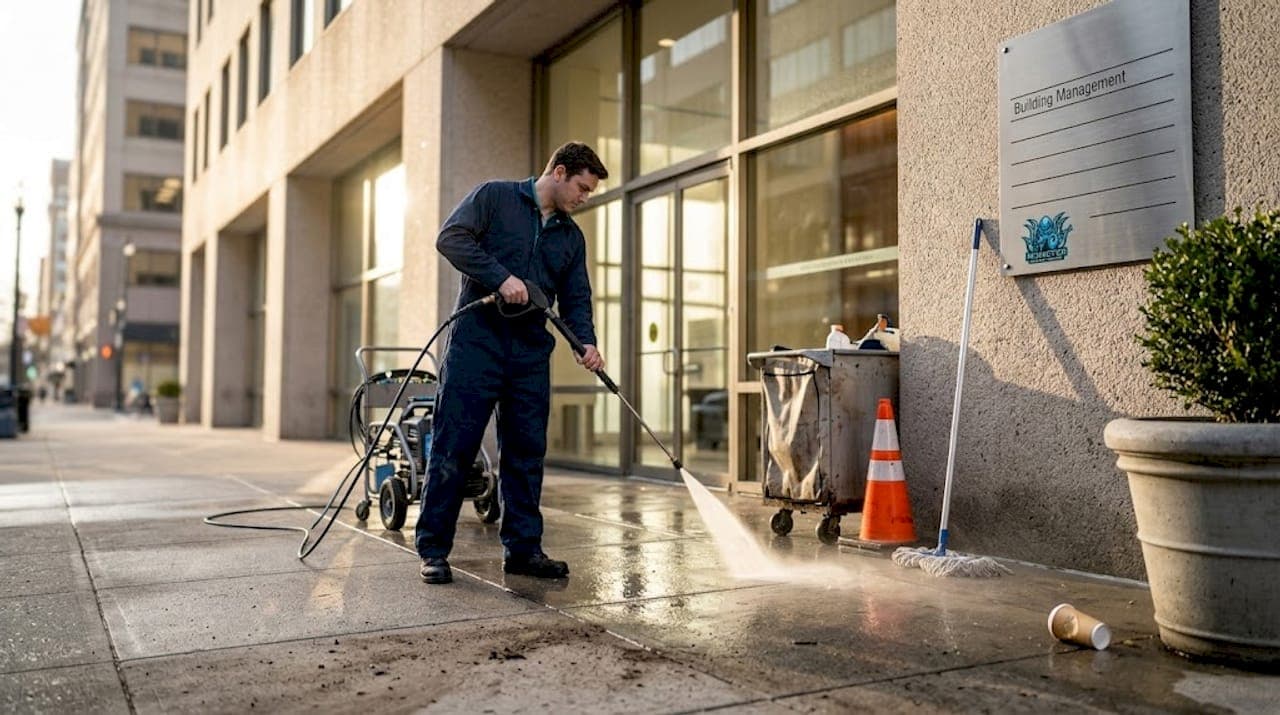
Not every square foot of your exterior matters equally. The areas your tenants touch and see every single day carry the most weight. A cracked, stained entry walkway sends a message before a prospect even opens the front door. That first impression is nearly impossible to undo.
Tenant satisfaction hinges on visible care in high-touch exteriors like entries, walkways, and parking areas. Clean properties consistently earn better reviews, stronger referrals, and higher retention rates. Neglecting these zones does not just look bad. It actively drives tenants to look elsewhere.
Here are the exterior areas to prioritize first:
- Building entries and lobbies: The face of your property. Stains, gum, and debris here create an immediate negative impression.
- Sidewalks and walkways: High foot traffic means faster buildup of dirt, mold, and organic staining.
- Parking lots and garages: Oil stains, litter, and faded markings signal neglect and create safety concerns.
- Dumpster enclosures: Often overlooked, but odors and visible grime here affect the entire surrounding area.
- Stairwells and breezeways: Shared spaces that tenants use daily and associate directly with management quality.
To boost property value by cleaning common areas, start by mapping your property and ranking each zone by daily tenant exposure. The higher the foot traffic, the higher the priority.
"The condition of shared exterior spaces is one of the first things prospective tenants notice and one of the last things satisfied tenants forget. Visible cleanliness is a form of communication."
When assessing exterior cleaning needs for your building, walk the property at the same time your tenants do. Morning and evening walkthroughs reveal what matters most to the people who live there.
Pro Tip: Allocate the majority of your cleaning budget to zones where tenants interact daily before spending on lower-traffic areas like rooftop decks or back fences. The return on visible cleanliness is immediate.
Recommended cleaning frequencies for exteriors
Once you know where to focus, the next question is how often to clean each area for best results.
Frequency is where many property managers either overspend or fall dangerously behind. A consistent schedule prevents buildup, reduces the cost of each service visit, and keeps your property looking sharp year-round. Sporadic cleaning leads to deep-set stains that cost far more to remove.
Recommended cleaning frequencies for multi-family properties break down like this:
| Exterior zone | Baseline frequency | Notes |
|---|---|---|
| Parking lots | Quarterly | Increase to monthly in high-traffic complexes |
| Sidewalks and entries | Quarterly | Boost frequency during spring pollen season |
| Building exterior surfaces | Annually | More often if near highways or industrial areas |
| Dumpster areas | Monthly | Non-negotiable for odor and pest control |
That table is your baseline. Real-world conditions will push some of those numbers up. Here is how to adjust:
- Heavy pollen seasons: Spring cleaning should be front-loaded. Pollen buildup on walkways and building surfaces accelerates staining and creates slip hazards.
- High-traffic complexes: Properties with 100-plus units or heavy vehicle flow may need parking lot cleaning monthly rather than quarterly.
- Coastal or humid climates: Mold and algae grow faster in moisture-rich environments. Bump building exterior cleaning to twice annually.
- Post-storm response: Wind and rain events deposit debris quickly. Schedule a responsive clean within 48 hours of major weather events.
To optimize your cleaning workflow, build your schedule around these triggers rather than just the calendar. A rigid quarterly schedule that ignores a heavy pollen spring will cost you tenant complaints.
A well-maintained property cleaning checklist tied to this frequency table gives your team and vendors a clear, repeatable standard. Consistency is what separates properties that hold tenants from those that constantly chase new ones.
Callout: Properties that stick to a documented cleaning schedule report fewer maintenance complaints and faster lease-up rates compared to those that clean reactively.
Benchmarking standards: APPA levels for commercial exteriors
Understanding how often to clean is great, but you also need standards to measure results.
The APPA (Association of Physical Plant Administrators) custodial standards give facility managers a universal language for cleanliness. Originally developed for educational facilities, these levels translate directly to commercial and multi-family exteriors. They give you a measurable target instead of a vague goal.
APPA Level 2 and Level 3 are the most relevant benchmarks for multi-family property managers:
| Standard | Description | Best for |
|---|---|---|
| Level 2: Ordinary tidiness | Clean surfaces, minor marks visible only on close inspection, no debris buildup | Main entries, lobbies, high-traffic walkways |
| Level 3: Casual inattention | Visible dust or marks, light debris present, no hazards | Low-traffic side walkways, back fences, utility areas |
For most common areas and tenant-facing exteriors, Level 2 is your target. Level 3 is acceptable only for spaces tenants rarely encounter.
Here is how to audit and maintain your target level:
- Walk the property weekly with a printed checklist tied to APPA descriptions. Mark each zone pass or fail.
- Photograph problem areas at each audit. Dated photos create a record useful for vendor accountability and deposit disputes.
- Score each zone on a simple 1 to 3 scale matching APPA levels. Any zone scoring 3 in a high-traffic area triggers an immediate service order.
- Review vendor performance monthly using your audit scores. Vendors who consistently miss Level 2 in priority zones need to be corrected or replaced.
- Share your standards in vendor RFPs and lease communications so expectations are explicit from day one.
For a deeper look at APPA standards for exterior cleaning in apartment settings, mapping each zone to a specific level before you hire a vendor ensures you are comparing apples to apples.
"When you put your cleanliness standards in writing and share them with vendors and tenants alike, you stop managing complaints and start managing expectations. That shift alone reduces friction significantly."
This commercial exterior cleaning guide approach also protects you legally. Documented standards and audit records are powerful evidence if a tenant dispute escalates.
The business case: How cleaning standards drive renewals and ROI
With standards and schedules set, it's crucial to understand why these practices deliver hard business results.
Cleaning is not a cost center. It is a revenue protection strategy. The numbers back this up clearly, and once you see the math, it is hard to justify cutting the cleaning budget.
Callout: Every satisfaction point increase drives 8.6% more lease renewals. On a 50-unit property, that is the difference between filling vacancies and watching revenue walk out the door.
Here is how cleaning standards affect your bottom line directly:
- Reduced turnover costs: Turning over a single unit costs between $2,000 and $5,000 when you factor in cleaning, repairs, lost rent, and leasing fees. Higher satisfaction from clean exteriors keeps tenants renewing.
- Fewer deposit disputes: 23% of deposit disputes are cleaning-related. Documented standards and regular audits give you the evidence to defend legitimate deductions.
- Lower repair costs: Dirt and organic buildup accelerate surface degradation. Regular pressure washing extends the life of concrete, siding, and painted surfaces by removing corrosive materials before they cause damage.
- Stronger lease-up performance: Prospective tenants touring a clean property convert at higher rates. Curb appeal is not just a real estate phrase. It is a leasing metric.
To cut cleaning costs sustainably, the key is consistent small investments rather than expensive emergency deep cleans. A quarterly pressure wash of parking and entries costs a fraction of what a neglected surface restoration runs.

You can also reduce repairs through better cleaning by catching surface issues early during regular service visits. Vendors who clean regularly spot problems before they become capital expenses.
Pro Tip: Keep a cleaning log with dates, vendor names, and before-and-after photos for every exterior service. This documentation is your best defense in any security deposit dispute and your strongest argument for budget approval.
Why exterior cleaning is property management's top ROI play
Here is the uncomfortable truth most property management consultants will not say out loud: the nicest gym in the building will not save you from a dirty parking lot.
We work with multi-family portfolios across the country, and the pattern is consistent. Properties that invest heavily in amenity upgrades while letting exterior cleaning slide see tenant satisfaction drop within 12 months. The tenants notice. They post about it. And they leave.
Conventional wisdom pushes property managers toward amenity arms races. New appliances, rooftop lounges, co-working spaces. These are real differentiators, but they are invisible when a prospect pulls into a stained, grimy parking lot. The exterior is the first data point, and first impressions are sticky.
The property management cleaning trends that drive top-performing portfolios in 2026 all point the same direction. Consistent, scheduled exterior maintenance outperforms sporadic deep cleans every time. Small, regular investments compound. Neglect compounds faster.
Pro Tip: A monthly dumpster cleaning and a quarterly sidewalk wash cost less annually than one emergency restoration project. Budget for prevention, not recovery.
If you want to lead a portfolio that tenants brag about, start with what they see every day. Clean exteriors are not a baseline expectation. They are a competitive advantage.
Get the results your property deserves
If you're ready to see tenant loyalty and property value rise, here's how to put these best practices into action.
Knowing the right frequencies and standards is only half the equation. Executing them consistently, at scale, across multiple buildings requires a partner who specializes in exactly this kind of work. That is what we do at Monster Property Partners.
Our team delivers multifamily exterior cleaning services built around the schedules and standards covered in this article. From high-traffic entry pressure washing to concrete cleaning for apartments, we handle the execution so you can focus on managing your portfolio. We bring the documentation, the consistency, and the commercial-grade equipment your property needs to stay competitive and keep tenants renewing year after year.
Frequently asked questions
How often should sidewalks and entries be cleaned in a multi-family building?
Sidewalks and entries should typically be cleaned quarterly, but high traffic or pollen seasons may require more frequent attention to prevent buildup and slip hazards.
What is the APPA Level 2 standard for exterior cleaning?
APPA Level 2 means exterior areas are clean with only minor marks visible on close inspection and no built-up debris, making it the right target for all tenant-facing common areas.
How does exterior cleaning affect tenant turnover costs?
High cleaning standards reduce turnover costs, which can average $2,000 to $5,000 per unit, by improving satisfaction scores and cutting the number of cleaning-related deposit disputes.
What areas are often missed in commercial exterior cleaning?
Dumpster areas and less-used walkways are frequently overlooked, but monthly dumpster cleaning and quarterly walkway service are essential to avoid odor complaints and tenant dissatisfaction.