
TL;DR:
- Fleet washing enhances property image and branding by maintaining clean, professional service vehicles.
- Implementing a structured, professional cleaning process regularly improves tenant perception and staff pride.
- Consistent fleet cleaning is a silent reputation driver that supports higher renewal rates and trust.
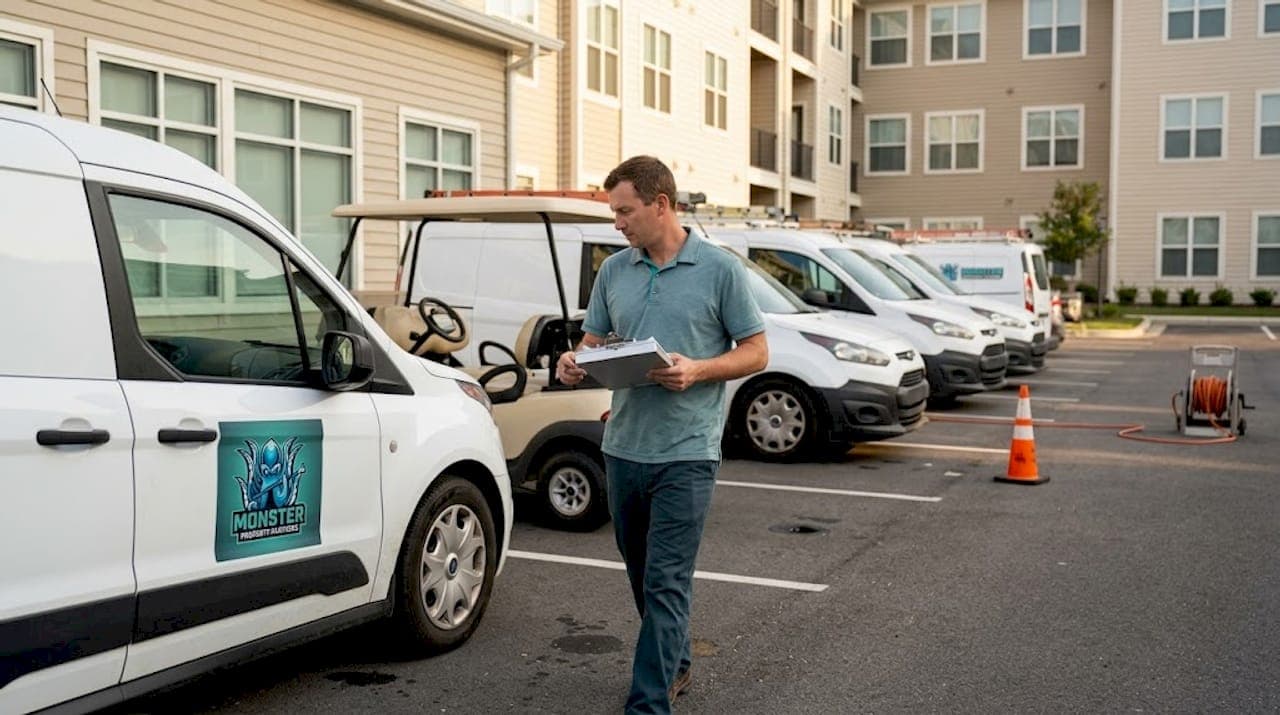
When a prospective tenant or vendor pulls into your community, they're not just looking at the landscaping or the lobby. They're watching your maintenance truck roll by. Property managers in multi-family communities spend enormous budgets on curb appeal, yet service vehicles often go weeks without a proper cleaning. Fleet washing for apartments is not a luxury detail or a vanity project. It's a systematic process that protects your property's image, supports your brand, and directly influences how tenants and visitors perceive the quality of your management. This guide covers what fleet washing actually involves, how it works, and how you can implement it effectively at your property.
Table of Contents
- Understanding fleet washing for apartments
- How professional fleet washing works
- Key benefits of fleet washing for apartment communities
- How to implement a fleet washing program for your property
- Our take: Why fleet washing is property management's silent reputation driver
- Need expert fleet washing? Explore tailored apartment cleaning solutions
- Frequently asked questions
Key Takeaways
| Point | Details |
|---|---|
| Fleet washing defined | Fleet washing for apartments means scheduled, professional cleaning of all on-property service vehicles to safeguard image and longevity. |
| Multi-step process | Effective fleet washing uses a detailed workflow including custom plans, specialty cleaners, and spot-free rinsing. |
| Boosts tenant satisfaction | Clean, branded vehicles help increase tenant confidence, property appeal, and staff morale. |
| Practical implementation | Property managers should combine regular routines with professional partnerships for best results. |
Understanding fleet washing for apartments
Fleet washing is not the same as running a pickup truck through a drive-through car wash. In the apartment and multi-family context, it refers to a structured, repeatable cleaning process applied to all service vehicles and equipment that represent your property on a daily basis.
The vehicles involved vary by property size and services offered. Common fleet vehicles in apartment communities include:
- Maintenance trucks and utility vans used for repairs and supply runs
- Golf carts used by leasing agents and community staff
- Landscaping trailers and equipment carriers
- Branded shuttle vans for resident transportation programs
- Pressure washing rigs and cleaning equipment vehicles
Each of these vehicles is a mobile billboard for your community. When they look dirty, neglected, or worn, residents notice. Visitors notice. Even applicants touring the property notice. A dirty maintenance truck parked near the leasing office sends a subtle but damaging message about management standards.
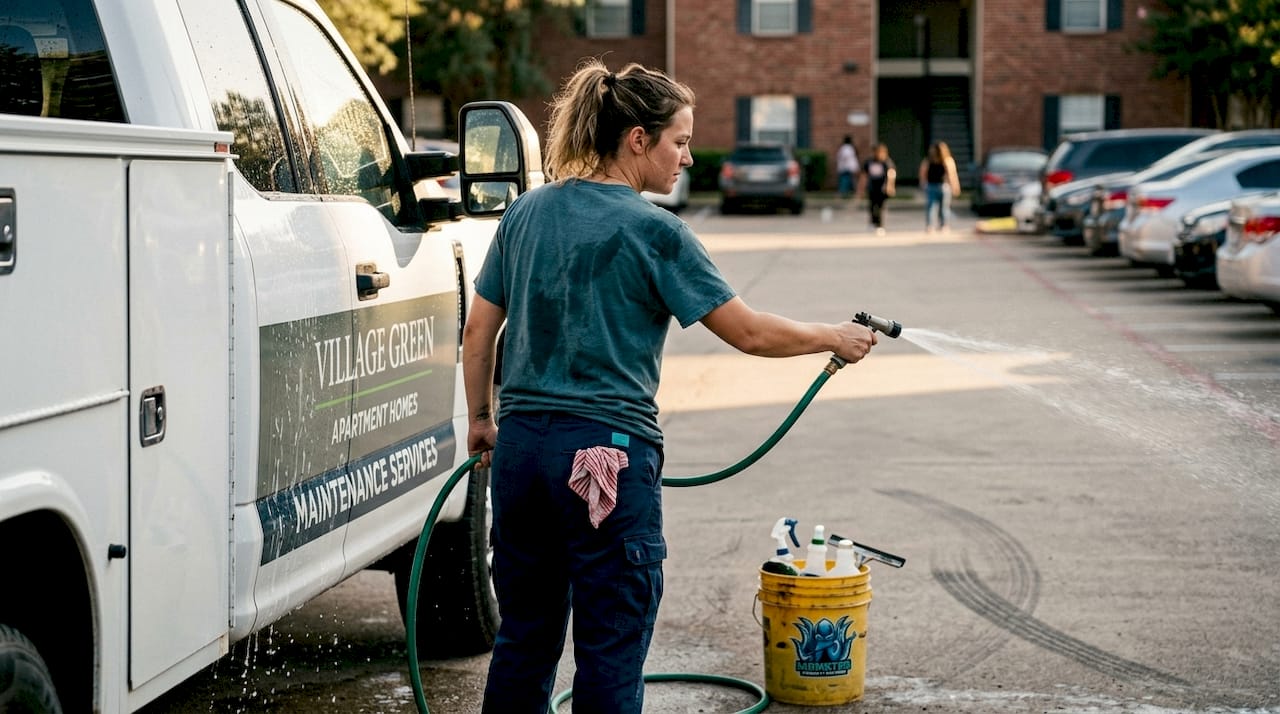
A major misconception is that fleet washing is a quick rinse with a hose. In reality, fleet washing is a multi-step cleaning workflow with specific steps tailored for professional vehicles. It involves inspection, chemical treatment, controlled pressure application, and a spot-free rinse that preserves decals, paint, and finish quality over time.
Another misconception worth correcting: fleet washing is not optional for communities that prioritize branding. If your vehicles carry your property's name or logo, every dirty panel is a branding failure. Tenants associate the condition of your equipment with the quality of your management.
"Your service vehicles are as much a part of your property's image as the building facade. Treat them accordingly."
Understanding what fleet washing involves is the first step. The next is knowing how a professional cleaning workflow guide applies to your specific fleet. If you're still figuring out where vehicles fit into your overall plan, start by reviewing how to assess exterior cleaning needs for your property as a whole.
How professional fleet washing works
Professional fleet washing follows a deliberate, step-by-step sequence. Each step exists for a reason, and skipping any one of them reduces the effectiveness of the entire process.
Here is the standard five-step process used by professional fleet washing providers:
- Pre-inspection: Technicians walk each vehicle to identify damage, sensitive decals, rust spots, or areas needing special treatment before water touches the surface.
- Pre-rinse: A light rinse removes loose dirt, dust, and debris so that the cleaning agents can work more effectively without being diluted by surface contamination.
- Chemical pre-treatment: Specialty detergents formulated for fleet vehicles are applied and allowed to dwell. These products break down road grime, grease, and biological matter without stripping protective coatings.
- Controlled wash: Using calibrated pressure and proper technique, technicians clean each panel systematically. This step requires skill to avoid damaging branded graphics, windows, or painted surfaces.
- Final rinse and spot-free finish: A final rinse removes all chemical residue. Spot-free rinse systems use filtered or deionized water to prevent water spots that leave a vehicle looking dirty even after cleaning.
As confirmed by professional fleet washing research, the standard process includes pre-inspection, pre-rinse, chemical treatment, controlled wash, and final rinse. Each phase is non-negotiable for achieving professional results.
| Step | Goal | How it's done |
|---|---|---|
| Pre-inspection | Identify risk areas | Visual walk-around by technician |
| Pre-rinse | Remove loose debris | Low-pressure water application |
| Chemical pre-treat | Break down grime and grease | Dwell-time detergent application |
| Controlled wash | Clean all surfaces safely | Calibrated pressure, proper technique |
| Final rinse | Remove residue, prevent spotting | Filtered or deionized water rinse |
Pro Tip: Always flag vehicle areas with branded decals or magnetic signs before service begins. Professional technicians can apply lower pressure and gentler chemistry to these zones, preserving your branding investment and extending the life of your graphics.
This level of thoroughness is what separates fleet washing from a basic rinse. It also connects directly to the value of soft washing methods used on building exteriors, where surface sensitivity demands the same careful approach. Consistent, professional cleaning is also a key part of regular exterior cleaning strategies that protect property assets over time.
Key benefits of fleet washing for apartment communities
Property managers who treat fleet washing as a routine operational priority see measurable advantages across several areas. Let's break down what actually changes when you commit to clean service vehicles.
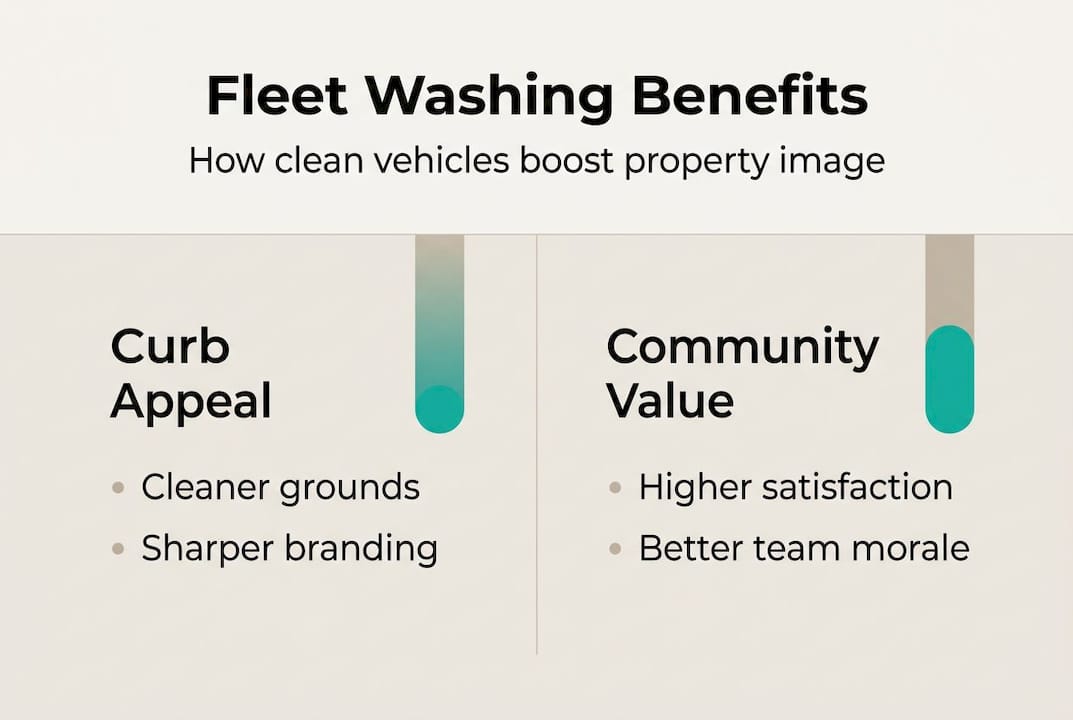
Tenant and visitor perception improves immediately. First impressions are formed within seconds. Clean equipment and service vehicles reflect positively on the property and management team. A prospective resident touring your community will subconsciously connect a clean, branded maintenance truck with a well-run organization.
Key benefits include:
- Stronger first impressions for prospective tenants and vendors
- Reinforced branding through clean, visible property logos on vehicles
- Increased employee pride and morale among maintenance staff
- Reduced long-term costs from rust prevention and surface protection
- Support for marketing materials and social media content featuring the community
Stat to know: Communities using consistent exterior and equipment cleaning programs report measurably higher tenant satisfaction scores compared to those that clean reactively. This aligns with commercial cleaning best practices that connect routine maintenance to resident renewal rates.
Pro Tip: Build fleet washing into your monthly maintenance calendar the same way you schedule HVAC filter changes. Reactive cleaning costs more over time and allows corrosion, staining, and surface damage to compound between washes.
There's also a staffing angle here that managers often overlook. Maintenance technicians who operate clean vehicles feel more professional and take greater pride in their work. That's not a soft benefit. It influences performance and retention. When your team sees that leadership invests in the tools and vehicles they use, they respond with higher accountability.
Fleet washing is also a marketing asset. Your vehicles move through the neighborhood and surrounding areas daily. Clean, branded service trucks extend your property's marketing reach without additional spend. This is one of the clearest ways to boost value and satisfaction across your community without a major budget commitment.
How to implement a fleet washing program for your property
Getting a fleet washing program off the ground does not require a large team or a major budget. It requires a clear plan, the right partner, and consistent follow-through.
Follow these steps to launch your program:
- Inventory your vehicles: List every vehicle and piece of equipment that represents your property. Include golf carts, utility vehicles, and branded equipment.
- Assess cleaning frequency needs: Most service vehicles in active apartment communities need washing every two to four weeks. Vehicles in high-dust or high-rain environments may need more frequent service.
- Evaluate DIY vs. professional service: See the comparison below.
- Select a qualified provider: Use the checklist below to vet vendors before signing any agreement.
- Document and communicate the program: Share the washing schedule with your maintenance team and include a brief mention in resident newsletters so tenants see the commitment to standards.
| Factor | DIY washing | Professional service |
|---|---|---|
| Upfront cost | Lower | Higher per session |
| Long-term cost | Often higher (damage, labor) | Lower (fewer repairs needed) |
| Quality of results | Inconsistent | Consistent, documented |
| Chemical safety and compliance | Risk of violations | Provider manages compliance |
| Time required | High (staff time) | Minimal (outsourced) |
As research confirms, fleet washing is most effective when customized for each property and vehicle type with a clear workflow. A generic approach produces generic results.
When choosing a provider, look for:
- Licensed and insured operation with fleet washing experience
- Eco-friendly detergents and water recovery or containment systems
- Flexible scheduling that fits around your maintenance operations
- Experience with branded vehicle surfaces and decal-safe methods
- References from multi-family or commercial property clients
For more structure around scheduling, the routine pressure washing guide offers a framework that applies directly to fleet programs. The exterior cleaning guide for property managers also covers compliance and documentation. Once you're ready to connect with a provider, explore multifamily exterior cleaning services built specifically for communities like yours.
Our take: Why fleet washing is property management's silent reputation driver
Most property management training focuses on the building. Exterior facades, common areas, parking lots, hallways. Vehicles are rarely part of the conversation, even though they're visible to tenants every single day.
In our experience working with multi-family communities across the country, the properties that earn the strongest renewal rates and the warmest resident reviews share one quiet habit: they manage every visible detail. Including the vehicles.
Here's the counterintuitive part. A spotless lobby can be completely undermined by a rusted, grimy maintenance truck idling outside a resident's building. Tenants process these signals together, not separately. A single inconsistency erodes the credibility built by every other investment.
Managers who prioritize fleet presentation are not just cleaning vehicles. They're signaling organizational standards to everyone who sees those vehicles move through the property. That signal builds trust over time, and trust drives renewals. If you want a starting point for structuring this into your operations, review the best cleaning workflows that high-performing properties use consistently.
Fleet washing is not a line item to cut when budgets get tight. It's a reputation asset that compounds quietly in the background, every single month.
Need expert fleet washing? Explore tailored apartment cleaning solutions
If this article has made one thing clear, it's that fleet washing is too important to leave to chance or inconsistent in-house efforts. At Monster Property Partners, we specialize in exterior cleaning programs built specifically for apartment communities and multi-family properties. Our team understands the operational constraints, branding sensitivities, and scheduling demands that property managers face every day.
We offer multifamily exterior cleaning services that include fleet washing tailored to your vehicle types and property schedule. We also handle common area concrete cleaning and full exterior programs so you can work with one reliable partner across all your cleaning needs. Reach out today to discuss a custom quote and see what a consistent fleet washing program can do for your property's reputation.
Frequently asked questions
What types of vehicles are included in apartment fleet washing?
Typical vehicles include maintenance trucks, golf carts, shuttle vans, and any branded service vehicles used on apartment properties. Professional fleet washing involves custom plans built around all service vehicles specific to your community.
How often should apartment fleets be washed?
Service vehicles should be washed every two to four weeks, or more frequently depending on local conditions like dust, pollen, or heavy rain. Regularly scheduled cleaning is critical for maintaining both appearance and operational value over time.
Is professional fleet washing environmentally friendly?
Reputable providers use eco-friendly detergents and water recovery or containment methods to stay in compliance with local environmental regulations. Custom washing plans typically include eco-conscious chemical selection appropriate for apartment operations.
Does clean equipment really impact tenant satisfaction?
Yes, and the effect is more direct than most managers expect. Clean service vehicles reflect positively on property management and contribute to the overall impression of quality and care that tenants use to judge their living experience.