
TL;DR:
- Maintenance managers play a strategic role in cleaning efficiency and property cost management.
- Implementing preventive cleaning reduces emergency repairs, vacancy days, and overall costs significantly.
- Proper triage, documentation, and digital tools help manage recurring issues and improve operational performance.
Reactive cleaning management is quietly draining multi-family property budgets. Properties operating without structured preventive maintenance programs face emergency repair costs averaging $650 per incident, while vacancy periods stretch to 24 days or more during unit turnovers. Most property executives focus on vendor selection and budgets, but overlook the single most influential factor in cleaning project outcomes: the maintenance manager. This guide reframes that role entirely, showing how empowered maintenance managers function as strategic drivers of cleaning efficiency, not just day-to-day overseers of mops and schedules.
Table of Contents
- Understanding the scope of maintenance manager roles in cleaning
- Key responsibilities: From scheduling to inspections and compliance
- Driving efficiency: Moving from reactive to preventive cleaning management
- Addressing inefficiency: Triage, false alarms, and repeat issues
- Why maintenance managers are undervalued: What most guides overlook
- How Monster Property Partners raises the bar for cleaning project management
- Frequently asked questions
Key Takeaways
| Point | Details |
|---|---|
| Supervisory expertise matters | Effective maintenance managers directly influence cleaning quality and regulatory compliance in multi-family properties. |
| Preventive cleaning saves money | Integrating cleaning into preventive maintenance schedules cuts emergency and turnover costs substantially. |
| Triage reduces inefficiency | Accurately prioritizing cleaning requests prevents unnecessary emergencies and repetitive problems. |
| Strategic role is undervalued | Empowering maintenance managers as partners in planning drives tangible property performance gains. |
Understanding the scope of maintenance manager roles in cleaning
Having set the stage for why cleaning project efficiency matters, let's clarify what the maintenance manager's role actually entails in multi-family settings.
The title "maintenance manager" often gets reduced to a catch-all for building repairs, light bulb replacements, and resident complaint calls. In reality, the cleaning-related responsibilities alone span a significant portion of their workload, and the complexity of those responsibilities scales with the size and type of property they manage.
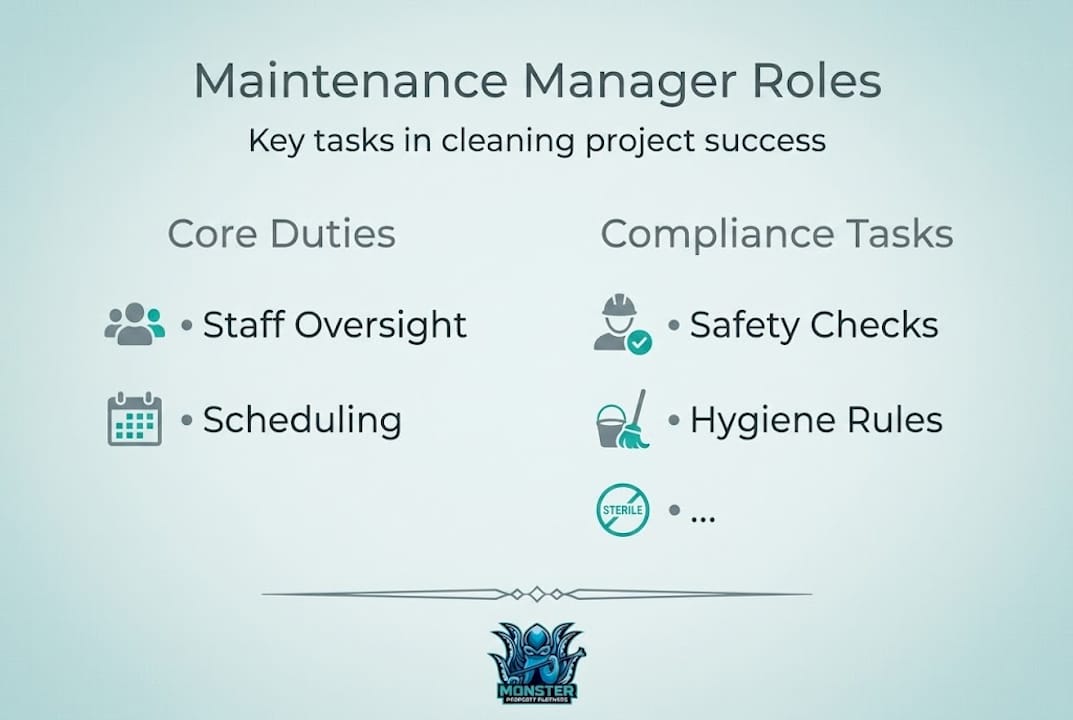
At the core, maintenance managers supervise janitorial, housekeeping, and cleaning staff across multi-family properties, ensuring cleanliness standards are met through scheduling, inspections, and ongoing performance oversight. That means they are not simply assigning tasks. They are building workflows, evaluating staff performance, and making real-time decisions about where to direct resources on any given day.
Their compliance responsibilities are equally demanding. Maintenance managers ensure compliance with safety and hygiene standards during cleaning operations, including proper use of cleaners and equipment for various surfaces. In a multi-family building, that means knowing which cleaning agents are safe for sealed concrete versus painted hallway walls, which pressure settings are appropriate for exterior siding, and which protocols apply in units where residents have chemical sensitivities.
The scope also shifts meaningfully depending on the property type. A senior living community, for example, requires a much stricter hygiene protocol than a general residential building. Infection control, odor management, and surface sanitation frequency are all elevated concerns. General residential properties may prioritize common area appearance and exterior curb appeal more heavily. A maintenance manager who understands this distinction can tailor their cleaning programs accordingly, rather than applying a one-size-fits-all approach that wastes resources and misses critical needs.
Our multi-family manager cleaning guide breaks down these property-specific differences in greater detail, and the cleaning project guide for managers offers a structured framework for building out your program from the ground up.
"The most effective maintenance managers treat cleaning not as a background task but as a front-line asset protection strategy. Every square foot cleaned on schedule is a square foot that doesn't become an expensive repair."
Key cleaning-related responsibilities that fall under the maintenance manager's scope include:
- Scheduling and supervising janitorial and exterior cleaning crews
- Conducting routine quality inspections of common areas, hallways, and building exteriors
- Enforcing safety and hygiene compliance across all cleaning operations
- Coordinating cleaning timelines with unit turnover schedules
- Selecting and approving cleaning products and equipment for each surface type
- Training staff on correct cleaning procedures and safety protocols
Key responsibilities: From scheduling to inspections and compliance
With the manager's scope set, it's vital to map out their pivotal hands-on and organizational responsibilities in detail.
The day-to-day work of a maintenance manager in a cleaning context is far more structured than most property executives realize. Effective managers are not reacting to visible dirt. They are running a coordinated operation that integrates cleaning schedules with turnover timelines, preventive maintenance windows, and seasonal exterior cleaning needs.
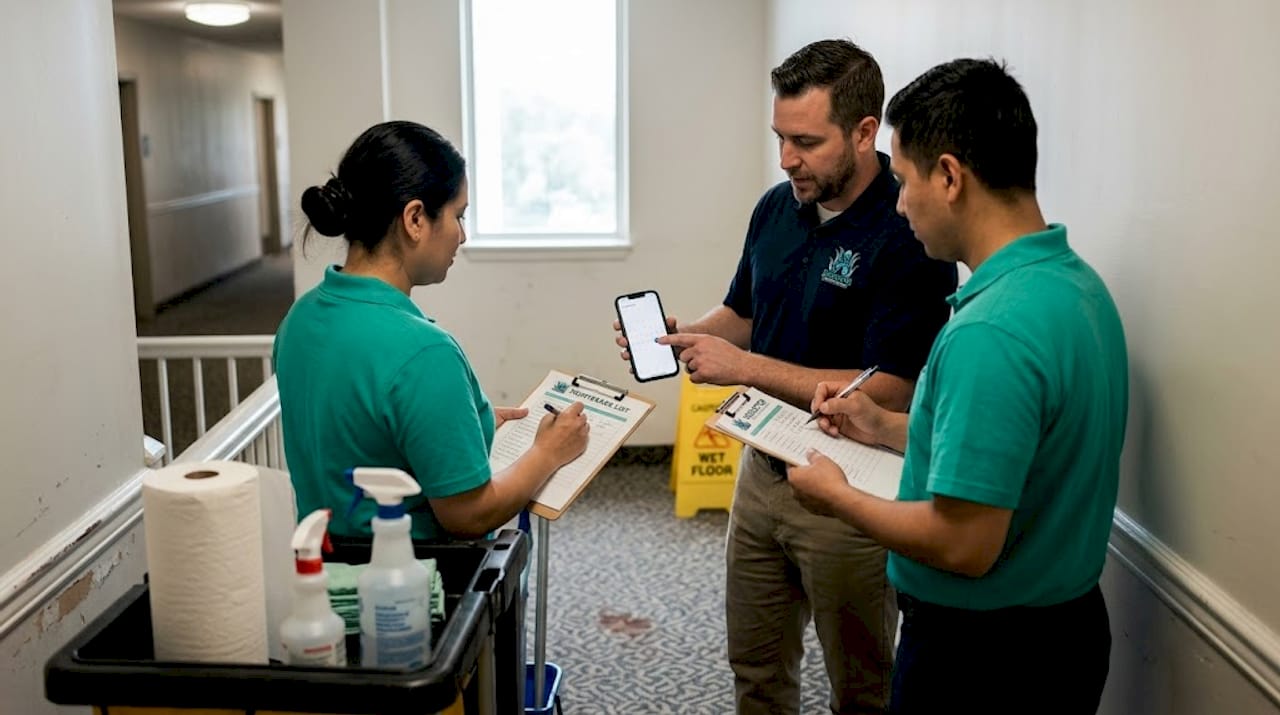
Responsibilities include inspecting properties for cleanliness, coordinating cleaning during unit turnovers such as carpet cleaning and painting prep, and integrating cleaning into preventive maintenance schedules like seasonal gutter cleaning. This integration is what separates high-performing properties from those constantly scrambling to address backlogs.
Here is a practical breakdown of how maintenance managers structure their core cleaning responsibilities:
-
Build and enforce cleaning schedules. Common areas need daily attention. Exterior surfaces like walkways, breezeways, and parking structures need scheduled deep cleaning on a monthly or quarterly basis. Managers who document these schedules and hold crews accountable to them eliminate the guesswork that leads to missed cleanings and resident complaints.
-
Coordinate cleaning with unit turnovers. Turnovers are the highest-stakes cleaning events in multi-family operations. A manager who sequences carpet extraction, appliance cleaning, and surface sanitization correctly can cut turnover time significantly, reducing vacancy days and lost revenue.
-
Conduct documented inspections. Inspections without documentation are just walks. Managers who use standardized inspection forms or digital tools create a record that supports accountability, identifies recurring problem areas, and provides evidence of compliance during audits or lease disputes.
-
Integrate seasonal exterior cleaning. Pressure washing, gutter clearing, and parking lot cleaning are not one-time events. Managers who build these into the annual calendar prevent the buildup of grime, mold, and debris that accelerates surface deterioration and increases long-term repair costs.
-
Use checklists and digital tools. Paper checklists are better than nothing. Digital maintenance management platforms are significantly better than paper. They allow managers to assign tasks, track completion, flag issues with photos, and generate reports that property executives can actually use for decision-making.
Pro Tip: If your maintenance manager is still running cleaning operations from a whiteboard or a shared spreadsheet, you are leaving measurable efficiency gains on the table. Even a basic digital maintenance platform pays for itself within one fiscal quarter through reduced missed tasks and faster turnover cycles.
Our unit cleaning checklist gives managers a ready-to-use framework, and the cleaning workflow optimization guide walks through how to sequence tasks for maximum throughput during high-volume turnover periods.
Managers act as coordinators, blending hands-on repairs with oversight of cleaning crews, and the methodology shifts from reactive, which consumes 68% of a manager's time in unstructured environments, to preventive via schedules and software for measurable efficiency gains.
Driving efficiency: Moving from reactive to preventive cleaning management
Understanding their everyday responsibilities, now see how maintenance managers shift projects from a costly reactive mode to a results-driven, preventive strategy.
The reactive vs. preventive distinction is not just operational philosophy. It is a financial reality that shows up directly in your NOI (net operating income). Reactive cleaning management means crews respond to visible problems after they have already become complaints or damage. Preventive management means problems are addressed on a schedule before they escalate.
The numbers are stark. Properties without preventive maintenance see emergency repair costs averaging $650 per incident, while automation and scheduled cleaning programs cut turnover costs by 35%, reducing vacancy from 24 days to just 9 days, and cutting overall maintenance costs by 30 to 38%.
| Factor | Reactive management | Preventive management |
|---|---|---|
| Emergency repair cost | $650+ per incident | Significantly reduced |
| Average vacancy days | 24 days | 9 days |
| Maintenance cost reduction | Baseline | 30 to 38% lower |
| Turnover cost reduction | Baseline | Up to 35% lower |
| Staff time on emergencies | 68% of work hours | Substantially lower |
Those figures represent real dollars on properties with hundreds of units. A 200-unit property reducing vacancy from 24 to 9 days per turnover cycle, across even 40 annual turnovers, generates a meaningful revenue recovery that goes directly to the bottom line.
The financial case for preventive cleaning is not marginal. It is transformational.
The maintenance manager's role in this shift is central. They are the ones who build the preventive schedule, advocate for the budget to execute it, train staff to follow it, and track whether it is working. Property executives who want to move their operations from reactive to preventive need to start by asking whether their maintenance manager has the tools, authority, and support to make that shift happen.
Pro Tip: Start small. Identify your three highest-frequency cleaning complaints from the past 12 months and build a preventive schedule specifically targeting those areas. Track complaint volume for 90 days. The data will make the case for expanding the program.
The methodology shifts from reactive to preventive through the use of scheduling software and structured oversight, and managers who lead this transition become the most valuable operational asset on the property team. Our guide on how to cut repairs and boost property value walks through the full financial model for property executives evaluating this shift.
Addressing inefficiency: Triage, false alarms, and repeat issues
Efficiency gains are not only about planning. Addressing inefficiency on the ground requires smart triage and follow-up.
Even the best-planned cleaning programs encounter friction. Residents submit requests that turn out to be non-issues. Crews address surface symptoms without resolving the underlying cause. The same area gets cleaned repeatedly without anyone identifying why it keeps getting dirty. These patterns are expensive, and they are more common than most property teams acknowledge.
Repeat issue rates average 15% industry-wide, with 23% of emergencies classified as false, highlighting the need for managers to triage cleaning and maintenance requests accurately before dispatching crews.
| Issue type | Industry average rate | Operational impact |
|---|---|---|
| Repeat cleaning issues | 15% of all requests | Wasted labor, resident frustration |
| False emergency calls | 23% of emergencies | Unnecessary crew dispatch, cost overrun |
| Unresolved root causes | Variable | Escalating damage, higher repair costs |
The triage process is where skilled maintenance managers earn their value. When a cleaning request comes in, the manager's job is to determine:
- Is this a genuine cleaning issue or a maintenance problem that cleaning will not fix?
- Has this area or unit been flagged before? If so, what was done and did it resolve the issue?
- Does this require immediate dispatch or can it be scheduled into the next routine cleaning cycle?
- What documentation exists from previous visits that could inform the current response?
"A maintenance manager who triages accurately is protecting two resources at once: the cleaning crew's time and the property's budget. Every false dispatch is a real cost that compounds across hundreds of units."
Best practices for reducing repeat issues and false emergencies include:
- Centralized request logging. Every cleaning request, regardless of source, goes into a single system. This allows managers to spot patterns across units and common areas.
- Photo documentation at every visit. Before and after photos create accountability and provide evidence when a resident disputes whether work was completed.
- Root cause analysis for repeat issues. When the same area generates three or more requests within a 90-day window, that triggers a root cause review rather than another routine cleaning dispatch.
- Resident communication protocols. Clear communication about what cleaning services cover, and what they do not, reduces the volume of requests that are actually maintenance issues in disguise.
Our cleaning triage checklist gives maintenance managers a structured process for evaluating and prioritizing incoming requests, reducing both false dispatches and repeat issue rates.
Why maintenance managers are undervalued: What most guides overlook
With the operational and efficiency factors explored, let's take a step back and challenge conventional wisdom about this pivotal role.
Here is the uncomfortable truth: most property management literature treats maintenance managers as tactical executors. They get the work order. They dispatch the crew. They close the ticket. That framing is not just incomplete. It is actively costing property portfolios money.
In our experience working with large multi-family properties across the country, the maintenance managers who deliver the best cleaning project outcomes are the ones who have been brought into strategic conversations. They know the capital improvement timeline. They understand which buildings are being positioned for refinancing or sale. They have a voice in vendor selection and contract negotiation. That context changes how they prioritize and plan.
The industry conversation rarely credits maintenance managers for their role in tenant retention. But cleaning and tenant retention are directly linked. Residents who experience consistently clean common areas, well-maintained building exteriors, and fast response to cleaning complaints renew their leases at higher rates. The maintenance manager is the operational engine behind all three of those outcomes.
There is also the staff development angle. High-performing maintenance managers invest in their cleaning crews. They train staff on technique, product selection, and safety. They recognize good work and address poor performance quickly. The result is lower crew turnover, which means less time spent onboarding replacements and more institutional knowledge retained on the team.
Most property executives are not asking their maintenance managers for strategic input on cleaning programs. They should be. The manager who runs your building every day knows which vendor shows up reliably, which cleaning product actually works on your specific exterior surfaces, and which common areas generate the most resident complaints. That knowledge is a strategic asset. Treat it like one.
How Monster Property Partners raises the bar for cleaning project management
If you're ready to transform your maintenance and cleaning project outcomes, here's how leading partners can help.
At Monster Property Partners, we built our entire service model around the realities that maintenance managers face every day. We understand that large exterior cleaning projects on multi-family properties require more than equipment and labor. They require reliable scheduling, clear communication, and a partner who shows up prepared and on time, every time.
Our multifamily exterior cleaning services are designed to integrate seamlessly with your existing maintenance schedules, reducing the coordination burden on your team and delivering consistent, documented results. From building exteriors and breezeways to parking structures and common area concrete cleaning, we bring the scale and reliability that property executives need when managing large portfolios. Connect with our team to build a customized cleaning efficiency plan that supports your maintenance managers and protects your asset value.
Frequently asked questions
What are the top daily tasks for maintenance managers in cleaning projects?
Routine responsibilities include scheduling staff, overseeing cleaning operations, performing inspections, and ensuring compliance with hygiene standards. Maintenance managers supervise janitorial and housekeeping staff while tracking performance across all cleaning touchpoints in the property.
How does preventive cleaning management reduce overall costs?
Preventive routines lower emergency repairs, reduce turnover vacancy, and decrease repetitive maintenance spending by integrating cleaning with other property upkeep. Preventive maintenance programs cut turnover costs by 35% and reduce overall maintenance costs by 30 to 38% compared to reactive approaches.
What methods help maintenance managers address recurring cleaning issues?
Triage of requests, thorough inspections, and use of checklists or digital tools help managers reduce repeat problems and false emergencies. Repeat issue rates average 15% industry-wide, making structured triage a critical skill for any maintenance manager overseeing cleaning operations.
How do maintenance managers balance cleaning with maintenance duties?
They coordinate schedules to integrate cleaning with other maintenance tasks and often use software to streamline oversight across teams. Managers blend hands-on repairs with crew oversight, shifting from reactive to preventive operations through structured scheduling and digital tools.