
TL;DR:
- Proper exterior cleaning prevents costly surface damage and extends property lifespan.
- Matching pressure washing methods to surfaces ensures effective cleaning without damage.
- Regular, scheduled pressure washing is a proactive investment that reduces long-term repair costs.
Keeping the exterior of a multi-family property clean is not just about appearances. Dirt, mold, algae, and grime build up fast on walkways, parking lots, and building facades, and when left unchecked, they accelerate surface deterioration that turns into costly capital repairs. Maintenance managers who treat exterior cleaning as a low priority often find themselves explaining emergency line items to ownership. This guide gives you a practical, proven framework for assessing your property's cleaning needs, selecting the right equipment and methods, building an execution plan, and deciding whether to handle it in-house or bring in a professional crew.
Table of Contents
- Define your needs: Pressure washing criteria for multi-family properties
- Selecting the right methods and equipment
- Building your step-by-step pressure washing plan
- Cost, quality, and frequency: Comparing options and making the call
- What most property managers miss about pressure washing ROI
- Partner with experts for consistent results
- Frequently asked questions
Key Takeaways
| Point | Details |
|---|---|
| Assess needs first | Identify your property’s key surfaces, budget, and frequency before hiring or buying. |
| Choose right methods | Select equipment and detergents based on surface material and contamination level. |
| Plan in steps | Follow a detailed checklist from prep to post-wash inspection for consistent quality. |
| Weigh cost and ROI | Compare DIY versus professional options to maximize long-term savings and curb appeal. |
| Partner for reliability | Working with specialists ensures ongoing property value and minimizes costly repairs. |
Define your needs: Pressure washing criteria for multi-family properties
Before you schedule a single wash, you need a clear picture of what you're actually dealing with. Properties vary widely in size, surface type, and foot traffic, and a one-size-fits-all approach will either waste your budget or leave problem areas untouched. Start by walking the property and cataloging every surface that needs attention.
Here are the core criteria to evaluate:
- Surface type: Concrete walkways, asphalt parking lots, vinyl siding, stucco, brick, and painted surfaces all respond differently to pressure and chemical treatments.
- Square footage: Total cleanable area drives both time and cost estimates. Measure parking lots, breezeways, building facades, and pool decks separately.
- Traffic zones: High-traffic areas like entry corridors and trash enclosures accumulate grime faster and need more frequent attention.
- Budget constraints: Know your approved spend before comparing vendor quotes or equipment rental costs.
- Scheduling windows: Resident notification requirements and lease terms often limit when you can run loud equipment. Early morning or weekday slots typically work best.
- Seasonal factors: Properties in humid climates battle mold and algae year-round, while northern properties deal with salt and freeze-thaw damage in winter months.
Neglecting exterior cleaning can lead to costly repairs that far exceed what routine maintenance would have cost. Reviewing last year's work orders is one of the fastest ways to identify where your property is losing money to preventable surface damage.
For a broader foundation on maintenance cleaning basics, it helps to understand how different exterior zones interact with weather and tenant activity before you lock in a cleaning schedule.
Pro Tip: Pull your last 12 months of maintenance work orders and highlight any repairs tied to surface deterioration, staining, or slip-and-fall incidents. Those line items are your best argument for a bigger cleaning budget and a smarter schedule.
Selecting the right methods and equipment
With your cleaning goals mapped out, the next step is matching the right pressure washing method to each surface on your property. The wrong choice can strip paint, crack grout, or force water behind siding, creating moisture damage that costs far more to fix than the original cleaning job.
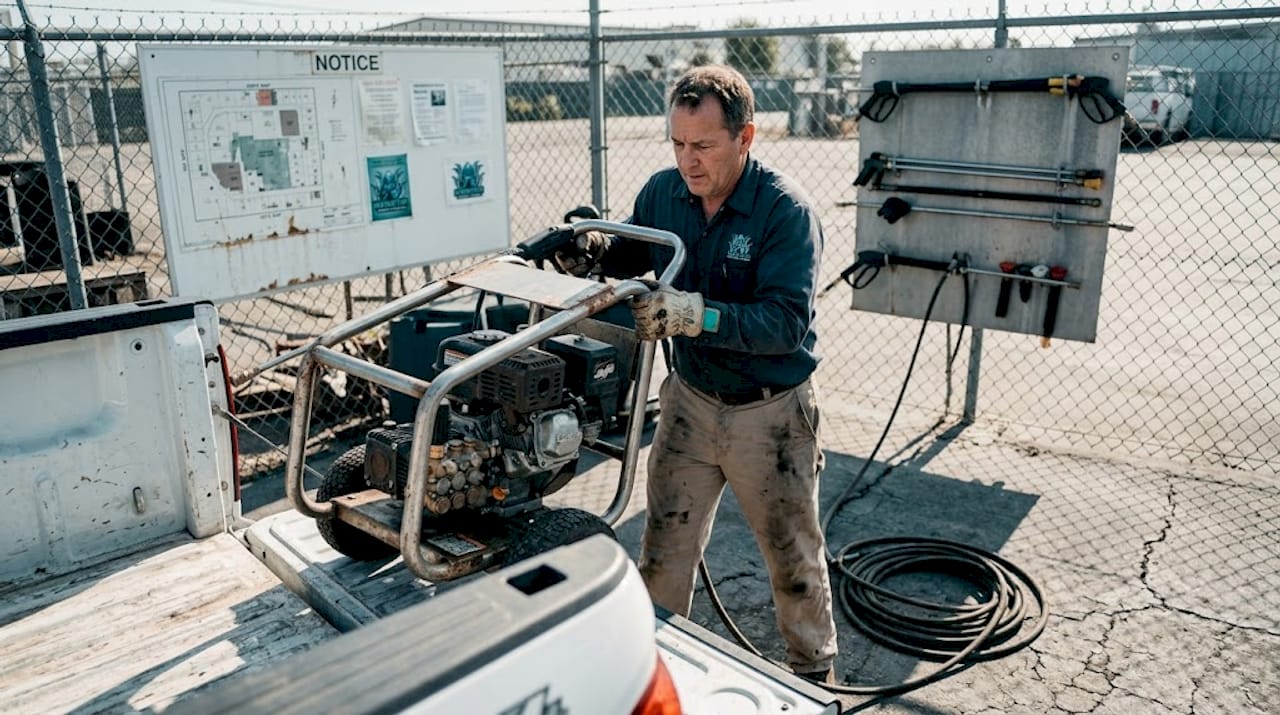
Start with the basics of pressure washing terms so your team and vendors are speaking the same language. Two numbers matter most: PSI (pounds per square inch, which measures water force) and GPM (gallons per minute, which measures flow volume). High PSI removes stubborn stains. High GPM rinses surfaces faster. For most multi-family exteriors, you want a balance of both rather than maxing out one.
Cold vs. hot water systems:
- Cold water: Best for general dirt, dust, and light biological growth. Lower operating cost and simpler maintenance.
- Hot water: Cuts through grease, oil stains in parking lots, and heavy organic buildup. Essential for dumpster pads and drive-through areas.
Here is a quick surface compatibility reference:
| Surface | Recommended PSI | Method | Notes |
|---|---|---|---|
| Concrete walkways | 2,500–3,500 | Standard pressure wash | Use a surface cleaner attachment |
| Asphalt parking lots | 1,500–2,500 | Cold water, low angle | Avoid high PSI that damages binder |
| Vinyl siding | 500–1,200 | Soft wash | Use chemical pre-treatment |
| Brick and mortar | 800–1,500 | Soft wash or low PSI | Old mortar is vulnerable |
| Stucco | 500–800 | Soft wash only | High PSI causes irreversible pitting |
| Pool decks | 1,500–2,000 | Standard pressure wash | Check for sealed vs. unsealed surface |
On pricing, commercial pressure washing costs $0.08–$0.40 per sq ft for flatwork and parking lots, and $0.15–$0.40 per sq ft for building exteriors. Those ranges shift based on method complexity, chemical use, and regional labor rates.
Pro Tip: For sensitive surfaces like stucco or older brick, soft washing uses lower pressure combined with biodegradable detergents to clean effectively without physical damage. It costs slightly more per square foot but prevents expensive repairs.
Building your step-by-step pressure washing plan
Once you've picked the best technique for each surface zone, you need a structured execution plan. Skipping steps here is where projects go sideways, whether that means a resident complaint, a chemical spill near a storm drain, or a missed area that gets flagged during an owner walkthrough.
Follow this sequence for every exterior cleaning project:
- Pre-wash inspection: Walk each zone and mark problem areas with flagging tape. Note any cracked surfaces, loose caulking, or damaged siding that could be worsened by pressure.
- Resident notification: Post notices at building entries and send a digital notice at least 48 hours in advance. Include the date, affected areas, and any parking restrictions.
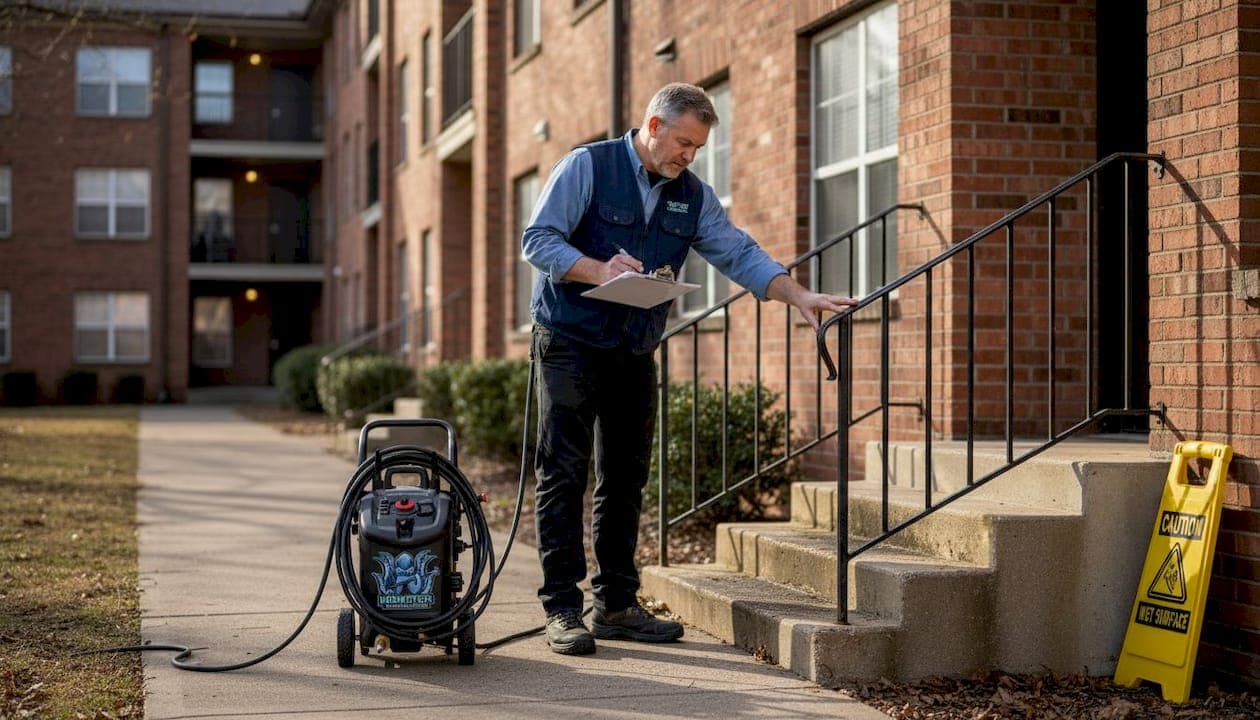
- Temporary signage: Place wet surface and area-closed signs before work begins. This protects residents and limits your liability exposure.
- Detergent and chemical selection: Match your cleaning agents to the surface and the type of contamination. Alkaline degreasers work on oil. Sodium hypochlorite solutions address mold and algae. Always verify that chemicals are safe for storm drain discharge in your municipality.
- Zone-by-zone execution: Work from the top of buildings down to ground-level surfaces. Start with the least visible areas to dial in your settings before moving to high-visibility facades.
- Post-cleaning inspection: Walk every zone with your checklist and compare against your pre-wash notes. Flag any areas that need a second pass.
- Documentation: Photograph before and after each zone. These images are valuable for owner reports, insurance records, and future vendor negotiations.
Routine cleaning not only boosts curb appeal but also extends the exterior's lifespan, which directly supports your long-term capital plan. A solid step-by-step checklist keeps your crew consistent across every project, regardless of who is running the job that day.
Pro Tip: Keep a shared photo folder organized by date and zone. Before-and-after documentation takes less than 10 minutes per project and gives you concrete evidence when justifying cleaning frequency to ownership.
Cost, quality, and frequency: Comparing options and making the call
With your plan mapped out, the final decision hinges on cost, quality, and how often to wash. The DIY versus professional debate is real, and the right answer depends on your property size, staff capacity, and risk tolerance.
DIY considerations:
- Lower direct cost if staff time is already budgeted
- Requires equipment purchase or rental, plus training
- Staff liability exposure if injuries or property damage occur
- Inconsistent results without experienced operators
Professional vendor considerations:
- Higher upfront cost but includes equipment, insurance, and expertise
- Faster completion on large properties
- Accountability through contracts and documented results
- Access to commercial-grade hot water systems and surface cleaners
Here is a simplified cost comparison for a mid-size 200-unit property:
| Option | Estimated cost | Time to complete | Quality level |
|---|---|---|---|
| DIY (staff + rental) | $800–$1,400 | 2–3 days | Variable |
| Professional vendor | $1,500–$3,500 | 1 day | Consistent |
For reference, a 5,000 sq ft lot can range from $400 to $800 for professional exterior surface cleaning. Scale that across a full complex and the professional option often delivers better value per square foot when you factor in staff hours and equipment wear.
On frequency, here is what the data supports for most multi-family properties:
- High-traffic zones (entries, trash areas, breezeways): Every 3 months
- Parking lots and driveways: Semi-annual minimum
- Building facades: Annual for most climates, semi-annual in humid regions
- Pool decks and amenity areas: Quarterly
For more detail on the professional pressure washing benefits that go beyond surface appearance, and to build a seasonal cleaning strategies calendar for your property, both resources are worth reviewing before you finalize your vendor contract.
"Routine professional cleaning can reduce repair costs by up to 30%, making it one of the highest-return maintenance investments for multi-family properties."
What most property managers miss about pressure washing ROI
Here is the uncomfortable truth: most maintenance managers only schedule a wash when something looks bad enough to generate a complaint. That reactive approach is exactly how minor surface issues become major capital expenses.
The real ROI from pressure washing is not in the clean surface you see the day after the job. It is in the mold that never penetrated the siding, the concrete sealer that lasted two extra years because buildup was removed before it caused cracking, and the tenant who renewed because the property looked maintained. Those outcomes never show up as a line item savings, which is why they get ignored.
Vendor selection matters just as much as frequency. A low-bid vendor using improper PSI on the wrong surface can cause surface wear that reduces property value faster than the dirt they were hired to remove. We have seen properties spend more on stucco repairs in a single year than they would have spent on five years of correctly executed soft washing.
Smart managers treat pressure washing as a preventive investment in the asset, not a cosmetic fix before a lease-up or an inspection. When you build it into your annual maintenance calendar with the same discipline as HVAC servicing or roof inspections, the results compound over time in both appearance and reduced repair spend.
Partner with experts for consistent results
When you're ready for hassle-free results, here's how to get started with experts who understand the scale and complexity of multi-family exterior cleaning.
At Monster Property Partners, we specialize in multifamily exterior cleaning services built for the demands of large residential complexes. From building facades to common area concrete cleaning, our crews show up with commercial-grade equipment, proper insurance, and a documented process that gives you before-and-after records for every project. We work around your resident schedules and can build a customized cleaning calendar that fits your budget and frequency needs. Reach out to our team for a fast, no-obligation estimate and see why property management teams across the country trust us to protect their assets.
Frequently asked questions
How much does commercial pressure washing typically cost per square foot?
Expect to pay $0.08–$0.40 per sq ft for flatwork, and $0.15–$0.40 per sq ft for building exteriors. Actual cost depends on surface type, regional labor rates, and the cleaning method required. Pricing ranges shift based on complexity and chemical use.
How often should multi-family properties be pressure washed?
Most properties benefit from at least semi-annual washes, with quarterly cleaning for high-traffic zones like entries and trash areas. Routine pressure washing extends exterior lifespan and reduces the frequency of costly surface repairs.
What surfaces require special care when pressure washing?
Stucco, painted surfaces, and old brick need gentler settings or soft washing to avoid cracking, pitting, or paint removal. Always test a small area first and match your PSI to the surface rating before running a full pass.
Is DIY pressure washing effective for large properties?
DIY works for small, isolated tasks but falls short on large complexes where consistency and commercial equipment matter. Professional cleaning covers specialized techniques, proper insurance, and faster completion that staff-run projects rarely match.
Will routine washing really reduce long-term repair costs?
Yes, regular cleaning can lower repair costs by up to 30% by preventing buildup and surface deterioration before it reaches the point of structural damage.