
TL;DR:
- Seasonal cleanings target specific environmental threats to prevent long-term property damage.
- Scheduling quarterly cleanings improves property value, extends equipment lifespan, and reduces emergency repairs.
- Implementing a structured, communicative seasonal plan enhances tenant satisfaction and retention.
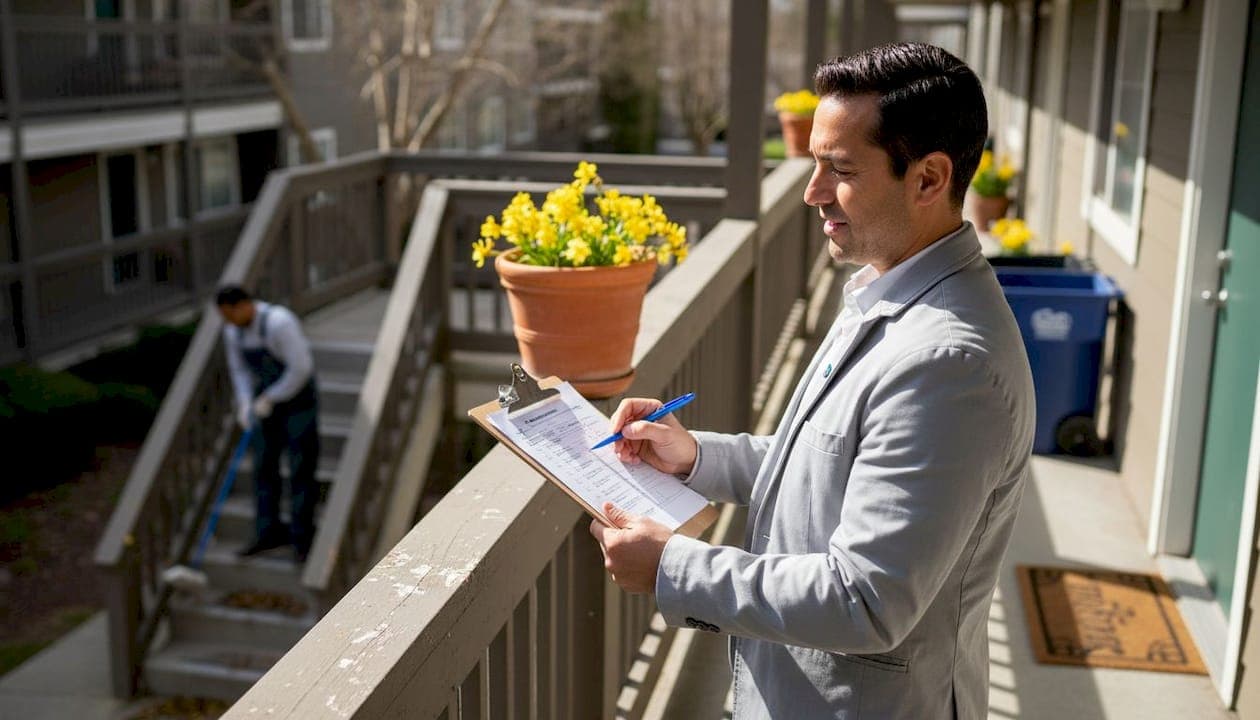
Routine cleaning schedules feel reliable, but they often miss the threats that change with every season. Pollen loads in spring, mold pressure in summer, leaf debris clogging drains in fall, and salt residue grinding into concrete all winter — these are not problems a fixed calendar can anticipate. Seasonal cleanings prevent buildup and the property damage that follows when those threats go unchecked. For property managers overseeing multi-family buildings, shifting from a routine mindset to a seasonal strategy is one of the highest-leverage moves available. This article breaks down why it matters, what the numbers look like, and how to build a program that actually works.
Table of Contents
- Why seasonal cleanings matter in property management
- The ROI of scheduled seasonal cleanings
- Best practices for seasonal cleaning schedules
- Overcoming edge cases and maximizing results
- The real key to tenant satisfaction and retention
- Partner for hassle-free seasonal cleanings
- Frequently asked questions
Key Takeaways
| Point | Details |
|---|---|
| Seasonal vs. routine cleaning | Seasonal cleanings directly address each season’s biggest risks, unlike simple routines. |
| Proven ROI boost | Proactive seasonal maintenance can increase property value, decrease emergencies, and extend equipment life. |
| Checklist-based scheduling | Quarterly frameworks with timely checklists maximize cleanliness and curb appeal for multi-family properties. |
| Handle edge cases | Tailor the cleaning plan for extreme weather events and unique property challenges to avoid costly surprises. |
| Tenant satisfaction | Visible and well-communicated cleaning programs improve tenant retention and property reputation. |
Why seasonal cleanings matter in property management
Routine cleanings are scheduled for convenience. Seasonal cleanings are scheduled for results. That distinction matters more than most property managers realize until a problem surfaces.
A routine cycle might call for a pressure wash every 90 days regardless of conditions. A seasonal strategy, by contrast, looks at what each quarter actually throws at a building and responds accordingly. The threats are predictable once you start looking at them through a seasonal lens.
Season-specific challenges like pollen in spring, salt residue in winter, and debris in fall cause buildup and damage to multi-family properties when left unaddressed. Here is what that looks like in practice:
- Spring: Pollen coats windows, walkways, and HVAC intakes, triggering tenant complaints and filter failures
- Summer: Heat and humidity accelerate mold and mildew growth on siding, decks, and common area surfaces
- Fall: Leaf debris clogs gutters and drains, creating moisture intrusion risks before winter sets in
- Winter: Road salt and de-icing chemicals corrode concrete, metal railings, and parking structures over time
Each of these is a building protection issue, not just an aesthetic one. Addressing them on a seasonal timeline reduces long-term damage and cuts the volume of maintenance complaints that pile up when conditions are ignored.
"Seasonal cleanings are not just about appearance. They are about extending the life of your assets and protecting the investment your clients have made in their properties."
For property managers using season-specific cleaning strategies, the shift from reactive to proactive is immediate. Start with a seasonal exterior checklist to map each season's specific tasks to your property type and climate zone.
Pro Tip: For buildings in high-risk weather corridors, schedule pre-storm and post-storm cleanings as standing line items in your service agreement. Waiting until damage is visible costs significantly more than a targeted clean right after the event.
The ROI of scheduled seasonal cleanings
Skepticism about cleaning ROI is understandable. It can feel like a soft benefit compared to capital improvements. The numbers tell a different story.
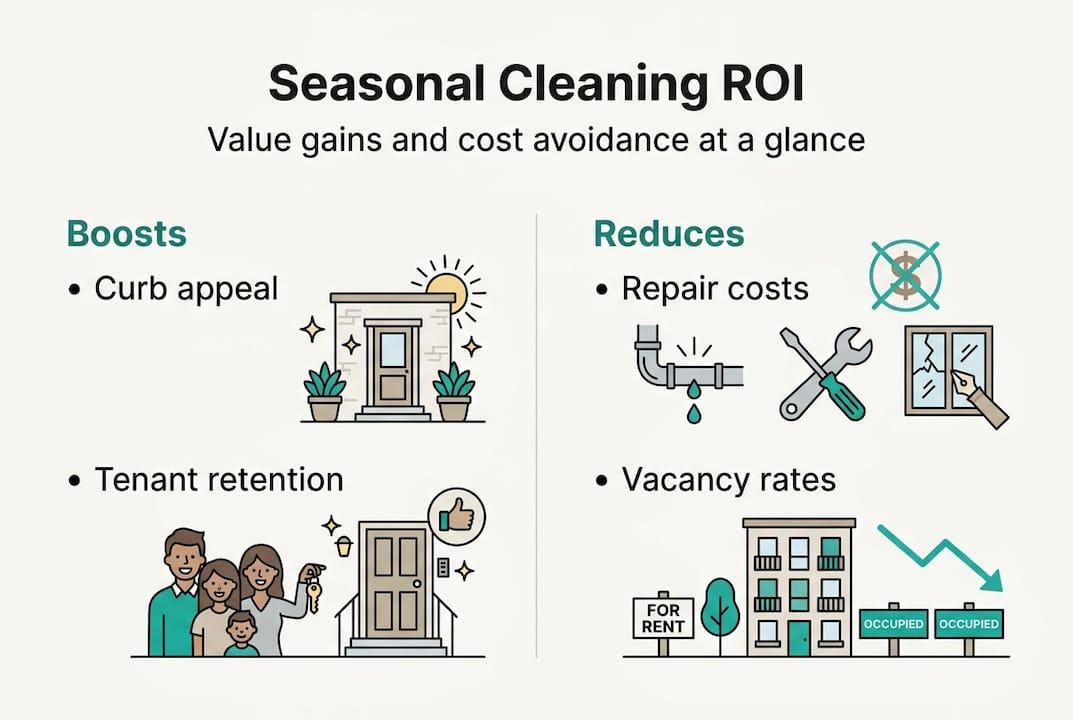
Implementing a scheduled seasonal cleaning program delivers measurable financial outcomes across multiple performance areas. The relationship between cleanliness and property value is well documented, and the maintenance cost savings that follow a proactive schedule are significant.
Here is what a structured seasonal program typically improves:
- Property value: Curb appeal improvements that support higher asking rents
- Equipment lifespan: Reduced wear on HVAC systems, gutters, and exterior materials
- Emergency repair frequency: Fewer reactive calls from tenants and fewer vendor rush fees
- Vacancy periods: Faster leasing when units and common areas look maintained
The data behind these outcomes is compelling. Curb appeal boosts property value by 5-15% and enables faster leasing with higher rents for multi-family units. On the cost side, proactive maintenance reduces emergency costs by 25%, extends equipment life by 40%, and cuts vacancy periods by 20%.
| Metric | Before seasonal program | After seasonal program |
|---|---|---|
| Property value lift | Baseline | 5-15% increase |
| Emergency repair costs | High, unpredictable | Reduced by up to 25% |
| Equipment lifespan | Standard depreciation | Extended by up to 40% |
| Vacancy period | Longer average | Reduced by up to 20% |
These are not theoretical projections. They reflect what happens when cleaning is treated as a scheduled investment rather than a reactive expense. A 25% reduction in emergency maintenance costs alone can offset the full annual cost of a seasonal cleaning contract at most mid-size properties.
Curb appeal also has a direct leasing effect. Properties that look clean and maintained attract prospects faster and support premium rent positioning. That translates to real revenue, not just avoided costs.
Best practices for seasonal cleaning schedules
Knowing the ROI is one thing. Building a schedule that actually captures it requires structure and discipline. Here is a practical framework built around the four seasonal milestones.
- Spring (March to May): Focus on post-winter recovery. Pressure wash building exteriors, walkways, and parking areas. Check HVAC intakes for pollen and debris. Inspect roofs and gutters after freeze-thaw cycles. Clean windows inside and out.
- Summer (June to August): Address heat and humidity-driven growth. Treat mold and mildew on siding, decks, and fencing. Inspect and clean AC units and condensate lines. Handle pest control around common areas and trash enclosures.
- Fall (September to November): Prepare for winter. Clear gutters and downspouts of leaf debris. Clean and inspect heating systems. Seal cracks in walkways and parking surfaces before freeze cycles begin. Deep clean common areas before residents spend more time indoors.
- Winter (December to February): Prioritize safety and corrosion control. Remove salt and grime from entryways, parking structures, and metal surfaces. Perform deep cleans of interior common areas. Use freeze-resistant cleaning solutions for exterior work.
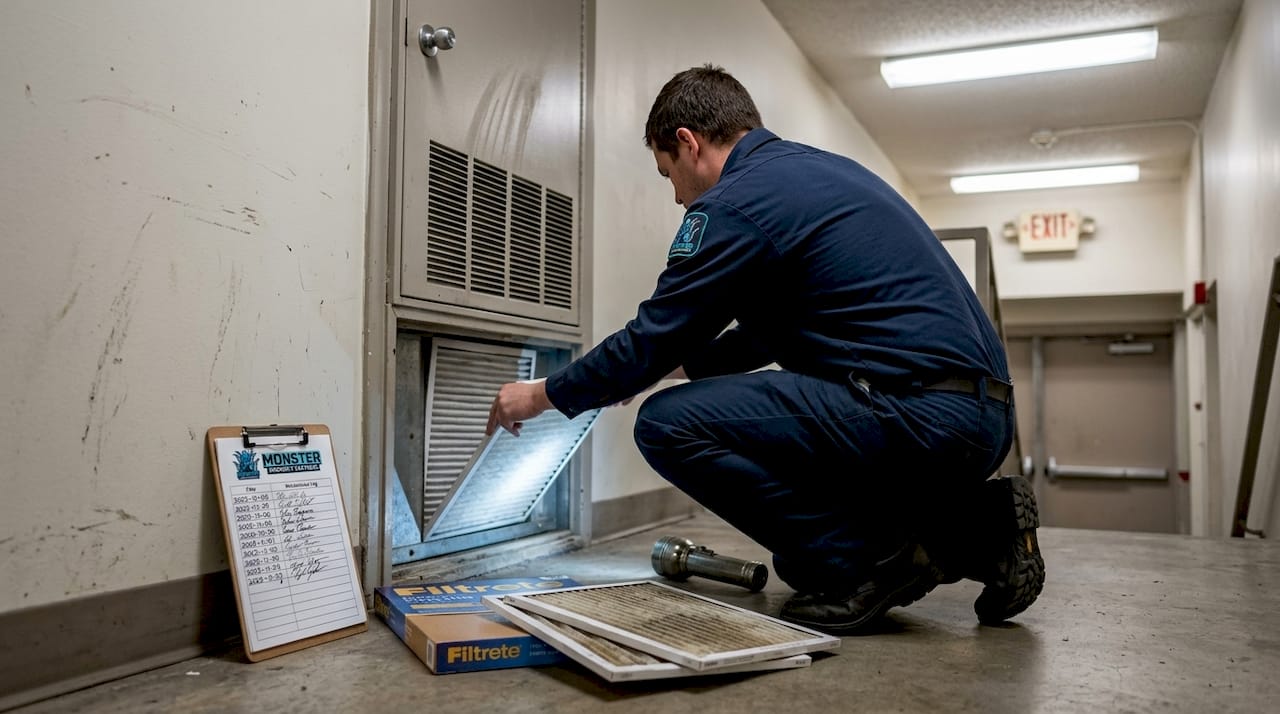
Seasonal checklists that include HVAC and roof checks in spring, pest control in summer, gutter prep in fall, and de-icing in winter deliver the highest sustained results when paired with on-demand services for efficiency.
| Schedule type | Cost profile | Issues caught | Flexibility |
|---|---|---|---|
| Seasonal (quarterly) | Predictable, budgetable | Season-specific risks | High, adapts to weather |
| Reactive (one-off) | Variable, often higher | Only visible problems | Low, always behind |
Beyond the four seasons, integrate dynamic dispatch into your program. When a major storm hits, an occupancy spike occurs, or tenant feedback flags a specific area, your seasonal schedule should flex to accommodate it. Use your multifamily cleaning checklist and [cleaning guide for managers](https://blog.monsterpropertypartners.com/multi family property cleaning guide managers) as living documents, not static templates.
Pro Tip: Keep audit logs with before and after photos for every seasonal service. This documentation supports vendor accountability, helps you spot recurring problem areas, and gives you evidence for insurance claims or capital improvement justifications.
Overcoming edge cases and maximizing results
Even a well-built seasonal schedule will face disruptions. The goal is not a perfect plan. It is a resilient one.
Common challenges that knock seasonal programs off track include:
- Unexpected winter storms that deposit salt and grime faster than scheduled cleanings can address
- HVAC failures triggered by debris buildup between scheduled service windows
- High-vacancy periods that reduce urgency but actually increase the risk of unnoticed damage
- Tenant-reported events like flooding, vandalism, or pest activity that require immediate response
For coastal properties, storm-prone markets, or buildings with older exterior materials, standard seasonal schedules need adjustment. In winter, prioritizing salt and grime removal along with HVAC maintenance prevents breakdowns, while coastal and storm-prone areas benefit from extra post-storm cleaning cycles built into the base contract.
The principle behind adapting to edge cases is the same one that drives the whole seasonal approach: anticipate instead of react.
"Preventative maintenance outperforms reactive maintenance by reducing tenant churn 2-8% through faster responses and fewer visible failures."
Quarterly audits and cleanings outperform sporadic maintenance for sustained ROI, and aligning cleaning schedules with local weather patterns, such as using freeze-resistant solutions in cold climates, makes the difference between a program that holds up and one that collapses under pressure.
For high-risk equipment, pair your seasonal cleaning program with a structured preventive maintenance protocol. Combining exterior cleaning cycles with equipment-specific service intervals keeps both the building and its systems performing at their best. Your cleaning guide for exteriors should account for local climate variables and document the adaptations you make each year.
The real key to tenant satisfaction and retention
Here is something most cleaning guides skip: executing a seasonal checklist is the floor, not the ceiling.
Property managers who see the biggest retention gains are not just running better cleaning programs. They are making those programs visible to residents. When tenants notice that the building looks better after winter, that walkways were treated before the first frost, or that common areas got a refresh before summer, they feel cared for. That perception is worth more than any single cleaning event.
The surprising ROI of seasonal cleaning is not just in avoided repair costs. It is in the relationship it builds between residents and the property. Tenants who trust that management is proactive are less likely to escalate complaints, less likely to move out, and more likely to renew.
Communicating seasonal upgrades through resident emails or posted notices turns maintenance into a trust signal. Review efficient property upkeep tips to build a communication rhythm that reinforces your cleaning program's value to residents.
Pro Tip: After each seasonal service, send a brief resident update noting what was completed and what to expect next. It takes five minutes and does more for retention than most amenity upgrades.
Partner for hassle-free seasonal cleanings
Building a seasonal cleaning program from scratch takes time, vendor coordination, and consistent follow-through. That is where a specialized partner changes the equation.

At Monster Property Partners, we work exclusively with apartment buildings and multi-family properties on large-scale exterior cleaning projects. Our team handles scheduling, execution, and documentation so your seasonal program runs without gaps. From multifamily exterior cleaning to concrete cleaning services for parking areas and common surfaces, we cover the full scope of what a seasonal program requires. If you are ready to stop reacting and start protecting your assets on a schedule that actually works, we are the team to call.
Frequently asked questions
What is the main difference between seasonal and routine cleanings?
Seasonal cleanings are timed to address specific challenges of each season, while routine cleanings fall short on season-specific issues because they follow a fixed calendar regardless of weather or environmental conditions.
How often should property managers schedule seasonal cleanings?
Most experts recommend quarterly cleanings aligned with the start of each season, plus additional services after major storms. Quarterly audits deliver higher ROI than sporadic or reactive maintenance.
What ROI can I expect from investing in seasonal cleanings?
Well-implemented programs can boost property values by 5-15% and reduce emergency repair costs by 25% while extending equipment life by up to 40%.
How do I handle extreme weather or unique property challenges?
Adapt your checklist for local risks, prioritize salt and grime removal in winter, and build post-storm cleaning cycles into your base service agreement to prevent compounding damage.
Does scheduling seasonal cleanings affect tenant satisfaction?
Yes. Proactive maintenance reduces tenant churn by 2-8%, and communicating seasonal improvements to residents amplifies that retention effect significantly.