
TL;DR:
- Proper equipment selection is crucial to prevent building damage and costly repairs in exterior cleaning.
- Common mistakes include using a single machine for all surfaces, ignoring flow rate, and untrained operators.
- Combining good procedures, regular maintenance, and staff training enhances safety, efficiency, and long-term property protection.
Property managers who treat exterior cleaning as a simple checkbox task often discover, too late, that the wrong equipment does far more harm than no cleaning at all. Building damage linked to inadequate or incorrect cleaning is well documented in building pathology research, and the consequences show up in repair budgets, resident complaints, and long-term structural decline. This article walks you through what equipment selection really means for multifamily properties, the most common mistakes that derail large-scale projects, and a practical framework for making smarter, safer choices every time.
Table of Contents
- Why equipment selection matters for large-scale property cleaning
- The most common equipment pitfalls and how to avoid them
- Choosing the right equipment: Key criteria for multifamily projects
- Procedures, maintenance, and compliance: Beyond the tools
- What most property managers miss about equipment choices
- Discover expert support for large-scale cleaning success
- Frequently asked questions
Key Takeaways
| Point | Details |
|---|---|
| Right tools prevent damage | Using equipment specifically suited for each cleaning task protects building systems from costly harm. |
| Avoid common pitfalls | Most cleaning-related damages are preventable with proper machine selection, water management, and procedures. |
| Holistic approach matters | Combining good equipment, clear processes, and ongoing training is the most reliable formula for large-scale cleaning success. |
| Compliance safeguards investments | Routine equipment maintenance and documented procedures reduce risk and reinforce property value over time. |
Why equipment selection matters for large-scale property cleaning
Most maintenance directors spend considerable time comparing cleaning chemicals and scheduling crews, but equipment often gets treated as an afterthought. That thinking is expensive. The machines you put to work on a 200-unit building are not interchangeable with what works on a suburban driveway, and the difference between the right tool and the wrong one can mean the difference between a clean facade and a water-damaged wall system.
The "more pressure equals better results" belief is one of the most stubborn misconceptions in property maintenance. High-pressure output sounds effective, but it can force water behind cladding panels, erode grout lines, strip protective coatings from walkways, and compromise window seals. The damage does not always appear immediately. Water infiltration behind exterior systems can sit undetected for months before showing up as mold, spalling, or interior leaks.
Research supports this concern directly. Inadequate or incorrect cleaning and improper water exposure during cleaning have been specifically linked to building damage across multiple external systems. This is not a theoretical risk for multifamily properties. It is a documented pattern that affects budgets and liability.
Here is what equipment selection actually controls on a large exterior project:
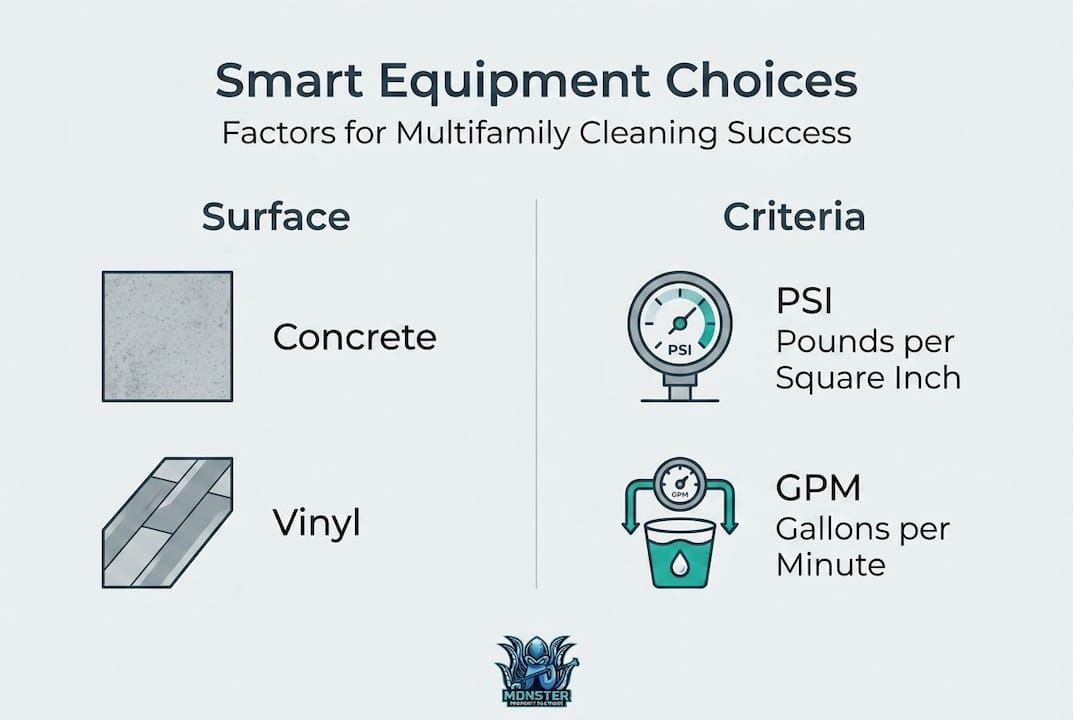
- Water pressure output: Measured in PSI (pounds per square inch), this determines penetration force. Too high on delicate substrates causes damage; too low on heavy concrete staining leaves the job incomplete.
- Water flow rate: Measured in GPM (gallons per minute), this affects how quickly cleaning agents are applied and rinsed, influencing both effectiveness and water consumption.
- Surface compatibility: Hot water units work differently from cold water machines. Rotating nozzle attachments behave differently from fan tips. Each combination suits a specific surface type.
- Reach and mobility: For multistory buildings, the difference between a trailer-mounted unit and a portable machine is not just convenience. It shapes what can actually be cleaned safely.
- Recovery systems: On environmentally regulated properties, machines with water reclaim capabilities keep you compliant with stormwater runoff rules.
Understanding safety best practices before any large exterior project is essential, not optional. Selecting fit-for-purpose equipment also has direct budget implications. Machines that operate efficiently at the correct pressure and flow rate reduce water usage, speed up project timelines, and cut crew hours. They also reduce the risk of callbacks and warranty disputes. You can find broader property cleaning insights to supplement your planning before committing to any equipment setup.
"The costliest repairs we see at multifamily properties are not from deferred cleaning. They are from cleaning done with the wrong equipment at the wrong settings."
The most common equipment pitfalls and how to avoid them
Every large-scale cleaning project carries risk. But most of the damage we see at multifamily properties is not mysterious or unpredictable. It traces back to a small set of avoidable equipment mistakes that property managers and vendors make repeatedly.
Mistake 1: Using a single machine for every surface. A concrete parking structure and a vinyl-clad building facade need entirely different approaches. Running the same 4,000 PSI machine across both surfaces is the fastest way to scour the structure and blow out the window seals on the apartments above. Projects at scale require multiple equipment configurations or operators trained to adjust settings between surfaces.
Mistake 2: Skipping flow rate assessment. Managers often focus on pressure (PSI) and ignore flow rate (GPM). A machine with moderate pressure but excessive flow rate can still saturate walls and force water into wall cavities. Instances of building damage tied to too much water or improper cleaning extend to facades, windows, and roofing systems. Too much water at moderate pressure is just as risky as too much pressure.
Mistake 3: Renting unfamiliar equipment without operator training. Rental equipment is widely available and often powerful. The problem is that large units without experienced operators can be unpredictable. Variable throttle control, nozzle selection errors, and improper standoff distances all lead to surface damage. Make sure every operator understands the specific machine being used before starting work on occupied buildings.
The consequences of these mistakes add up quickly:
- Facade staining and discoloration from incorrect chemical concentration
- Window seal failure from direct high-pressure contact
- Cracked or eroded mortar joints on brick exteriors
- Slippery walkway surfaces caused by stripping protective coatings
- Drainage system overload from excessive water volume
Review a complete list of essential cleaning equipment before finalizing your project scope. The multi-family cleaning guide for maintenance managers also provides surface-specific advice that helps you match the right tool to each building zone.
Pro Tip: Before any large exterior project, do a 10-minute equipment audit. Check nozzle type, verify PSI and GPM settings for each surface area planned, confirm all operators know how to adjust pressure mid-job, and review chemical dilution ratios. This 10 minutes prevents hours of repair work later.
"Equipment that seems powerful enough is rarely the problem. Equipment pointed at the wrong surface at the wrong setting, with no adjustment plan, is always the problem."
Choosing the right equipment: Key criteria for multifamily projects
Once you understand what can go wrong, the next step is building a practical selection process. Choosing equipment for multifamily exterior cleaning is not about finding the biggest machine or the most affordable rental. It is about matching capability to the actual demands of the property in front of you.
Failures in proper cleaning methods due to equipment choice can affect all major external building systems, which means your selection criteria need to account for every surface the project will touch.
Follow this step-by-step evaluation process:
- Map all surfaces on the property. Walk the property before selecting any equipment. Note surface materials, stories above grade, proximity to windows and electrical fixtures, and areas near water-sensitive landscaping or stormwater drains.
- Define the pressure range for each zone. Assign a target PSI and GPM range to concrete, walkways, facades, rooftops, and any specialty surfaces. Document these ranges before equipment arrives.
- Assess reach requirements. Buildings over three stories need trailer-mounted units or surface cleaners with extended-reach capability. Document the maximum working height before finalizing equipment choices.
- Evaluate water recovery needs. Properties near wetlands, in drought-restricted areas, or operating under specific municipal stormwater permits need reclaim systems. Check local regulations early.
- Confirm chemical compatibility. Some detergents are corrosive to certain machine seals and pump components. Verify compatibility before combining cleaning agents with rental or leased equipment.
Here is a practical equipment comparison for the most common multifamily cleaning zones:
| Surface type | Recommended PSI | GPM range | Equipment type | Notes |
|---|---|---|---|---|
| Concrete parking areas | 2,500 to 3,500 | 4 to 6 | Surface cleaner attachment | Reduces streaking, faster coverage |
| Vinyl or wood-clad siding | 500 to 1,200 | 2 to 3 | Soft wash system | Low pressure, chemical reliant |
| Brick or masonry facades | 1,500 to 2,500 | 3 to 4 | Fan tip with hot water unit | Avoids mortar erosion |
| Windows and glass | Under 500 | 1 to 2 | Dedicated window cleaning system | Never use pressure washers directly |
| Roof surfaces | 500 to 1,000 | 2 to 3 | Soft wash with biodegradable mix | Prevents tile or shingle damage |
For a broader planning framework, use the multifamily cleaning checklist alongside the comprehensive property cleaning guide for managers. These resources help you tie equipment decisions to your annual maintenance calendar rather than treating each project as a standalone event.
On the rent versus buy question, the answer depends on project frequency. If your property runs quarterly exterior cleaning cycles, owning surface cleaners and soft wash systems likely pays off within 18 months. For specialized work done once or twice a year, rental is almost always the smarter financial call. Factor in storage, maintenance, and operator training costs before committing to ownership.
Procedures, maintenance, and compliance: Beyond the tools
Selecting the right equipment solves half the problem. The other half is what happens to that equipment between projects, how operators use it on the day, and whether your team has documented procedures that protect the property and reduce liability.
Improper cleaning procedures and lack of adherence to best practices contribute to building damage independent of equipment quality. You can own perfect machinery and still cause harm through inconsistent procedures or undertrained crews.
Here is a practical equipment maintenance schedule for multifamily cleaning operations:
| Maintenance task | Frequency | Responsible party | Documentation required |
|---|---|---|---|
| Pre-project inspection | Before every project | Lead operator | Inspection checklist, signed |
| Nozzle wear check | Every 50 hours of use | Operator | Log entry |
| Pump oil change | Every 500 hours | Technician | Service record |
| Hose inspection for cracks | Monthly | Lead operator | Visual log |
| Annual professional service | Once per year | Certified technician | Full service report |
| Chemical injector flush | After every project | Operator | Post-project log |
Follow this numbered process for building a compliance-focused equipment program:
- Create a written equipment use policy. This document should specify approved PSI ranges per surface, required personal protective equipment, chemical handling protocols, and operator certification requirements.
- Assign ownership. Every piece of equipment should have a named responsible party. Anonymous ownership leads to skipped maintenance and unlogged damage.
- Log every use. Date, location, operator name, pressure settings used, and any issues observed. This record becomes your defense if a resident files a damage claim.
- Train before you deploy. New operators should run machines on low-risk areas first. Never assign an untrained employee to a multistory facade on day one.
- Audit your procedures quarterly. Review logs, inspect equipment, and update procedures based on what your team actually encounters in the field.
Review the cleaning compliance steps your team should follow before each large project, and build them into your standard operating procedures now rather than after an incident. A seasonal cleaning checklist can help you link equipment maintenance to your property's recurring cleaning calendar.
Pro Tip: Keep a laminated quick-reference card in each equipment case. It should show the approved PSI settings for each surface type on your property, emergency shutoff procedures, and the direct phone number for your equipment service provider. Field crews make better decisions when the answer is already in front of them.
Building a compliance culture takes time, but it pays off consistently. Teams that follow documented procedures make fewer errors, catch equipment problems earlier, and produce more consistent results across every property they service.
What most property managers miss about equipment choices
Here is the uncomfortable truth we have learned working across multifamily properties at scale: the managers who obsess over equipment specifications often have worse outcomes than those who invest in process.
We have walked properties where maintenance teams had access to high-end, purpose-built cleaning equipment and still produced inconsistent results, surface damage, and costly re-cleans. The problem was never the hardware. It was the absence of clear procedures, operator accountability, and scheduled follow-through.
Equipment is a vehicle. Process is the driver. A world-class machine operated by an undertrained crew with no documented guidelines is more dangerous than a mid-tier machine run by a disciplined team that follows a clear protocol every single time. This is not a knock on investing in good equipment. It is a reminder that the investment only pays off when surrounded by the right culture and workflow.
We have also seen properties where managers chase the newest trends in exterior cleaning technology, spending money on cutting-edge gear while their basic maintenance scheduling remains reactive and disorganized. Tracking 2026 cleaning trends is useful for staying competitive, but not if your team is still skipping pre-project inspections or mixing chemicals without documented ratios.
The properties that consistently perform well, protect their exterior systems, and hold resident satisfaction are the ones where equipment choices are part of a larger strategy. They map their surfaces annually, match their tools to those surfaces, train their crews before every project season, and document everything. They treat exterior cleaning as infrastructure management, not a recurring vendor bill.
That shift in thinking is what separates reactive maintenance from proactive property protection.
Discover expert support for large-scale cleaning success
Managing equipment selection, crew training, compliance documentation, and seasonal scheduling is a significant operational lift, especially across multiple properties or large building complexes.
At Monster Property Partners, we specialize in taking that burden off your team. Our multifamily exterior cleaning services are built specifically for the demands of apartment buildings and large residential communities, where equipment choices, surface compatibility, and compliance all intersect. Whether you need recurring facade cleaning, common area concrete solutions, or a partner who can manage a full exterior refresh on a tight schedule, we bring the right equipment and the documented procedures to back it up. Visit Monster Property Partners to explore your options or request a consultation for your property today.
Frequently asked questions
What building systems are most at risk from improper cleaning equipment use?
Facades, windows, ventilation pipes, stormwater systems, and roofing are especially vulnerable, as building damage from inadequate equipment frequently affects all these major external systems simultaneously.
How often should cleaning equipment be serviced for large exterior projects?
Most cleaning machinery should be inspected before each large project and undergo professional servicing at least once per year by a certified technician.
Can using too much water during pressure washing really harm building exteriors?
Yes. Damage caused by excessive water during cleaning is well documented, particularly on facades and windows where water infiltration leads to long-term structural problems.
Should property managers buy or rent cleaning equipment for multi-family buildings?
Rent for specialized or infrequent jobs, and consider purchasing for recurring needs. Factor in storage, maintenance costs, and operator training before making a ownership commitment.
Are compliance and documentation as important as equipment type?
Absolutely. Proper records and documented procedures reduce liability, ensure consistent results, and help your team use equipment safely and effectively across every project cycle.