
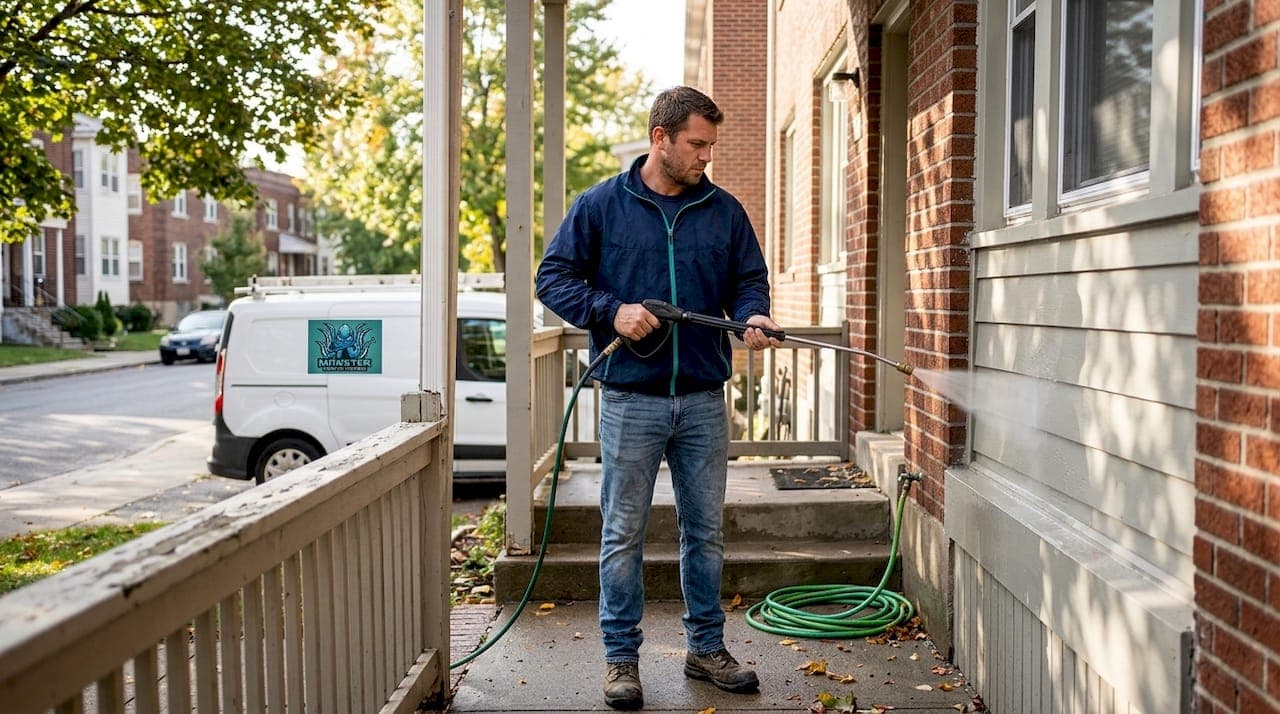
Many property managers assume pressure washing is the best solution for all exterior surfaces. This misconception leads to costly damage when high-pressure water strips paint, forces moisture behind siding, or removes protective granules from roofing materials. Soft washing offers a professional, safe alternative specifically designed for delicate surfaces common in multi-family buildings. This guide clarifies what soft washing is, how it works, and why it's becoming the preferred maintenance strategy for apartment communities nationwide.
Table of Contents
- Defining soft washing: The basics
- How soft washing works: Process and materials
- Soft washing vs. pressure washing: Key differences
- Benefits of soft washing for multi-family properties
- Common soft washing applications for apartment communities
- Partner with exterior cleaning experts
- Frequently asked questions
Key Takeaways
| Point | Details |
|---|---|
| Soft washing defined | Soft washing uses low-pressure water and cleaning agents to safely clean building exteriors. |
| Safer than high-pressure | It prevents damage to delicate materials that high-pressure washing might cause. |
| Ideal for multi-family buildings | Soft washing is especially effective for roofs, siding, and amenities in larger rental communities. |
| Prevents costly repairs | Using soft washing regularly can extend the life of exterior finishes and minimize unexpected maintenance costs. |
Defining soft washing: The basics
Soft washing represents a fundamental shift in exterior cleaning methodology. Unlike traditional approaches that rely on brute force, soft washing uses low-pressure water, typically under 500 PSI, combined with specialized cleaning solutions to remove contaminants. This technique effectively eliminates mold, algae, pollen, and accumulated dirt without the mechanical stress that damages building materials.
The method proves particularly valuable for roofs, siding, stucco, and painted surfaces where high pressure creates more problems than it solves. For multi-family properties, soft washing functions as preventive maintenance rather than reactive cleaning. By addressing organic growth before it penetrates surfaces, you avoid the water intrusion and material degradation that lead to expensive repairs.
A common misconception persists that higher water pressure delivers better results. This assumption ignores material science. Painted wood, composite siding, and architectural shingles require gentle treatment to maintain their protective barriers. When pressure washing forces water past these barriers, moisture becomes trapped, creating ideal conditions for rot and mold growth.
Pro Tip: Ask your cleaning provider what pressure they use and request safety data sheets for their products. Professional apartment building soft washing contractors should readily provide this information and explain why their approach suits your specific building materials.
How soft washing works: Process and materials
Understanding the soft washing process helps you evaluate service providers and set proper expectations. The technique relies on proprietary detergents to loosen grime and very low-pressure rinsing to prevent damage. Here's how professional soft washing unfolds:
- Area preparation: Technicians protect landscaping, close windows, and identify sensitive surfaces requiring extra care.
- Detergent application: Biodegradable cleaning agents designed to break down organic material are applied using specialized low-pressure pumps and nozzles.
- Dwell time: Solutions remain on surfaces for 10-20 minutes, allowing chemical action to dissolve contaminants without scrubbing or pressure.
- Gentle rinsing: Low-pressure water removes loosened debris and cleaning agents, leaving surfaces clean without material stress.
- Inspection: Technicians verify complete cleaning and check for any areas requiring additional attention.
The equipment differs significantly from pressure washing setups. Soft washing systems use pumps that deliver consistent low pressure, specialized hoses that handle chemical solutions safely, and nozzles engineered for wide, gentle coverage rather than concentrated force. The cleaning agents themselves represent the core innovation. These biodegradable detergents target specific contaminants like algae and mold at the molecular level, eliminating them rather than simply blasting them away.
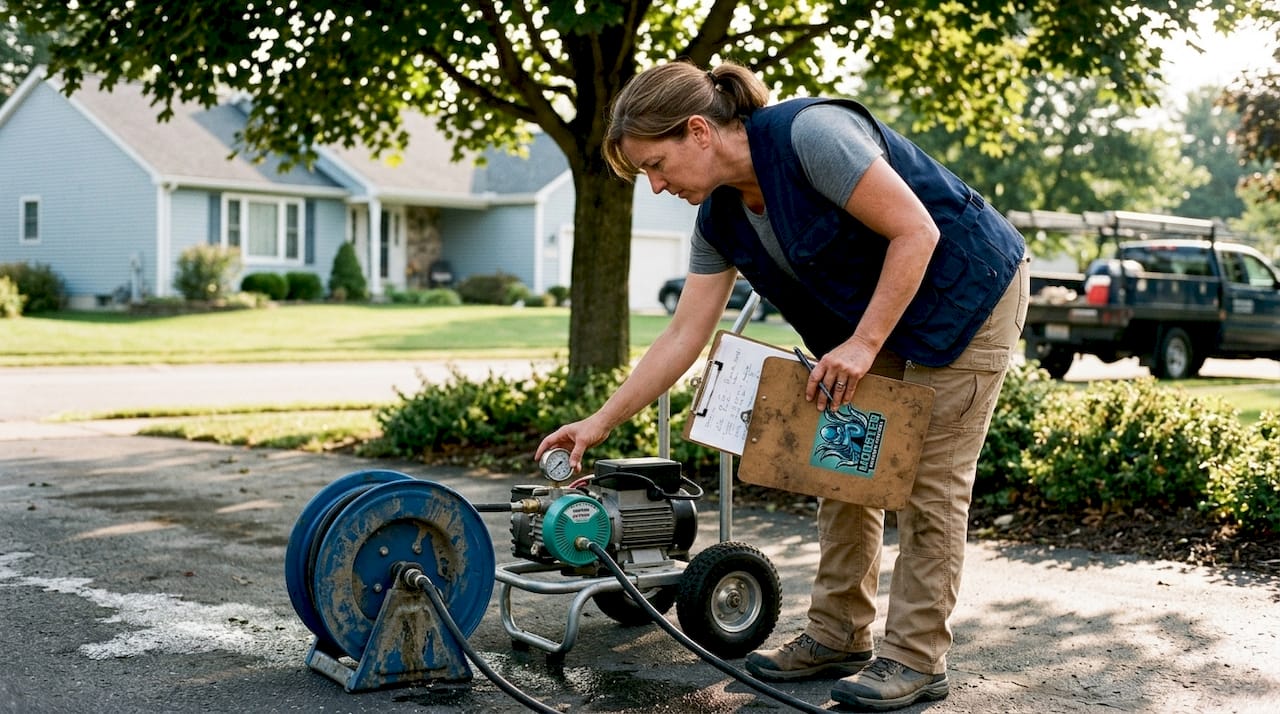
Pro Tip: Ensure your contractor allows proper dwell time and completes thorough rinsing. Rushing either step leaves residue that can attract dirt or damage finishes. Quality soft washing for multifamily buildings prioritizes process over speed.
Soft washing vs. pressure washing: Key differences
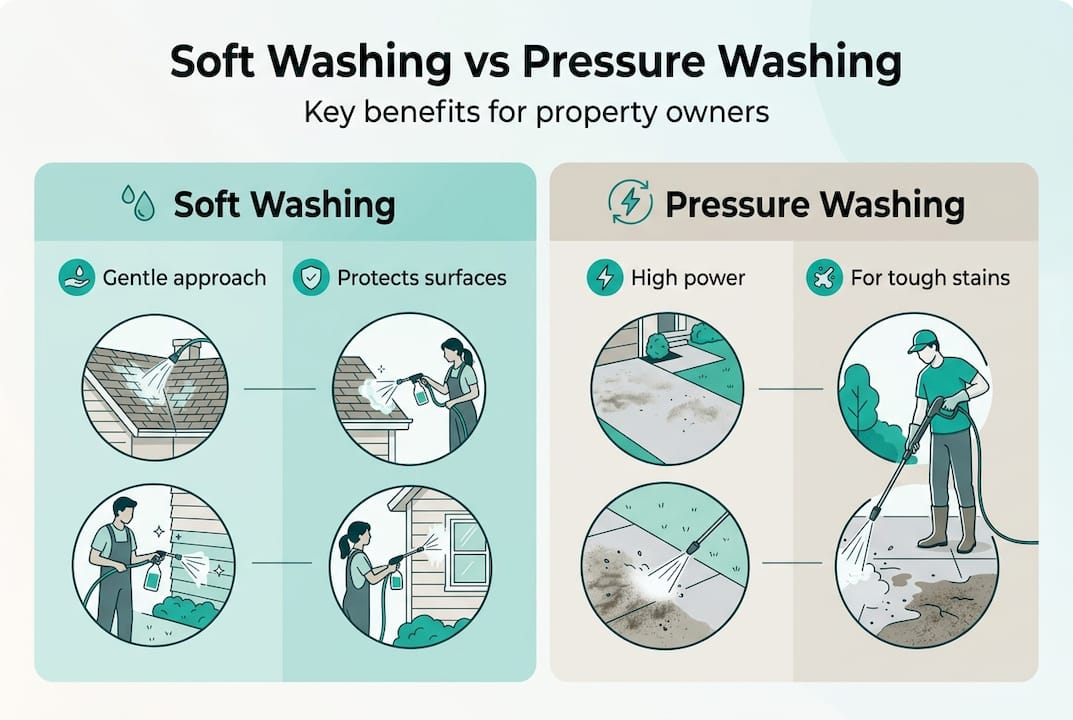
Knowing when to use soft washing over pressure washing protects your investment and ensures effective cleaning. Pressure washing typically operates at 1500-4000+ PSI, while soft washing stays under 500 PSI and uses cleaning chemicals. This fundamental difference creates distinct applications and risk profiles.
Pressure washing excels at removing stubborn stains from durable surfaces like concrete walkways and parking structures. However, it poses serious risks when applied to painted surfaces, composite materials, or roofing. The high-pressure stream strips paint, removes protective granules from shingles, and forces water behind siding where it causes rot and mold. These hidden damages often don't appear until months later when repairs become necessary.
Soft washing preserves material integrity while achieving superior cleanliness on vulnerable surfaces. The chemical action eliminates contaminants at their source, killing mold spores and algae roots rather than temporarily removing visible growth. This approach proves ideal for roofs, stucco, painted wood, and decorative architectural elements.
| Feature | Soft Washing | Pressure Washing |
|---|---|---|
| Water pressure | Under 500 PSI | 1500-4000+ PSI |
| Primary cleaning mechanism | Chemical solutions | Mechanical force |
| Best for | Roofs, siding, painted surfaces | Concrete, brick, stone |
| Damage risk | Minimal when done properly | High on delicate materials |
| Longevity of results | 2-3 years | 6-12 months |
| Water usage | Lower volume | Higher volume |
Understanding pressure ranges matters. Surfaces rated for 500 PSI or less include most residential siding, painted wood, and architectural shingles. Exceeding these thresholds voids warranties and creates liability.
Choose soft washing when:
- Cleaning painted or stained surfaces
- Maintaining roofing materials
- Addressing mold or algae growth
- Working near windows or sensitive areas
- Preserving architectural details
Choose pressure washing when:
- Cleaning concrete walkways and driveways
- Removing graffiti from masonry
- Preparing surfaces for painting
- Cleaning parking structures
For comprehensive guidance on methods, review our article on pressure washing terminology and explore types of exterior cleaning appropriate for different property elements.
Benefits of soft washing for multi-family properties
Once you understand how soft washing compares to alternatives, the advantages for multi-unit property owners become clear. These benefits directly impact your bottom line, tenant satisfaction, and long-term asset value.
Soft washing reduces maintenance cycles by preventing mold and rot caused by forced water penetration. When you eliminate organic growth without damaging protective barriers, building materials last significantly longer. Paint maintains its adhesion, siding retains its weather resistance, and roofing materials preserve their granule coating.
Curb appeal improvements translate directly to higher tenant retention rates. Clean, well-maintained exteriors signal professional management and create pride of place among residents. This perception reduces turnover costs and supports premium rental rates in competitive markets.
Environmental considerations matter increasingly to both regulators and residents. Soft washing uses less water than pressure washing while achieving superior results. The biodegradable cleaning solutions break down naturally, creating less harsh runoff than the contaminated water produced when pressure washing simply relocates dirt and pollutants.
Key advantages include:
- Extended material life: Prevents premature replacement of siding, roofing, and painted surfaces
- Reduced repair costs: Eliminates water intrusion that causes rot and structural damage
- Superior cleanliness: Chemical action kills mold and algae at the source
- Occupant comfort: Removes allergens and improves air quality near buildings
- Lower water consumption: Uses 50-70% less water than pressure washing
- Warranty protection: Maintains manufacturer warranties that high pressure voids
| Maintenance Scenario | Pressure Washing Cost | Soft Washing Cost | 5-Year Savings |
|---|---|---|---|
| Annual cleaning + repairs | $8,500/year | $6,200/year | $11,500 |
| Bi-annual cleaning + repairs | $5,200/year | $3,800/year | $7,000 |
| Tri-annual cleaning + repairs | $3,800/year | $2,900/year | $4,500 |
These figures account for both direct cleaning costs and repair expenses from water damage. The savings compound over time as soft washing preserves materials that pressure washing degrades. Learn more about planning exterior cleaning projects and why routine exterior cleaning matters for property value.
Common soft washing applications for apartment communities
Knowing where soft washing offers the most impact helps you prioritize maintenance budgets and communicate effectively with service providers. Multi-family properties contain numerous surfaces that benefit specifically from this gentle approach.
Certain building components, like shingle roofs, painted wood, and decorative facades, are especially vulnerable to high pressure and best cleaned with soft washing. Roofing materials top the list. Asphalt shingles, tile roofs, and metal roofing all maintain their protective qualities when cleaned with low pressure and appropriate solutions. High-pressure cleaning removes granules, creates leaks, and voids warranties.
Building siding represents another prime application. Vinyl, fiber cement, wood, and composite materials all respond well to soft washing. The method removes organic stains without forcing water behind panels or stripping protective finishes. Stucco and EIFS systems particularly benefit, as their porous nature makes them vulnerable to water intrusion from pressure washing.
Additional surfaces ideal for soft washing:
- Wood fencing and privacy screens
- Painted trim and architectural details
- Outdoor signage and wayfinding elements
- Pool deck surrounds (when surface appropriate)
- Outdoor stairs and railings
- Patio covers and pergolas
- Window frames and exterior doors
Exterior amenities require special attention. Pool areas, outdoor gathering spaces, and recreational facilities create first impressions for prospective residents. Soft washing maintains these high-visibility areas without the overspray and material damage that pressure washing can cause.
These materials qualify as soft washing candidates because they share common characteristics. They're designed to repel water and resist weathering through surface treatments, coatings, or inherent material properties. High pressure compromises these protective features, while soft washing preserves them. For comprehensive service options, explore our multifamily exterior cleaning capabilities and specialized common area concrete cleaning approaches.
Partner with exterior cleaning experts
At Monster Property Partners, we've built our reputation on understanding exactly when soft washing delivers superior results for multi-family properties. Our team specializes in matching cleaning methods to building materials, ensuring your property receives the right treatment for long-term preservation and immediate visual impact.
We manage large-scale exterior cleaning projects with the reliable operations and clear communication that property managers need. From initial assessment through final inspection, our process ensures consistent quality across every building in your portfolio.
Our soft washing services protect your investment while enhancing curb appeal. We use professional-grade equipment, biodegradable solutions, and proven techniques that extend material life and reduce maintenance costs. Whether you manage a single apartment community or oversee multiple properties, we deliver the expertise and reliability that keeps your exteriors looking their best.
Ready to see the difference professional soft washing makes? Contact Monster Property Partners today to schedule a property assessment and discover how our exterior cleaning solutions support your maintenance goals and budget priorities.
Frequently asked questions
What surfaces should NOT be soft washed?
Bare concrete and certain metals may not need soft washing's chemical agents. These durable surfaces often require pressure washing to remove deep stains, while detergents could cause discoloration or corrosion on untreated metal.
How often should multi-family properties be soft washed?
Most experts recommend soft washing every 1-3 years, depending on climate, material type, and contamination levels. Properties in humid climates with heavy tree coverage may need annual treatment, while arid regions often extend to three-year cycles.
Is soft washing safe for landscaping and gardens?
Soft washing is designed to minimize environmental harm; professional rinsing techniques reduce risk further. Contractors pre-wet plants, use protective barriers, and thoroughly rinse areas to prevent chemical contact with sensitive vegetation.
What certifications or training should a soft washing provider have?
Look for professionals with exterior cleaning safety training and knowledge of cleaning solutions recommended for your property type. Industry certifications, insurance coverage, and references from similar properties indicate qualified contractors who understand material compatibility and safety protocols.