
TL;DR:
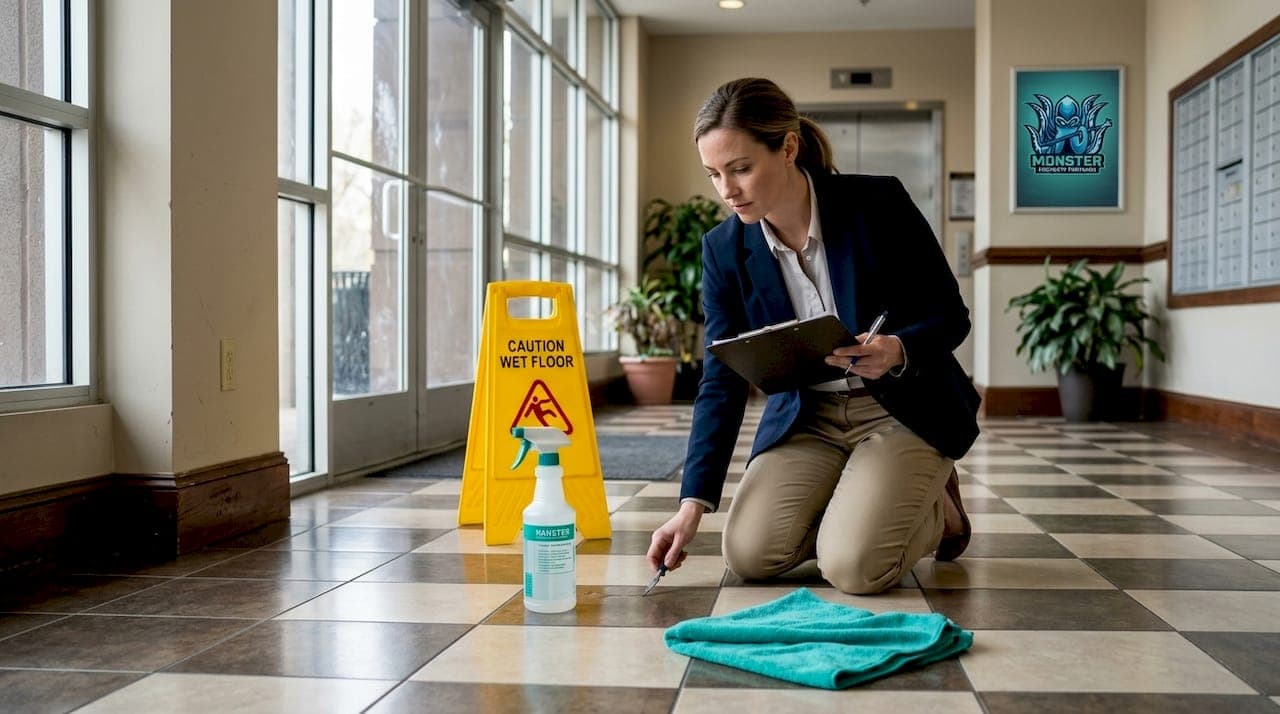
- Hard surface cleaning in apartment communities involves systematic removal of contaminants from all rigid surfaces to improve appearance and prevent costly damage. Proper protocols differentiate cleaning, sanitizing, and disinfecting, with correct sequencing and chemical choices vital for effectiveness and surface preservation. Treating hard surface maintenance as a profit center and outsourcing to specialized vendors enhances property value, tenant satisfaction, and long-term asset protection.
Most property managers assume that mopping the lobby and wiping down counters checks the box on hard surface cleaning. It does not. True hard surface cleaning is a systematic process that removes contaminants from rigid surfaces across your entire property, and when it is done correctly, it directly impacts tenant retention, curb appeal, and long-term maintenance costs. This guide breaks down what hard surface cleaning really means for apartment communities, how it differs from sanitizing and disinfecting, and how your maintenance team can build reliable protocols that protect both your residents and your property investment.
Table of Contents
- Defining hard surface cleaning for apartment properties
- Cleaning, sanitizing, and disinfecting: How they differ
- Choosing the right tools and methods for various surfaces
- Practical protocols for effective hard surface cleaning
- Hard surface cleaning: What most property managers miss
- Enhance your property's appeal with expert cleaning solutions
- Frequently asked questions
Key Takeaways
| Point | Details |
|---|---|
| Beyond surface dirt | True hard surface cleaning targets both visible soil and microbial contaminants, not just quick wipes. |
| Cleaning precedes disinfection | Always clean hard surfaces before attempting to sanitize or disinfect for optimal effectiveness. |
| Right tools prevent damage | Choosing the appropriate cleaning method for each surface preserves finish and avoids costly repairs. |
| Routine protocols matter | Frequent cleaning of high-touch surfaces keeps residents safe and properties attractive. |
| Impact on property value | Effective hard surface cleaning directly boosts curb appeal and tenant retention for multifamily properties. |
Defining hard surface cleaning for apartment properties
Hard surface cleaning is not a single task. It is a category of maintenance that covers every rigid, non-textile surface across your property, from interior floors and countertops to exterior concrete, building facades, and even light switches. Understanding what falls under this umbrella helps property managers build smarter maintenance budgets and assign the right tasks to the right teams.
According to CDC hygiene guidance, hard surface cleaning is the thorough cleaning of rigid, non-textile surfaces to physically remove dirt, soil, and microbial contaminants. That definition covers a wide range of surfaces on a typical multi-family property.
Common hard surfaces in apartment communities include:
- Interior floors: tile, hardwood, vinyl, concrete, and laminate
- Kitchen and bathroom countertops, sinks, and fixtures
- High-touch points: door handles, light switches, elevator buttons, and railings
- Common area hard floors: lobby, laundry room, fitness center, and hallways
- Exterior surfaces: building facades, sidewalks, parking structures, and breezeways
- Amenity surfaces: pool decks, outdoor furniture, and recreation areas
The critical distinction between basic cleaning and true hard surface cleaning is scope and intention. Basic cleaning reacts to visible dirt. Hard surface cleaning proactively targets the full range of contaminants on rigid surfaces before they cause damage, complaints, or health concerns.
For exterior concrete specifically, routine hard surface cleaning removes organic growth, oil stains, and atmospheric grime that quietly degrade the property's appearance over time. Common area concrete cleaning is one of the highest-impact investments a property manager can make because concrete is everywhere on a multi-family property and it absorbs contaminants rapidly.
Building exteriors present a different challenge. Algae, mold, and oxidation build up on siding, stucco, and painted surfaces without any visible warning until the damage is significant. Building soft washing uses low-pressure water combined with targeted cleaning solutions to safely remove these contaminants without damaging surface finishes. Similarly, window cleaning for apartments is often overlooked in hard surface cleaning programs despite windows being one of the first things prospective tenants and residents notice.
Key takeaway: Hard surface cleaning is not a single chore. It is a property-wide maintenance discipline that directly supports the appearance, health, and structural integrity of your building.
Cleaning, sanitizing, and disinfecting: How they differ
Now that we have defined hard surface cleaning, it is important to distinguish it from related practices. Sanitizing and disinfecting are terms that get used interchangeably, but they describe very different actions with very different outcomes.
Cleaning versus disinfecting are distinct steps. Cleaning removes dirt and most germs from surfaces. Sanitizing reduces the number of germs to a safe level as defined by public health standards. Disinfecting kills a higher percentage of germs on surfaces. Cleaning is always the first step because dirt and organic material physically block disinfecting chemicals from reaching the surface and doing their job.
Here is a simple comparison that your maintenance team can reference:
| Step | What it does | When to use it | Products needed |
|---|---|---|---|
| Cleaning | Removes dirt, debris, and most germs | Daily, routine maintenance | Soap, detergent, water |
| Sanitizing | Reduces germs to safe levels | Food prep surfaces, high-touch areas | Sanitizing solutions |
| Disinfecting | Kills a high percentage of germs | After illness, outbreaks, high-risk events | EPA-registered disinfectants |
For practical maintenance teams, the sequence matters enormously. Skipping the cleaning step before disinfecting is one of the most common errors in commercial property maintenance. Organic matter, soil, and surface grime neutralize disinfectants before they can work. You essentially waste chemicals, time, and money while achieving inadequate results.
The correct sequence for disinfecting hard surfaces:
- Remove loose debris and visible soil from the surface
- Apply a cleaning solution and scrub or wipe thoroughly
- Rinse the surface to remove cleaning product residue
- Apply an EPA-registered disinfectant following the label's dilution and contact time instructions
- Allow the product to remain on the surface for the full contact time before wiping or rinsing
- Document the process for compliance records
Proper chemical selection is not optional. Using the wrong product or incorrect dilution risks both surface damage and ineffective disinfection. This is especially important in amenity spaces like fitness centers and laundry rooms where resident contact is frequent. Treating clean common areas as a direct driver of property value means every cleaning step, including chemical selection, needs to be deliberate and documented. Commercial cleaning best practices that prioritize this sequence consistently deliver better tenant satisfaction scores.
Choosing the right tools and methods for various surfaces
Bringing these differences into focus, let us look at how maintenance teams can navigate the nuances of cleaning different hard surface materials. Not all hard surfaces respond the same way to the same products or tools. Using the wrong method can strip floor finishes, damage countertop sealants, or discolor grout permanently.
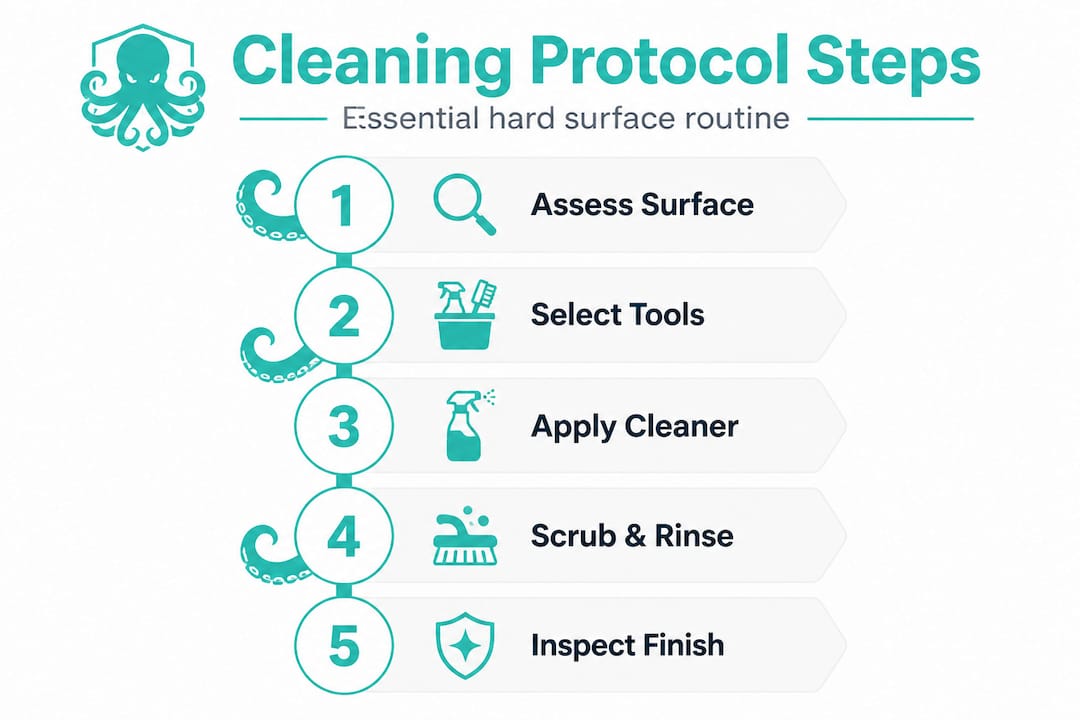
A critical principle for maintenance teams: surface material compatibility determines whether cleaning improves appearance or causes damage. The same cleaner that works on ceramic tile will dull a hardwood floor or etch a polished granite countertop. This is not a minor consideration. Refinishing damaged floors or replacing countertops is significantly more expensive than simply using the correct cleaner from the start.
Here is a practical reference table for surfaces commonly found in multi-family properties:
| Surface type | Recommended method | Products to use | Products to avoid |
|---|---|---|---|
| Hardwood floors | Damp mop, low moisture | pH-neutral cleaner | Steam, alkaline cleaners |
| Ceramic or porcelain tile | Wet mop, scrub | Neutral or alkaline cleaner | Acidic cleaners on grout |
| Polished concrete | Auto scrubber or mop | pH-neutral, non-abrasive | Acids, bleach-based products |
| Granite countertops | Wipe with soft cloth | pH-neutral stone cleaner | Vinegar, citrus-based products |
| Stainless steel | Wipe with grain | Non-abrasive cleaner | Steel wool, bleach |
| Exterior concrete | Pressure washing | Degreaser, surfactant | Bleach on unsealed surfaces |
Pro Tip: Keep a surface material reference sheet in your maintenance office. When a new team member joins or a cleaning vendor comes on site, this single document prevents the most common and costly cleaning mistakes. It takes 30 minutes to create and saves hours of remediation work.
Multifamily exterior cleaning projects add another layer of complexity because you are dealing with weather-exposed surfaces that accumulate years of oxidation, biological growth, and vehicle emissions. These surfaces often require specialized equipment and chemistry that goes beyond what an in-house maintenance team can handle efficiently. A well-designed apartment cleaning workflow separates interior surface cleaning from exterior surface cleaning, assigns the right resources to each, and sets clear quality checkpoints at every stage.
Steam cleaning deserves a specific mention. It works well on hard, non-porous surfaces like tile and some stone, offering chemical-free sanitization through heat. However, it should never be used on hardwood, laminate, or surfaces with damaged sealant because moisture infiltration causes irreversible swelling and warping. Understanding these edge cases is what separates a reactive maintenance team from a proactive one.
Practical protocols for effective hard surface cleaning
Having selected the right tools and methods, it is time to incorporate them into systematic, reliable cleaning protocols that maintenance teams can follow daily and during special situations. The difference between a property that consistently impresses tenants and one that generates complaints usually comes down to whether cleaning happens by schedule or by reaction.
High-touch surface cleaning frequency matters. For everyday risk reduction, cleaning high-touch hard surfaces is sufficient for most situations. Sanitizing and disinfecting are reserved for specific risk scenarios such as illness outbreaks, post-incident cleanup, or move-out turnover between residents.
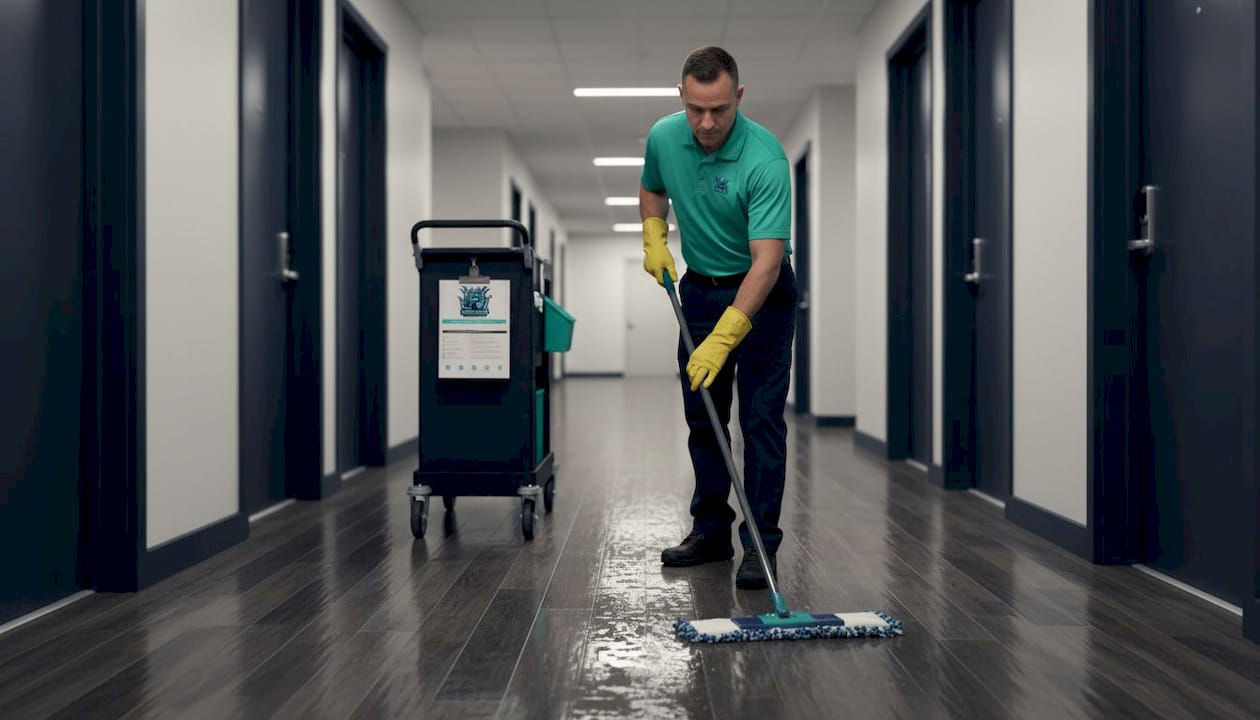
Standard hard surface cleaning protocol for apartment common areas:
- Identify surface type and check your material reference sheet before selecting products
- Gather all supplies before starting: cleaning solution, appropriate tools, PPE, and documentation sheet
- Remove visible debris, trash, and loose soil from the surface
- Apply cleaning solution at the correct dilution, working from clean areas toward dirty areas
- Agitate the surface using the appropriate tool (mop, brush, microfiber cloth) based on surface type
- Rinse the surface thoroughly when required by the product or surface type
- Inspect the surface for missed areas, streaks, or residue and re-clean if necessary
- Document the cleaning: date, time, surface, product used, and the team member who completed the task
- Escalate to disinfection protocol if the area has had a known health incident or resident complaint
Frequency is as important as technique. High-touch surfaces in lobbies, mail rooms, laundry rooms, and fitness centers should be cleaned daily. Low-touch surfaces like exterior railings, parking structures, and building facades can follow weekly or monthly schedules depending on environmental conditions. Properties in humid climates need more frequent biological growth management on exterior surfaces compared to dry climates.
Pro Tip: Building your documentation into a digital property management system rather than paper logs makes it significantly easier to demonstrate compliance to regulatory inspectors and to identify which areas are being cleaned inconsistently. It also gives you data to justify cleaning budget requests.
Sustainable cleaning methods are increasingly relevant for multi-family properties because they reduce chemical costs, minimize environmental liability, and appeal to environmentally conscious tenants. Concentrated products that dilute correctly at the point of use, for example, reduce packaging waste and storage costs while delivering the same cleaning performance. For large-scale exterior work, the commercial exterior cleaning guide for property managers provides detailed guidance on scheduling, vendor selection, and post-cleaning inspection processes that apply directly to multi-family properties.
Seasonal protocols deserve attention as well. Spring cleaning should focus on removing winter accumulation from exterior surfaces, breezeways, and parking areas. Fall protocols should address organic debris, leaf staining, and preparation for wet weather. Building these seasonal cycles into your annual maintenance calendar prevents the reactive emergency cleaning calls that cost three to five times more than scheduled service.
Hard surface cleaning: What most property managers miss
Most guides stop at protocols and product lists. What they miss is the strategic layer, and that is where successful property managers separate themselves.
Here is the honest perspective from working with apartment communities across the country: the properties that underinvest in hard surface cleaning are not saving money. They are deferring costs at a premium. Stained concrete that costs a few hundred dollars to clean annually can require $8,000 or more to resurface after years of neglect. Mold on building exteriors that a soft wash service removes in an afternoon can penetrate wall systems and create remediation expenses that run into tens of thousands of dollars.
The shift that makes the biggest difference is treating hard surface cleaning as a profit center rather than a maintenance line item. When you track cleaning quality against tenant satisfaction scores, move-out deduction disputes, and renewal rates, the correlation is hard to ignore. Properties with visible, well-maintained hard surfaces attract higher quality prospective tenants, generate fewer complaints, and retain residents longer. That retention value is measurable in real dollars.
The teams that struggle most with this are those that clean reactively. They clean when something is visibly dirty or when a resident complains. The teams that build property value through cleaning are the ones operating on consistent schedules, documenting outcomes, and treating exterior surfaces with the same rigor they apply to interior common areas.
One more thing most guides will not tell you: vendor accountability is a critical part of this equation. When you outsource hard surface cleaning to an exterior cleaning partner, the quality of that work directly reflects on your property. Working with multifamily cleaning services that specialize in apartment communities means working with a team that understands property-specific requirements, HOA restrictions, resident communication needs, and large-scale scheduling logistics. Generic commercial cleaning companies often do not carry that context, and it shows in the results.
Enhance your property's appeal with expert cleaning solutions
You now have a clear picture of what hard surface cleaning really involves, why protocols matter, and how the right approach builds long-term property value. The next step is applying this knowledge at scale with a team that knows multi-family properties inside and out.
At Monster Property Partners, we deliver multifamily exterior cleaning services built specifically for apartment communities and large multi-family properties. Whether you need scheduled exterior building washes, parking structure cleaning, or common area concrete cleaning solutions that restore curb appeal and protect surface longevity, our team handles it with precision. We manage communication, scheduling, and quality inspection so your maintenance team can focus on what they do best. Let us help you build a cleaning program that your residents will notice.
Frequently asked questions
What surfaces are considered 'hard surfaces' in apartment communities?
Hard surfaces include floors, countertops, concrete, switches, and exterior surfaces that are rigid and non-porous. The CDC defines hard surfaces as rigid, non-textile items found in homes and facilities.
How often should hard surfaces be cleaned in common areas?
High-touch hard surfaces should be cleaned daily, while low-touch surfaces can be cleaned weekly or as needed. The CDC recommends routine cleaning of high-touch surfaces to reduce risk in occupied environments.
Do I need to disinfect after cleaning hard surfaces?
You should disinfect only when there is a specific risk or outbreak; otherwise, routine cleaning is sufficient for everyday maintenance. Cleaning removes most germs, and disinfecting is reserved for situations where higher germ kill is specifically required.
What cleaning products are best for hard surfaces?
Choose pH-neutral cleaners for floors and delicate finishes, and use EPA-registered disinfectants according to label directions when disinfection is required.
Can hard surface cleaning help boost property value?
Yes, proper cleaning enhances curb appeal and tenant satisfaction, directly increasing both property value and retention rates. Clean common areas are consistently linked to higher renewal rates and stronger first impressions for prospective residents.