
TL;DR:
- Power washing uses heated water at high pressure for heavy-duty cleaning tasks.
- Proper method selection is essential to prevent surface damage and ensure regulatory compliance.
- Regular, professional exterior cleaning helps maintain property value and tenant satisfaction.
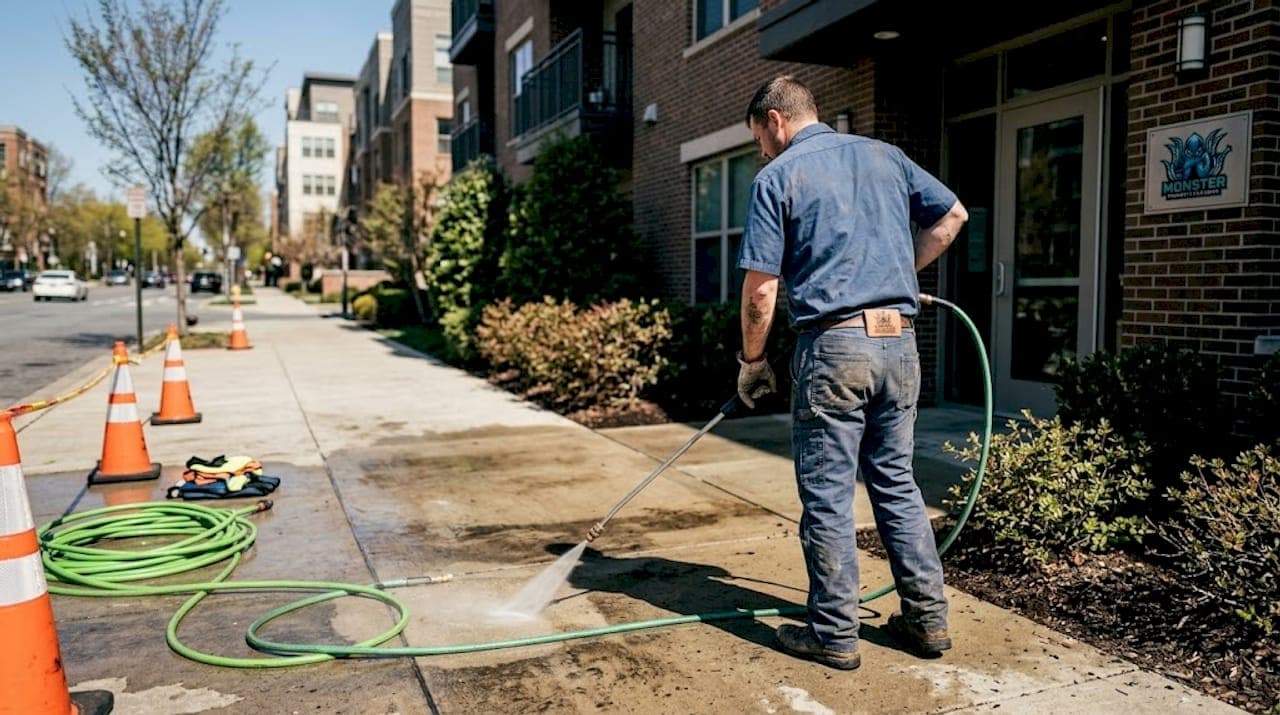
Most property owners use "power washing" and "pressure washing" like they mean the same thing. They don't. That confusion leads to wrong equipment choices, surface damage, and sometimes costly regulatory fines. Power washing uses a high-pressure stream of heated water to break down grease, oil, mold, and stubborn grime that cold water simply can't touch. For multi-family property owners and investors, knowing the difference isn't just technical trivia. It's the line between protecting your asset and accidentally degrading it. This guide walks you through what power washing actually is, how it compares to pressure washing, which surfaces it suits, and how to use it to protect long-term property value.
Table of Contents
- What is power washing? Definition and core principles
- Power vs. pressure washing: Key differences and proper uses
- Materials and areas best suited for power washing
- Protecting property value: Best practices and regulatory compliance
- Our take: What most property owners miss about power washing
- Professional property washing services for multi-family owners
- Frequently asked questions
Key Takeaways
| Point | Details |
|---|---|
| Power washing defined | Uses heated, high-pressure water to remove tough contaminants from surfaces. |
| Method comparison | Pressure washing uses cold water for lighter dirt, while power washing targets heavy-duty cleaning. |
| Surface safety | Not all materials are safe for power washing; soft surfaces require lower pressure or soft washing. |
| Regulatory compliance | Proper power washing must include runoff containment to meet environmental regulations. |
| Professional support | Expert services help maintain property value and prevent costly mistakes for multi-family properties. |
What is power washing? Definition and core principles
Power washing is a cleaning method built around two forces working together: high pressure and heat. The water temperature is the defining factor. Most power washers heat water to between 180°F and 250°F before pushing it through a nozzle at high pressure. That combination doesn't just blast surfaces clean. It dissolves grease, kills bacteria, and loosens contaminants that cold water would leave behind.
According to pressure washing terminology used in the industry, power washing uses heated water for heavy-duty cleaning tasks where cold water pressure alone falls short. That distinction matters enormously when you're managing a 50-unit apartment complex with grease-stained parking decks and algae-covered walkways.
Common contaminants power washing removes:
- Grease and oil stains on concrete and asphalt
- Mold and mildew on exterior walls and walkways
- Chewing gum and organic debris from common areas
- Algae and moss from parking structures
- Efflorescence (mineral salt deposits) on brick and stone
The heat factor is what separates power washing from its cold-water cousin. Think of it like washing dishes: hot water cuts through grease in seconds, while cold water just moves it around. The same physics apply at scale on a building exterior.
"Power washing is best reserved for hard, durable surfaces where heat and high pressure won't cause damage. Knowing when to use it versus when to step down to pressure washing or soft washing is the mark of a professional operation."
Here's a quick breakdown of how power washing stacks up on the basics:
| Feature | Power washing |
|---|---|
| Water temperature | Heated (180°F to 250°F) |
| Pressure range | 1,500 to 4,000 PSI |
| Best for | Grease, oil, heavy grime, mold |
| Common surfaces | Concrete, stone, brick, asphalt |
| Equipment cost | Higher than pressure washers |
For multi-family properties, power washing is most valuable in high-traffic zones: parking garages, dumpster pads, loading areas, and entryways. These spots accumulate the kind of heavy contamination that cold water pressure can't fully remove.
Power vs. pressure washing: Key differences and proper uses
Now that the definition is clear, let's compare these two methods side by side. The core difference is water temperature. Pressure washing uses unheated cold water at high pressure, making it effective for lighter dirt and mildew but less capable against grease and oil. Power washing adds heat, which changes the chemistry of the cleaning process entirely.
| Factor | Power washing | Pressure washing |
|---|---|---|
| Water temperature | Hot (180°F to 250°F) | Cold (ambient) |
| Best contaminants | Grease, oil, heavy mold | Light dirt, mildew, dust |
| Surface risk | Higher on soft materials | Moderate |
| Equipment cost | Higher | Lower |
| Best use case | Parking decks, dumpster pads | Sidewalks, fences, siding |
Property owners often make the mistake of defaulting to the most powerful method available. More pressure and more heat don't always mean better results. In fact, using power washing on the wrong surface causes more damage than the dirt it was meant to remove.
Common mistakes property owners make:
- Using power washing on vinyl siding when soft washing would protect the surface
- Applying high PSI to older brick without testing for structural integrity first
- Skipping containment barriers and creating runoff violations
- Hiring the cheapest contractor without verifying method knowledge
- Treating all exterior surfaces with the same pressure setting
The exterior cleaning benefits of choosing the right method extend beyond appearance. Proper technique prevents surface degradation, which directly reduces maintenance costs over time.
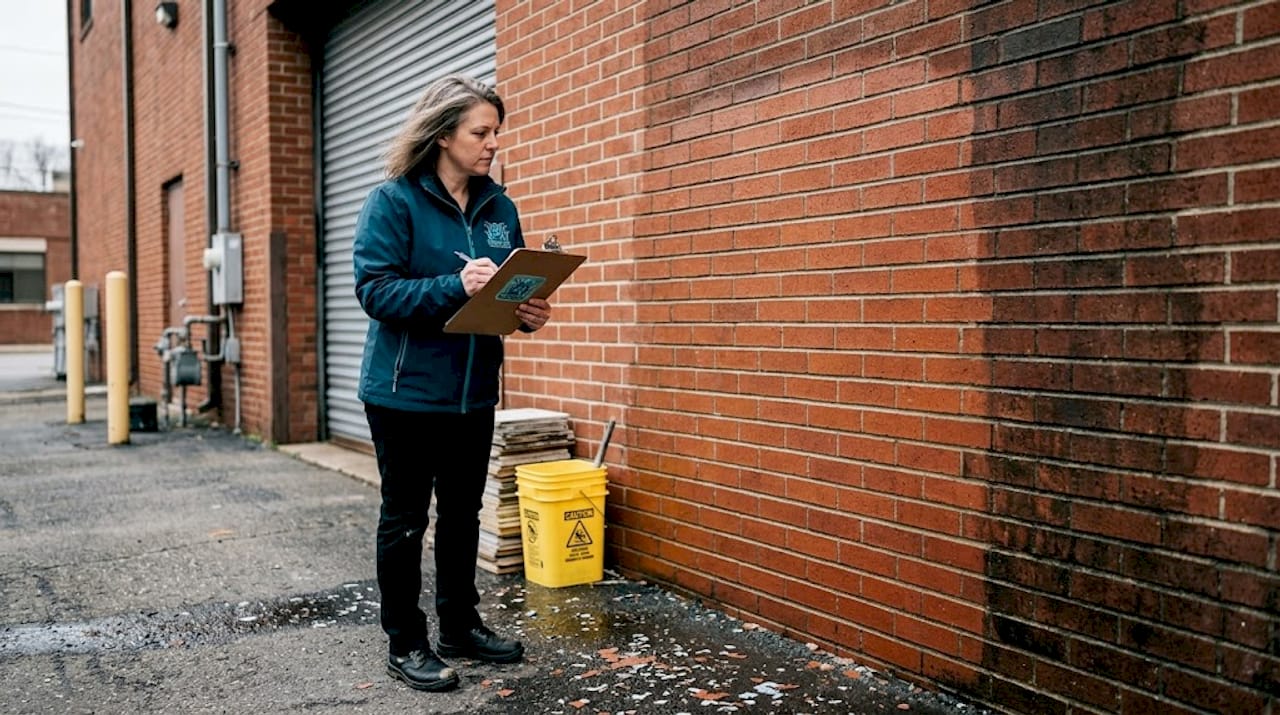
Pro Tip: If your property has painted surfaces, wood trim, or older masonry, ask your contractor about soft washing for multifamily buildings. Soft washing uses low pressure and specialized cleaning solutions, making it the safer choice for delicate materials while still delivering a thorough clean.
The bottom line on method selection: match the method to the surface and the contamination level. Power washing is a precision tool, not a universal solution.
Materials and areas best suited for power washing
Not every surface on your property is a candidate for power washing. Knowing which materials can handle the heat and pressure, and which ones can't, is essential for protecting your investment.
Surfaces that respond well to power washing:
- Concrete driveways, parking garages, and walkways
- Natural stone patios and retaining walls
- Brick in good structural condition
- Asphalt surfaces with heavy oil contamination
- Metal railings and dumpster enclosures
These materials are dense and durable. They can handle the combination of heat and pressure without absorbing moisture or cracking under force.
On the other hand, some surfaces require serious caution. High pressure damages soft materials like wood, vinyl siding, and older brick, causing etching, cracking, or splintering that creates new maintenance problems. For those materials, switching to building soft washing is the smarter call.
Here's what can go wrong with improper technique on the wrong surface:
- Wood decking and fencing: High pressure lifts wood grain, causes splintering, and drives moisture into the wood, accelerating rot.
- Vinyl siding: Excessive pressure forces water behind panels, creating moisture intrusion and potential mold growth inside walls.
- Older brick: Mortar joints on aging masonry are vulnerable. High pressure erodes mortar, which leads to structural instability over time.
- Painted surfaces: Power washing strips paint prematurely, triggering expensive repainting cycles.
Runoff is another risk that property owners often overlook. Cleaning chemicals, grease, and debris washed off your property can enter storm drains and create environmental violations.
Pro Tip: Before any large-scale exterior cleaning project, check local stormwater ordinances. Many municipalities require containment systems, such as berms or vacuum recovery equipment, to capture and properly dispose of wash water. Violating these washing guidelines can result in fines that far exceed the cost of the cleaning job itself.
A professional contractor will assess each surface type before selecting pressure settings and nozzles. That surface-by-surface evaluation is what separates a quality cleaning operation from one that leaves damage behind.
Protecting property value: Best practices and regulatory compliance
Power washing, done right, is one of the most cost-effective ways to protect a multi-family property investment. Done wrong, it becomes a liability. Smart scheduling and regulatory compliance are what separate the two outcomes.
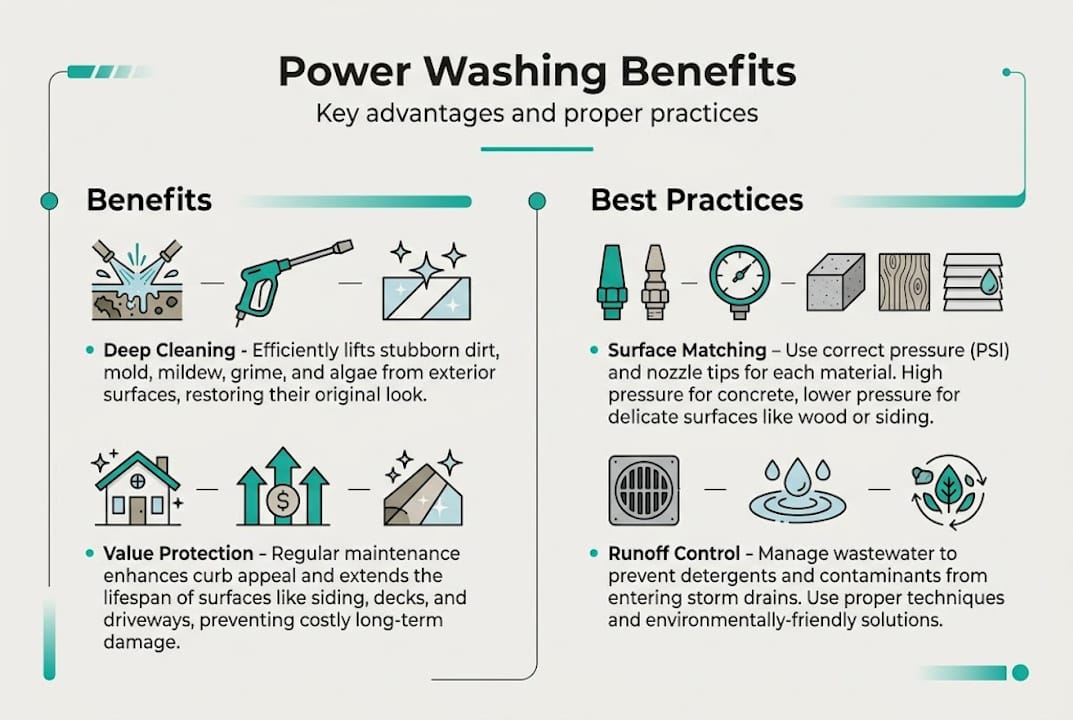
Regulations require containing runoff to prevent stormwater pollution, and that requirement applies to commercial property cleaning operations. Ignoring it isn't just an environmental issue. It's a financial risk.
Regulatory compliance steps for exterior washing:
- Identify local stormwater management requirements before scheduling
- Use containment berms or vacuum recovery to capture wash water
- Avoid cleaning within 50 feet of storm drains without containment
- Select biodegradable, low-impact cleaning solutions
- Document cleaning activities and disposal methods for compliance records
Beyond compliance, a routine washing schedule is one of the most practical tools for preserving property value. Dirt and biological growth don't just look bad. They accelerate surface degradation. Algae holds moisture against concrete and brick, speeding up freeze-thaw cracking. Grease on parking surfaces softens asphalt over time. Regular cleaning removes these threats before they become structural problems.
Best practices for multi-family property washing:
- Schedule exterior cleaning at least twice per year, with additional cleanings after heavy weather events
- Prioritize high-traffic zones: parking areas, entryways, dumpster pads, and pool decks
- Use the correct PSI for each surface, lower for painted or older surfaces, higher for concrete
- Coordinate cleaning with tenant communication to minimize disruption
- Partner with a contractor who understands both technique and compliance requirements
The benefits of professional pressure washing go beyond curb appeal. Properties that maintain clean exteriors consistently report stronger tenant retention and higher perceived value. That's a direct return on a relatively modest maintenance investment. Soft washing is preferred over high-pressure methods for multi-family properties where long-term asset protection is the priority.
Our take: What most property owners miss about power washing
Here's the uncomfortable truth: the power washing vs. pressure washing debate trips up even experienced property managers. Part of the problem is that the industry itself isn't consistent. Many contractors use the terms interchangeably, which creates confusion when you're trying to specify what you actually need for your building.
We've seen properties where owners requested "power washing" and received cold-water pressure washing, leaving grease stains untouched. We've also seen the opposite, where power washing was applied to vinyl siding and caused moisture intrusion that cost far more to fix than the original cleaning bill.
The soft washing guide we recommend to most multi-family owners reflects a core belief: protecting your asset long-term is more important than the most aggressive cleaning method available. Some sources use these terms interchangeably, but the method difference has real consequences for your building's surfaces and your bottom line.
Before any exterior cleaning project, get a surface assessment from a qualified professional. The right method, matched to your specific materials and contamination level, is always the smarter investment.
Professional property washing services for multi-family owners
If you've read this far, you already understand that exterior cleaning for multi-family properties isn't a one-size-fits-all job. The right method, the right pressure, and the right compliance approach all matter.

At Monster Property Partners, we specialize in large-scale exterior cleaning for apartment buildings and multi-family communities. Our team assesses every surface, selects the appropriate method, and manages containment and compliance so you don't have to. Whether you need multifamily exterior cleaning services for a full property refresh or targeted common area concrete cleaning for high-traffic zones, we're equipped to handle it at scale. Reach out to schedule a consultation and protect your investment the right way.
Frequently asked questions
How does power washing differ from pressure washing?
Power washing uses heated water for deeper cleaning of grease and heavy grime, while pressure washing uses cold water and works best for lighter dirt and mildew. The heat is what makes power washing more effective on tough contaminants.
What surfaces should not be power washed?
Avoid power washing wood, vinyl siding, and older brick because high pressure damages these materials, causing cracking, splintering, or moisture intrusion. Soft washing or low-PSI pressure washing is the safer alternative for these surfaces.
Is power washing regulated by environmental agencies?
Yes. Regulations require runoff containment to prevent stormwater pollution, and most municipalities enforce these rules for commercial cleaning operations. Failing to comply can result in significant fines.
Can power washing help protect property value?
Regular professional cleaning removes biological growth and contaminants that accelerate surface decay, and soft washing protects long-term assets better than high-pressure methods for most multi-family building materials. Consistent exterior maintenance also supports stronger tenant retention and higher property appeal.